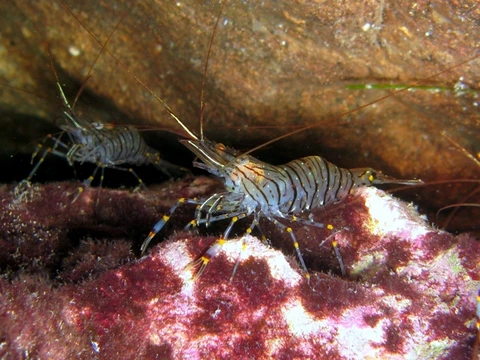
Alpheus randalli
A snapping shrimp that lives in symbiosis with a goby.

Alpheus randalli is a snapping shrimp from the family Alpheidae. It lives in the Marquesas Islands and parts of the Indian Ocean, such as the Seychelles, where it shares a burrow with a goby from the genus Amblyeleotris. The shrimp is transparent or white, with bold red markings.
This medium-sized shrimp reaches about 3 centimeters (1.2 inches) in length. Its rostrum is half again as long as it is wide, and its carapace is not flattened from the sides. The two chelipeds are uneven, with one forming a large snapping claw. The body is white or see-through, with red bands and spots on the rostrum and both claws. The abdomen has alternating white and red bands, and the tips of the uropods are red. The tips of the thoracic appendages are yellowish-green.
First described in 1981, the species was found in the Marquesas Islands at a depth of 18 meters (59 feet), living with a previously unknown goby species now called Randall's prawn goby (Amblyeleotris randalli).
The shrimp and goby share an extensive burrow that the shrimp digs in sandy or silty seabed. The burrow has one or more openings, which shift as the shrimp keeps digging. During the day, the goby rests on the burrow floor near the entrance or may come out farther. It feeds by picking small invertebrates from the substrate stirred up by the shrimp, or by taking mouthfuls of sediment to extract edible bits and detritus. The shrimp mainly eats detritus. The shrimp has poor eyesight and stays alert to the goby’s movements. It is quick to retreat into the burrow even at low danger. If the fish darts headfirst into the burrow to escape immediate threat, the shrimp follows right away. At night, both animals move deep inside, and the entrances are sealed.
The goby likely lays its eggs in a mass inside the burrow, as other members of its genus do. The shrimp lives alone in the burrow, and during breeding season it probably makes an opening near a neighboring burrow occupied by a shrimp of the opposite sex. The female shrimp carries her eggs under her abdomen.
Quick Facts
- Taxon
- Alpheus randalli
Facts from the source article.
Lore & Background
Alpheus randalli was first described in 1981 from the Marquesas Islands in the Indian Ocean, where it was found at a depth of 18 metres in association with a previously undescribed species of goby, now named Randall's prawn goby (Amblyeleotris randalli). The shrimp is transparent or white with prominent red markings, including red bands and spots on the rostrum and chelipeds, and red tips on the uropods. Its thoracic appendages have yellowish-green tips.
The shrimp excavates an extensive burrow in sandy or silty seabed areas, which it shares with the goby. The goby rests near the burrow opening during the day and feeds on small invertebrates disturbed by the shrimp or by taking mouthfuls of sediment. The shrimp, which has poor sight, is alert to the goby's actions and retreats quickly to safety, even at low danger levels. At night, both animals retreat inside the burrow and seal the entrances.
The female shrimp carries her eggs under her abdomen. At breeding time, the shrimp likely makes an opening close to an adjoining burrow occupied by a shrimp of the opposite sex. The goby probably lays its eggs in a mass in the burrow, as happens with other members of its genus.
Reader's Guide
Alpheus randalli is significant as a model of mutualistic symbiosis between a snapping shrimp and a goby. The shrimp's poor eyesight is compensated by the goby's vigilance; the shrimp relies on the goby's movements to detect danger and retreats into the burrow when the goby does. This relationship allows both species to share a burrow that the shrimp excavates and maintains. The shrimp is a detritus feeder, while the goby feeds on invertebrates disturbed by the shrimp's burrowing. The species was first described in 1981 from the Marquesas Islands, and its association with a previously unknown goby species highlights the interconnectedness of reef ecosystems. Its transparent or white body with red markings and asymmetric snapping claw are characteristic features. The shrimp's behavior of sealing the burrow at night and its breeding habits, including egg-carrying by the female, are documented aspects of its biology. The species is found in the Indian Ocean, including the Seychelles, and the Marquesas Islands.
Did You Know?
- Alpheus randalli grows to about 3 centimetres (1.2 in) long.
- The shrimp has poor sight and relies on the goby's actions to detect danger.
Frequently Asked Questions
What is Alpheus randalli?
Alpheus randalli is a medium-sized snapping shrimp in the family Alpheidae, first described in 1981. It is best known for its tight burrow-sharing partnership with a goby, making it a classic example of shrimp-goby symbiosis.
How big is Alpheus randalli?
The shrimp tops out at roughly 3 centimetres (about 1.2 inches) in total length. Its rostrum is noticeably longer than it is wide, and the carapace keeps a rounded cross-section rather than being flattened sideways.
Where does Alpheus randalli live in the wild?
You'll find it in the Marquesas Islands and across portions of the Indian Ocean, including the Seychelles. It has been recorded at depths of up to about 18 metres (59 ft).
Which goby does Alpheus randalli share its burrow with?
Its dedicated partner is Amblyeleotris randalli, commonly called Randall's prawn goby. The two species rely on each other for shelter and lookout duty, with the shrimp maintaining the burrow while the goby acts as a sentinel.
What does Alpheus randalli look like?
The body is either see-through or white, decorated with striking red bands and spots, particularly along the rostrum. One of its two front claws is swollen into a large snapping apparatus, while the other stays comparatively small.
More in Pistol and Cleaner Shrimp 1-15
Spotted an error? Know more?
Reader corrections go straight into our review queue. Suggest an edit · How this site is sourced