Victor Poor
Co-created the architecture behind the first successful microprocessor, the Intel 8008.

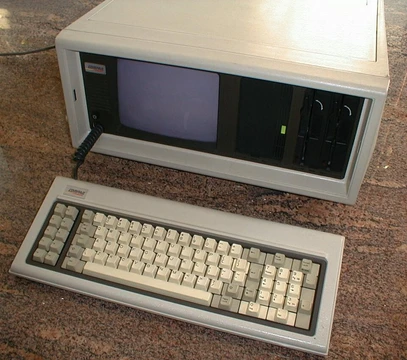
Victor "Vic" Poor (July 12, 1933 – August 17, 2012) was an American engineer and computer pioneer. While working at Computer Terminal Corporation, later renamed Datapoint Corporation, he helped design the architecture that became the basis for the Intel 8008, the world's first 8-bit microprocessor. That same company then built the Datapoint 2200, a programmable terminal recognized as the first personal computer. Born in Los Angeles to Pinckney Peyton Poor and Leona Lucille Poor (née Mallory), Victor Dale Poor developed an early fascination with radio. He built a transceiver from scavenged parts and earned his amateur radio license in 1951 (callsign W6JSO). After high school, he joined the Navy. During electronics training at Treasure Island Naval Base in 1952, he met Florence in a San Francisco church; they married that November, and he was subsequently stationed at Ford Island in Pearl Harbor, Hawaii. Upon leaving the Navy in 1955, Poor joined Stromberg-Carlson in San Diego, working on telecommunications technology. He learned computer programming and wrote his first program in 1956 for a UNIVAC 1103. Recruited by Raytheon, he moved to Massachusetts. Though he never attended college, he took electronics classes in the Navy and at Raytheon, quickly surpassing his instructors and eventually teaching the courses himself. Later, in Maryland, he helped found Frederick Electronics, a manufacturer of radio and telegraph equipment. Promoted to an executive role, he conceived the idea of adapting radioteletype (RTTY) machines for wireless data transmission. The Army and commercial clients like the Associated Press used these systems to send news reports globally. Poor continued experimenting, aiming to transmit photographs wirelessly. In 1969, while serving his notice at Frederick Electronics, he and fellow amateur radio operator Harry Pyle sketched out the fundamental architecture of the modern microprocessor on a living room floor during Thanksgiving. They enlisted another radio amateur, Jonathan Schmidt, to write the communications software. They pitched the design to Texas Instruments and Intel, leading to the development of the Intel 8008, the precursor to today's microprocessor chips. Later that year, Poor became Technical Director at Computer Terminal Corporation, a San Antonio startup founded by former NASA engineers Phil Ray and Gus Roche.
Quick Facts
- Birth Date
- 1933-07-12
- Birth Place
- Los Angeles, California, U.S.
- Death Date
- 2012-08-17
- Death Place
- Palm Bay, Florida, U.S.
- Occupation
- Engineer, Inventor
- Years Active
- 1952–2012
- Employer
- United States Navy / Stromberg-Carlson / Raytheon / Frederick Electronics / Datapoint / Airnet
- Known For
- Co-development of the microprocessor, ARCNET, APlink, Winlink
- Spouse
- Florence Ann Poor
- Children
- 3
- Callsign
- W6JSO/W5SMM
- Awards
- ARRL President's Award
Facts from the source article.
Lore & Background
Victor Poor was born in Los Angeles, California, the son of Pinckney Peyton Poor and Leona Lucille Poor. With a passion for radio, he built his own transceiver from discarded pieces and qualified on amateur radio in 1951. After high school, he joined the United States Navy, attending electronics training at Treasure Island Naval Base in 1952, where he met his wife Florence. He was then assigned to Ford Island naval base, Pearl Harbor, Hawaii. After leaving the Navy in 1955, Poor joined Stromberg-Carlson in San Diego, writing his first program in 1956 for the UNIVAC 1103. Recruited by Raytheon, he moved to Massachusetts, taking electronics training classes and soon teaching them. He then moved to Maryland to help form Frederick Electronics, where he developed the idea of adapting radioteletype machines to send data wirelessly, selling these to the U.S. Army and commercial customers like the Associated Press. In 1969, while working his notice period from Frederick Electronics during the Thanksgiving holiday, Poor and fellow amateur radio colleague Harry Pyle produced the underlying architecture of the modern microprocessor on a living room floor. They asked Jonathan Schmidt to write the communications software. Pitching the idea to Texas Instruments and Intel, the partnership developed the Intel 8008. Poor then joined Computer Terminal Corporation as Technical Director, and the company asked him to approach Intel to see how much of his design could fit onto a chip. A $100,000 proposal led to the Intel 8008 master chip, the world's first 8-bit microprocessor. Poor and Pyle developed the instruction set architecture, enabling Phil Ray and Gus Roche to design the mass-produced Datapoint 2200 computer terminal.
Reader's Guide
Victor Poor's significance lies in his co-creation of the architecture that became the Intel 8008, the first successful computer microprocessor, and his role in the creation of the Datapoint 2200, considered the first personal computer. At Computer Terminal Corporation, he oversaw the development of ARCNET, an early local area network, by lead architect John Murphy. Poor stayed with Datapoint until 1984, after the company lost its technical lead to IBM and was bought out by corporate raiders. He retired on profits from Datapoint stock and took up sailing. While sailing, he developed APlink (AMTOR-Packet Link) in 1985, a computer program to integrate Internet with amateur radio for store-and-forward messaging. As part of a group, he helped develop Winlink. The American Radio Relay League adopted APlink for their National Traffic System digital messages. The system was widely adopted by radio amateurs, the U.S. military, and emergency preparedness teams, and was credited as one of the few communications systems that worked after Hurricane Katrina. Poor's legacy includes foundational contributions to microprocessor architecture, personal computing, and amateur radio emergency communications.
Did You Know?
- He co-created the microprocessor architecture on a living room floor during the Thanksgiving holiday in 1969.
- The Intel 8008 was the world's first 8-bit microprocessor.
- Poor developed APlink in 1985, which was later adopted by the ARRL for emergency communications.
More in PC Hardware, Part 2 1-24
Spotted an error? Know more?
Reader corrections go straight into our review queue. Suggest an edit · How this site is sourced