Lee Felsenstein
Designer of the first mass-produced portable computer and influential early personal computing engineer.

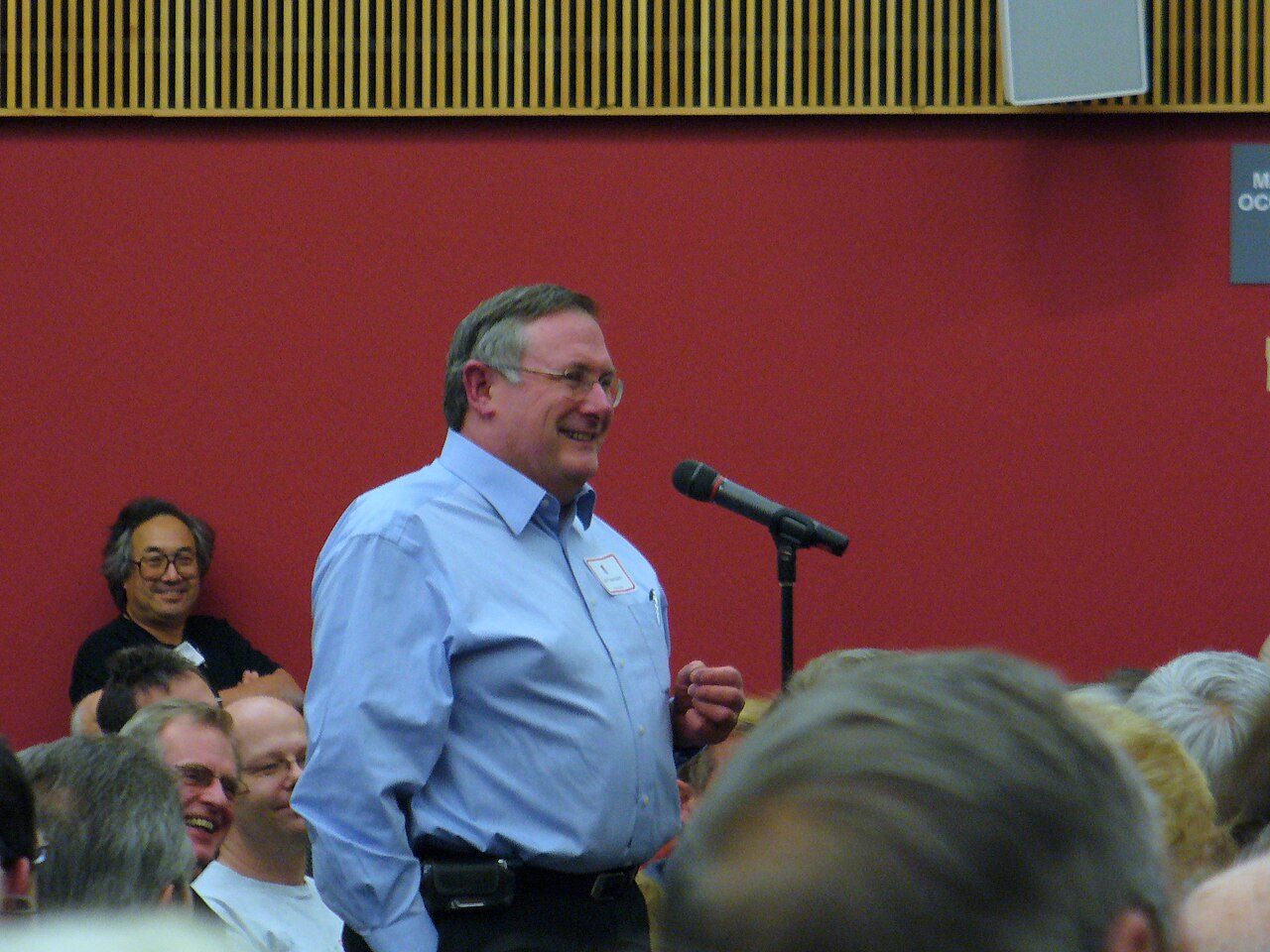
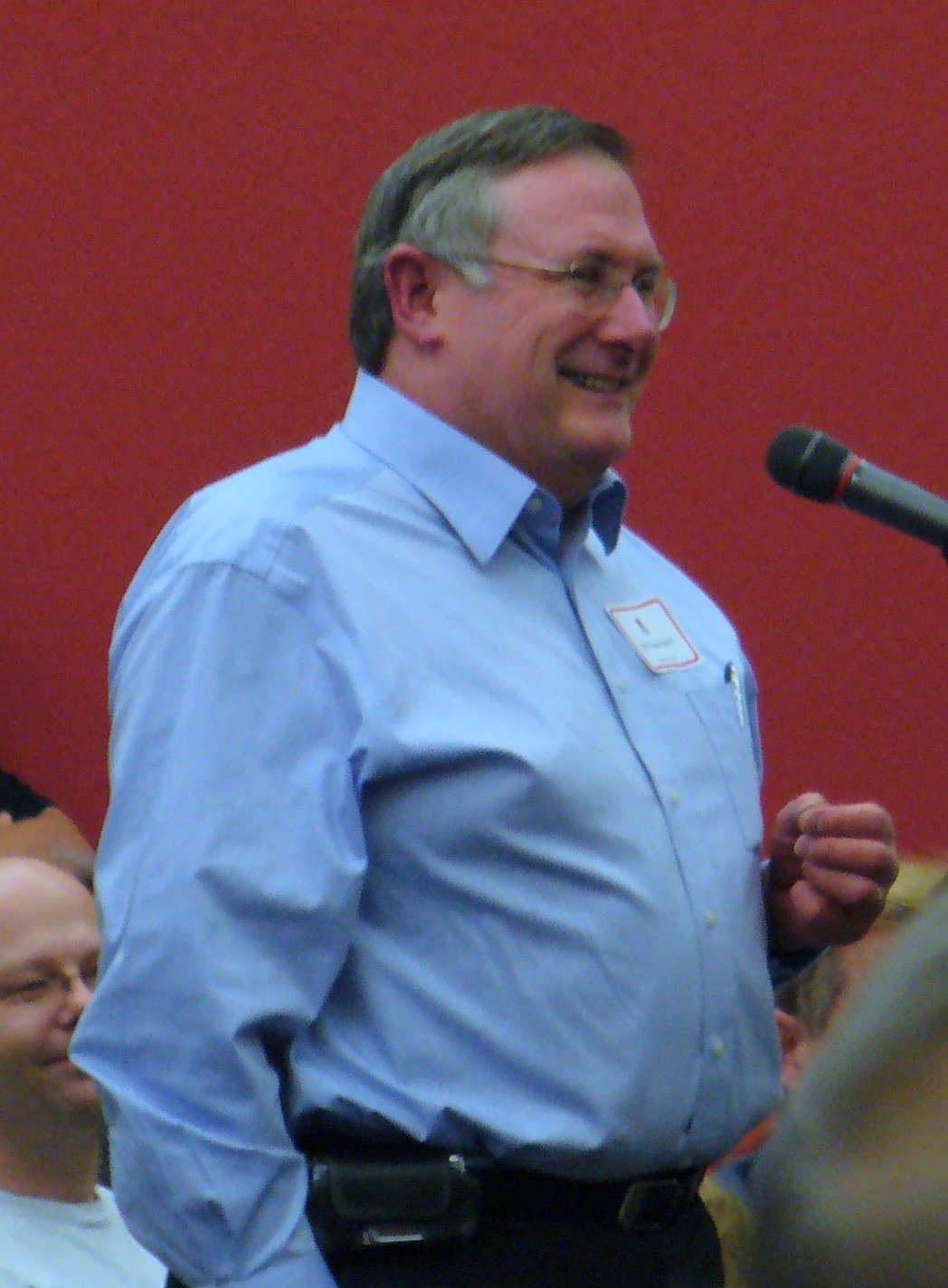
Marcin Wichary from San Francisco, U.S.A., cropped by Gorinin · CC BY 2.0
Lee Felsenstein (born April 27, 1945) is an American computer engineer whose work helped shape the early personal computer industry. He was an original member of the Homebrew Computer Club and created the Osborne 1, the first portable computer to be mass-produced. Before that, he designed the Sol-20 computer (based on the Intel 8080 processor) for Processor Technology, the PennyWhistle modem, and other early S-100 bus systems. His Processor Technology VDM-1 video display board, which used shared memory for alphanumeric output, was heavily copied and set the standard for how personal computers displayed text.
Felsenstein’s designs often aimed to lower the cost of computing so it could reach a wider audience. His work reflected a deep concern for technology’s social effects, shaped by the philosophy of Ivan Illich, especially the book *Tools for Conviviality*. He was the engineer behind the Community Memory project, an early effort to put networked computer terminals in public places—like Berkeley supermarkets—so that ordinary people could interact socially through them, long before the commercial internet existed.
Felsenstein grew up in Philadelphia and graduated from Central High School as part of class 219. As a young man, he was a New Left radical. In late 1964, he took part in the Free Speech Movement at UC Berkeley and was among the 768 people arrested during the Sproul Hall sit-in on December 2–3. He also wrote for the *Berkeley Barb*, a prominent underground newspaper. He first entered UC Berkeley in 1963, joined the Cooperative Work-Study Program in Engineering in 1964, and dropped out at the end of 1967. From 1968 to 1971, he worked as a junior engineer at Ampex Corporation, then re-enrolled at Berkeley and earned a B.S. in electrical engineering and computer science in 1972.
From 1981 to 1983, Felsenstein worked at Osborne Computer Corporation, where he designed the Osborne 1. After that, he returned to freelance consulting. In 1992, he joined Interval Research Corporation, staying until 2000. He then worked for Pemstar Pacific Consultants (later acquired by Benchmark Electronics) until 2005. Throughout his career, he also took on occasional freelance design work or ran his own firm.
The Community Memory project began in 1972 under Resource One, Inc.
Quick Facts
- Birth Date
- 1945-04-27
- Birth Place
- Philadelphia, Pennsylvania, United States
- Field
- Computer engineering
- Workplaces
- Osborne Computer Corporation, Interval Research Corporation, Pemstar Pacific Consultants
- Education
- University of California, Berkeley
Facts from the source article.
Lore & Background
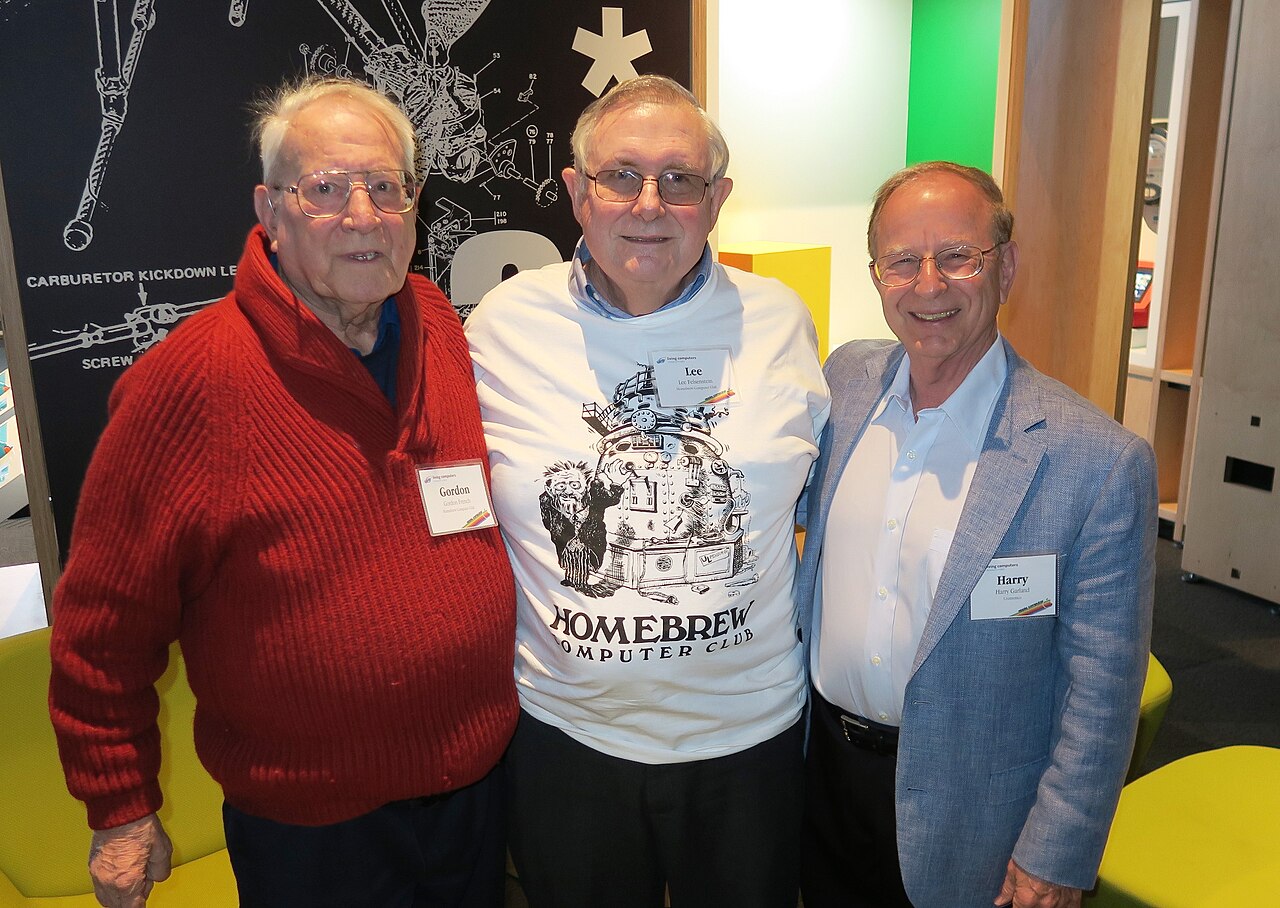
Felsenstein was one of the original members of the Homebrew Computer Club, which formed in 1975 in response to the appearance of the Altair 8800 computer kit. With a handy yardstick, he moderated meetings at the SLAC Auditorium, described as less a chair than a keeper of chaos. Before the Osborne, Felsenstein designed the Intel 8080 based Sol-20 computer from Processor Technology, the PennyWhistle modem, and other early S-100 bus era designs. These existed in a market space with early generation hobbyist microcomputers from Altair, IMSAI, Morrow Designs, Cromemco, and other vendors.
Felsenstein was the engineer for the Community Memory project, one of the earliest attempts to place networked computer terminals in public places to facilitate social interactions among individuals, in the era before the commercial Internet. The project began as a project of Resource One, Inc. in 1972 and later incorporated in 1977 by Felsenstein with Efrem Lipkin, Ken Colstad, Jude Milhon, and Mark Szpakowski. It placed terminals in such places as Berkeley supermarkets to attract casual use by persons from all walks of life.
His work featured a concern for the social impact of technology and was influenced by the philosophy of Ivan Illich, particularly the book Tools for Conviviality, which advocated a convivial approach to design allowing users to learn about technology by encouraging exploration, tinkering, and modification. Felsenstein summarized his conclusions in several aphorisms: 'In order to survive in a public-access environment, a computer must grow a computer club around itself,' 'To change the rules, change the tools,' and 'If work is to become play, then tools must become toys.'
Reader's Guide
Felsenstein's significance lies in his central role in the development of personal computers, particularly through his design of the Osborne 1, the first mass-produced portable computer, and the Processor Technology VDM-1 video display module, which was widely copied and became the basis for the standard display architecture of personal computers. Many of his designs were leaders in reducing costs of computer technologies for the purpose of making them available to large markets. His work featured a concern for the social impact of technology, as exemplified by the Community Memory project, which was one of the earliest attempts to place networked computer terminals in public places to facilitate social interactions among non-technical individuals before the commercial Internet. Felsenstein was influenced by the philosophy of Ivan Illich, particularly the concept of convivial tools that encourage exploration and modification. His legacy includes being named a Pioneer of the Electronic Frontier in 1994, receiving the Editor's Choice Award for Creative Excellence in 2007, being named a Laureate of The Tech Museum of Innovation in 2003, and being made a Fellow of the Computer History Museum in 2016. In 2003, he designed an open-source telecommunications and computer system for remote villages, dubbed the Pedal-Powered Internet, though installation of the first system in Laos was unsuccessful.
Did You Know?
- Felsenstein was one of 768 arrested during the Sproul Hall Sit-In of December 2–3, 1964, as a participant in the Free Speech Movement.
- He designed the Osborne 1, the first mass-produced portable computer, while employed at Osborne Computer Corporation from 1981 to 1983.
- His older brother is evolutionary biologist Joseph Felsenstein, a National Academy of Sciences member whose PHYLIP system was one of the earliest examples of bioinformatics.
- Felsenstein founded the Free Speech Movement Archives in 1998 as an online repository of historical information.
Designing the First Portable
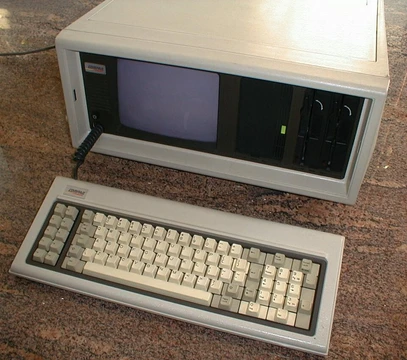
After Adam Osborne sold his computer book-publishing business to McGraw-Hill in 1979, he envisioned an affordable portable computer that came with a full software package. To bring that vision to hardware reality, he recruited Lee Felsenstein to handle the design. The machine that emerged—the Osborne 1—packed a 5-inch, 52-column cathode-ray tube, two floppy-disk drives, a Z80 microprocessor, and 64 kilobytes of RAM into a chassis small enough to slide under an airplane seat yet sturdy enough to survive an accidental drop. The bundled software suite was ambitious: CP/M, two BASIC dialects, WordStar, SuperCalc, project-management tools with PERT and Gantt charts, and communications software for a 300-baud modem. Osborne secured much of this software by offering equity in the newly founded Osborne Computer Corporation; MicroPro International, for instance, received 75,000 shares plus $4.60 per WordStar copy shipped. Unlike typical startups that spent years in development, the company's first product was ready almost immediately after its January 1981 founding, and the very first units rolled out of the door in July of that year.
Two People, Then Three Thousand
The Osborne Computer Corporation began with exactly two employees: Adam Osborne and Lee Felsenstein. Within twelve months of the Osborne 1's July 1981 debut, that pair had grown into a workforce of 3,000 generating $73 million in revenue. The numbers were staggering even by the standards of a booming industry. Eleven thousand units sold in the first eight months, with another 50,000 sitting on backorder. Peak monthly sales hit 10,000 units—a figure that exceeded the original business plan's total lifecycle projection for the entire product. The pace of expansion was so vertiginous that an executive returning from a one-week trade show found her team had been relocated and had to hunt through two separate buildings to locate them. By October 1982, a temporary bundling deal with Ashton-Tate's dBase II pushed production to 500 units per day, a throughput that severely strained quality control. Early units carried a 10-to-15 percent failure rate, a reminder that the machine was being pulled from the factory faster than it could be properly tested.
A Market That Moved Faster
The portable-computer window that Felsenstein and Osborne had opened was quickly crowded. Kaypro Computer launched rival portables that also ran CP/M with bundled software but featured noticeably larger 9-inch screens, giving them a visual edge in retail. Apple's machines carried a deep native software library and, through aftermarket expansion cards, could run CP/M as well. IBM's personal computer was simply faster and more advanced, and its software ecosystem was expanding rapidly. Felsenstein and Osborne were not unaware of the threat; they attempted to raise $20 million in capital to rush an IBM-compatible design to market, but the financing fell through. The competitive pressure was felt internationally as well. In Australia, President Computers Pty Ltd had become the largest global distributor of the Osborne 1 outside the United States, yet a corporate decision to split the dealership agreement pushed that partner toward the Kaypro line. Local distributor Tom Cooper had even warned Osborne not to announce the successor Osborne Executive until Osborne 1 inventory was exhausted—a caution that went unheeded.
The Effect That Broke a Company
In early 1983, Osborne began showing the upcoming Osborne Executive to journalists. The theory later dubbed the 'Osborne Effect' holds that this premature reveal triggered a cascade: dealers, anticipating the new model, cancelled pending orders for the Osborne 1, and unsold inventory mounted on warehouse floors. Desperate price cuts followed—the machine dropped from $1,295 in July 1983 to $995 by August—but sales never recovered. On September 13, 1983, Osborne Computer Corporation filed for bankruptcy. At an all-hands meeting, the first wave of layoffs swept through sales, production, domestic marketing, and most clerical support; affected workers were handed their final paychecks and sent home. The management that lingered was drawn mostly from the international marketing division. Nine days later, a group of 24 investors filed suit against the company and several individuals, seeking $8.5 million in damages and alleging that the true financial picture had been concealed and that some directors had engaged in insider trading. Historians remain divided on whether the early product reveal was the true cause or merely the final blow.
Gallery
Frequently Asked Questions
Who is Lee Felsenstein?
Lee Felsenstein is an American computer engineer, born in 1945, best known for designing the Osborne 1, the first mass-produced portable computer. He earned his degree in electrical engineering and computer science from UC Berkeley and went on to shape the early personal-computer industry through several landmark hardware projects.
Why is the Osborne 1 considered a milestone in PC history?
The Osborne 1, created by Felsenstein at Osborne Computer Corporation, was the first computer small enough to carry and sold in sufficient volume to prove that portable computing was a viable market. It essentially established the concept of the laptop years before the term became common.
What was Felsenstein's role in the Homebrew Computer Club?
He was an original member of the Homebrew Computer Club, the small group of Bay Area hobbyists whose gatherings in the early 1970s helped incubate the personal-computer movement. His involvement there placed him at the center of the S-100 bus ecosystem and the community that eventually produced machines like the Altair 8800 and Apple I.
What did Felsenstein build at Processor Technology and why did it matter?
At Processor Technology he designed the Sol-20, an Intel 8080-based personal computer, the PennyWhistle modem, and the VDM-1 video display module. The VDM-1 was especially influential because its shared-memory scheme for alphanumeric output was copied so widely that it became the de facto standard for early PC video hardware.
What major honors has Felsenstein received for his work in computing?
In 1994 he was named a Pioneer of the Electronic Frontier, a recognition of his foundational contributions to consumer-facing computer hardware. His broader career also includes work at Interval Research Corporation and ongoing involvement with the Jhai Foundation and Hacker Dojo.
More in PC Hardware, Part 2 1-24
Spotted an error? Know more?
Reader corrections go straight into our review queue. Suggest an edit · How this site is sourced