Bill English (computer engineer)
Co-creator of the first computer mouse prototype.

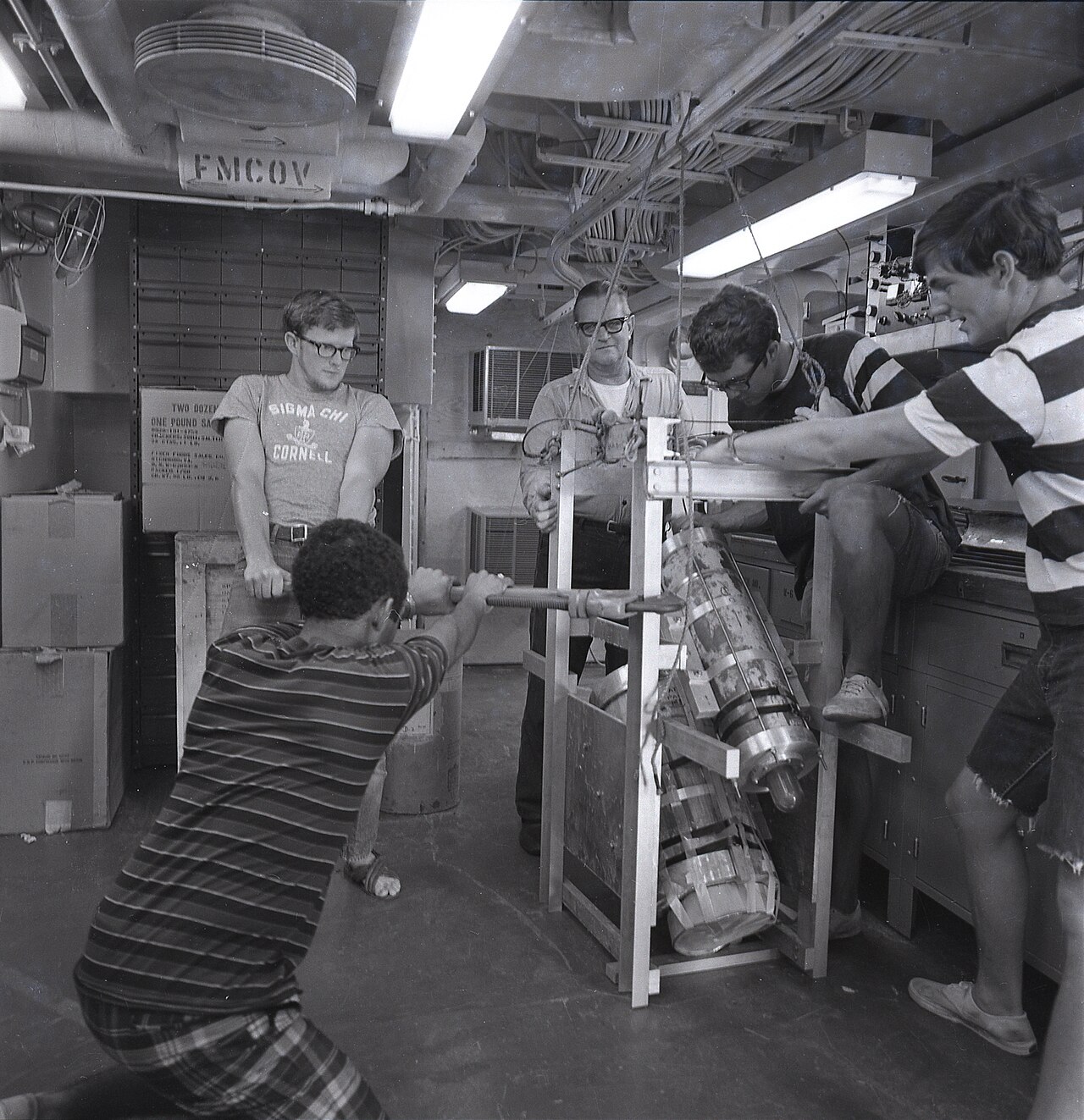
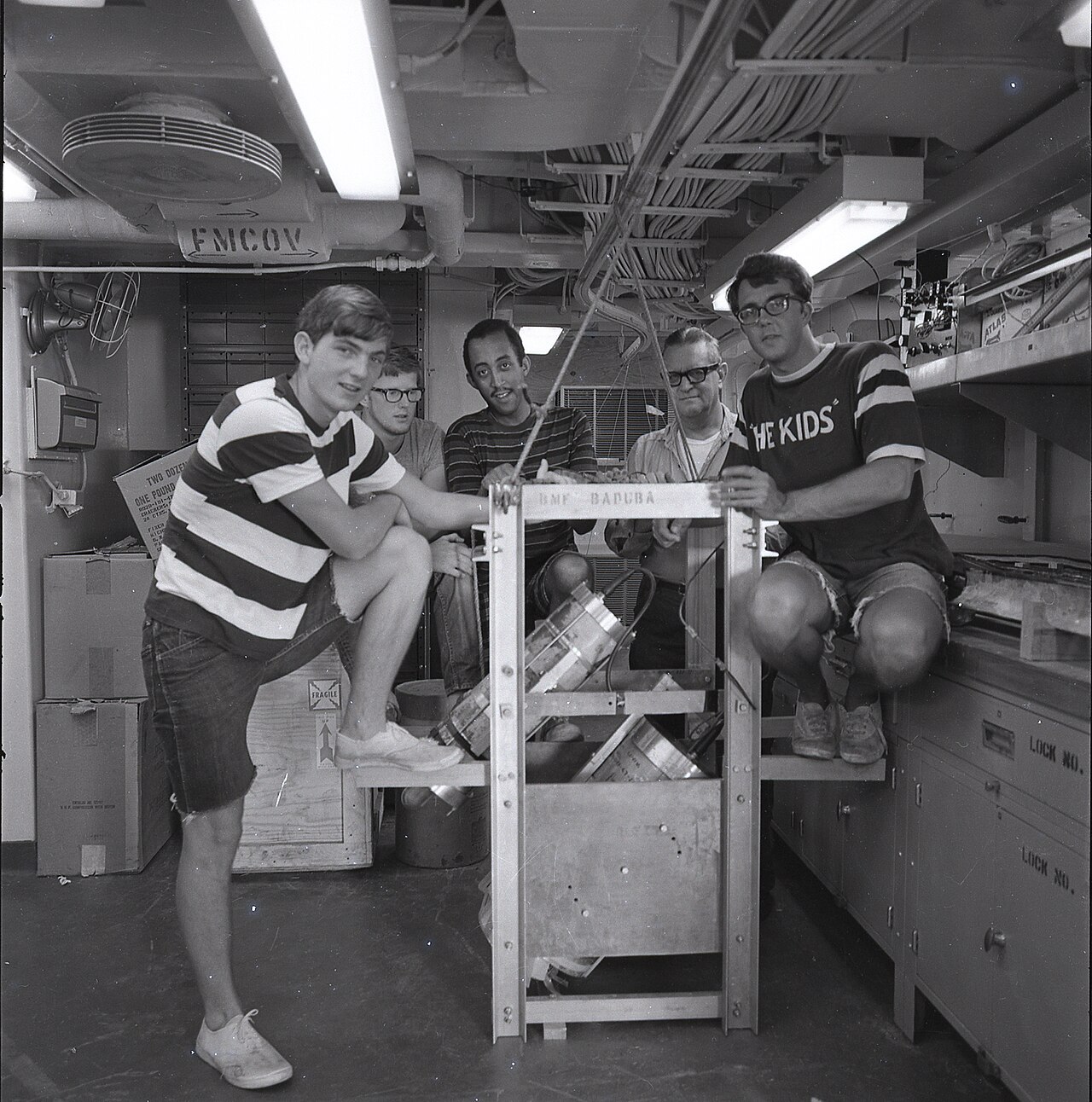
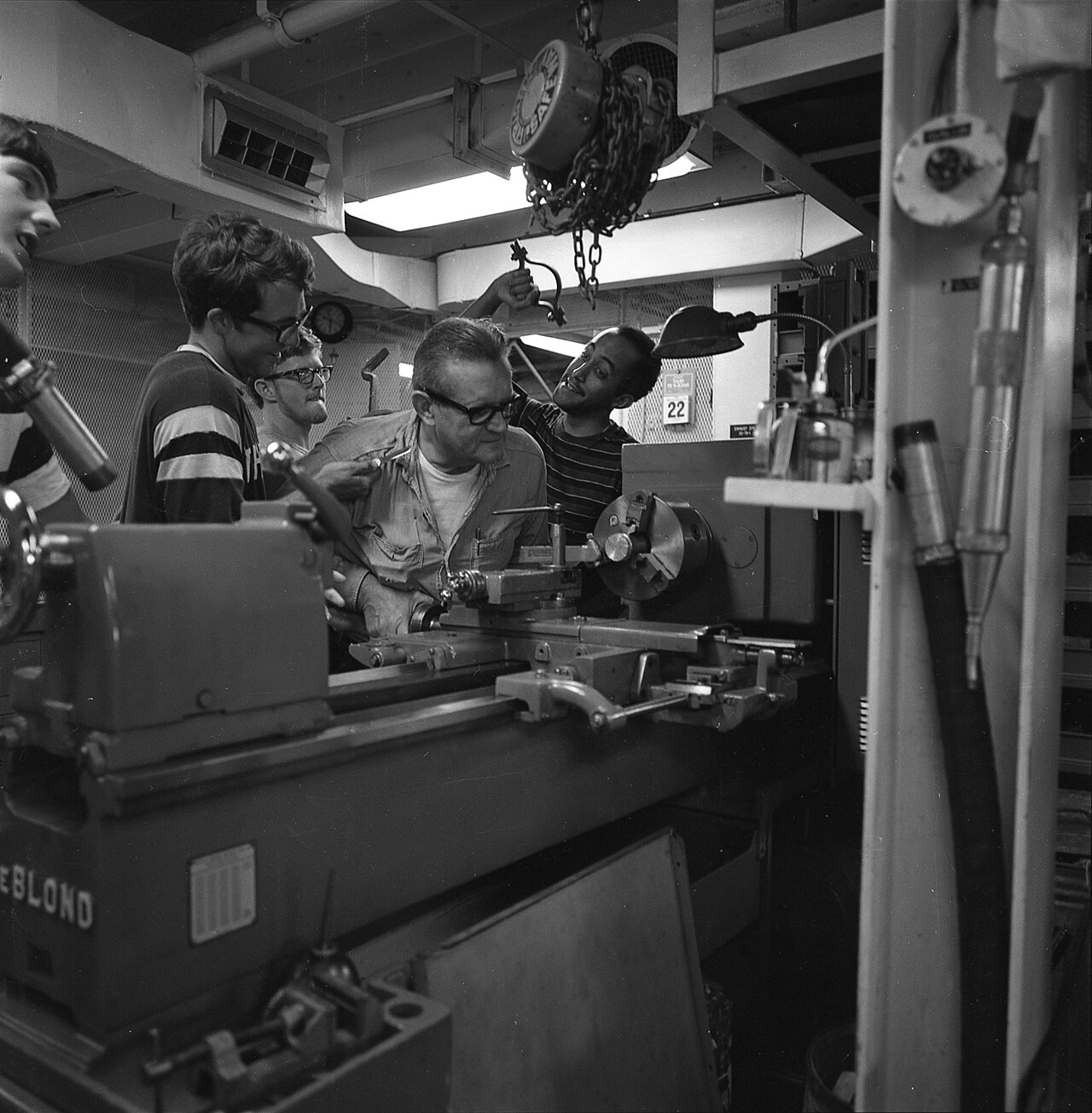
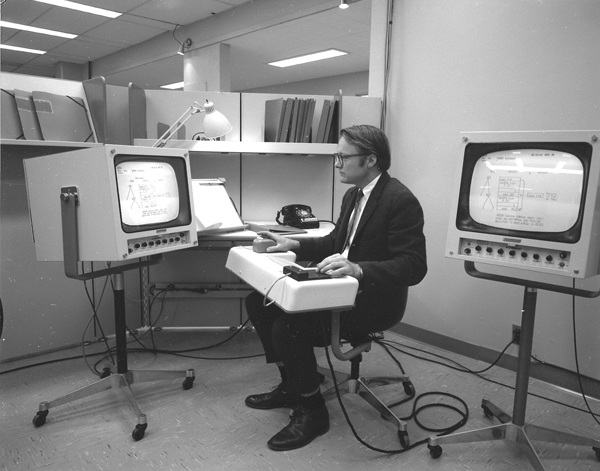
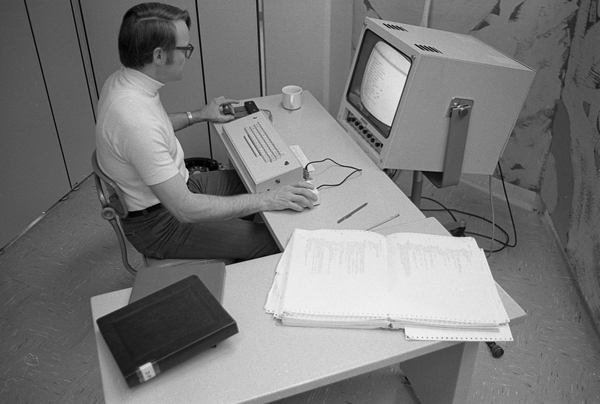
Credit Line: AIP Emilio Segrè Visual Archives, Gift of Bill Woodward, USNS Kane · CC0
Bill English, an American computer engineer, is best known for his role in creating the first computer mouse alongside Douglas Engelbart. Born in Lexington, Kentucky, to an electrical engineer father and a homemaker mother, he attended boarding school in Arizona before studying electrical engineering at the University of Kentucky. After serving in the US Navy until the late 1950s, including postings in northern California and Japan, English joined the Stanford Research Institute in the 1960s, where he worked on magnets and built one of the first all-magnetic arithmetic units with Hewitt Crane. In 1964, he became the first person to join Engelbart’s Augmentation Research Center.
English built the initial mouse prototype in 1963 based on Engelbart’s notes and was its first user. He led a 1965 NASA-sponsored project that evaluated methods for selecting points on a computer display, with the mouse emerging as the winner. At the 1968 Mother of All Demos, English was instrumental in connecting a terminal in San Francisco to the host computer 30 miles away at SRI, also transmitting audio and video between the sites. He left SRI in 1971 for Xerox PARC, where he managed the Office Systems Research Group and developed a ball mouse, replacing the original wheels with a ball similar to a device called Rollkugel from Telefunken. In 1989, he joined Sun Microsystems to work on internationalization. English died of respiratory failure in San Rafael, California, at age 91.
Quick Facts
- Birth Name
- William Kirk English
- Birth Date
- 1929-01-27
- Birth Place
- Lexington, Kentucky, U.S.
- Death Date
- 2020-07-26
- Death Place
- San Rafael, California, U.S.
- Workplaces
- SRI International's ARC / Xerox PARC / Sun Microsystems
- Known For
- Development of the computer mouse
Facts from the source article.
Lore & Background
English served in the US Navy until the late 1950s, including postings in northern California and Japan. He then joined the Stanford Research Institute in the 1960s to work on magnets, and built one of the first all-magnetic arithmetic units with Hewitt Crane. In 1964, he was the first person to join Douglas Engelbart's lab, the Augmentation Research Center. He and Engelbart share credit for creating the first computer mouse in 1963; English built the initial prototype and was its first user, based on Engelbart's notes. English led a 1965 project, sponsored by NASA, which evaluated the best way to select a point on a computer display; the mouse was the winner. He was also instrumental at The Mother of All Demos in 1968, which showcased the mouse and other technologies developed as part of their NLS (oN-Line System). In particular, English figured out how to connect a terminal in the San Francisco Civic Auditorium to the host computer at SRI 30 miles away, and also transmitted audio and video between the locations. He left SRI in 1971 and went to Xerox PARC, where he managed the Office Systems Research Group. While working at PARC, English developed a ball mouse, in which a ball replaced the original set of wheels. It worked similarly to a moveable ball-based mouse device called Rollkugel, which had been developed by Telefunken, Germany, and was offered since 1968 as input device for their computers. In 1989, he went to work for Sun Microsystems on internationalization efforts.
Reader's Guide
English's significance lies in his direct role in creating and refining the computer mouse, a foundational input device. He built the first prototype in 1963 from Engelbart's notes and was its first user. His 1965 NASA-sponsored project validated the mouse as the best pointing device for computer displays. At the 1968 Mother of All Demos, he solved the technical challenge of connecting a remote terminal and transmitting audio and video, enabling the landmark demonstration of the mouse and NLS system. Later, at Xerox PARC, he developed the ball mouse, replacing the original wheels with a ball, a design that became standard. His work at Sun Microsystems on internationalization efforts further extended his impact. The article notes that the ball mouse worked similarly to a prior Telefunken device called Rollkugel, but does not resolve any dispute about independence or influence.
Did You Know?
- English built the first computer mouse prototype in 1963 and was its first user.
- At the 1968 Mother of All Demos, he connected a terminal 30 miles away and transmitted audio and video between locations.
- While at Xerox PARC, he developed a ball mouse that replaced the original set of wheels.
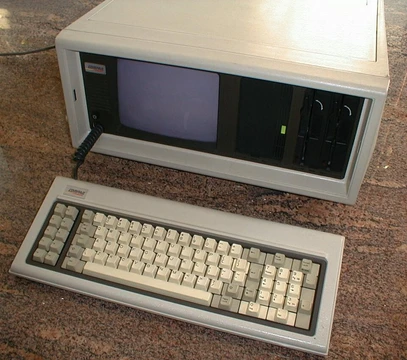
A Giant Learns to Dance: IBM's Reluctant Entry into Personal Computing
For decades, International Business Machines defined itself through large, expensive business systems, and the broader tech world assumed that identity was permanent. By the late 1970s, however, IBM's grip on the minicomputer segment was slipping while rivals like Tandy, Commodore, and Apple sold machines for mere hundreds of dollars and captured enormous popularity. The microcomputer market had ballooned to roughly fifteen billion dollars in annual sales by 1979, with projections of over forty percent yearly growth in the early 1980s. Other heavyweights—Hewlett-Packard, Texas Instruments, Data General—were already circling, and IBM's own corporate customers were quietly purchasing Apple hardware. Rumors surfaced in 1980 that IBM might build a personal computer, possibly a shrunken System/370, and Matsushita even acknowledged partnership talks before the idea was shelved. The industry response was mocking; one analyst quipped that watching IBM produce a PC would be like teaching an elephant to tap dance, a jab at the company's notorious four-to-five-year development cycles. IBM had previously shipped microcomputers such as the 1975 IBM 5100, but at a price tag approaching twenty thousand dollars, it was firmly a business tool. Entering the home and small-business arena demanded an entirely different philosophy, one that would force the company to abandon habits it had cultivated for decades.
Ron Mion's Blueprint and the Three Rules IBM Had to Break
In the summer of 1979, Ron Mion, serving as IBM's Senior Business Trends Advisor for entry-level systems, drafted a proposal arguing that the small-business computing market would expand dramatically and that IBM could not ignore it without ceding ground to Apple and Tandy. His plan hinged on three radical breaks from IBM tradition. First, manufacturing costs had to be slashed by assembling the machine from standard, off-the-shelf parts rather than proprietary IBM-designed components, making the final product competitively priced. Second, the operating system should come from a third party—Mion specifically named Digital Research's CP/M and Microsoft's MS-DOS—so that an ecosystem of independent software developers could build the applications small businesses needed to justify a purchase. Third, distribution and after-sales service should flow through independent retail resellers instead of IBM's own channels. IBM executives rejected the proposal that autumn, reaffirming the long-standing rule that every component of an IBM-branded machine must be developed, built, sold, and serviced in-house. The rejection lasted only a few months. In January 1980, Tandy's annual report revealed that 1979 TRS-80 shipments had topped one hundred thousand units, roughly fifty million dollars in revenue, validating Mion's market forecast and forcing a serious reappraisal of his strategy.
Project Chess: Breaking the Bureaucracy in Thirty Days
With Mion's ideas back on the table, IBM president John Opel appointed William C. Lowe and Philip Don Estridge to lead a new Entry Level Systems unit in Boca Raton, Florida. Market research confirmed that computer dealers were eager to carry an IBM product but demanded a design built on standard parts so their own technicians could perform repairs without shipping machines back to the manufacturer. Time pressure compounded the urgency. Atari even offered to serve as an original equipment manufacturer for an IBM microcomputer, a proposal that was ultimately rejected. Lowe instead argued for an independent internal working group that would discard every traditional IBM procedure, promising a full design within a year and a working prototype within just thirty days. That prototype, admittedly underperforming, was presented alongside a detailed business plan calling for an open architecture, non-proprietary components and software, and retail-store distribution—every element a direct contradiction of IBM's existing practices. The plan projected sales of two hundred twenty thousand machines over three years, a figure exceeding IBM's entire installed base at the time. The Corporate Management Committee was persuaded, converting the group into a formal business unit dubbed Project Chess and granting it the funding and authority to move at unprecedented speed. The team was authorized to grow to one hundred fifty members by year's end, and in a single day more than five hundred IBM employees phoned in requesting a spot on the project.
An Architecture That Outlived Its Maker: The IBM PC's Enduring Footprint
The IBM Personal Computer, model 5150, shipped on August 12, 1981, powered by an Intel 8088 processor built on the x86 instruction set. Its defining characteristic was not any single component but its philosophy: an open architecture that welcomed third-party peripherals, expansion cards, and software from a vast ecosystem of independent developers. Over the following years, that openness snowballed into what became the de facto standard for the entire personal computer industry. Throughout the 1980s, the only meaningful non-compatible competitors were Apple's Macintosh line and the consumer-oriented machines from Commodore and Atari; everything else converged on IBM PC-compatible specifications. The influence has proven remarkably durable. The vast majority of personal computers produced since 1981, and even the Intel-based Macintosh models that Apple manufactured between 2006 and 2022, share core architectural features traceable directly to the original 5150 design. In other words, the machine that emerged from a thirty-day prototype sprint in Boca Raton did not merely capture a market segment—it established the structural DNA of personal computing for the next four decades and beyond, making its 1981 release one of the most consequential product launches in technology history.
Gallery
Frequently Asked Questions
Who is Bill English (computer engineer)?
Bill English was an American engineer born in Lexington, Kentucky, in 1929, who went down in PC history as the person who physically built the first working computer mouse prototype in the 1960s.
What is Bill English most famous for in PC hardware history?
He is recognized as the co-creator of the very first computer mouse, the small box with a ball-and-wheel mechanism that turned a cursor on screen into a practical input device. He assembled that prototype at the Stanford Research Institute alongside Douglas Engelbart.
What was Bill English's career path before the mouse project?
After earning his electrical engineering degree at the University of Kentucky, he served in the US Navy through the late 1950s, seeing duty in northern California and Japan. In the 1960s he joined the Stanford Research Institute, where he worked on magnet research and helped build an early all-magnetic arithmetic unit with Hewitt Crane.
What was the division of labor between English and Engelbart on the mouse?
Engelbart provided the broader interactive-computing vision and the concept of pointing at a screen, while English handled the hands-on engineering and construction of the actual hardware. Their collaboration at SRI produced the device that later became the standard pointing input for personal computers.
When and where did Bill English die?
He passed away on July 26, 2020, in San Rafael, California, from respiratory failure, at the age of 91.
More in PC Hardware, Part 2 1-24
Spotted an error? Know more?
Reader corrections go straight into our review queue. Suggest an edit · How this site is sourced