Douglas Engelbart
Pioneer of human–computer interaction and inventor of the computer mouse.

Robert Scoble · CC BY 2.0
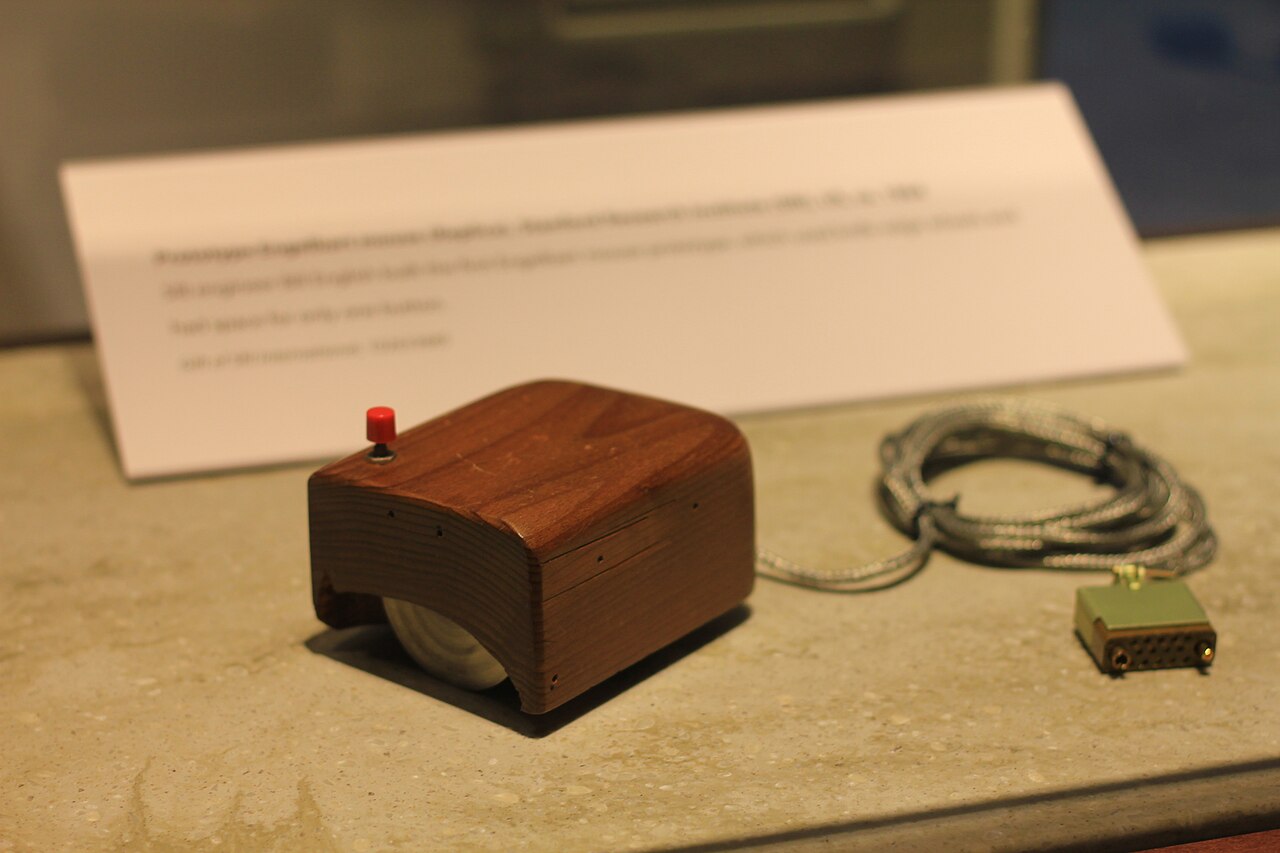
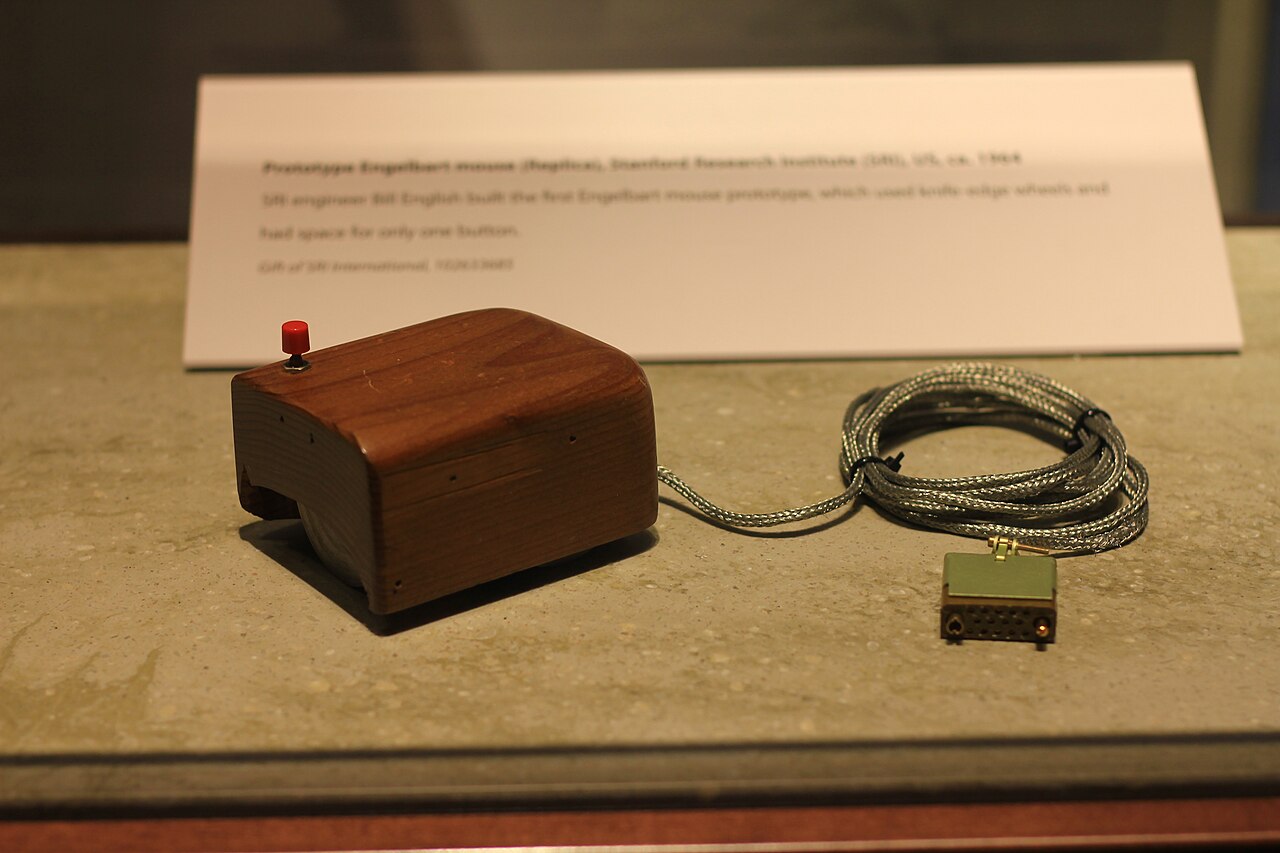
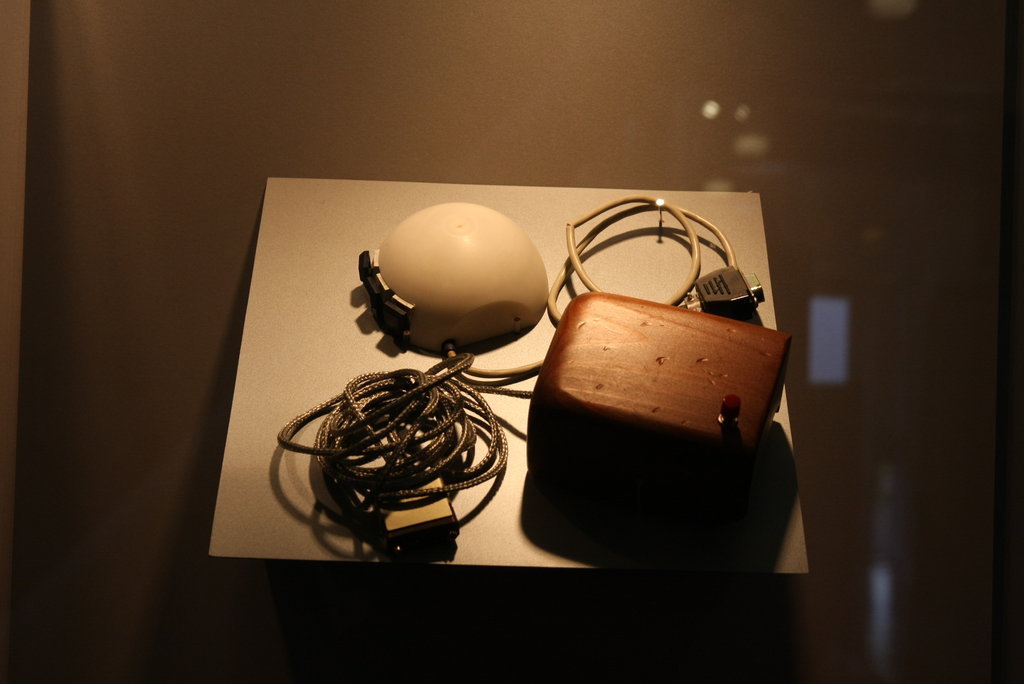
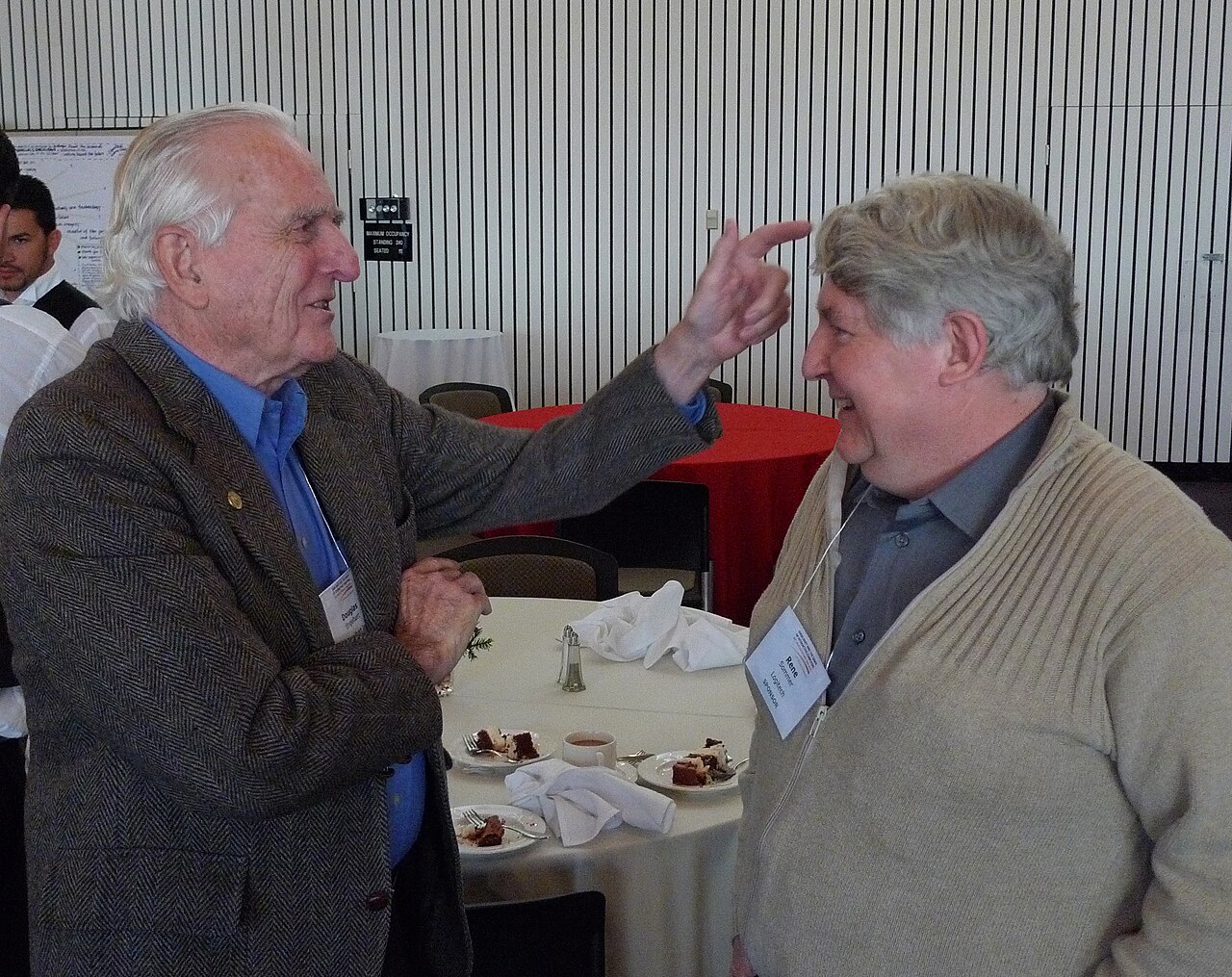
Douglas Carl Engelbart was an American engineer, inventor, and pioneer in computer science, best known for founding the field of human–computer interaction. His work at the Augmentation Research Center Lab at SRI International led to the creation of the computer mouse, hypertext, networked computers, and precursors to graphical user interfaces, demonstrated at The Mother of All Demos in 1968.
Quick Facts
- Birth Date
- 1925-01-30
- Birth Name
- Douglas Carl Engelbart
- Birth Place
- Portland, Oregon, U.S.
- Death Date
- 2013-07-02
- Death Place
- Atherton, California, U.S.
- Field
- Human–computer interaction · Inventor
- Workplaces
- SRI International · Tymshare · McDonnell Douglas · Bootstrap Institute/Alliance · The Doug Engelbart Institute
- Education
- Oregon State University (BS) · University of California, Berkeley (MS, PhD)
- Doctoral Advisor
- Paul L. Morton · John R. Woodyard
- Thesis Title
- A Study of High-Frequency Gas-Conduction Electronics in Digital Computers
- Thesis Url
- https: · www.proquest.com/docview/301923912
- Thesis Year
- 1956
Facts from the source article.
Lore & Background
Engelbart was born in Portland, Oregon, on January 30, 1925, to Carl Louis Engelbart and Gladys Charlotte Amelia Munson Engelbart. He served in the U.S. Navy as a radio and radar technician in the Philippines, where he read Vannevar Bush's article 'As We May Think', which greatly influenced his thinking. After completing his PhD at Berkeley, he worked at SRI International, founding the Augmentation Research Center (ARC). There, he and his team developed the oN-Line System (NLS), which included the computer mouse, bitmapped screens, word processing, and hypertext, all demonstrated at The Mother of All Demos in 1968. The lab was later transferred to Tymshare and then McDonnell Douglas, where Engelbart faced limited interest and funding, retiring in 1986.
Reader's Guide
Engelbart's significance lies in his foundational contributions to human–computer interaction, particularly through the development of the computer mouse, hypertext, and precursors to graphical user interfaces. His work, funded largely by ARPA (later DARPA), was showcased at The Mother of All Demos in 1968, demonstrating technologies now in widespread use. Despite receiving no royalties for the mouse, he was awarded the 1997 ACM Turing Award and the National Medal of Technology in 2000. His guiding philosophy, inspired by reading Bush's article, focused on harnessing collective human intellect through interactive computers to solve important problems. After his retirement, he and his daughter launched the Bootstrap Institute (later the Doug Engelbart Institute) to promote his vision, securing some DARPA funding to modernize Augment.
Did You Know?
- Engelbart's computer mouse was originally nicknamed 'mouse' because the tail came out the end.
- He never received royalties for the mouse; SRI licensed it to Apple Computer for about $40,000.
- Engelbart's original on-screen cursor was an upward-pointing arrow, later slanted left at Xerox PARC.
- He read Vannevar Bush's 'As We May Think' while stationed on the island of Leyte in the Philippines.
The Mother of All Demos
In 1968, Douglas Engelbart, working as a researcher at SRI, delivered a presentation that would later earn the legendary nickname "The Mother of All Demos." In that single showing, he laid out a vision of interactive computing that would not become commonplace for decades. Among the technologies he previewed were electronic mail, hypertext linking, word processing, video conferencing, and the pointing device we now call the mouse. Each of these capabilities, which Engelbart demonstrated in 1968, would go on to become indispensable fixtures of everyday professional life in the twenty-first century. The demo was not a one-off experiment; it represented the culmination of sustained research conducted within his own laboratory. By bundling these diverse tools into a single coherent demonstration, Engelbart offered the world a glimpse of what computers might do for individual thinkers long before the hardware existed to make such a vision affordable or widespread.
The Augmentation Research Center
The laboratory behind Engelbart's famous 1968 demonstration was his Augmentation Research Center, a research group whose central mission was to apply computer technology in service of creative human thought. Rather than treating the machine as a mere calculation engine for batch jobs or shared time-slicing, the center pursued a fundamentally different question: how could computing tools amplify the intellectual capacity of a single person? The Mother of All Demos was described as the culmination of the work done within this lab, meaning that the mouse, the hypertext system, the word processor, and the other tools on display were not isolated inventions but the visible fruits of a sustained research program. The center's philosophy stood in deliberate contrast to the dominant computing culture of the late 1960s, in which large, expensive machines were owned by institutions and accessed indirectly through operating staff or shared terminals. Engelbart's lab, by contrast, was oriented toward the individual mind and its creative processes.
A Vision Against the Mainframe Era
When Engelbart staged his demonstration in 1968, the computing landscape was dominated by large, costly machines owned by corporations, universities, and government agencies. The typical end user never touched the hardware directly; instead, tasks were prepared on off-line equipment such as card punches, gathered into batches, and submitted to a central computing center where results might not return for hours or even days. A somewhat more interactive alternative, time-sharing, let multiple terminals share a single mainframe processor, but the individual user still experienced the machine as a shared, mediated resource. Minicomputers such as the LINC and PDP-8 offered a step down in size and price, yet they still cost tens of thousands of dollars and occupied the space of a refrigerator. Into this world of institutional, batch-oriented, and shared computing, Engelbart's Augmentation Research Center introduced a radically different premise: that a computer could be a direct, interactive partner for one person's creative thinking.
Seeds of the Microcomputer Revolution
The tools Engelbart previewed in 1968—the mouse, word processing, hypertext, e-mail, video conferencing—would not reach a broad audience until the microcomputer revolution of the 1970s. The commercialization of the microprocessor, which consolidated arithmetic, logic, and control functions onto a single integrated circuit, dramatically slashed manufacturing costs and made individual computing systems affordable as consumer goods. Early microcomputers, often sold as electronic kits in limited quantities, initially attracted hobbyists and technicians. The Xerox Alto of 1973, a minicomputer with a graphical interface, bit-mapped high-resolution screen, and a mouse, is cited as a landmark step toward the personal computer. Engelbart's 1968 demonstration had already sketched many of the interactive capabilities that these later machines would deliver. His work thus occupies a unique position: a researcher who, in the era of mainframes and batch processing, articulated a vision of individual, interactive computing that the microprocessor would eventually make a mass-market reality.
Gallery
Frequently Asked Questions
Who is Douglas Engelbart?
Douglas Carl Engelbart (1925–2013) was an American engineer and computer scientist who essentially created the discipline of human–computer interaction. He is most widely recognized as the person who invented the computer mouse while leading research at SRI International's Augmentation Research Center.
What are Douglas Engelbart's most notable inventions?
Beyond the computer mouse (patented in 1970), Engelbart's team developed early hypertext systems, networked computing concepts, and what would become the foundation for graphical user interfaces. All of these breakthroughs were showcased publicly for the first time in his landmark 1968 presentation.
What was "The Mother of All Demos"?
It was a historic 1968 live presentation in which Engelbart and his team demonstrated the computer mouse, hypertext linking, and collaborative networked computing in real time. The talk is still regarded as one of the most influential technology demonstrations ever delivered.
What major awards did Douglas Engelbart receive?
He was honored with the ACM Turing Award in 1997 and the National Medal of Technology in 2000. Both recognitions cited his foundational contributions to how people interact with computers.
Where did Douglas Engelbart study?
He earned his bachelor's degree in electrical engineering from Oregon State University in 1948, then completed both his master's and doctoral work at the University of California, Berkeley, finishing his PhD in 1955.
More in PC Hardware, Part 2 1-24
Spotted an error? Know more?
Reader corrections go straight into our review queue. Suggest an edit · How this site is sourced