Mark Dean (computer scientist)
Co-creator of the IBM PC and developer of the ISA bus.

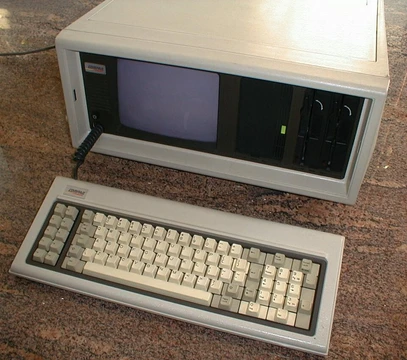
Mark Edward Dean (born March 2, 1957) is an American inventor and computer engineer. Together with Dennis Moeller, he created the ISA bus, and he headed the team that built the first one-gigahertz computer processor chip. He is one of the co-creators of the 1981 IBM personal computer, holding three of the nine PC patents related to it. In 1995, Dean became the first African-American to be named an IBM Fellow.
Quick Facts
- Birth Date
- 1957-03-02
- Birth Place
- Jefferson City, Tennessee, United States
- Education
- B.S., Electrical Engineering, 1979, University of Tennessee / M.S., Electrical Engineering, 1982, Florida Atlantic University / Ph.D., Electrical Engineering, 1992, Stanford University
- Occupation
- Computer engineer
- Organization
- IBM
- Parents
- James Dean, Barbara Dean
Facts from the source article.
Lore & Background
Dean was born in Jefferson City, Tennessee, and displayed an affinity for technology at a young age. His father, James, worked with electrical equipment for turbines and spillways and often brought him on work trips, introducing him to engineering. When Dean was young, he and his father constructed a tractor from scratch. In middle school, Dean had made up his mind on becoming a computer engineer. He attended Jefferson City High School in Tennessee, where he excelled in both academics and athletics. While in high school during the 1970s, Dean built a high-powered stereo system and a public address system for his school. He graduated with a bachelor's in electrical engineering in 1979 and soon after got a job at IBM as an engineer. His first task was to create a word processor adapter for the IBM System/23 Datamaster microcomputer. During this time, he also created the ISA bus that allowed additional components to be connected to a PC. His work got him promoted in 1982 to chief engineer of PC design, where he worked with a team to develop the IBM PC. In the same year, Dean earned his master's degree in electrical engineering. In 1999, Dean and his team developed a gigahertz microchip, the first in the world.
Reader's Guide
Dean's significance stems from his foundational contributions to personal computing. He co-created the ISA bus, which enabled the expansion of PC capabilities through additional components, and he holds three of nine patents for the IBM personal computer released in 1981. His leadership of the team that developed the first one-gigahertz processor chip marked a milestone in computing speed. As the first African-American IBM Fellow in 1995, he achieved the highest level of technical excellence at the company. His work also led to the development of the color PC monitor. Dean later served as interim dean of the University of Tennessee's Tickle College of Engineering and became a professor there. His legacy includes more than 20 patents and a lasting impact on PC architecture and processor design.
Did You Know?
- Dean and his father constructed a tractor from scratch when he was young.
- In 2000, Dean discussed a handheld device that would display media content like a digital newspaper.
- April 25 is officially Mark Dean Day in Knox County, Tennessee, as of April 26, 2019.
Ancient Foundations of Computation
Long before silicon chips or binary code, human beings were already seeking mechanical ways to ease the burden of arithmetic. The earliest tools were deceptively simple: tally sticks, notched bones like the 35,000-year-old Lebombo fibula found between Eswatini and South Africa, and small clay spheres called calculi sealed inside hollow containers to track livestock or grain in the Fertile Crescent. By around 2700–2300 BC, a form of reckoning board—later recognized as the Roman abacus—was already in use in Babylonia. What makes this era particularly striking for anyone tracing the lineage of modern hardware is the appearance of genuine mechanical logic. A Greek bronze combination lock from the Augustan or Hadrianic period could not be opened until two independent rotary dials were aligned correctly, a primitive form of conditional gating. Meanwhile, the Antikythera mechanism, dating to roughly 150–100 BC, performed astronomical calculations through interlocking gears. These devices remind us that the fundamental question—how to encode a rule into physical motion—has been asked for millennia.
The Analog Revolution and Its Limits
Before the transistor changed everything, a great deal of computing relied on representing numbers in continuous physical forms. A value might be encoded as a distance along a ruler, the angle of a rotating shaft, or a particular voltage level. This analog approach had a real advantage in simplicity: the mechanism could be relatively straightforward. The trade-off, however, was precision. Once numbers were locked into discrete digits and manipulated automatically by a mechanism, results became far more accurate, even though the underlying machinery grew considerably more complex. The Hellenistic Antikythera mechanism and the medieval astronomical clocks of Su Song and al-Jazari exemplify this analog tradition. Al-Jazari's 1206 castle clock, a hydropowered mechanical astronomical device, is often cited as the first programmable analog computer. The Banū Mūsā brothers' steam-powered automatic flute, described in their 850 treatise, may have been the earliest programmable device of any kind. These ingenious machines set the conceptual stage, but it was the shift from continuous to discrete representation that ultimately paved the way for the digital systems that would dominate the twentieth century.
The Logarithmic Leap and the Slide Rule Era
Scottish mathematician John Napier made a discovery that would reshape how humans performed multiplication and division for centuries: these operations could be reduced to the addition and subtraction of logarithms. While laboriously compiling his first logarithmic tables, Napier also designed an abacus-like aid he called 'Napier's bones,' which simplified the very multiplications he was trying to avoid. The practical fruit of his insight arrived in the 1620s with the slide rule. Edmund Gunter at Oxford built a single logarithmic scale that made arithmetic dramatically faster. William Oughtred took the next step in 1630 with a circular slide rule, then in 1632 produced the modern linear version—essentially two Gunter scales held together in the hand. For the next three centuries, generations of engineers and technically minded professionals depended on this tool for their daily calculations. It was not until the pocket calculator appeared that the slide rule finally retired, marking the end of an era in which a person's fingers, not a circuit, performed the arithmetic.
From Gears to Silicon: The Mechanical-to-Digital Bridge
Guidobaldo del Monte documented the first known use of gears for mechanical calculation in 1609, building a four-gear multiplier for fractional-degree astronomy. A decade later, Wilhelm Schickard combined a mechanized version of Napier's rods with what is considered the world's first mechanical adding machine. Yet a single-tooth gear in his carry mechanism could jam, and a fire in 1624 destroyed at least one unit; Schickard reportedly never built a replacement. Blaise Pascal, still a teenager in 1642, picked up the challenge. These mechanical pioneers established the core problem that would occupy computing for the next three centuries: how to make arithmetic reliable, fast, and compact. The answer finally arrived with transistor technology and, soon after, integrated circuit chips. Metal-oxide-semiconductor large-scale integration then produced semiconductor memory and the microprocessor, which together gave birth to the miniaturized personal computer in the 1970s. By the 1990s, PCs were ubiquitous; by the 2000s, smartphones and tablets had carried the same digital logic into every pocket.
Gallery


Frequently Asked Questions
Who is Mark Dean (computer scientist)?
Mark Edward Dean is an American computer engineer and inventor born on March 2, 1957, in Jefferson City, Tennessee. He is best known as one of the people behind the original 1981 IBM personal computer, holding three of that machine's nine foundational patents.
What is Mark Dean's connection to the ISA bus?
Along with Dennis Moeller, Dean designed the Industry Standard Architecture (ISA) bus, which became the dominant expansion-bus standard for PCs through the 1980s and 1990s. The bus let add-on cards talk to the motherboard and was a cornerstone of early PC hardware architecture.
What role did Mark Dean play in creating the IBM PC?
Dean was part of the team that developed the first IBM personal computer in 1981 and holds three of the nine patents tied to that system. His work on the machine's architecture helped define the expandability and form factor that made the PC a commercial success.
Why is Mark Dean important to PC hardware history?
He co-created the ISA bus and contributed to the original IBM PC, two milestones that shaped how personal computers were built and expanded for decades. He also led the team that produced the first one-gigahertz processor chip, pushing clock speeds to a new level.
What "firsts" or milestones is Mark Dean associated with?
In 1995, Dean became the first African-American to receive IBM's highest technical honor, the IBM Fellow designation. He was elected to the National Academy of Engineering in 2001, and over his career he has accumulated more than twenty patents.
More in PC Hardware, Part 2 1-24
Spotted an error? Know more?
Reader corrections go straight into our review queue. Suggest an edit · How this site is sourced