Adam Osborne
Creator of the first commercially successful portable computer.

Adam Osborne (6 March 1939 – 18 March 2003) was a British author, software publisher, and computer designer who started several companies in the United States and elsewhere. He is most famous for creating the Osborne 1, the first portable computer to succeed commercially, which expanded the personal computer market beyond just hobbyists.
Born to British parents in Bangkok, Thailand, Osborne spent World War II in Tiruvannamalai, southern India, with his mother, where they often visited Sri Ramana Maharshi's Ashram. His father, Arthur Osborne, taught eastern religion and philosophy and lectured in English at Chulalongkorn University; the whole family spoke Tamil fluently. Osborne attended Presentation Convent School in Kodaikanal through sixth grade. In 1950, the family returned to England. From age 11, he went to a Catholic boarding school in Warwickshire, then from 1954 to 1957 attended Leamington College for Boys, a grammar school where he played chess. He earned a chemical engineering degree from the University of Birmingham in 1961 and a PhD from the University of Delaware in 1968. While living in the United States, he learned to write computer code. He worked as a chemical engineer for Shell Oil in California but was fired.
Osborne pioneered easy-to-read computer manuals, founding a company in 1972 that specialized in them. By 1977, Osborne & Associates had 40 titles. McGraw-Hill bought the company in 1979, continuing it as the imprint Osborne/McGraw-Hill. Osborne also wrote books; *An Introduction To Microcomputers* sold 300,000 copies.
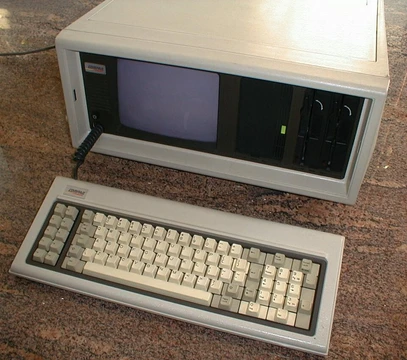
Around 1975, he regularly attended Homebrew Computer Club meetings. In April 1981, he released the Osborne 1, the first commercially available portable computer. It weighed 24.5 pounds, cost $1,795 (about half the price of comparable computers), ran the CP/M 2.2 operating system, and was designed to fit under an airline seat. At its peak, Osborne Computer Corporation shipped 10,000 units per month. Osborne understood that many buyers were not hobbyists, so the Osborne 1 came with word processing and spreadsheet software—unlike IBM, which sold operating systems, monitors, and cables separately. His industry experience gave the company credibility, and its ads compared his influence to Henry Ford's. In 1983, Osborne reportedly bragged about two advanced new computers in development, destroying demand for the Osborne 1.
Quick Facts
- Birth Date
- 1939-03-06
- Birth Place
- Bangkok, Thailand
- Death Date
- 2003-03-18
- Death Place
- Kodaikanal, India
- Field
- Computer engineering
- Workplaces
- Osborne Computer Corporation
- Education
- University of Birmingham / University of Delaware
- Known For
- Osborne 1
Facts from the source article.
Lore & Background
Osborne learned to write computer code while living in the United States. He was known to frequent the Homebrew Computer Club's meetings around 1975. His company, Osborne Computer Corporation, released the Osborne 1 in April 1981. It weighed 24.5 pounds, cost US$1795—about half the cost of comparable computers—ran the CP/M 2.2 operating system, and was designed to fit under an airline seat. The Osborne 1 included word processing and spreadsheet software, targeting buyers who were not computing hobbyists, at a time when IBM sold hardware and software separately.
Osborne's experience in the computer industry gave his new company credibility. Advertisements compared his influence on the personal computer market to Henry Ford's influence on transportation. In 1983, Osborne reportedly bragged about two advanced new computers his company was developing. These statements destroyed consumer demand for the Osborne 1, and the resulting inventory glut forced Osborne Computer to file for bankruptcy on 13 September 1983. This phenomenon became known as the Osborne effect, though some sources attribute the bankruptcy to management errors and insufficient cash flow.
After the collapse, Osborne wrote a best-selling memoir, Hypergrowth: The Rise and Fall of the Osborne Computer Corporation, with John C. Dvorak, published in 1984. He later founded Paperback Software International Ltd. in 1984, which produced inexpensive software including VP-Planner, a clone of Lotus 1-2-3. Lotus sued for copyright infringement in 1987; the court ruled in 1990 that the clone's look-and-feel menu interface violated Lotus's copyright. Osborne stepped down from Paperback Software that year. His final venture, Noetics Software, founded in 1992, focused on artificial intelligence.
Reader's Guide
Adam Osborne's significance lies in his role as a pioneer of the portable computer and his recognition of a broad market beyond hobbyists. The Osborne 1, released in April 1981, was the first commercially successful portable computer, weighing 24.5 pounds and costing US$1795—roughly half the price of comparable systems. By bundling word processing and spreadsheet software, Osborne targeted non-hobbyist users, contrasting with IBM's practice of selling components separately. His company's collapse in 1983, triggered by pre-announcement of future products, coined the term 'Osborne effect,' though the article notes that management errors and cash flow problems may have been the real causes. Osborne's later ventures in software publishing and his legal battle over software look-and-feel copyright further shaped the industry. His memoir Hypergrowth documented his company's rise and fall. He died in 2003 in Kodaikanal, India, at age 64.
Did You Know?
- Osborne was born to British parents in Bangkok, Thailand, and spent World War II in Tiruvannamalai, India.
- The Osborne 1 weighed 24.5 pounds and cost US$1795, about half the cost of comparable computers at the time.
- The 'Osborne effect'—a catastrophic drop in demand due to pre-announcement of new products—is named after his company's 1983 bankruptcy.
More in PC Hardware, Part 2 1-24
Spotted an error? Know more?
Reader corrections go straight into our review queue. Suggest an edit · How this site is sourced