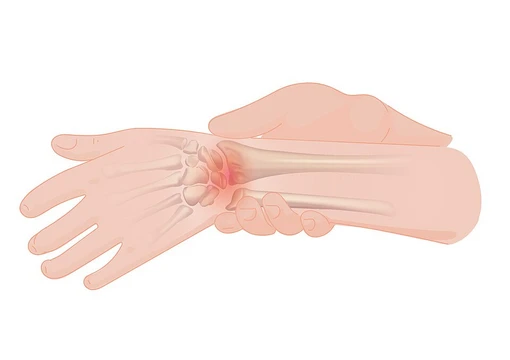
Endorphins
Endogenous peptides that block pain and promote well-being.

Endorphins (a blend of "endogenous morphine") are peptides created in the brain that dull pain perception and boost feelings of well-being. They are produced and stored in the brain’s pituitary gland, as well as in other areas such as the hypothalamus and central nervous system. Acting as the body’s natural painkillers, endorphins are often released during physical exercise or orgasm, and they help reduce pain, muscle cramps, and stress.
The discovery of opioid peptides in the brain began in 1973, when John Hughes and Hans Kosterlitz at the University of Aberdeen isolated "enkephalins" (from the Greek word 'enkephalos,' meaning 'within the head') from pig brains, identifying two forms: met-enkephalin and leu-enkephalin. This followed the discovery of a receptor thought to produce morphine’s pain-relieving effects, prompting the search for natural opioid ligands. Researchers were aiming for a painkiller without morphine’s addictive or overdose risks. Rabi Simantov and Solomon H. Snyder later found morphine-like peptides in calf brains. Eric J. Simon, who independently discovered opioid receptors, coined the term "endorphins" for any peptide with morphine-like activity. In 1976, Choh Hao Li and David Chung sequenced α-, β-, and γ-endorphin from camel pituitary glands, noting their opioid activity. Li showed β-endorphin produced strong pain relief, and in 1977 Wilhelm Feldberg and Derek George Smyth confirmed it was more potent than morphine, with its effects reversed by naloxone. Subsequent research distinguished enkephalins, endorphins, and true endogenous morphine (which is not a peptide). Opioid peptides are classified by their precursor propeptide: endorphins come from proopiomelanocortin (POMC), enkephalins from proenkephalin, and dynorphins and neoendorphins from prodynorphin.
The word "endorphin" comes from the Greek *endon* ("within," as in endogenous) and "morphine," from Morpheus, the Greek god of dreams. So it is a contraction of "endogenous morphine."
The endorphin class includes three endogenous opioid peptides: α-endorphin, β-endorphin, and γ-endorphin. All are synthesized from the precursor POMC and share a met-enkephalin motif at their N-terminus: Tyr-Gly-Gly-Phe-Met. α-endorphin and γ-endorphin are formed by proteolytic cleavage of β-endorphin between specific residues. α-endorphin is the shortest, β-endorphin the longest.
- Field
- Neuroscience, Biochemistry
- Known for
- Endogenous opioid peptides that block pain and increase well-being
- Types
- α-Endorphin, β-endorphin, γ-endorphin
- Precursor protein
- Proopiomelanocortin (POMC)
- Discovery year
- 1973
- Discoverers
- John Hughes and Hans Kosterlitz
Lore & Background
Opioid peptides in the brain were first discovered in 1973 by investigators at the University of Aberdeen, John Hughes and Hans Kosterlitz. They isolated 'enkephalins' from pig brain, identified as met-enkephalin and leu-enkephalin. This came after the discovery of a receptor that was proposed to produce the pain-relieving analgesic effects of morphine and other opioids, which led Kosterlitz and Hughes to their discovery of the endogenous opioid ligands. Research during this time was focused on the search for a painkiller that did not have the addictive character or overdose risk of morphine.
Rabi Simantov and Solomon H. Snyder isolated morphine-like peptides from calf brain. Eric J. Simon, who independently discovered opioid receptors, later termed these peptides as endorphins. This term was essentially assigned to any peptide that demonstrated morphine-like activity. In 1976, Choh Hao Li and David Chung recorded the sequences of α-, β-, and γ-endorphin isolated from camel pituitary glands for their opioidergic activity. Li determined that β-endorphin produced strong analgesic effects. Wilhelm Feldberg and Derek George Smyth in 1977 confirmed this, finding β-endorphin to be more potent than morphine. They also confirmed that its effects were reversed by naloxone, an opioid antagonist.
Reader's Guide
Endorphins are significant as the body's natural painkillers, playing a major role in the inhibitory response to pain. They are released from the pituitary gland, typically in response to pain, and act in both the central and peripheral nervous systems. In the peripheral nervous system, β-endorphin inhibits transmission of pain signals by binding μ-receptors of peripheral nerves, blocking release of neurotransmitter substance P. In the central nervous system, the mechanism works by blocking gamma-aminobutyric acid (GABA), which increases production and release of dopamine, a neurotransmitter associated with reward learning. Research has demonstrated that meditation and laughter can trigger endorphin release, and vigorous aerobic exercise may contribute to the phenomenon known as 'runner's high,' though experimental blockade of the mu opioid receptor has shown that endorphins are not strictly necessary for exercise-induced euphoria, with endocannabinoids suggested as more likely contributors. Endorphins may partially mediate exercise-induced analgesia.
Did You Know?
- The word endorphin is a contraction of 'endogenous morphine'.
- Endorphins are produced and stored in the pituitary gland of the brain.
- β-endorphin was found to be more potent than morphine in producing analgesic effects.
- All endorphins are synthesized from the precursor protein proopiomelanocortin (POMC).
More in Pain 1-24
Spotted an error? Know more?
Reader corrections go straight into our review queue. Suggest an edit · How this site is sourced