Bertolotti's syndrome
A congenital cause of chronic low back pain often missed.

Jmarchn · CC BY-SA 3.0
Bertolotti's syndrome is a clinical condition characterized by chronic low back pain caused by lumbosacral transitional vertebrae (LSTV). It is named after Mario Bertolotti, an Italian physician who first described the syndrome in 1917. The syndrome is congenital but typically becomes symptomatic in a person's later twenties or early thirties, though earlier onset is possible.
- Named after
- Mario Bertolotti
- First described
- 1917
- Field
- Medicine
- Condition type
- Congenital lumbosacral anomaly
- Primary symptom
- Chronic low back pain with buttock pain
- Key distinction
- LSTV is anatomical; Bertolotti's syndrome requires clinical confirmation of causality
Lore & Background
Mario Bertolotti, an Italian physician, first identified the syndrome in 1917, linking low back pain to lumbosacral transitional vertebrae. The condition involves sacralization of the lowest lumbar vertebra or lumbarization of the uppermost sacral segment, leading to an enlarged transverse process that may contact the sacrum or ilium. This altered anatomy restricts motion at the lumbosacral junction, causing compensatory strain on upper segments and potential disc degeneration.
Reader's Guide
Bertolotti's syndrome is significant because it is a commonly missed cause of chronic low back pain, often leading to prolonged patient suffering and ineffective treatments. The distinction between asymptomatic LSTV and symptomatic Bertolotti's syndrome is clinically crucial, as many individuals with LSTV never experience pain. Diagnosis requires careful patient history and imaging such as X-ray, CT, or MRI, often supplemented by diagnostic injections to confirm the causal link. Treatment ranges from physical therapy and steroid injections to surgical resection or fusion in refractory cases. The condition highlights the importance of precise diagnosis in back pain management.
Did You Know?
- Bertolotti's syndrome is named after Italian physician Mario Bertolotti, who first described it in 1917.
- The presence of lumbosacral transitional vertebrae (LSTV) is an anatomical observation, while Bertolotti's syndrome is a clinical diagnosis requiring proof that the LSTV causes pain.
- Pain can arise from arthritis of a pseudo-articulation, radiculopathy from nerve compression or inflammation, or disc herniation at L4-L5 due to altered biomechanics.
Anatomy vs. Disease: The Critical Distinction
Bertolotti's syndrome carries a name that traces back to 1917, when Italian physician Mario Bertolotti first described the condition. Though the underlying lumbosacral transitional vertebra is a congenital anatomical variant present from birth, most affected individuals do not experience symptoms until their late twenties or early thirties, with only a handful of cases surfacing at a considerably younger age.
The most consequential point for any clinician or patient to understand is that spotting a transitional vertebra on a scan is not the same as diagnosing Bertolotti's syndrome. The former is a purely anatomical observation; the latter is a clinical determination that this specific bony variant is the definitive source of a patient's chronic low back pain and related symptoms. Because a large share of people who carry this transitional anatomy never develop any symptoms at all, simply identifying the vertebra on imaging is insufficient. Proving a causal link demands a rigorous combination of advanced imaging and diagnostic injections. This evidentiary bar is the principal reason the syndrome is so often missed, leaving patients to endure months or years of misdirected treatments aimed at other suspected pain sources.
How the Transitional Vertebra Breaks Down
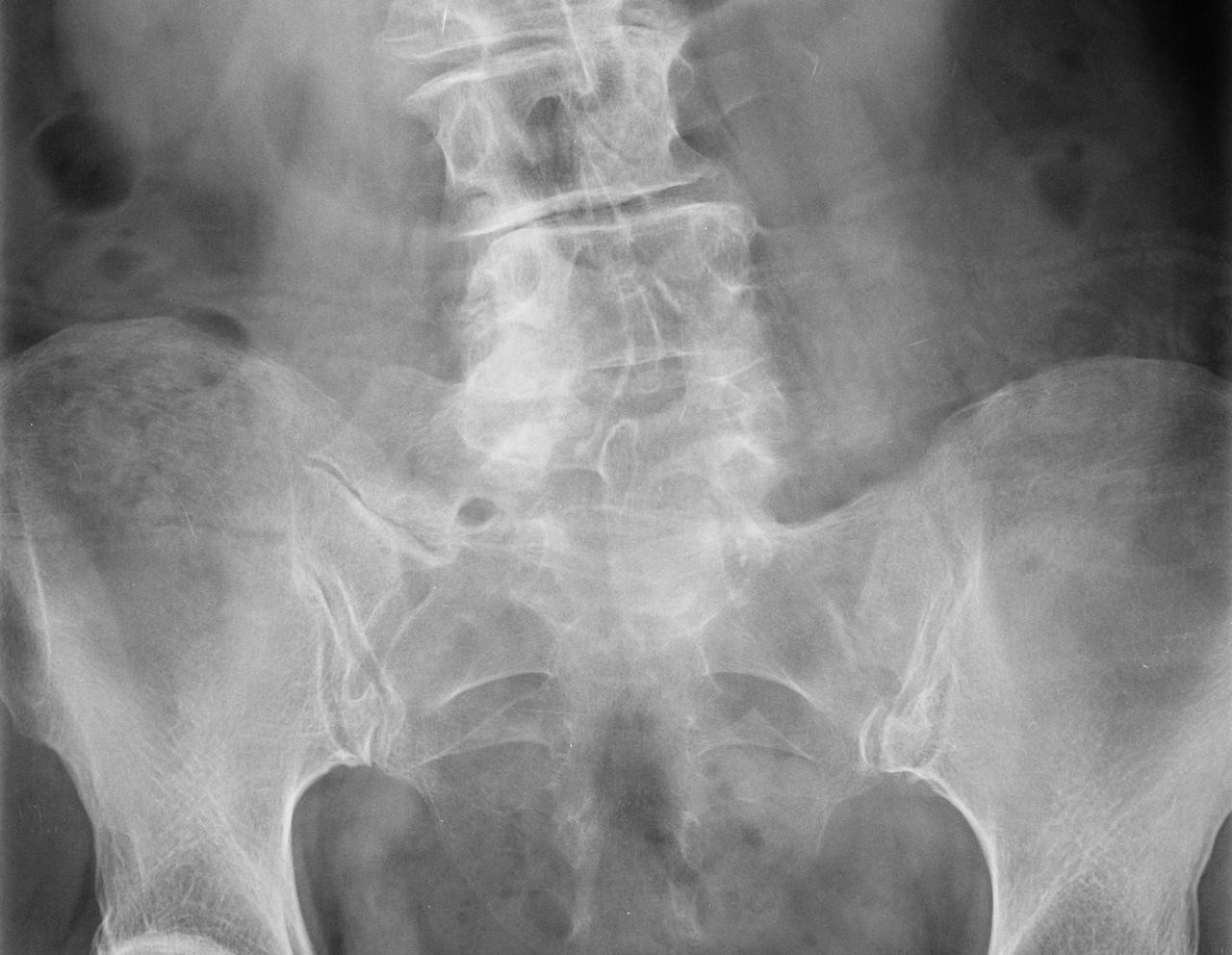
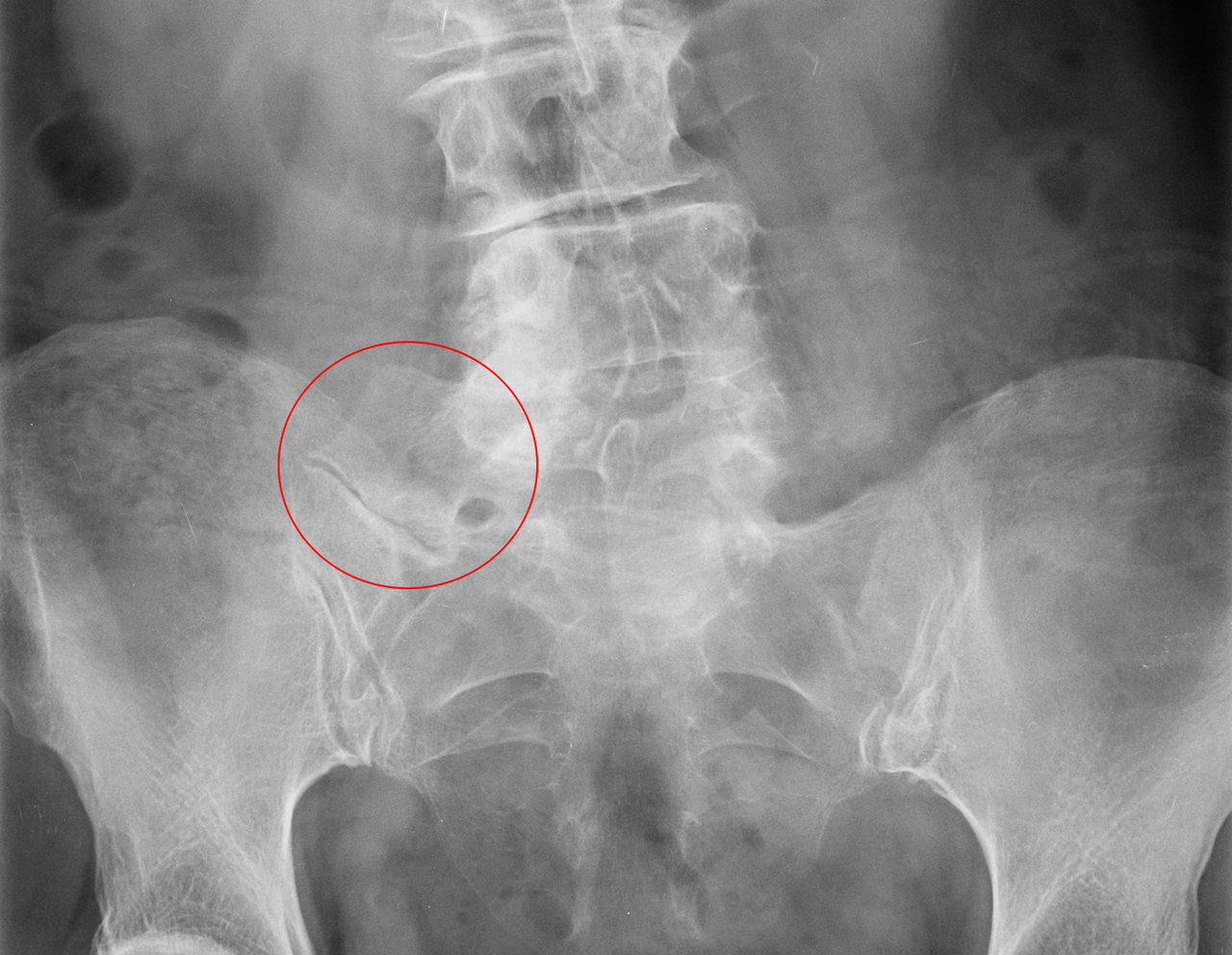
At its core, Bertolotti's syndrome involves the sacralization of the lowest lumbar vertebral body or the lumbarization of the uppermost sacral segment. In practical terms, the transverse process of the final lumbar vertebra becomes partially or fully fused to the sacrum, either unilaterally or bilaterally, creating a transitional fifth lumbar vertebra. This fusion enlarges the transverse process, which may then press against the sacrum, the iliac crest, or both, restricting normal motion at the lumbosacral junction. The body compensates by shifting mechanical load to the segments above, and over time this altered biomechanics can trigger degeneration, herniation, or fissuring of the L4 disc. Scoliosis is also frequently seen alongside these changes.
Pain in affected patients typically manifests as a persistent, aching low back pain radiating into the buttock. The direct mechanical culprits include arthritis at the pseudo-articulation seen in types II and IV, where bone-on-bone contact produces grinding, inflammation, and osteophyte buildup. Radiculopathy—pain shooting down the leg—can arise from direct compression of the L5 nerve root by the enlarged process, from inflammatory irritation caused by osteophytes, or from hypermobility at L4-L5 that precipitates a disc herniation.
Mapping the Variations: Classification Systems
Understanding the precise morphology of a transitional vertebra is essential for both diagnosis and treatment planning, and two major classification schemes have shaped how clinicians describe these variants. The original Castellvi classification, developed by Antonio Castellvi, identified seven distinct types of lumbosacral transitional vertebra. However, Castellvi designed this framework specifically to assess disc herniation risk, not to characterize Bertolotti's syndrome patients per se, which limits its direct clinical utility for this condition.
In 2023, Dr. Arthur Jenkins published a revised system tailored more directly to the syndrome. The Jenkins Classification organizes variants into four primary types with detailed subclassifications. Type 1 describes a dysplastic transverse process with a gap between 2 and 10 millimeters across the lumbosacral junction. Type 2 involves a pseudo-articulation where the gap is under 2 millimeters. Type 3 represents complete fusion lateral to the facet at the ala, without spontaneous fusion of the disc or facet joints. Type 4 captures the mixed scenario of a unilaterally fused side paired with varying degrees of pseudoarticulation on the opposite side. Each type carries further designations for left or right prominence, unilateral versus bilateral involvement, and whether the enlarged process makes contact with the iliac crest.
From Diagnosis to Resolution: The Clinical Pathway
Confirming Bertolotti's syndrome requires a careful integration of patient history with targeted imaging. Lumbosacral spine radiographs and CT scans of the lumbar region help identify the skeletal abnormality and visualize the bone deformity in detail, while MRI is employed to confirm whether disc pathology is present. Because the condition is commonly missed, the diagnostic process often involves ruling out other sources of chronic low back pain before the transitional vertebra is definitively implicated.
Once a diagnosis is established, treatment follows a stepwise approach. Conservative measures form the first line of defense: steroid injections into the lower back, radiofrequency sensory ablation to interrupt pain signaling, and structured physical therapy focused on mobilization, neural stretching, and core strengthening exercises. These interventions are particularly helpful in earlier or milder presentations.
Surgical intervention is reserved as a last resort when all conservative methods have failed. The operative options include posterolateral fusion combined with resection of the offending anatomy, or resection of the enlarged transverse process alone. The choice between these approaches depends on the specific morphological type and the degree of associated degeneration.
Gallery
Frequently Asked Questions
Who is Bertolotti's syndrome?
Bertolotti's syndrome is a congenital lumbosacral anomaly that produces chronic low back and buttock pain, named after Italian physician Mario Bertolotti who first described it in 1917. It is present from birth but typically stays asymptomatic until the late twenties or early thirties, though earlier onset is possible.
What are Bertolotti's syndrome's powers/role?
Its signature effect is persistent low back pain that radiates into the buttocks, driven by an extra transitional vertebra at the lumbosacral junction. A critical distinction: the anatomical variant (LSTV) alone does not qualify; clinical confirmation that the vertebra is actually the pain source is required.
Why is Bertolotti's syndrome important?
It is a frequently overlooked cause of chronic low back pain, so many patients endure years of misdiagnosis and unnecessary testing before the transitional vertebra is identified. Recognizing it helps clinicians stop blaming discs or muscles when the true structural culprit sits at the lumbosacral junction.
When was Bertolotti's syndrome first introduced to the canon?
The condition entered the medical record in 1917, when Mario Bertolotti published his description linking the lumbosacral transitional vertebra to back pain. It has since become a recognized entity in orthopedic and spine literature.
More in Pain 1-24
Spotted an error? Know more?
Reader corrections go straight into our review queue. Suggest an edit · How this site is sourced