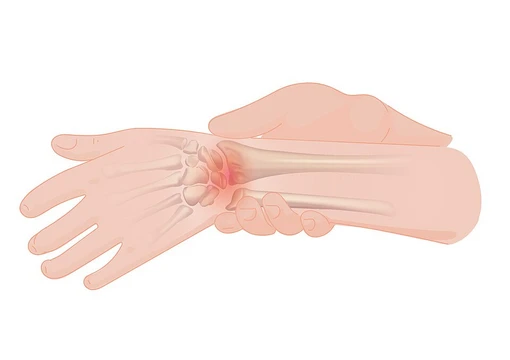
Barodontalgia
Tooth pain from pressure changes, affecting divers and pilots.

Myself User:Indolences , User:Masturbius · Public domain
Barodontalgia, also called tooth squeeze, is tooth pain triggered by shifts in surrounding pressure. The pain typically stops once the original pressure is restored. Dental barotrauma refers to actual damage to the teeth from such pressure changes.
The condition most often affects underwater divers, who experience pressure increases of several atmospheres on deep dives, and military pilots, due to rapid pressure shifts. In pilots, the pain can be severe enough to force early termination of flights. Most research on barodontalgia comes from high-altitude chamber simulations rather than real flights. In the 1940s, its prevalence ranged from 0.7% to 2%, dropping to 0.3% in the 1960s. In Luftwaffe high-altitude chamber simulations, 0.3% of cases reported barodontalgia. The Israeli Air Force recorded about one case per 100 flight-years. During World War II, roughly one in ten American aircrew members experienced at least one episode. A more recent study of 331 Israeli Air Force aircrew found that 8.2% reported at least one episode. A large epidemiologic study also suggested that barometric pressure changes can trigger or worsen various oral pains seen in dental emergency departments.
Barodontalgia is a symptom of underlying dental disease, such as an inflammatory cyst in the mandible. Most common oral pathologies have been linked to it: dental caries, defective fillings, pulpitis, pulp necrosis, apical periodontitis, periodontal pockets, impacted teeth, and mucous retention cysts. One exception is barodontalgia that occurs as referred pain from barosinusitis or barotitis-media, which are caused directly by pressure changes rather than a flare-up of a pre-existing condition. A meta-analysis of studies from 2001 to 2010 found a rate of five episodes per 1,000 flight-years. In flight, maxillary and mandibular teeth are affected equally, but in diving, the upper teeth are more often involved, suggesting maxillary sinus issues play a larger role in diving barodontalgia. Surprisingly, despite cabin pressurization, current in-flight barodontalgia rates have actually increased compared to the early 20th century, with modern studies showing 8.2% prevalence versus 0.7–2% in the 1940s. Also, even though divers experience greater pressure swings, the weighted incidence among aircrew is similar to that among divers.
Quick Facts
- Field
- Hyperbaric medicine
Facts from the source article.
Lore & Background
Barodontalgia is most commonly observed in underwater divers, due to deep dives where pressures can increase by several atmospheres, and in military pilots, because of rapid pressure changes. In pilots, the pain may be severe enough to cause premature cessation of flights. Most available data comes from high-altitude chamber simulations rather than actual flights. Prevalence was between 0.7% and 2% in the 1940s, and 0.3% in the 1960s. Cases were reported in 0.3% of high-altitude chamber simulations in the Luftwaffe. The rate was about 1 case per 100 flight-years in the Israeli Air Force. During World War II, about one-tenth of American aircrews had one or more episodes. In a recent study, 8.2% of 331 Israeli Air Force aircrews reported at least one episode.
Reader's Guide
Barodontalgia is significant as a symptom of underlying dental disease, such as dental caries, defective tooth restoration, pulpitis, pulp necrosis, apical periodontitis, periodontal pockets, impacted teeth, and mucous retention cysts. One exception is barodontalgia manifested as referred pain from barosinusitis or barotitis-media, which are generated from pressure changes rather than flare-up of pre-existing conditions. A meta-analysis of studies between 2001 and 2010 revealed a rate of 5 episodes per 1,000 flight-years. Maxillary and mandibular dentitions were affected equally in flight, but in diving, maxillary dentition was affected more, indicating a greater role for maxillary sinus pathology in diving barodontalgia. Despite cabin pressurization, current in-flight incidence is similar to the first half of the 20th century. Despite greater pressure fluctuation in divers, weighted incidence among aircrews is similar to that among divers. Contrary to common belief, the role of facial barotrauma in in-flight barodontalgia is minor (about one-tenth of cases). The Fédération dentaire internationale describes 4 classes based on signs and symptoms, with specific recommendations for therapeutic intervention.
Did You Know?
- Barodontalgia is also known as tooth squeeze.
- In diving, maxillary dentition is affected more than mandibular dentition, suggesting a greater role for maxillary sinus pathology.
- Despite cabin pressurization, current in-flight barodontalgia incidence is similar to that in the first half of the 20th century.
Epidemiology Across Populations
Barodontalgia has long been recognized as a pressure-related dental complaint affecting two primary groups: underwater divers subjected to multi-atmosphere depth changes and military pilots experiencing rapid altitude shifts. Historical prevalence data paints a shifting picture. During the 1940s, reported rates among aircrews ranged from 0.7 to 2 percent, while a comparable figure of 0.3 percent emerged from Luftwaffe high-altitude chamber simulations. By the 1960s, the rate had dropped to roughly 0.3 percent. In the Israeli Air Force, the incidence was approximately one case per hundred flight-years, and a more recent survey found that 8.2 percent of 331 aircrew members had experienced at least one episode. A meta-analysis covering studies from 2001 to 2010 estimated five episodes per thousand flight-years. Notably, despite modern cabin pressurization, current in-flight rates remain comparable to those of the early twentieth century. Equally striking, the weighted incidence among aircrews closely mirrors that of divers, even though divers endure far greater pressure swings. Contrary to popular assumption, facial barotrauma accounts for only about one-tenth of in-flight cases.
Underlying Dental Pathologies
Although barodontalgia is often described simply as a pressure-induced toothache, it is fundamentally a symptom of pre-existing dental disease. A broad spectrum of oral pathologies has been identified as potential sources, including dental caries, defective restorations, pulpitis, pulp necrosis, apical periodontitis, periodontal pockets, impacted teeth, and mucous retention cysts. An inflammatory cyst in the mandible, for instance, can manifest as barodontalgia when ambient pressure shifts. One important exception to this pattern is referred pain originating from barosinusitis or barotitis-media, conditions in which the pressure change itself generates the pathology rather than merely aggravating a pre-existing one. The site of involvement also varies by context: in flight, maxillary and mandibular dentitions are affected equally, whereas in diving the maxillary teeth are disproportionately implicated, suggesting a stronger contribution from maxillary sinus pathology in that setting. A large epidemiologic study further indicated that barometric pressure fluctuations are a trigger for the onset or worsening of diverse oral pains presenting in dental emergency departments, underscoring that pressure sensitivity is not an isolated curiosity but a clinically significant diagnostic clue.
Structural Damage and Dental Barotrauma
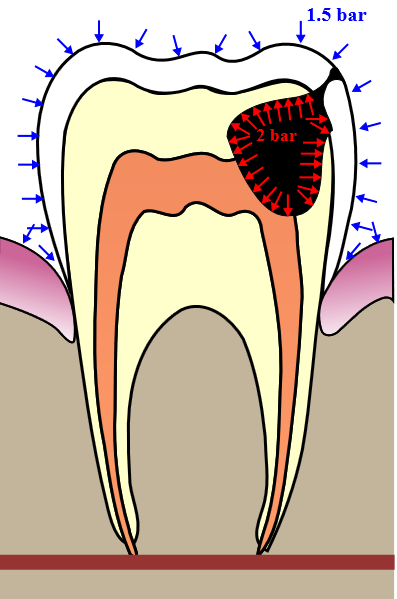
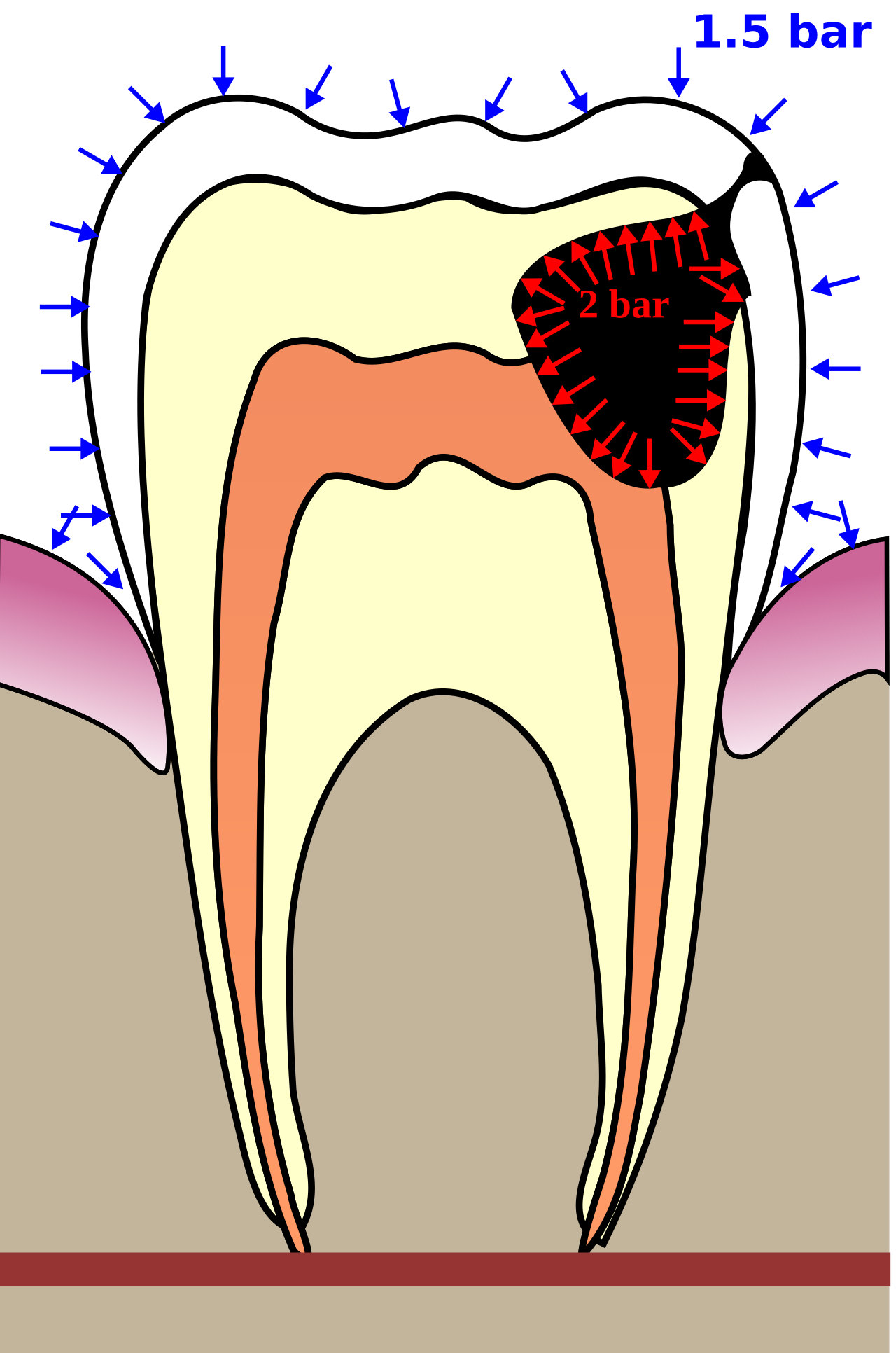
Beyond transient pain, pressure differentials can inflict genuine structural harm on the dentition, a condition termed dental barotrauma. The mechanism is mechanical: when ambient pressure rises or falls, air trapped within a void inside the tooth cannot expand or contract rapidly enough to equalize the external force. The resulting pressure differential acts on the rigid tooth structure, and in susceptible cases the induced stress is sufficient to fracture the tooth or dislodge a filling. This form of injury is most commonly encountered among underwater divers and aviators, both of whom routinely traverse significant pressure gradients during their work. For the treating clinician, the patient's report of pain specifically timed to a pressure change serves as a critical diagnostic indicator pointing toward an underlying void or structural weakness. Management is directed at eliminating the trapped-air space. Depending on the extent of damage, this may involve carefully replacing the offending restoration, repeating endodontic treatment, or, in the most severe cases, extracting the affected tooth entirely.
Classification and Clinical Framework
The Fédération dentaire internationale has established a four-class system for barodontalgia, organizing the condition according to observable signs and symptoms and pairing each class with specific therapeutic recommendations. This structured framework gives clinicians a standardized vocabulary for grading severity and selecting appropriate interventions. The practical importance of such classification is heightened by the fact that much of the available evidence on barodontalgia derives not from real-world flights or dives but from high-altitude chamber simulations, which, while controlled, may not fully replicate the physiological stresses of actual operations. In the aviation context, the condition can be clinically significant: in some pilots, the pain is severe enough to force premature cessation of a flight, making accurate diagnosis and prompt management a matter of operational safety. The fact that the pain typically resolves once ambient pressure returns to baseline offers useful clinical reassurance, yet it does not negate the need for definitive treatment of the underlying dental pathology to prevent recurrence. The FDI classification thus serves as both a diagnostic and a treatment-planning tool in a condition that sits at the intersection of dentistry, aviation medicine, and diving medicine.
Gallery
Frequently Asked Questions
What is Barodontalgia?
Barodontalgia, commonly nicknamed "tooth squeeze," is a sharp tooth pain that arises when the ambient pressure around a person's body shifts. The discomfort generally fades once the pressure returns to its original level.
Who is most at risk for Barodontalgia?
The condition primarily strikes deep-sea divers, who endure multi-atmosphere pressure increases, and military pilots, who face rapid pressure swings during ascent and descent.
Can Barodontalgia end a pilot's flight?
Yes. In some cases the pain becomes so intense that a pilot is forced to abort the mission and land early.
How has the prevalence of Barodontalgia changed over time?
In the 1940s roughly 0.7–2 percent of pilots reported it, the figure dropped to about 0.3 percent by the 1960s, yet a modern Israeli Air Force study now puts in-flight incidence at 8.2 percent—well above mid-century rates.
What is the difference between Barodontalgia and dental barotrauma?
Barodontalgia is the pain sensation caused by pressure fluctuation, whereas dental barotrauma refers to genuine structural damage to the tooth itself resulting from those same pressure changes.
More in Pain 1-24
Spotted an error? Know more?
Reader corrections go straight into our review queue. Suggest an edit · How this site is sourced