Automated Pain Recognition
Objective pain measurement via machine learning and multimodal signals.

Sascha Gruss · CC BY-SA 4.0
Automated Pain Recognition (APR) is an interdisciplinary research area and method for objectively measuring pain, combining elements of medicine, psychology, psychobiology, and computer science. It focuses on computer-aided, machine-learning-based recognition of pain, enabling valid and reliable detection and monitoring in people who cannot communicate verbally.
- Field
- Interdisciplinary (medicine, psychology, psychobiology, computer science)
- Known for
- Automated, machine-learning-based pain recognition from physiological and behavioral signals
- Method
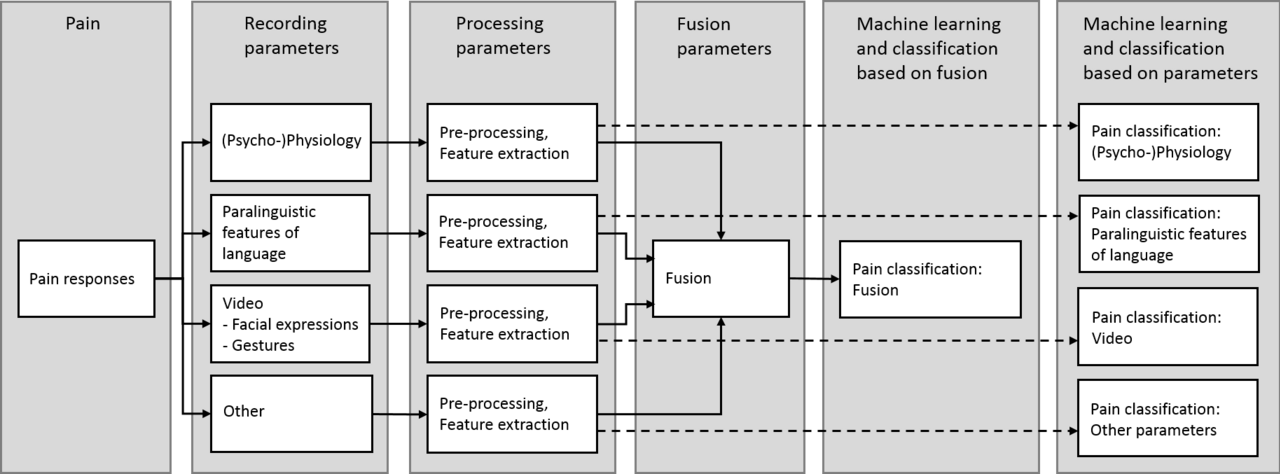
- Non-invasive sensors (camera, audio, biopotential) and machine learning classifiers (SVM, RF, k-NN, ANN)
- Application
- Pain assessment in verbally or cognitively impaired, sedated, or mechanically ventilated patients
- Controversy
- Critics argue pain diagnosis can only be performed subjectively by humans
Lore & Background
Automated Pain Recognition emerged to address limitations in traditional pain assessment for patients unable to self-report, such as those with cognitive impairment or under sedation. Existing observational tools like the Zurich Observation Pain Assessment and Pain Assessment in Advanced Dementia Scale require specialist expertise and are prone to observer misjudgment, and cannot provide continuous high-resolution monitoring. APR aims to use valid, robust pain response patterns recorded multimodally for temporally dynamic, automated pain intensity recognition.
Reader's Guide
The significance of Automated Pain Recognition lies in its potential to provide objective, continuous, and high-resolution pain monitoring for vulnerable populations who cannot communicate verbally. By leveraging machine learning on physiological signals (e.g., electrodermal activity, heart rate, EEG) and behavioral signals (facial expressions, gestures, paralinguistic sounds), APR could reduce reliance on subjective observer interpretation. However, clinical implementation remains controversial, with critics asserting that pain diagnosis is inherently subjective and human-dependent. The field's legacy includes the creation of specialized pain databases (e.g., UNBC-McMaster Shoulder Pain, BioVid Heat Pain) and the application of classifiers such as Support Vector Machines, Random Forests, and neural networks. Future visionary efforts aim to recognize not just pain intensity but also quality, site, and temporal course.
Did You Know?
- Automated Pain Recognition uses non-invasive sensors including cameras, microphones, and biopotential electrodes to capture pain-related signals.
- Machine learning classifiers used include Support Vector Machine, Random Forest, k-Nearest Neighbors, and Artificial Neural Networks.
- Pain databases for training are often experimental or quasi-experimental because natural pain responses are difficult to record.
- Critics argue that pain diagnosis can only be performed subjectively by humans.
The Purpose and Definition of Pain
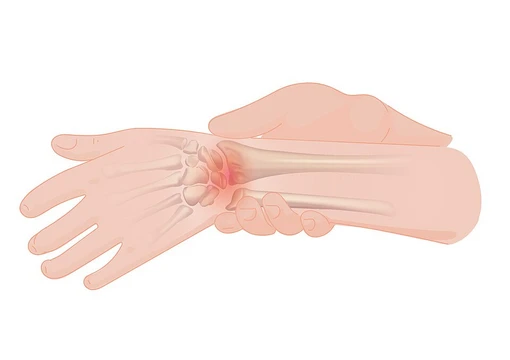
Pain is fundamentally a distressing bodily sensation triggered by intense or harmful stimuli. The International Association for the Study of Pain frames it as an unpleasant sensory and emotional experience tied to actual or potential tissue damage. Beyond mere sensation, pain serves a critical biological role: it drives animals to pull away from harmful situations, guard injured areas during recovery, and steer clear of similar threats down the line. In most instances, once the offending stimulus is gone and healing has occurred, the pain fades. Yet this is not always the case—pain can linger well after the original cause has been resolved, and in some instances it emerges with no identifiable stimulus, damage, or disease whatsoever. The word itself carries ancient weight, first appearing in English around 1297 as "peyn," tracing back through Old French "peine" to Latin "poena" (punishment, penalty) and ultimately to the Greek "poine," meaning price paid or penalty.
Taxonomy and Classification of Pain
Pain is typically sorted into three broad categories, though individual cases may blend more than one. Nociceptive pain stems from inflamed or injured tissue activating specialized sensors called nociceptors, and it splits into superficial and deep varieties—the latter further divided into deep physical and deep visceral subtypes. Neuropathic pain arises from damage or malfunction within the nervous system itself, categorized as either peripheral (originating in the peripheral nervous system) or central (rooted in the brain and spinal cord). Peripheral neuropathy is frequently described with words like burning, tingling, electrical, stabbing, or pins and needles. A third category, nociplastic pain, presents without clear evidence of tissue or somatosensory damage. In 1994, the International Association for the Study of Pain recommended clinicians describe a patient's pain using specific descriptors: the body region involved, the dysfunctional system, the duration and pattern, intensity, and the underlying cause.
Phantom Pain and Allodynia
Phantom pain—experienced in a body part that has been amputated or from which the brain no longer receives signals—represents a striking form of neuropathic pain. Among upper limb amputees, nearly 82% report it, while the figure for lower limb amputees stands at 54%. One study noted that eight days post-amputation, 72% of patients felt phantom limb pain, and six months later, 67% still did. The sensation is often described as shooting, crushing, burning, or cramping, and in some cases it accompanies urination or defecation. Prolonged continuous pain can sensitize parts of the intact body so that touching them triggers phantom-limb pain. Allodynia, a related phenomenon, is pain provoked by an ordinarily painless stimulus, classified by the type of trigger—cold, heat, touch, pressure, or pinprick—and it carries no biological function. In paraplegia, five to ten percent of patients report phantom body pain in areas of complete sensory loss, initially burning or tingling but potentially evolving into severe crushing or the sensation of fire running down the legs.
Management and the Role of Psychology
Pain is the most common reason people seek physician consultation in developed nations, and it profoundly impairs concentration, working memory, mental flexibility, problem-solving, and information processing speed, while increasing the likelihood of irritability, depression, and anxiety. Simple over-the-counter medications prove effective in roughly 20% to 70% of common acute pain cases, such as post-tooth-extraction discomfort. Psychological factors—including social support, cognitive behavioral therapy, excitement, or distraction—can meaningfully alter pain's intensity or unpleasantness. For phantom limb pain, local anesthetic injections into stump nerves may provide relief lasting days, weeks, or even permanently despite the drug wearing off within hours. Mirror box therapy creates the illusion of movement and touch in the missing limb, which can reduce pain. Vigorous vibration, electrical stimulation of the stump, or surgically implanted spinal cord electrodes also offer relief to some patients. Breakthrough pain in cancer patients, which suddenly pierces through regular medication, may require intensive opioid use including fentanyl.
Gallery
Frequently Asked Questions
What is Automated Pain Recognition?
It is a cross-disciplinary approach that leverages machine learning to detect and track pain from physiological and behavioral signals, drawing on expertise from medicine, psychology, psychobiology, and computer science.
How does Automated Pain Recognition actually work?
The pipeline captures data through non-invasive sensors such as cameras, microphones, and biopotential readers, then feeds those signals into classifiers like SVMs, random forests, k-nearest neighbors, or neural networks to flag pain states.
Who benefits most from Automated Pain Recognition?
It is primarily aimed at patients who cannot verbally report their discomfort—such as those who are sedated, mechanically ventilated, or living with cognitive or communication impairments—giving clinicians an objective window into their pain.
Why is Automated Pain Recognition controversial?
Critics argue that pain is inherently subjective and that only a human clinician can truly diagnose it, pushing back against the notion that an algorithm can replace that judgment.
Why does Automated Pain Recognition matter to the field?
It provides a continuous, objective monitoring option for populations who are otherwise left without a reliable pain-assessment tool, bridging a critical gap in clinical care.
More in Pain 1-24
Spotted an error? Know more?
Reader corrections go straight into our review queue. Suggest an edit · How this site is sourced