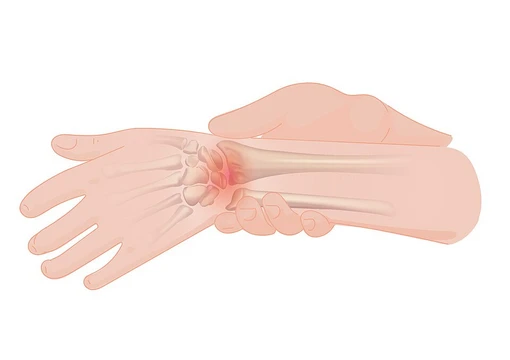
Acute (medicine)
Medical term for recent onset or short-duration disease.

Ant.ton.t · CC BY-SA 3.0
In medicine, the term 'acute' describes a disease of recent onset, occasionally denoting a short duration. The quantification of 'short' and 'recent' varies by disease and context, but the core denotation is always qualitatively in contrast with 'chronic', which denotes long-lasting disease. As a mass noun, 'acute disease' refers to the acute phase—a short course—of any disease entity.
- Field
- Medicine
- Known for
- Describing diseases of recent onset or short duration, contrasted with chronic
Lore & Background
The term 'acute' is used in medicine to denote a disease that is of recent onset; it occasionally denotes a short duration. The quantification of what constitutes 'short' and 'recent' varies by disease and by context, but the core denotation is always qualitatively in contrast with 'chronic', which denotes long-lasting disease. For example, acute leukaemia is contrasted with chronic leukaemia.
In the context of the mass noun 'acute disease', it refers to the acute phase (a short course) of any disease entity. For instance, in an article on ulcerative enteritis in poultry, the author says, 'in acute disease there may be increased mortality without any obvious signs,' referring to the acute form or phase of ulcerative enteritis.
The term is also included in the definition of several diseases, such as severe acute respiratory syndrome, acute leukaemia, acute myocardial infarction, and acute hepatitis. This is often to distinguish diseases from their chronic forms, such as chronic leukaemia, or to highlight the sudden onset of the disease, such as acute myocardial infarct.
Reader's Guide
The term 'acute' serves a fundamental role in medical classification, distinguishing conditions of recent onset or short duration from chronic, long-lasting diseases. Its meaning is context-dependent, varying by disease and clinical setting, but always maintains a qualitative contrast with 'chronic'. This distinction is critical for diagnosis, treatment, and prognosis, as acute conditions often require urgent or emergency care, while chronic conditions involve long-term management. The term appears in the names of specific diseases—such as severe acute respiratory syndrome, acute leukaemia, acute myocardial infarction, and acute hepatitis—to differentiate them from chronic forms or to emphasize sudden onset. Related concepts include acute care, which is the early and specialist management of adult patients requiring urgent or emergency care usually within 48 hours, and acute hospitals, intended for short-term medical and/or surgical treatment. The term's flexibility allows it to apply to mild conditions like a stubbed toe or acute upper respiratory infections, as well as severe diseases, underscoring its utility across the spectrum of medical practice.
The Core Meaning and Its Chronic Counterpart
In medical language, labeling a condition as acute fundamentally signals that it has appeared recently. In certain contexts the term also carries the implication of a brief course, though the precise window of time that qualifies as 'recent' or 'short' is never fixed. It shifts depending on which disease is under discussion and on the clinical setting in which the word is used. What remains constant, however, is the qualitative opposition that 'acute' sets up against 'chronic.' Where chronic describes a disease that persists over a long span, acute marks the opposite end of that spectrum. This pairing is most visible in paired diagnoses such as acute leukaemia and chronic leukaemia, where the single adjective does the heavy lifting of telling the clinician whether the blood disorder is in its rapid, newly emerged form or its protracted, long-standing one. The flexibility of the time frame means that a condition lasting a few days might be called acute in one specialty while the same duration would be considered chronic in another, underscoring that the term is relational rather than absolute.
Acute as a Naming Convention Across Diagnoses
The adjective acute does far more than describe timing; it is baked into the very names of several well-known conditions. Severe acute respiratory syndrome, acute leukaemia, acute myocardial infarction, and acute hepatitis all carry the word as a permanent part of their clinical identity. In some cases the label exists primarily to separate the condition from its chronic counterpart, as with the distinction between acute and chronic leukaemia. In others, such as acute myocardial infarction, the emphasis falls on the sudden, dramatic onset of the event rather than on a long versus short duration. At the milder end of the spectrum, everyday ailments like a stubbed toe, a bout of acute upper respiratory infection, or a case of acute gastroenteritis in an adult are all termed acute, and they typically resolve within a matter of days or a few weeks. The common thread is that the word flags a condition that has arrived suddenly and, in many of these milder instances, is expected to pass relatively quickly.
The Acute Phase as a Universal Disease Stage
Beyond individual diagnoses, 'acute disease' functions as a mass noun that points to a particular stage within any disease entity. Rather than naming a specific illness, it designates the short, early course that a condition goes through before it either resolves or transitions into a longer phase. This usage is visible in veterinary and agricultural writing as well as human medicine. For instance, a researcher describing ulcerative enteritis in poultry notes that during the acute phase of the disease, mortality can rise sharply even when the birds show no obvious outward signs of illness. The phrase 'in acute disease' in that passage is not a standalone diagnosis but a reference to the acute form or window of ulcerative enteritis specifically. This flexible, stage-based meaning allows clinicians and researchers across species and specialties to discuss the early, often most volatile period of a condition without needing to re-specify the underlying disease each time.
Acute Care: The Clinical Infrastructure Behind the Term
The concept of acuity extends well beyond diagnostic labels into the structure of healthcare delivery itself. Acute care refers to the early, specialist management of adult patients who present with a broad range of medical conditions that demand urgent or emergency intervention. This care is typically delivered within a tight window, often within forty-eight hours of the patient's admission or referral from another specialty. The hospitals built to handle this work are called acute hospitals, and their purpose is short-term medical or surgical treatment rather than long-stay rehabilitation. The medical specialty that underpins this model is acute medicine, a field that exists in part because primary care settings are frequently not equipped to take on the intensity and speed that acute presentations require. In this way, the same adjective that marks a disease as newly arrived also defines an entire tier of hospital infrastructure designed to meet that suddenness head-on.
Gallery

Frequently Asked Questions
Who is Acute (medicine)?
Acute is a medical descriptor used to label diseases that have appeared recently or are expected to resolve quickly. It functions as a classification tag rather than a standalone condition, helping clinicians distinguish brief episodes from long-standing ones.
What is Acute (medicine)'s role in the medical canon?
Its primary function is to flag a disease as having a recent onset or a short expected duration, giving healthcare providers a quick signal about the temporal nature of a condition. The exact threshold for 'short' shifts depending on which specific disease is being discussed.
How does Acute (medicine) contrast with Chronic?
Acute and Chronic serve as opposing temporal labels in medical taxonomy—Acute marks the brief, early phase while Chronic signals a prolonged, persistent state. When used as a mass noun, 'acute disease' specifically refers to that short initial course of any given illness.
Why is Acute (medicine) important to the field?
It gives clinicians a standardized shorthand to communicate how long a condition has been present and how long it is likely to last, which directly shapes treatment urgency and follow-up planning. Without this distinction, recent-onset and long-standing presentations would be conflated in diagnosis and management.
Does Acute (medicine) have a fixed definition across all conditions?
No—the precise meaning of 'recent' or 'short' flexes from one disease to another, so there is no universal time cutoff. The only constant is the qualitative contrast it draws against the chronic, long-lasting end of the spectrum.
More in Pain 1-24
Spotted an error? Know more?
Reader corrections go straight into our review queue. Suggest an edit · How this site is sourced