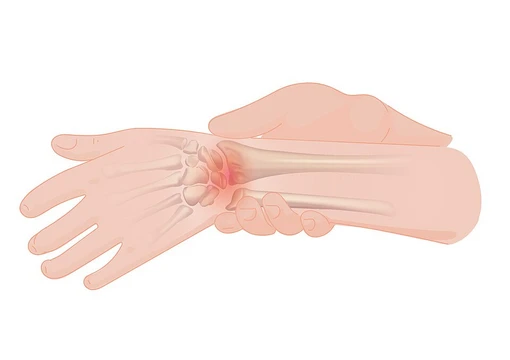
Bone pain
Pain originating from bone tissue, often dull and hard to localize.

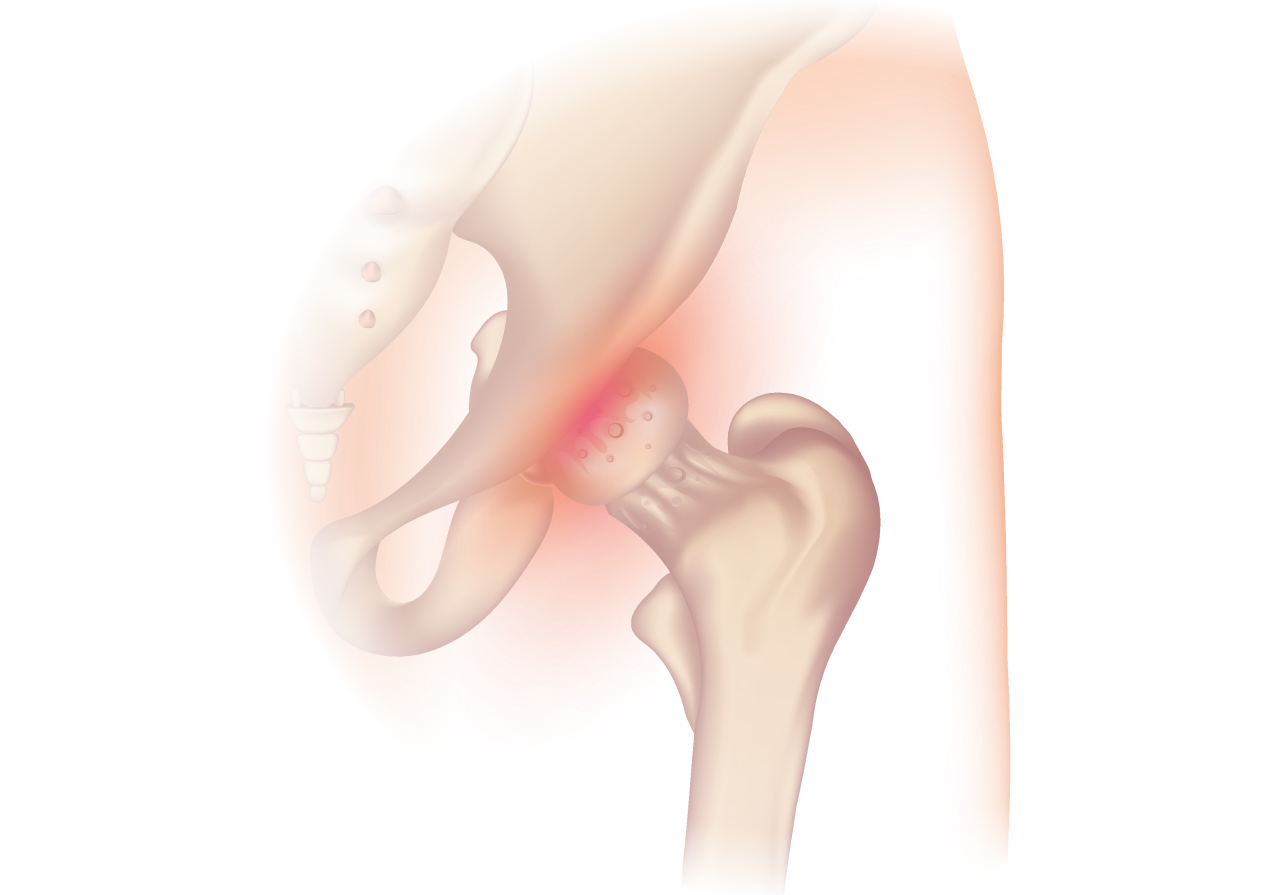
Robystarm07 · CC BY-SA 4.0
Bone pain, also referred to by various medical terms, originates from bone tissue due to harmful stimuli. It can arise from numerous diseases, physical conditions, or a combination of both, and often significantly reduces quality of life. Classified as deep somatic pain, it is typically described as a dull ache that patients find difficult to pinpoint precisely, unlike pain from superficial receptors such as those in the skin.
The outer membrane of bone, called the periosteum, is highly sensitive to pain and is a key source of discomfort in conditions like fractures and osteoarthritis. In other diseases, such as osteomalacia, osteonecrosis, and related bone disorders, the nerve supply within the inner bone lining (endosteum) and the haversian canals plays a major role. Consequently, bone pain varies in type, with many potential origins.
**Causes** Numerous diseases can lead to bone pain, including: - **Endocrine:** Hyperparathyroidism, osteoporosis, kidney failure. - **Gastrointestinal or systemic:** Celiac disease and non-celiac gluten sensitivity (often without obvious digestive symptoms), inflammatory bowel disease (Crohn’s disease and ulcerative colitis). - **Hematologic:** Cushing’s syndrome, histiocytosis, multiple myeloma, sickle cell anemia. - **Infectious:** Lyme disease, osteomyelitis. - **Neurological:** Spinal cord injury, vertebral degeneration. - **Oncologic:** Bone metastasis, oncogenic osteomalacia, leukemia. - **Rheumatic:** Ankylosing spondylitis, rheumatoid arthritis, gout. - **Other:** Fractures, osteoarthritis, Paget’s disease of bone (also called osteitis deformans).
- Field
- Medicine
- Known for
- Pain originating from bone tissue, associated with numerous diseases and conditions
- Classification
- Deep somatic pain
- Common causes
- Fractures, osteoarthritis, cancer, infection, endocrine disorders
Lore & Background
Bone pain arises from stimulation of specialized pain-sensitive nerve fibers (nociceptors) that innervate bone tissue, including both the periosteum and bone marrow. The periosteal layer is highly pain-sensitive and is an important source of pain in conditions like fractures and osteoarthritis. In certain diseases such as osteomalacia and osteonecrosis, the endosteal and haversian nerve supply plays a significant role. Bone tissue is innervated by both myelinated (A beta and A delta fiber) and unmyelinated (C fiber) sensory neurons, which together produce an initial burst of pain followed by a longer-lasting dull pain.
Reader's Guide
Bone pain is a significant clinical symptom with a wide range of causes, from physical stress to serious diseases such as cancer. Pain caused by bone cancer is considered among the worst forms of pain and has been extensively researched. Metastatic cancer cells often establish themselves in the skeleton, weakening bone matrix and leading to complications including pain. Treatment approaches include anesthetics administered within the bone, radiotherapy (including systemic radioisotope therapy for bone metastasis), and surgical treatment for fractures. Research using animal models continues to explore the neuron tissue densities in bone and mechanisms for maintenance of bone pain, with new targets such as the CB-1 receptor being investigated for potential treatments.
Did You Know?
- Bone pain belongs to the class of deep somatic pain, often experienced as a dull pain that cannot be localized accurately by the patient.
- The periosteal layer of bone tissue is highly pain-sensitive and an important source of pain in conditions like fractures and osteoarthritis.
- Pain caused by bone cancer is among the worst forms of pain and has been researched extensively using mouse femur models.
- Activation of the CB-1 receptor in mouse models has been shown to help reduce reactions associated with acute bone pain.
Anatomy of the Complaint: How Back Pain Presents
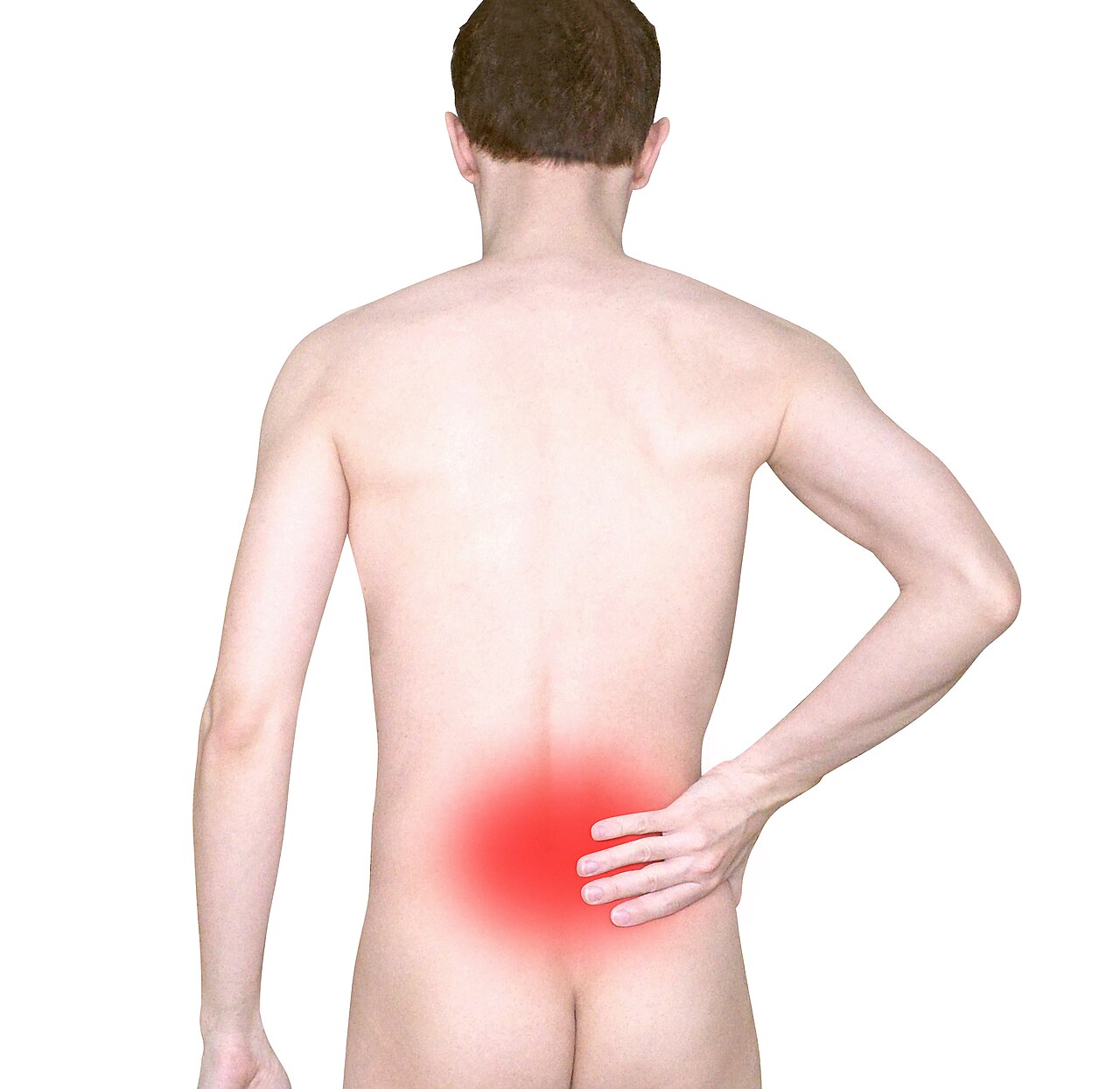
Back pain, known in medical Latin as dorsalgia, is a remarkably varied experience that can manifest across the entire posterior axis of the body. Clinicians divide it into four regional categories based on the spinal segment involved: cervical (neck), thoracic (middle back), lumbar (lower back), and coccydynia (tailbone or sacral region). Among these, the lumbar area is by far the most frequently troubled zone. Beyond location, the character of the discomfort itself varies widely—patients may describe a deep, persistent dull ache, a sharp shooting or piercing sensation, or a burning quality that seems to seep through tissue. The pain is not always confined to the back; it can travel outward into the arms and hands or downward into the legs and feet, sometimes accompanied by numbness or a loss of strength in the extremities. Duration further shapes the clinical picture: episodes lasting fewer than six weeks are termed acute, those between six and twelve weeks are subacute, and anything extending past twelve weeks crosses into the chronic category, each carrying different implications for management and prognosis.
The Diagnostic Mystery: Why Most Back Pain Has No Name
The most striking feature of back pain from a diagnostic standpoint is how often it resists explanation. Roughly nine out of every ten individuals who present with this complaint are ultimately labeled as having nonspecific, idiopathic pain, meaning that no identifiable structural abnormality or physiological cause can be pinpointed through imaging or laboratory testing. In many of these cases the trigger is a simple strain or sprain of a muscle or ligament, yet a large number of patients cannot recall any particular event or activity that set the episode in motion. In a subset of chronic cases, the mechanism appears to be central sensitization: an initial injury triggers a prolonged state in which the nervous system remains hyper-reactive to pain signals long after the tissue has healed. Management in such situations may include low-dose antidepressants alongside directed rehabilitation like physical therapy. When a cause is found, accounting for roughly ten percent of cases, it typically involves degenerative or traumatic changes to discs and facet joints. Far rarer, at under two percent, are secondary etiologies such as metastatic cancers, spinal osteomyelitis, or epidural abscesses.
A Near-Universal Experience: Prevalence and Societal Cost
Few medical conditions touch so many lives as back pain. Estimates suggest that nine in ten adults will encounter it at some stage, and some researchers push that lifetime figure as high as ninety-five percent. Among working adults, roughly half are affected in any given year. In the United States, acute low back pain ranks as the fifth most frequent reason for physician visits and accounts for approximately forty percent of all missed work days. Globally, it stands as the single leading cause of disability. Yet for the vast majority of sufferers the condition is self-limiting; most do not develop severe, unrelenting pain but instead experience persistent or intermittent discomfort that remains mild to moderate. That said, chronic back pain—defined as repeated or persistent symptoms lasting at least three months within a twelve-month window—still affects a substantial share of the population. A nationwide adult sample found that thirty-four point four percent experienced it in mild form, twenty-five point one percent in moderate form, and thirteen percent in severe or very severe form. The World Health Organization notes that about ninety percent of low back pain cases remain non-specific, with no clear structural explanation.
Structural Pathologies: When the Spine Itself Is the Culprit
When a structural cause can be identified, several distinct pathologies come into play. Spinal disc disease arises when the gel-like nucleus pulposus in the inner core of a vertebral disc ruptures, potentially compressing nearby nerve roots. The L4–L5 and L5–S1 levels are the most vulnerable, and risk is elevated in overweight individuals, in men (who face roughly double the likelihood), and in those who work night shifts or lead sedentary lives. Severe spinal-cord compression constitutes a surgical emergency, and cauda equina syndrome—characterized by progressive motor and sensory loss followed by bladder incontinence—demands immediate decompression. Degenerative conditions such as spondylosis, spondylolisthesis, and spinal stenosis (typically seen in patients over sixty) can progressively narrow the spinal canal and produce neurogenic claudication, where leg and buttock pain worsens with standing and eases with sitting. Vertebral compression fractures account for about four percent of lower-back-pain presentations, with age, female sex, osteoporosis, and chronic steroid use as key risk factors. Notably, for herniated discs and stenosis, rest, injections, and surgery yield broadly similar pain-resolution outcomes at the one-year mark.
Gallery
Frequently Asked Questions
What is bone pain?
Bone pain is a type of discomfort that originates within bone tissue itself, triggered by harmful stimuli. It is classified as a deep somatic pain and is linked to a wide range of diseases, physical conditions, or a mix of both.
How does bone pain feel compared to, say, a skin cut?
Unlike sharp, easily located surface pain, bone pain is typically a dull ache that patients struggle to pin down to one exact spot. This difficulty in localizing it is a hallmark of deep somatic pain.
What are the most common causes of bone pain?
Frequent culprits include fractures, osteoarthritis, cancer, infection, and endocrine disorders. In many cases, more than one of these factors is at play simultaneously.
Why does the periosteum matter so much in bone pain?
The periosteum is the outer membrane covering bone, and it is packed with pain-sensitive receptors. Conditions like fractures and osteoarthritis put direct stress on this layer, making it a primary source of the discomfort patients report.
How does bone pain impact a person's everyday life?
Because it is persistent, hard to pinpoint, and often tied to serious underlying conditions, bone pain can significantly reduce a person's overall quality of life. It frequently limits mobility and makes routine activities much more difficult.
More in Pain 1-24
Spotted an error? Know more?
Reader corrections go straight into our review queue. Suggest an edit · How this site is sourced