Golden Spike National Historical Park
Site of the first Transcontinental Railroad's completion in 1869.
Last updated
Where it is
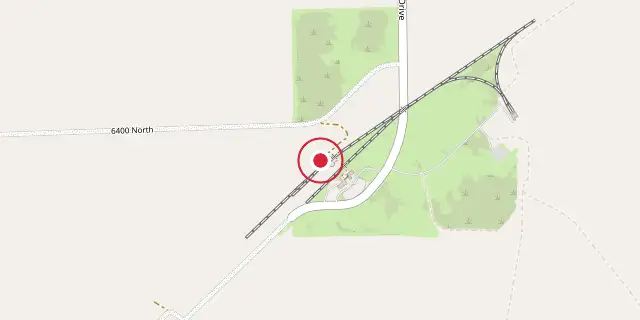
Coordinates: 41°37′05″N 112°33′07″W (41.6180, -112.5520) · Open in OpenStreetMap
Coordinates and connected clubs: the infobox of Wikipedia: Golden Spike National Historical Park (CC BY-SA 4.0). Map: drawn by Codexery from OpenStreetMap tiles.
Out on Promontory Summit in Utah, north of the Great Salt Lake, this national historical park marks the spot where the Central Pacific and Union Pacific Railroads finally linked up on May 10, 1869. The joining of the tracks, which completed the first Transcontinental Railroad, was celebrated by hammering in a special golden spike. The nearest town is Corinne, about 23 miles to the east-southeast.
Background
The park covers 2735 acres. Initially only 7 acres when established in 1957, it was limited to the area near the junction of the two rail systems. In 1965, it expanded by 2176 acres through land swaps and acquisition of a strip mostly 400 feet wide along 15.5 miles of the former railroad right-of-way. It reached its present size in 1980.
Besides the Summit site where the rails were joined, the park includes the west slope and east slope linear areas, which contain worker campsites, partially-completed grades, incomplete cuts, specialty workshops, and two historical landmarks: where the Central Pacific finished its "Ten miles of track, laid in one day" tracklaying record (west slope) and where the Big Fill and Big Trestle were completed (east slope). The line was abandoned in 1904, bypassed by the Lucin Cutoff, and the original rails were removed in 1942 for the war effort.
The site now includes 2 miles of rebuilt track from the summit area to a train storage building, designed as an authentic representation of the 1869 rails. The first monument erected at the site was a concrete obelisk built by the Southern Pacific Railroad around 1916; it has been moved several times and is now near the 1969 Visitor Center. Bernice Gibbs Anderson began writing articles about local history in 1926 and led the movement to preserve the site.
History
She was president of the Golden Spike Association of Box Elder County, which held its first re-enactment of the joining of the rails on May 10, 1952, using local volunteers organized by Judge B.C. Call from a script by Marie Thorne Jepson. Anderson urged state and federal officials to build a monument at Promontory Summit, and the site was authorized as a National Historic Site on April 2, 1957, under non-federal ownership, with the Golden Spike Association maintaining it under a cooperative agreement among the Southern Pacific Railroad and the state and federal governments.
More in National Historical Parks of the United States
Sources
Compiled from Wikipedia and the sources listed below. Text from Wikipedia is available under CC BY-SA 4.0; this entry is adapted from it.
- Wikipedia: Golden Spike National Historical Park (CC BY-SA 4.0).
Spotted an error? Know more?
Reader corrections go straight into our review queue. Suggest an edit · How this site is sourced