Klondike Gold Rush National Historical Park
Commemorates the Klondike Gold Rush across Alaska and Washington.
Last updated
Where it is
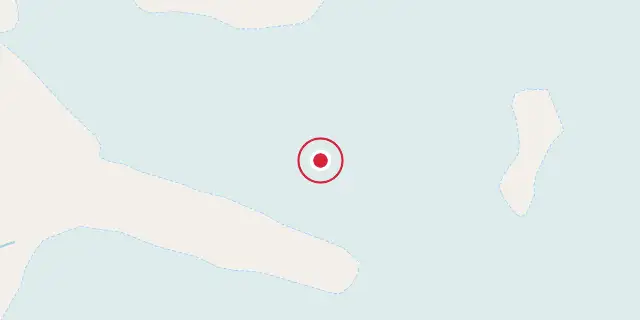
Coordinates: 59°34′30″N 135°15′50″W (59.5750, -135.2640) · Open in OpenStreetMap
Coordinates and connected clubs: the infobox of Wikipedia: Klondike Gold Rush National Historical Park (CC BY-SA 4.0). Map: drawn by Codexery from OpenStreetMap tiles.
Klondike Gold Rush National Historical Park is a United States National Park Service site commemorating the Klondike Gold Rush of the late 1890s. The park includes staging areas and routes in Alaska and Washington, while gold fields themselves were in Yukon, Canada. It is part of a binational international historical park that links sites in both countries.
Historic Skagway
The Skagway unit preserves much of the historic downtown, with buildings owned and restored by the National Park Service and others, some still leased for commercial use to evoke the city's historic bustle. The visitor center is in the railroad depot at Second and Broadway, where ranger-led or self-guided tours begin. Junior rangers can plan activities and earn badges at the Pantheon Saloon further up Broadway. The White Pass & Yukon Route Railway Broadway Depot, completed in December 1898, served as the railway's depot until the 1950s.
From 1942 to 1946, the depot, adjoining administration building, and railway were taken over by the U.S. Army Railway Operating Battalion to supply construction of the Alaska Highway, the first land route to Alaska. It was the only commercial railway in the United States taken over for this purpose.
The building transferred to the National Park Service in 1976, with restoration completed in 1984, returning its appearance to the 1908–1915 period. The White Pass & Yukon Route Railway Administration Building, completed in 1900, houses the park museum on the bottom floor and park offices upstairs. It was vacated in 1969, transferred to the National Park Service in 1976, and restored in 1984.
Seattle unit
The Seattle unit sits in the Pioneer Square Historic District, where many buildings date to the 1880s and 1890s. The 1890 Cadillac Hotel at 319 Second Avenue South served as a key outfitting and departure spot for gold rush stampeders. After the 2001 Nisqually earthquake badly damaged it, the hotel was restored from 2004 to 2005 and became the park’s interpretive center and museum, which opened on June 26, 2006. The unit’s visitor center first opened on June 2, 1979, inside the 1902 Union Trust Annex.
International Park
The idea for a joint park linking the Chilkoot Trail to the Klondike gold rush was announced by the U.S. and Canadian governments in 1969. America’s section became part of Klondike Gold Rush National Historical Park in 1976, while Canada’s side was designated Chilkoot Trail National Historic Site. The two parks were formally united in 1998, the gold rush’s centennial, as the Klondike Gold Rush International Historical Park. Each kept its original legal name, but the new title recognized years of existing cooperation and shared management.
Additional sites are also tied to the park’s interpretation: the Dawson Historical Complex National Historic Site in Dawson City, Yukon, and the Thirty Mile stretch of the Yukon River, a national heritage waterway from Lake Laberge to the Teslin River. Parks Canada considers both Dawson City and the Thirty Mile as units of the international park. Beyond this formal structure, several Yukon national historic sites relate to the gold rush: Discovery Claim, SS Keno, Dredge No. 4, SS Klondike, Yukon Hotel, Canadian Bank of Commerce, Former Territorial Court House, and Old Territorial Administration Building.
Did You Know?
- The White Pass Trail, one of two main routes used by prospectors, leads from Skagway to the headwaters of the Yukon River in British Columbia.
- The historic townsite of Dyea is part of the park; from there the Chilkoot Trail runs to Bennett Lake in British Columbia.
- A permit is required to hike the 33-mile Chilkoot Trail.
More in National Historical Parks of the United States
Sources
Compiled from Wikipedia and the sources listed below. Text from Wikipedia is available under CC BY-SA 4.0; this entry is adapted from it.
- Wikipedia: Klondike Gold Rush National Historical Park (CC BY-SA 4.0).
Spotted an error? Know more?
Reader corrections go straight into our review queue. Suggest an edit · How this site is sourced