Keweenaw National Historical Park
Preserving 7,000 years of copper mining heritage.
Last updated
Where it is
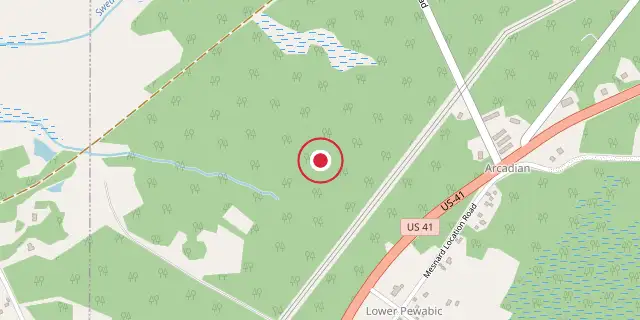
Coordinates: 47°09′22″N 88°33′50″W (47.1560, -88.5640) · Open in OpenStreetMap
Coordinates and connected clubs: the infobox of Wikipedia: Keweenaw National Historical Park (CC BY-SA 4.0). Map: drawn by Codexery from OpenStreetMap tiles.
Keweenaw National Historical Park, established in 1992, is a U.S. National Park Service unit located on the Keweenaw Peninsula in Michigan's Upper Peninsula. It is a federal-local cooperative park comprising the Calumet and Quincy units, along with nearly two dozen cooperating Heritage Sites on federal, state, and private land. The park preserves the region's unique copper mining heritage, including the oldest and largest known lava flow on Earth and the only site of prehistoric aboriginal copper mining in the country.
Copper heritage
The Keweenaw Peninsula holds the world's most extensive known deposits of native copper, occurring in relatively pure form. This red metal was worked into jewelry, tools, coins, and electric wire over approximately 7,000 years, from 5000 BCE until 1968. During the recorded period of 1840–1968, more than 11 billion pounds of copper were extracted, with peak annual production of 270 million pounds during World War I. The park's three key components—the Village of Calumet, the Calumet and Hecla Mining Company properties (including the Osceola #13 mine complex), and the Quincy Mining Company properties—together represent the social, ethnic, commercial, corporate, and extraction themes of the region's copper mining history.
Ethnic heritage
The Keweenaw Peninsula drew a wave of European immigrants from the mid-1800s into the early 1900s, all seeking work in its copper mines. By 1910, the region’s communities included French Canadians, Germans, Chinese, Irish, Cornish, Croatians, Finns, Italians, Greeks, and Syrians.
The discovery of native copper in the 1830s brought Cornish families, who introduced hard-rock mining techniques and the pasty; heritage sites like Old Victoria preserve this legacy. Later in the 1800s, many Finns—then under Russian rule—settled in the western Upper Peninsula, drawn by familiar landscapes and mining jobs. Finnish saunas still dot the area, and the Hanka Homestead site recalls their arrival.
Calumet Unit
The Calumet Unit encompasses sites in and around Calumet and Laurium, communities that survived the 1968 shutdown of the Calumet and Hecla Mining Company. The Calumet & Hecla, the richest of the Keweenaw's separate copper mines, dug shafts into rock formations laced with nearly pure copper nuggets. The towns built at the mine head reflect its productivity, with surviving structures including a 1,200-seat opera house, large churches of Lake Superior brownstone, and mansions of the mining bosses.
Heritage Sites
As of 2023, the park cooperates with 23 heritage sites. The system began in 2007 with 19 sites; in October 2013, Houghton's Carnegie Museum and the Michigan Technological University Archives were added. The A.E. Seaman Mineral Museum, named for curator Arthur Edmund Seaman (1928–1937), houses a collection established in the 19th century that grew to over 30,000 specimens, with 8,000 on display, including the world's best collection of crystallized native copper and native copper in crystallized calcite.
The Carnegie Museum in Houghton, a former Carnegie library, focuses on local history. The Calumet Theatre, built in 1899 and opened March 20, 1900, was the first municipally built theatre in the country; it hosted live performers such as Frank Morgan, Douglas Fairbanks, Sr., Lon Chaney, Sr., John Philip Sousa, Sarah Bernhardt, and Madame Helena Modjeska, converted to a movie house in the late 1920s, and brought back summer stock theatre in 1958.
Did You Know?
- The Quincy Mine shaft is 9,000 feet deep and nicknamed 'Old Reliable' for its record of paying annual dividends for decades.
- The Quincy Mine's surface hoist is the largest steam-powered hoist in the world.
- The Adventure Mining Company's mine never turned a profit despite operating from 1850 to 1920.
More in National Historical Parks of the United States
Sources
Compiled from Wikipedia and the sources listed below. Text from Wikipedia is available under CC BY-SA 4.0; this entry is adapted from it.
- Wikipedia: Keweenaw National Historical Park (CC BY-SA 4.0).
Spotted an error? Know more?
Reader corrections go straight into our review queue. Suggest an edit · How this site is sourced