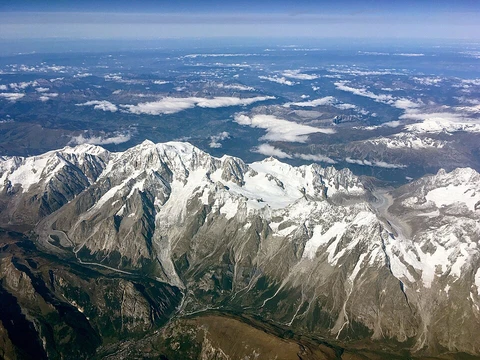
Central Mountain Range
Principal mountain range on Taiwan Island, dividing east and west coasts.

The Central Mountain Range is the principal mountain range on Taiwan Island, running from north to south and acting as a barrier between the east and west coasts, historically hindering travel across the island. Its name in English is a calque of the Chinese Zhōngyāng Shānmài or Shānmò, sometimes referred to simply as the Zhongyang. During the Qing dynasty, it was known as the Dashan, derived from the Wade–Giles romanization of the Chinese term for "Big Mountains." The tallest peak of the range proper is Mount Xiuguluan. In a broader geographical sense, the Central Mountain Range includes its conjoint ranges, such as the Xueshan Range and the Yushan Range. Under this broader definition, the tallest peak becomes Yushan (also known as Jade Mountain or Mount Morrison), with Xueshan (Snow Mountain) as the second tallest. Ecologically, the range lies within the Taiwan subtropical evergreen forests ecoregion, with forest composition varying by elevation. Lower elevations and coastal plains feature evergreen laurel-Castanopsis forests, dominated by Cryptocarya chinensis and Castanopsis hystrix, along with scattered stands of the subtropical pine Pinus massoniana. As elevation increases, evergreen broadleaf trees give way to deciduous broadleaf trees and conifers. At higher elevations, Cyclobalanopsis glauca becomes the dominant tree. Above that, deciduous broadleaf species such as Formosan alder and maple mix with Taiwan hemlock. At the highest elevations, subalpine forests are dominated by conifers including Taiwan hemlock, Taiwan spruce, and Taiwan fir.
- Location
- Taiwan Island
- Alternate names
- Central Range, Zhongyang Range, Chungyang Range, Ta-shan (Qing dynasty)
- Ecoregion
- Taiwan subtropical evergreen forests
Lore & Background
The Central Mountain Range is the principal mountain range on Taiwan Island, extending from north to south and acting as a formidable barrier that impedes travel between the east and west coasts. Its highest peak is Mount Xiuguluan. In a broader geographical sense, the range includes the adjacent Xueshan Range and Yushan Range; under this definition, the tallest peak is Yushan (also known as Jade Mountain or Mount Morrison), with Xueshan (Snow Mountain) as the second highest. During the Qing dynasty, the range was called the Ta-shan, a Wade–Giles romanization of the Chinese name Dàshān, meaning "Big Mountains." Ecologically, the range lies within the Taiwan subtropical evergreen forests ecoregion, with forest composition varying by elevation. Lower elevations and coastal plains feature evergreen laurel-Castanopsis forests, primarily Cryptocarya chinensis and Castanopsis hystrix, along with scattered Pinus massoniana pine. As elevation increases, evergreen broadleaf trees give way to deciduous broadleaf species and conifers. At higher altitudes, Cyclobalanopsis glauca becomes dominant. Above that, deciduous trees such as Formosan alder and maple mix with Taiwan hemlock. At the highest elevations, subalpine forests are dominated by conifers including Taiwan hemlock, Taiwan spruce, and Taiwan fir.
Reader's Guide
The Central Mountain Range is the primary mountain system on Taiwan Island, extending from the northern to the southern end of the island. Its most prominent role is as a natural barrier that separates the eastern and western coasts, historically making travel between them difficult. The highest peak within the range itself is Mount Xiuguluan. In a broader geographical definition, the range also includes the adjoining Xueshan Range and Yushan Range; under this inclusive view, the tallest summit becomes Yushan (also known as Jade Mountain or Mount Morrison), with Xueshan (Snow Mountain) as the second highest. Ecologically, the Central Range lies within the Taiwan subtropical evergreen forests ecoregion. The forest composition shifts markedly with altitude: lower elevations and coastal plains feature evergreen laurel-Castanopsis forests, dominated by species such as Cryptocarya chinensis and Castanopsis hystrix, along with scattered stands of the subtropical pine Pinus massoniana. As elevation increases, evergreen broadleaf trees give way to deciduous broadleaf trees and conifers. At higher elevations, Cyclobalanopsis glauca becomes the dominant tree. Above that, deciduous species like Formosan alder and maple mix with Taiwan hemlock. At the highest elevations, subalpine forests consist mainly of conifers, including Taiwan hemlock, Taiwan spruce, and Taiwan fir. Historically, during the Qing dynasty, the range was known as the Dashan, meaning "Big Mountains." Its modern name, Central Mountain Range or Central Range, is a calque of the Chinese Zhōngyāng Shānmài.
Did You Know?
- The Central Mountain Range runs from the north of Taiwan Island to the south.
- During the Qing dynasty, it was known as the Ta-shan, meaning 'Big Mountains.'
Frequently Asked Questions
What is the Central Mountain Range?
It is the dominant north-to-south mountain chain on Taiwan Island, serving as the natural divide between the island's eastern and western coastal lowlands.
What other names does the Central Mountain Range go by?
You'll also see it listed as the Central Range, Zhongyang Range, or Chungyang Range in romanized Chinese. During the Qing dynasty it carried the name Ta-shan.
What ecoregion does the Central Mountain Range belong to?
The range sits within the Taiwan subtropical evergreen forests ecoregion, meaning its slopes support dense, year-round green woodland rather than alpine tundra.
Why is the Central Mountain Range considered so important to Taiwan's geography?
Because it runs the full length of the island, it creates a hard physical barrier that keeps the wet, typhoon-battered east coast and the drier, more populated west coast in distinct climatic and cultural zones.
More in Mountain Ranges And Massifs 1-24
Related in Mountain Ranges And Massifs
Links follow this subject's own source article.
Spotted an error? Know more?
This is a living reference — every entry is fact-audited, and reader corrections feed straight into our audit queue. Suggest an edit · See this site's audit record