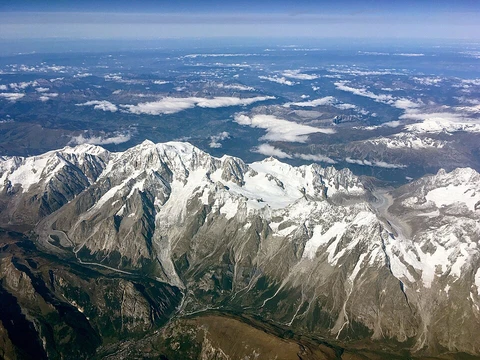
Apuseni Mountains
Mountain range in Transylvania with about 400 caves.

The Apuseni Mountains are a mountain range in Transylvania, Romania, forming part of the Western Romanian Carpathians. They are known as the "Western Mountains" in Romanian and the "Transylvanian Mountains" in Hungarian. The range is distinguished by its roughly 400 caves and its highest point, Bihor Peak, which reaches 1,849 meters. Unlike a single, continuous chain, the Apuseni Mountains are broken by many low and easy passes that lead toward the Crișana region and the Pannonian Plain. From south to north, the main groups include the Metaliferi Mountains, which contain the basaltic Detunata masses near Abrud; the Bihor Mountains, rich in caverns and home to the highest peak; the Muntele Mare group east of this, located southwest of Cluj-Napoca; and the northernmost Seș and Meseș Mountains. The geological history of the area is tied to the broader evolution of the Carpathians. Crystalline schists began forming as early as the Precambrian, becoming more defined during the Silurian due to the Caledonian orogeny and especially the Hercynian movements in the Carboniferous. Successive orogenic, volcanic, and metamorphic processes continued through the Mesozoic. The main uplift occurred during the Cretaceous period as part of the Alpine orogenesis, which also created depressions like Gurahonț and Brad that functioned as lake basins. After the Cretaceous, erosion formed platforms at lower altitudes than those in the Southern Carpathians, due to less dramatic elevation. Volcanic activity in the later Neogene shaped the Metaliferi Mountains. The range reached its final height at the start of the Quaternary, when waters receded from depressions, forming the current river network. The climate is temperate-continental with oceanic influences, with average annual temperatures between 6 and 10°C and precipitation of 700 to 1000 millimeters per year. Vegetation includes deciduous and coniferous forests above 1300 meters. The fauna is diverse, featuring red foxes, grey wolves, martens, red deer, roe deer, squirrels, and brown bears, while the Apuseni Natural Park hosts 45 mammal species and birds such as the western capercaillie, lesser-spotted eagle, golden eagle, and various woodpeckers.
- Highest peak
- Bihor Peak at 1,849 metres (6,066 ft)
- Number of caves
- about 400
- Location
- Transylvania, Romania
- Mountain range
- Western Romanian Carpathians
- Climate
- temperate-continental with transitional nuances and oceanic influences
- Average annual temperature
- between 6 and 10°C
- Annual precipitation
- 700-1000 mm/year
Lore & Background
The Apuseni Mountains have a complex paleogeographic evolution linked to the Western Carpathians. Crystalline schists began separating as early as the Precambrian period, becoming more defined in the Silurian due to the Caledonian orogeny and especially in the Carboniferous from Hercynian movements. Uplift occurred in the Cretaceous period as a result of Alpine orogenesis, accompanied by subsidence that formed depressions such as Gurahonț and Brad. Volcanic activity in the second half of the Neogene period formed the Metaliferi Mountains. The range reached its final elevation at the beginning of the Quaternary period, when waters receded from depressions and the hydrographic network formed.
Reader's Guide
The Apuseni Mountains are significant as a distinct section of the Western Romanian Carpathians, characterized by their fragmented structure and numerous caves. Their paleogeographic history reflects major orogenic events from the Precambrian through the Quaternary, including Caledonian, Hercynian, and Alpine movements, as well as Neogene volcanism. The mountains support a temperate-continental climate with oceanic influences, with average temperatures of 6–10°C and precipitation of 700–1000 mm/year. Vegetation includes deciduous and coniferous forests above 1300 m, and fauna includes red foxes, grey wolves, martens, red deer, roe deer, squirrels, and brown bears. The Apuseni Natural Park hosts 45 species of mammals and birds such as western capercaillie, lesser-spotted eagles, golden eagles, and woodpeckers. The range is bounded by the Barcău River to the north, the Mureș River to the south, the Transylvanian Plateau to the east, and the Crișana plains to the west. Its subdivisions include the Criș Mountains, Seș-Meseș Mountains, Bihor Massif, and Mureș Mountains.
Did You Know?
- The Apuseni Mountains have about 400 caves.
- The highest peak is Bihor Peak at 1,849 metres (6,066 ft).
- Volcanic activity in the second half of the Neogene period formed the Metaliferi Mountains.
- The Apuseni Natural Park is home to 45 species of mammals.
- The range is bounded by the Barcău River to the north and the Mureș River to the south.
Frequently Asked Questions
Who is Apuseni Mountains?
The Apuseni Mountains are a mountain range located in Transylvania, Romania, and they belong to the larger Western Romanian Carpathians system. In Romanian they are called Munții Apuseni ("Western Mountains"), while Hungarian speakers refer to them as the Transylvanian Mountains.
What are Apuseni Mountains's powers/role?
The range is most celebrated for its extraordinary karst landscape, which shelters roughly 400 caves of varying sizes. Its tallest point is Bihor Peak, standing at 1,849 metres (6,066 ft), and the terrain is dotted with low, easily crossed passes rather than a single imposing wall.
How does Apuseni Mountains's story end?
Instead of terminating in a dramatic cliff face, the range dissolves into a series of gentle, low-lying passes that spill westward toward the Crișana region and the Pannonian Plain. This fragmented, open topography has long served as a natural route for travellers moving between Transylvania and the plains beyond.
Why is Apuseni Mountains important?
The range anchors the western edge of the Transylvanian Basin and provides a temperate-continental climate with mild oceanic influences, keeping average annual temperatures in the 6-to-10 °C band. Its blend of hundreds of caves, moderate summits, and accessible passes makes it a central geographic and outdoor-recreation landmark in western Romania.
What is Apuseni Mountains's home base?
The range sits entirely within Transylvania, Romania, as a constituent part of the Western Romanian Carpathians. It occupies the western flank of the Transylvanian Basin, with its lower reaches opening onto the Crișana lowlands and the broader Pannonian Plain to the west.
More in Mountain Ranges And Massifs 1-24
Spotted an error? Know more?
This is a living reference — every entry is fact-audited, and reader corrections feed straight into our audit queue. Suggest an edit · See this site's audit record