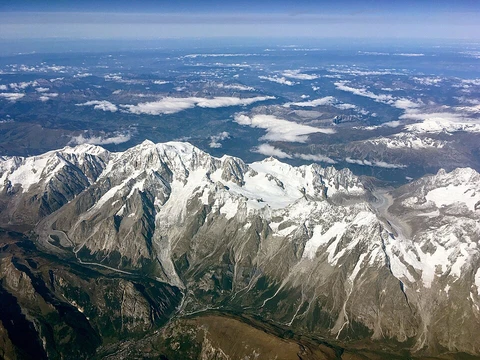
Cascade Range
Major mountain range of western North America with notable volcanoes.

The Cascade Range, a major mountain system in western North America, extends from southern British Columbia through Washington and Oregon into Northern California. It is part of the Pacific Ocean’s Ring of Fire, a chain of volcanoes and mountains encircling the Pacific. The range comprises both non-volcanic peaks, especially in the rugged North Cascades, and the prominent volcanic cones known as the High Cascades. The highest summit is Mount Rainier in Washington. All eruptions in the contiguous United States over the last two centuries have originated from Cascade volcanoes, most recently Lassen Peak (1914–1921) and the major 1980 eruption of Mount St. Helens, with minor activity continuing into the 2000s. The range is a segment of the American Cordillera, the western backbone of the Americas.
Geographically, the Cascades run from Lassen Peak north to the confluence of the Nicola and Thompson rivers in British Columbia. The Fraser River separates them from the Coast Mountains, while the Willamette Valley divides them from the Oregon Coast Range. The High Cascades often rise twice the height of neighboring mountains, with visual heights exceeding one mile. The northern portion, called the North Cascades in the U.S. and the Cascade Mountains in Canada, is extremely rugged with steep, glaciated peaks and deep valleys. The southern Canadian Cascades resemble the North Cascades, while the northern part is more plateau-like. The range’s western slopes receive heavy rain and snow due to orographic lift, with record seasonal snowfall at Mount Baker. Western slopes support dense Douglas-fir, western hemlock, and red alder; drier eastern slopes feature ponderosa pine, western larch, and subalpine species. The eastern foothills are arid due to a rain shadow, and beyond lies the Columbia Plateau, formed by basalt flows. The Columbia River Gorge is the only major break in the U.S. portion, carved as the range rose. Before European contact, Indigenous peoples named many peaks, such as Tahoma for Mount Rainier and Louwala-Clough for Mount St. Helens. British explorer George Vancouver named several volcanoes in 1792, including Mount Baker, Mount Rainier, Mount Hood, and Mount St. Helens, though he did not name the range itself. The Cascades host national parks including North Cascades, Mount Rainier, Crater Lake, and Lassen Volcanic, and the northern half of the Pacific C
- Location
- Western North America, from southern British Columbia to Northern California
- Notable volcanoes
- Lassen Peak, Mount St. Helens, Mount Rainier, Mount Baker, Mount Hood, Mount Ada
- Part of
- Pacific Ring of Fire and American Cordillera
Lore & Background
The Cascade Range extends from Lassen Peak in northern California northward to the confluence of the Nicola and Thompson rivers in British Columbia. In Canada, the Fraser River separates the Cascades from the Coast Mountains, while the Willamette Valley divides the range from the upper Oregon Coast Range. The range includes both non-volcanic mountains, particularly in the rugged North Cascades, and the prominent volcanoes known as the High Cascades. These volcanoes often rise twice the height of surrounding peaks, with a visual height of one mile or more. The highest peak is Mount Rainier in Washington. The northern portion, north of Rainier, is called the North Cascades in the United States and the Cascade Mountains in Canada, extending to Lytton Mountain. This region is extremely rugged, with steep, glaciated peaks and deep valleys creating great local relief. The southern Canadian Cascades, especially the Skagit Range, resemble the North Cascades geologically, while the northern and northeastern parts are less glaciated and more plateau-like. The range lies near the Pacific Ocean and receives heavy rain and snowfall on its western slopes due to prevailing westerly winds and orographic lift, with annual snow accumulations reaching up to significant depths. The western slopes are densely forested with Douglas-fir, western hemlock, and red alder, while the drier eastern slopes feature ponderosa pine, western larch, mountain hemlock, and subalpine fir. The eastern foothills experience a rain shadow effect, receiving much less rainfall. The Columbia River Gorge is the only major break in the range within the United States, carved as the Cascades rose during the late Miocene. The range is part of the Pacific Ring of Fire, and all eruptions in the contiguous United States over the last 200 years have come from the Cascade Volcanoes, including Lassen Peak from 1914 to 1921 and the major 1980 eruption of Mount St. Helens, with minor eruptions continuing as recently as 2004 to 2008.
Reader's Guide
The Cascade Range is part of the Pacific Ring of Fire, and all eruptions in the contiguous United States over the past two centuries have originated from its volcanoes. The most recent major events were Lassen Peak’s activity from 1914 to 1921 and the catastrophic 1980 eruption of Mount St. Helens, which also had minor eruptions as recently as 2004 to 2008. The range forms a segment of the American Cordillera, the nearly continuous mountain chain running the length of the Americas. Ecologically, the western slopes receive immense rain and snow from prevailing Pacific winds via orographic lift, with annual snow accumulations exceeding 1,000 inches in some areas—Mount Baker set a national single-season record in 1998–99, and Mount Rainier’s Paradise station held the previous record. These wet slopes support dense forests of Douglas-fir, western hemlock, and red alder, while the drier eastern slopes, sheltered by a rain shadow, host ponderosa pine, western larch, mountain hemlock, and subalpine fir. The range is dotted with national parks and protected areas, including North Cascades, Mount Rainier, Crater Lake, and Lassen Volcanic National Parks, and the northern half of the Pacific Crest Trail follows its spine. Historically, Indigenous peoples named many peaks—such as Tahoma for Mount Rainier and Louwala-Clough for Mount St. Helens—before British explorer George Vancouver charted the area in 1792, bestowing English names like Mount Baker, Mount Rainier, Mount Hood, and Mount St. Helens, though he did not name the range itself.
Did You Know?
- The Cascade Range is listed as a mountain range by length at 1,100 km (680 mi) in the source.
- The range is a section of the North American Cordillera, which is listed at 6,400 km (4,000 mi).
- All eruptions in the contiguous United States over the last 200 years have been from the Cascade Volcanoes.
Frequently Asked Questions
Who is Cascade Range?
The Cascade Range is a major mountain system stretching across western North America, running from southern British Columbia down through Washington, Oregon, and into Northern California. It combines both non-volcanic peaks and a chain of prominent volcanoes collectively called the High Cascades.
What are Cascade Range's powers/role?
Sitting within the Pacific Ring of Fire and the broader American Cordillera, the Cascades are one of the most volcanically active regions on the continent. Peaks such as Mount St. Helens, Mount Rainier, and Lassen Peak have all produced eruptions, with St. Helens famously exploding in 1980.
How does Cascade Range's story end?
As a living geological feature the Cascades have no true finale, but their most recent dramatic chapter was Mount St. Helens' 1980 eruption, followed by minor activity between 2004 and 2008. Lassen Peak's last eruptive period ran from 1914 to 1921, and the range's dormant volcanoes remain under continuous monitoring.
Why is Cascade Range important?
The range shelters several major national parks, including North Cascades, Mount Rainier, Crater Lake, and Lassen Volcanic National Park, making it a centerpiece of American wilderness. It also holds an extreme-snowfall record, with Mount Baker accumulating 1,140 inches during the 1998–99 season.
What is Cascade Range's highest peak?
Mount Rainier holds the top spot at 14,411 feet (4,392 meters) above sea level. It towers over neighboring High Cascades volcanoes such as Mount Baker, Mount Hood, and Mount Adams.
More in Mountain Ranges And Massifs 1-24
Related in Mountain Ranges And Massifs
Links follow this subject's own source article.
Spotted an error? Know more?
This is a living reference — every entry is fact-audited, and reader corrections feed straight into our audit queue. Suggest an edit · See this site's audit record