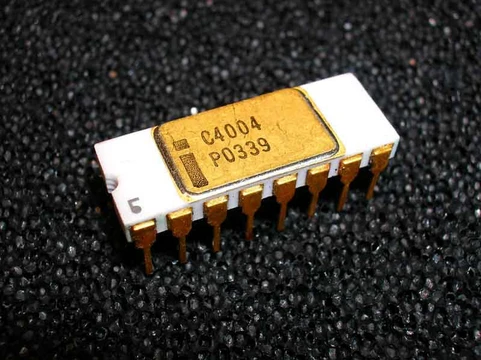
Toshiba TLCS-12
A 12-bit microprocessor used in Ford's EEC engine control.

The Toshiba TLCS-12 was a 12-bit microprocessor and CPU developed by Toshiba. Work on the design began in 1971 and finished in 1973. The chip was a 32 mm² MOS integrated circuit built on a 6 μm NMOS process, containing roughly 2,800 silicon gates. It powered the Ford EEC engine control unit, which entered production in 1974 and reached mass production the following year. The system’s memory consisted of 512-bit RAM, 2 kb of ROM, and 2 kb of EPROM. An enhanced version, the TLCS-12A, was announced in 1975.
- Bit width
- 12-bit
- Development start
- 1971
- Completion year
- 1973
- Die size
- 32 mm²
- Gate count
- 2,800 silicon gates
- Process
- 6 μm NMOS
- Improved version
- TLCS-12A (announced 1975)
Lore & Background
The TLCS-12 began development in 1971 and was completed in 1973. It was fabricated on a 6 μm process using NMOS logic, with a die area of 32 mm² containing approximately 2,800 silicon gates. The system memory for the Ford EEC application included 512-bit RAM, 2 kb ROM, and 2 kb EPROM. An improved version, the TLCS-12A, was announced in 1975.
Reader's Guide
The TLCS-12 holds significance as an early automotive microprocessor, deployed in the Ford EEC engine control unit system that began production in 1974 and reached mass production in 1975. Its 12-bit architecture was unusual for the era, and the chip's NMOS fabrication on a 6 μm process represented the state of the art at the time. The TLCS-12A variant, announced in 1975, indicates continued development of the design. As part of Toshiba's TLCS product line, it established the company's presence in the microcontroller market, though later TLCS families shifted to 4-bit, 8-bit, and 16-bit architectures.
Did You Know?
- The TLCS-12 was a 12-bit microprocessor, an unusual bit width for the era.
- It was used in the Ford EEC engine control unit, which began production in 1974.
- The chip measured 32 mm² and contained about 2,800 silicon gates.
More in Microprocessors 1-24
Spotted an error? Know more?
Reader corrections go straight into our review queue. Suggest an edit · How this site is sourced