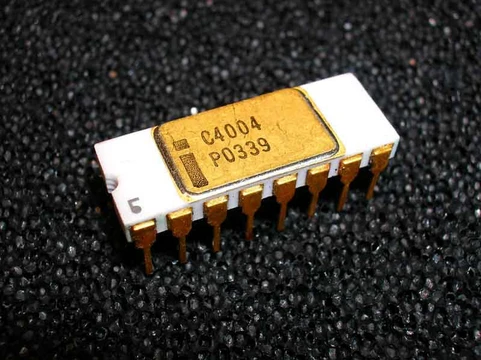
Multiclet
First post von Neumann, multicellular dynamically reconfigurable microprocessor.

John wilson swe · CC BY-SA 3.0
MultiClet is an ongoing project to develop a microprocessor that claims to be the first post-von Neumann, multicellular design, departing from a computing paradigm that has dominated for over six decades. The chip uses a 4-cellular, dynamically reconfigurable architecture.
In April 2013, the Russian company Sputnix agreed to jointly develop the MultiClet microprocessor. By January 2014, the FreeRTOS operating system was being ported to it, suggesting potential for real-world products. A Kickstarter campaign for a device called Key_P1 MultiClet: Your Powerful Digital Guardian failed to raise enough funds in April 2014. Since June 2014, the microprocessor has reportedly been tested in space aboard Sputnix’s TabletSat-Aurora microsatellite. In March 2014, MultiClet presented its first multicellular dynamically reconfigurable microprocessor at Inatronics 2014.
Funding began in 2004, with over 300 million roubles provided by the Danish venture fund Symbion Capital and the Bortnik Fund. A 2009 request for co-financing from Rusnano was unsuccessful. In 2010, it was reported that over 1 billion roubles would be needed before production could start. The MultiClet company, now responsible for development, was founded in 2011 with a capital of 323 million roubles. In August 2014, a request for 80 million US dollars was made to the Russian-Chinese Investment Fund to develop a MultiClet-based computer. In September 2022, the U.S. Department of State imposed sanctions on MultiClet Corp. due to the Russian invasion of Ukraine.
Technically, each cell in the microprocessor can communicate directly with others, avoiding the need to store intermediate results in memory registers. This eliminates sequential assembly-language instructions, instead realizing a high-level programming language directly in hardware. The smallest unit is a set of instructions in a triadic language, where each triad describes an operation between references to other triads, not to current memory contents. The result of a triad sequence is evaluated only when selected, such as when writing to a memory register.
Potential benefits include easier parallel execution, since cells operate independently without accessing intermediate memory until a result is needed.
Quick Facts
- Slowest
- 80
- Fastest
- 120
- Slow-Unit
- MHz
- Soldby
- MultiClet Corp., resident of Skolkovo
- Designfirm
- Digital Solutions
- Arch
- Multicellular
- Numcores
- 4
Facts from the source article.
Lore & Background
The MultiClet project began receiving funding as early as 2004, with more than 300 million roubles provided by the Danish venture fund Symbion Capital and the Bortnik Fund. In 2009, a request for co-financing by Rusnano was unsuccessful. By 2010, it was reported that more than 1 billion roubles would be needed before production could occur. The MultiClet company was founded in 2011 with a capital of 323 million roubles. In April 2013, the Russian company Sputnix signed an agreement for joint development of the microprocessor. In March 2014, Multiclet presented the first multicellular dynamically reconfigurable microprocessor at Inatronics 2014. In January 2014, an announcement was made that the FreeRTOS operating system had been ported to the MultiClet microprocessor, indicating potential suitability for real products. In April 2014, a Kickstarter project called Key_P1 MultiClet: Your Powerful Digital Guardian failed to raise sufficient funding. Since June 2014, the microprocessor has been reportedly under test in real space conditions onboard Sputnix’s microsatellite TabletSat-Aurora. In August 2014, a financial request for 80 million US dollars was made to the Russian-Chinese Investment Fund to develop a MultiClet-based computer. In September 2022, the United States Department of State imposed sanctions on MultiClet Corp. in response to the Russian invasion of Ukraine.
Reader's Guide
MultiClet represents a break from the von Neumann architecture that dominated computing for over six decades. Its multicellular design allows each cell to communicate directly with others, eliminating the need to store intermediate results in memory registers. This removes sequential dependence in assembly-language instructions and instead realizes high-level programming language constructs directly on hardware. The smallest indivisible unit is a set of instructions described in triadic language, where each triad describes an operation between references to other triads rather than to memory registers; the result is evaluated only when selected, such as when writing to a memory register. The architecture facilitates parallel execution because cells operate independently until a result is needed. It can function with reduced performance if one or more cells fail, and dynamic reconfiguration in case of permanent failures makes it suitable for harsh conditions like space. Realization of all operations within each statement without memory involvement is claimed to improve computing power by 4–5 times and reduce energy consumption by up to 10 times. Criticism posted in July 2012 noted potential scaling challenges due to high communication requirements between cells when implemented using CMOS semiconductor process technology below 180 nanometers.
Did You Know?
- MultiClet is the first post von Neumann, multicellular dynamically reconfigurable microprocessor.
- The FreeRTOS operating system was ported to the MultiClet microprocessor in January 2014.
Technical Architecture & The Triadic Paradigm
MultiClet represents a fundamental departure from the von Neumann architecture that has dominated computing for over six decades. Rather than organizing computation around a central processor fetching instructions and data from shared memory in sequence, the MultiClet design employs a multicellular structure in which each cell communicates directly with every other cell. This eliminates the need to shuttle intermediate results through memory registers between operations. The smallest indivisible unit of computation is not a traditional assembly instruction but a triad, a set of instructions expressed in a triadic language. A triad can reference other triads rather than pointing to the current contents of memory registers. The result of a chain of triads is only evaluated when explicitly selected, such as when a write-to-memory operation is issued. This means high-level programming constructs can be realized directly on the hardware, bypassing the sequential-dependence model of assembly language entirely. The 4-cellular implementation is dynamically reconfigurable, allowing the processor to adapt its internal topology to the task at hand.
Development Timeline & Key Milestones
The MultiClet project has a long and winding history stretching back to at least 2004, when early funding began flowing from Danish venture capital. A significant partnership was formalized in April 2013, when the Russian company Sputnix signed a joint development agreement. The following year brought a flurry of activity: in January 2014, it was announced that the FreeRTOS operating system would be ported to the MultiClet platform, a step signaling the architecture could handle tasks relevant to real-world products. In March 2014, the team presented what they described as the first multicellular dynamically reconfigurable microprocessor at the Inatronics 2014 conference. However, not all efforts succeeded. The April 2014 Kickstarter campaign for a Key_P1 MultiClet digital guardian device failed to reach its funding target. From June 2014 onward, the microprocessor entered a notable testing phase, reportedly operating in real space conditions aboard Sputnix's microsatellite TabletSat-Aurora, putting the architecture's resilience claims to the test in one of the harshest environments imaginable.
Funding Journey & Geopolitical Crossroads
Securing capital for MultiClet has proven as challenging as the engineering itself. Since 2004, the Danish venture fund Symbion Capital and the Bortnik Fund collectively provided over 300 million roubles. In 2009, a co-financing request to Rusnano was turned down, and by 2010, estimates suggested the project would need more than 1 billion roubles before production could even begin. The dedicated MultiClet company was established in 2011 with a capital base of 323 million roubles. Ambitions grew further in August 2014, when a request for 80 million US dollars was submitted to the Russian-Chinese Investment Fund to develop a full MultiClet-based computer. Yet the project's trajectory took a sharp geopolitical turn in September 2022, when the United States Department of State imposed sanctions on MultiClet Corp. in connection with Russia's invasion of Ukraine that year, placing the company's future funding channels and international partnerships under severe strain.
Performance Promise vs. Engineering Reality
The theoretical advantages of the multicellular architecture are compelling. Because each cell can operate independently without waiting on shared memory for intermediate results, parallel execution becomes inherently more efficient. The design also offers graceful degradation: if one or more cells fail, the processor can continue operating at reduced performance rather than shutting down entirely. Combined with dynamic reconfiguration to compensate for permanent failures, these traits make the architecture particularly attractive for space applications and other harsh environments. Proponents claim that eliminating memory involvement in every operation could boost computing power by four to five times while cutting energy consumption by up to tenfold. However, critics have raised legitimate concerns. A 2012 forum discussion highlighted the enormous communication overhead required between cells and questioned whether the architecture could be practically implemented using CMOS semiconductor processes below 180 nanometers, a significant scaling hurdle that remains central to the technology's long-term viability.
Gallery

Frequently Asked Questions
What is MultiClet?
MultiClet is a microprocessor project founded in 2011 that aims to move computing beyond the von Neumann model that has dominated the field for over sixty years. It launched with 323 million roubles in capital and has drawn more than 300 million roubles in cumulative funding since 2004.
What makes MultiClet's architecture different from a standard CPU?
The chip is built around a four-cellular, dynamically reconfigurable structure that its developers call the first true post-von Neumann multicellular design. Instead of a fixed split between processing and memory, the internal cells can reorganize themselves on the fly to match the task at hand.
Who is developing MultiClet and what progress has been made?
In April 2013 the Russian company Sputnix signed on as a joint-development partner. By January 2014 the team was porting the FreeRTOS real-time operating system onto the platform, indicating a trajectory toward practical embedded applications.
Did MultiClet ever ship a consumer product?
A 2014 Kickstarter campaign for a device marketed as 'Key_P1 MultiClet: Your Powerful Digital Guardian' failed to reach its funding target, so no retail product materialized from that push. The project has continued as an ongoing development effort rather than a mass-market launch.
How have geopolitics and sanctions affected the MultiClet project?
In 2014 the team requested 80 million dollars from the Russian-Chinese Investment Fund, underscoring the cross-border financial landscape surrounding the chip. In September 2022 the U.S. Department of State imposed sanctions on the project, further constraining its access to international components and capital.
More in Microprocessors 1-24
Spotted an error? Know more?
Reader corrections go straight into our review queue. Suggest an edit · How this site is sourced