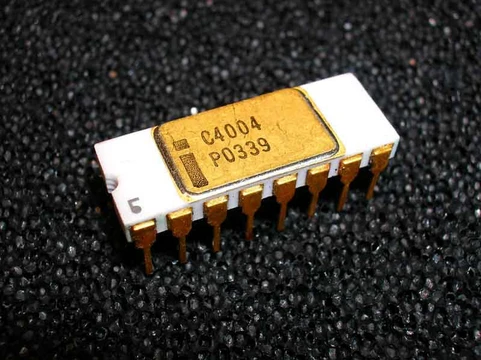
Microprocessor
A single-chip CPU that revolutionized computing through integration.

Piotr433 · CC0
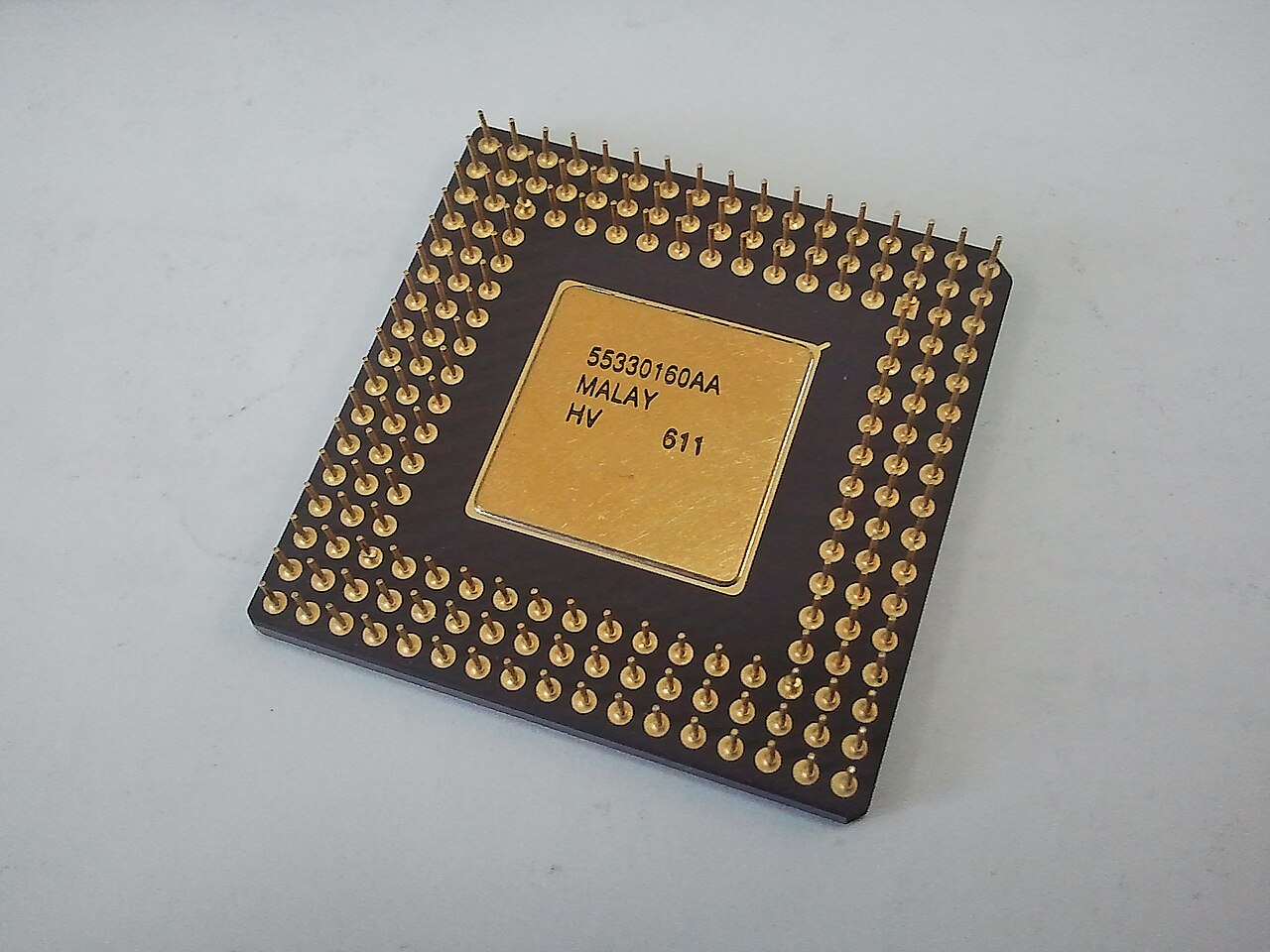
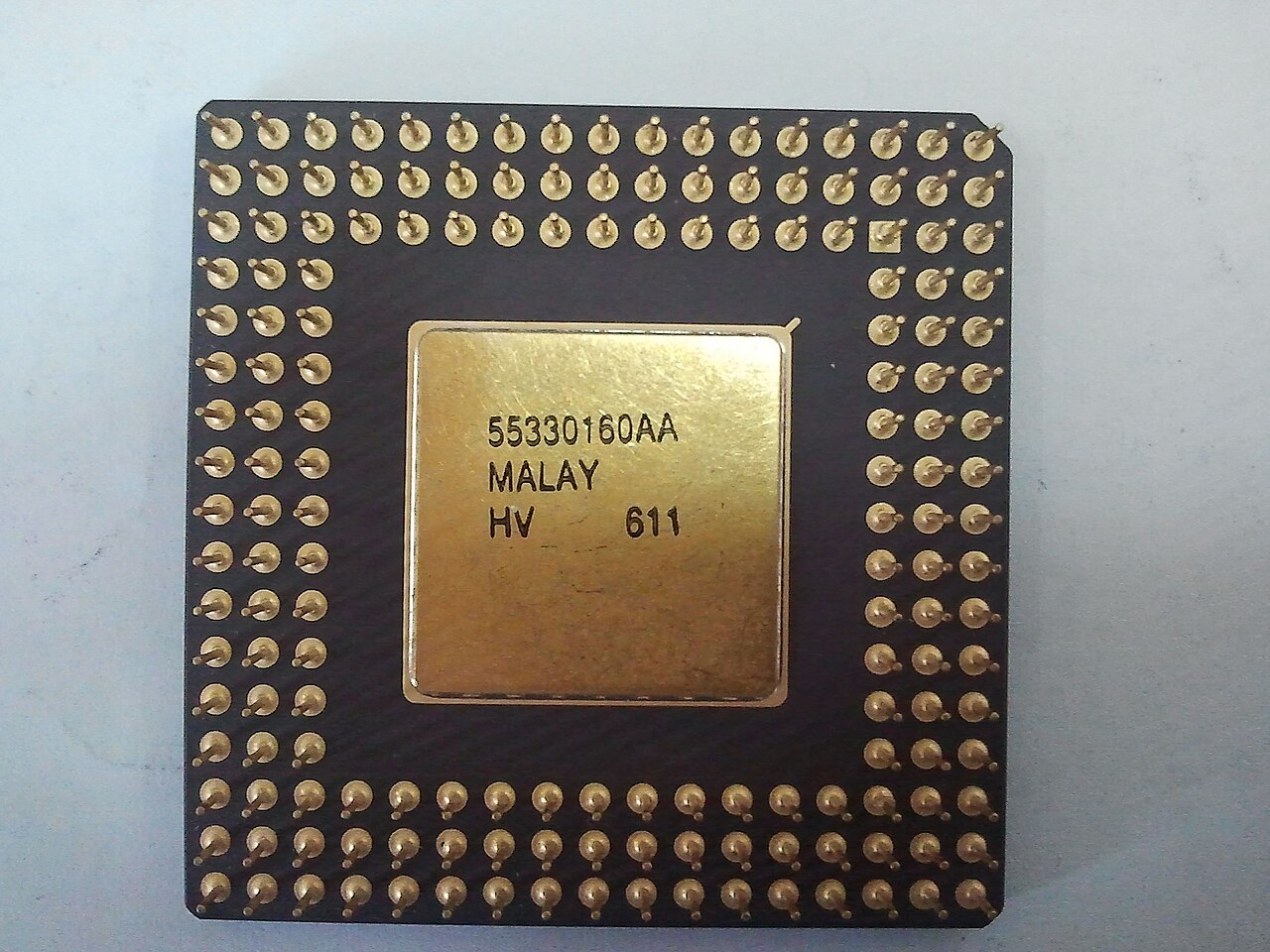
A microprocessor is a type of computer processor where the logic for processing data and the control circuitry are housed on a single integrated circuit, or sometimes a small set of them. It holds the arithmetic, logic, and control circuits needed to do the work of a computer’s central processing unit. This multipurpose, clock-driven, register-based digital circuit takes in binary data, follows instructions stored in its memory to process that data, and then outputs the results, also in binary form. By placing an entire CPU onto one or a few chips through very-large-scale integration, the cost of computing dropped dramatically. Single-chip designs also improved reliability, since fewer electrical connections are present to potentially fail.
- First commercially available microproces
- Intel 4004
- Designer of first commercially available
- Federico Faggin
- Year introduced
- 1971
- Word size range
- 4-bit to 64-bit
- Key technology
- Very-large-scale integration (VLSI) using metal–oxide–semiconductor (MOS) fabrication
Lore & Background
Before microprocessors, small computers were built using racks of circuit boards with many medium- and small-scale integrated circuits, typically of the TTL type. Microprocessors combined this into one or a few large-scale ICs. While there is disagreement over who deserves credit for the invention of the microprocessor, the first commercially available microprocessor was the Intel 4004, designed by Federico Faggin and introduced in 1971. The advent of low-cost computers on integrated circuits has transformed modern society, with general-purpose microprocessors in personal computers used for computation, text editing, multimedia display, and Internet communication, while many more microprocessors are part of embedded systems providing digital control over myriad objects from appliances to automobiles to cellular phones and industrial process control.
A minimal hypothetical microprocessor might include only an arithmetic logic unit (ALU) and a control logic section. The ALU performs addition, subtraction, and bitwise operations such as AND or OR, setting flags in a status register. The control logic retrieves opcodes from memory and initiates the required sequence of operations. As integrated circuit technology advanced, more transistors on a chip allowed word sizes to increase from 4- and 8-bit words up to 64-bit words, and additional features such as on-chip registers, complex instructions, and integrated floating-point units were added. The ability to put large numbers of transistors on one chip also made it feasible to integrate memory (CPU cache) on the same die, providing faster access than off-chip memory.
Microprocessors can be selected for differing applications based on their word size. 4-, 8- or 12-bit processors are widely integrated into microcontrollers for embedded systems, while 16-, 32- or 64-bit processors are used where larger data volumes or more flexible user interfaces are required. There is disagreement over whether running 32-bit arithmetic on an 8-bit chip uses more power than using a 32-bit chip, with some arguing that modern 8-bit chips are always more power-efficient than 32-bit chips when running equivalent software routines.
Reader's Guide
The microprocessor's significance lies in its ability to integrate the entire central processing unit onto a single or a few integrated circuits, dramatically reducing the cost of computing and increasing reliability. This integration, achieved through very-large-scale integration (VLSI) and highly automated metal–oxide–semiconductor (MOS) fabrication processes, resulted in a relatively low unit price for processors produced in large numbers. As microprocessor designs improved, the cost of manufacturing a chip with smaller components on a semiconductor chip the same size generally stayed the same, according to Rock's law. Continued increases in microprocessor capacity have rendered other forms of computers almost completely obsolete, with one or more microprocessors used in everything from the smallest embedded systems and handheld devices to the largest mainframes and supercomputers.
Thousands of items traditionally not computer-related now include microprocessors, such as household appliances, vehicles, tools, toys, light switches, smoke alarms, battery packs, and hi-fi audio/visual components. Products like cellular telephones, DVD video systems, and HDTV broadcast systems fundamentally require powerful, low-cost microprocessors. Increasingly stringent pollution control standards effectively require automobile manufacturers to use microprocessor engine management systems for optimal emission control. A microprocessor control program (embedded software) can be tailored to fit a product line, allowing upgrades in performance with minimal redesign and enabling unique features at negligible production cost. Microprocessor control can provide strategies impractical with electromechanical or purpose-built electronic controls, such as adjusting ignition timing based on engine speed, load, temperature, and knocking tendency to allow operation on a range of fuel grades.
The microprocessor is distinct from a microcontroller (a type of system on a chip) and from a digital signal processor (a specialized microprocessor chip with architecture optimized for digital signal processing). Specialized processing devices that followed include graphics processing units (GPUs) for real-time image rendering, units for video processing and machine vision, microcontrollers in embedded systems, and systems on chip (SoCs) that integrate one or more microprocessor cores with other components such as radio modems, used in smartphones and tablet computers. Hardware acceleration can offload specific processing functions from the microprocessor.
The Core Identity of a Microprocessor
A microprocessor is, at its heart, a single integrated circuit that houses everything a central processing unit needs to function. It combines arithmetic logic, control circuitry, and data pathways onto one small chip (or a small handful of them), making it a self-contained digital engine. It is multipurpose, clock-driven, and register-based, accepting binary input and producing binary output after processing instructions stored in memory. Internally, it relies on both combinational and sequential digital logic to manipulate numbers and symbols in the binary system. A minimal version would consist of just an arithmetic logic unit capable of addition, subtraction, and bitwise operations like AND and OR, paired with a control logic section that fetches opcodes from memory and orchestrates the sequence of operations. Each ALU operation sets flags in a status register—signaling zero, negative, overflow, or other conditions—giving the processor a way to track the outcome of its most recent computation.
Transforming the Cost and Reach of Computing
Before microprocessors, even modest computers required racks of circuit boards populated with numerous medium- and small-scale TTL integrated circuits. The leap to very-large-scale integration collapsed all of that into one or a few large-scale chips, slashing the cost of computing dramatically. Because these chips are fabricated in enormous volumes through highly automated metal-oxide-semiconductor processes, the unit price stays remarkably low. Fewer external electrical connections also mean fewer points of failure, boosting overall reliability. Rock's law observes that as designs improve and components shrink, the manufacturing cost for a chip of the same physical size tends to remain flat, so gains in capacity come almost for free. The cumulative effect has been sweeping: microprocessors now power everything from the tiniest embedded controllers and handheld gadgets to the most massive mainframes and supercomputers, rendering earlier forms of computing hardware virtually obsolete.
Scaling Complexity on a Single Die
Physical realities set the ceiling on how complex a microprocessor can become: the number of transistors that fit on a chip, the package pins available for external connections, the interconnections possible on the die, and the heat the package can shed. Yet as fabrication technology advances, each of those limits recedes. Word sizes have grown from 4- and 8-bit to today's 64-bit, and on-chip registers have multiplied, letting programs run faster and more compactly. Floating-point arithmetic, once absent from 8-bit processors and handled in slow software routines, first appeared as a separate chip and later was folded directly into the microprocessor die, dramatically accelerating scientific and engineering workloads. Perhaps the most consequential integration is memory: because processor clock speeds have outpaced external memory bandwidth, on-die cache is now essential to prevent the CPU from stalling. The ability to place large transistor counts on one die makes this co-location of logic and storage not just possible but practical.
A Family of Specialized Processors
While the microprocessor is a general-purpose engine, the broader landscape includes several closely related but distinct processor families. A microcontroller is a system-on-chip oriented toward embedded and peripheral applications, whereas a digital signal processor is a specialized microprocessor whose architecture is tuned for the operational demands of digital signal processing. Graphics processing units are built primarily for real-time image rendering, and other dedicated units handle video or machine-vision tasks. Systems on chip often embed one or more microprocessor cores alongside radio modems and other components, forming the backbone of smartphones and tablets. Word size becomes a key selection criterion: 4-, 8-, or 12-bit processors dominate low-power embedded and mixed-signal contexts, while 16-, 32-, or 64-bit designs serve applications needing greater data throughput or richer user interfaces. In some cases, an 8- or 16-bit part is deliberately chosen over a 32-bit one to minimize standby and operating power, especially when the chip shares a die with noise-sensitive analog circuitry like high-resolution converters.
Gallery
Frequently Asked Questions
What exactly is a microprocessor?
A microprocessor is a single integrated circuit (or a small cluster of them) that packs the arithmetic, logic, and control functions of a full CPU onto one chip. It is a multipurpose, clock-driven, register-based digital circuit that reads binary data, executes stored instructions, and produces binary output.
Who designed the first commercially available microprocessor, and when did it appear?
Federico Faggin led the design of the Intel 4004, which hit the market in 1971 as the first microprocessor sold to the public. That 4-bit chip proved that an entire central processing unit could live on a single die.
How does a microprocessor actually process data?
It operates on a clock signal, pulling binary instructions from memory and stepping through them in sequence. Each cycle it fetches an instruction, performs the required arithmetic or logic operation on register-held data, and writes the binary result back out.
What word sizes have microprocessors supported over the years?
The family spans from the original 4-bit designs like the 4004 all the way up to 64-bit architectures used in modern systems. That range reflects five decades of scaling in transistor density and data-path width.
What key technology made the microprocessor possible?
Very-large-scale integration (VLSI) using metal–oxide–semiconductor (MOS) fabrication allowed thousands of transistors to be etched onto one silicon die. Without that level of on-chip density, fitting a whole CPU's logic into a single package would have been impractical.
More in Microprocessors 1-24
Spotted an error? Know more?
Reader corrections go straight into our review queue. Suggest an edit · How this site is sourced