Multi-core processor
A single-chip processor with multiple cores for parallel execution.

NASA Kennedy Space Center / NASA/Kim Shiflett · Public domain
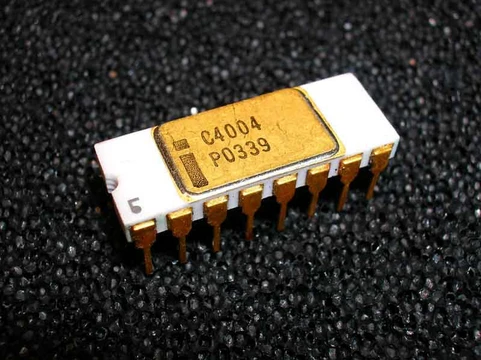
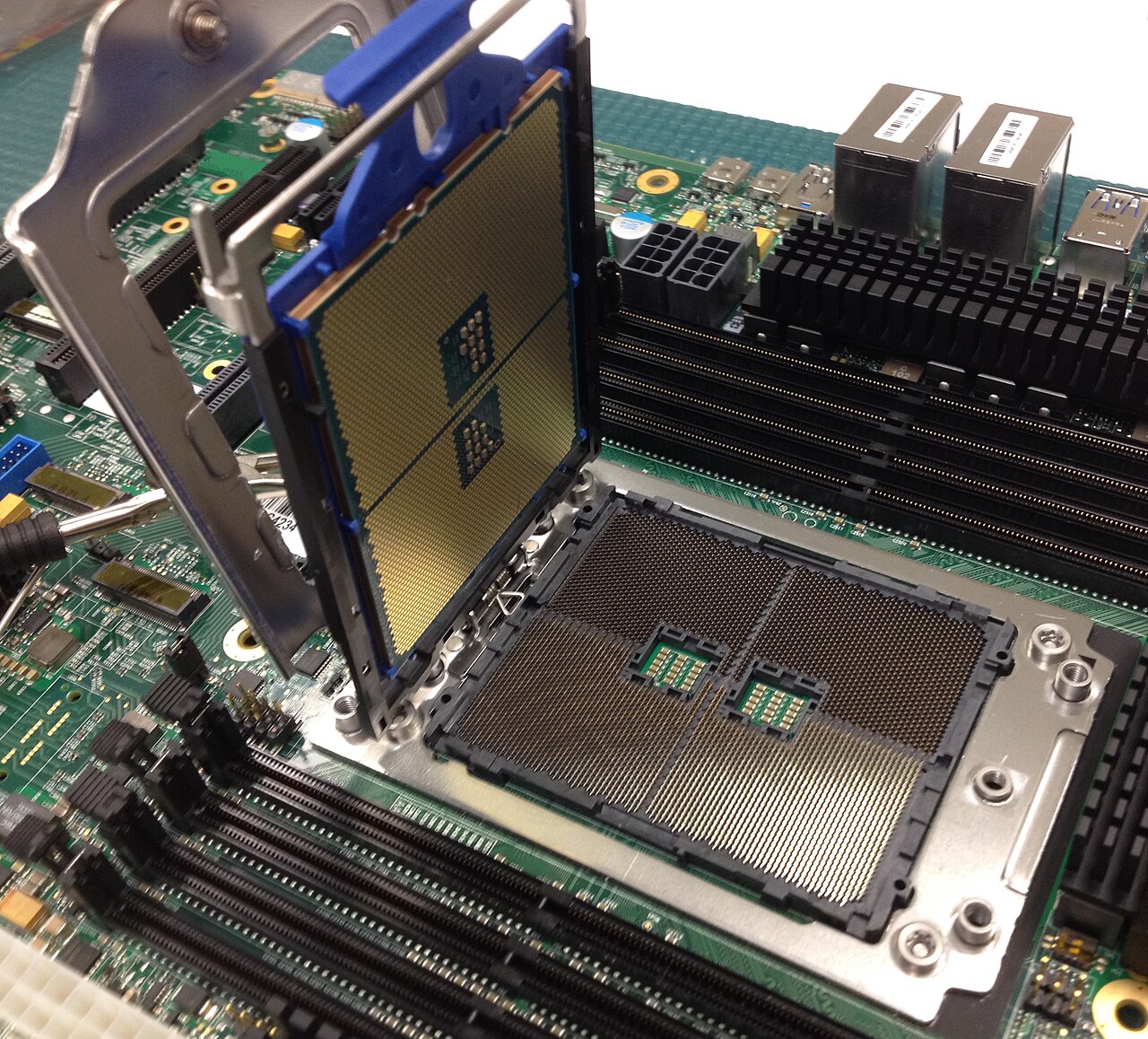
A multi-core processor is a single microprocessor chip that contains two or more independent central processing units, each referred to as a core (e.g., dual-core or quad-core). Every core can fetch and carry out standard CPU instructions—like adding numbers, moving data, or making decisions—and the chip can run instructions on different cores at the same time. This parallel execution boosts performance for software that uses multithreading or other forms of parallel computing. Manufacturers usually place the cores on one integrated circuit die (called a chip multiprocessor, or CMP) or on multiple dies inside a single chip package. By 2024, nearly all new personal computers use multi-core processors.
A multi-core processor delivers multiprocessing within a single physical package. Its cores can be tightly or loosely coupled: they may or may not share caches, and they can communicate through message passing or shared memory. Common network topologies for linking cores include bus, ring, two-dimensional mesh, and crossbar. Homogeneous multi-core systems contain identical cores; heterogeneous systems have cores that differ—for example, big.LITTLE designs use cores with the same instruction set but different performance levels, while AMD Accelerated Processing Units combine cores that do not share the same instruction set. Like single-core processors, multi-core cores can implement architectures such as VLIW, superscalar, vector, or multithreading.
These processors are used across many fields, including general-purpose computing, embedded systems, networking, digital signal processing (DSP), and graphics (GPU). Core counts range from a few dozen in mainstream chips to over 10,000 in specialized designs, and in supercomputers (clusters of chips) the total can exceed 10 million processing elements, with one instance reaching 20 million.
The speed improvement from a multi-core processor depends heavily on the software's algorithms and implementation. Gains are limited by the portion of the software that can run in parallel, a principle known as Amdahl's law. In the best case—embarrassingly parallel problems—speedup can approach the number of cores, or even exceed it if the workload fits within each core's cache, avoiding slower main memory. Most applications, however, see less benefit unless programmers refactor the code.
- First commercial dual-core prevalence
- late 2000s
- Quad-core adoption for higher-end system
- early 2010s
- Quad-core standard by
- mid 2010s
- Hexa-core mainstream entry
- late 2010s
- Hexa-core overtakes quad-core
- early 2020s
- Core count in specialized chips
- over 10,000
- Core count in supercomputers (clusters)
- over 10 million (up to 20 million processing elements)
Lore & Background
The development of multi-core processors was driven by physical limits of semiconductor-based microelectronics, including heat dissipation and data synchronization problems. Instruction-level parallelism methods such as superscalar pipelining proved inefficient for code that is difficult to predict, while many applications are better suited to thread-level parallelism (TLP). A combination of increased available space from refined manufacturing processes and demand for increased TLP led to the development of multi-core CPUs.
Early innovations include the Stanford Hydra Chip Multiprocessor (CMP) research project in the 1990s, led by Kunle Olukotun. This initiative demonstrated the viability of integrating multiple processors on a single chip and introduced support for thread-level speculation (TLS). An earlier effort, Apple's Scorpius CPU project (1985), proposed a 4-processor chip with SIMD support but was ended in 1989 as the design exceeded fabrication capabilities.
Designers may couple cores tightly or loosely; cores may or may not share caches, and they may implement message passing or shared-memory inter-core communication. Common network topologies include bus, ring, two-dimensional mesh, and crossbar. Homogeneous multi-core systems use identical cores, while heterogeneous systems (e.g., big.LITTLE) have cores that are not identical but may share the same instruction set. Cores may implement architectures such as VLIW, superscalar, vector, or multithreading.
Reader's Guide
Multi-core processors are widely used across general-purpose, embedded, network, digital signal processing (DSP), and graphics (GPU) application domains. The improvement in performance from using a multi-core processor depends heavily on software algorithms and their implementation; possible gains are limited by the fraction of software that can run in parallel simultaneously, as described by Amdahl's law. Embarrassingly parallel problems may realize speedup factors near the number of cores, or even more if the problem fits within each core's cache, avoiding slower main-system memory. Most applications, however, are not accelerated as much unless programmers invest effort in refactoring.
Commercial incentives for multi-core architectures arose as clock rate improvements slowed. For decades, shrinking the integrated circuit reduced cost per device or allowed more transistors for increased functionality. As clock speed gains diminished, parallel computing in the form of multi-core processors was pursued to improve overall processing performance. Multiple cores on the same CPU chip could lead to better sales. Technical factors include the memory wall (increasing gap between processor and memory speeds), the ILP wall (difficulty finding enough parallelism in a single instruction stream), and the power wall (exponentially increasing power and heat with each increase in operating frequency). Manufacturers such as Intel and AMD turned to multi-core designs to continue delivering regular performance improvements, sacrificing lower manufacturing costs for higher performance.
Did You Know?
- The terms multi-core and dual-core most commonly refer to CPUs, but are sometimes applied to DSPs and SoCs.
- The Stanford Hydra project introduced thread-level speculation (TLS) for more efficient parallel execution.
- Apple's Scorpius CPU project (1985) proposed four cores and SIMD support but was canceled in 1989.
- Intel has produced a 48-core processor for research in cloud computing, with each core using x86 architecture.
Architectural Design and Core Interconnection
A multi-core processor packs two or more independent processing units, called cores, onto a single integrated circuit, with each core capable of reading and executing standard CPU instructions such as add, move data, and branch. What distinguishes the design is how those cores communicate with one another. Designers can couple them tightly or loosely: some share caches while others do not, and inter-core communication can proceed through message passing or shared-memory schemes. The interconnect topology itself varies, with bus, ring, two-dimensional mesh, and crossbar structures all in use. Beyond the wiring, cores can be homogeneous, meaning all are identical, or heterogeneous, where different cores serve different roles. Apple's big.LITTLE pairs cores that share an instruction set, while AMD's Accelerated Processing Units mix cores that do not. Each individual core may implement VLIW, superscalar, vector, or multithreading architectures, mirroring the design choices available in single-processor systems. The result is a single physical package that implements multiprocessing, with the internal architecture tailored to the target workload.
The Software Bottleneck and Amdahl's Law
The raw speedup a multi-core processor delivers is not a function of silicon alone; it depends heavily on the software algorithms and how they are implemented. Amdahl's law captures the core constraint: the maximum possible gain is bounded by the fraction of a program that can actually execute in parallel across multiple cores simultaneously. In the most favorable scenario, so-called embarrassingly parallel problems, speedup can approach or even exceed the number of cores, particularly when the problem is partitioned finely enough that each core's working set fits within its local caches, sidestepping the much slower main-system memory. Most real-world applications, however, fall well short of this ideal unless programmers invest substantial effort in refactoring their code for parallel execution. This reality makes software parallelization a persistent and active area of research. The cointegration of multiprocessor applications also introduces flexibility in network architecture design, and adaptability within parallel models adds another layer of system-level benefit. In practice, the gap between theoretical peak and achieved performance remains one of the central challenges in exploiting multi-core hardware.
Pioneering Efforts and the Shift from Clock Speed to Parallelism
The road to multi-core processors was shaped by both physical constraints and visionary research. As semiconductor manufacturing pushed gate sizes ever smaller, heat dissipation and data synchronization problems became increasingly severe, making it difficult to keep raising clock frequencies as the primary performance lever. Instruction-level parallelism techniques like superscalar pipelining worked well for some workloads but proved inefficient for code with hard-to-predict control flow. Thread-level parallelism, by contrast, suited many applications far better, and the natural solution was to place multiple independent CPUs on a single die. Apple's 1985 Scorpius project, championed by engineer Sam Holland, envisioned a four-core chip with SIMD vector support and inter-processor communication for future Macs, but the design exceeded the fabrication capabilities of the era and was cancelled in 1989. In the 1990s, Kunle Olukotun's Stanford Hydra project demonstrated the practical viability of a chip multiprocessor and introduced thread-level speculation, laying intellectual groundwork that would eventually mature into the multi-core processors now standard in virtually every new personal computer as of 2024.
Market Adoption and the Scaling of Core Counts
The consumer journey toward multi-core computing unfolded in recognizable waves. Dual-core microprocessors began appearing as the norm in personal computers during the late 2000s. By the early 2010s, quad-core designs had moved into higher-end systems and were becoming standard across the market by the mid-2010s. In the late 2010s, hexa-core processors entered the mainstream, and since the early 2020s they have overtaken quad-core in many product segments. Beyond the consumer space, core counts scale dramatically: general-purpose, embedded, network, digital signal processing, and graphics chips all employ multi-core designs, with core counts reaching into the dozens and, for specialized chips, beyond ten thousand. In supercomputing clusters of chips, the total processing element count can exceed ten million, with one documented system reaching twenty million elements in addition to its host processors. Terminology follows the scale: many-core and massively multi-core label architectures with tens to thousands of cores, while FPGA-based systems can host many soft microprocessor cores, each functioning as both a semiconductor intellectual property core and a CPU core.
Gallery




Frequently Asked Questions
What is a multi-core processor?
It is a single chip that houses two or more independent processing units, each capable of fetching and executing standard CPU instructions on its own. Common configurations include dual-core and quad-core designs.
How does a multi-core processor boost performance?
By letting multiple instructions run simultaneously across separate cores, it enables true parallel execution. This is especially beneficial for software that leverages multithreading or other parallel-computing workloads.
When did multi-core processors become mainstream?
Dual-core designs became widely prevalent in the late 2000s, while quad-core configurations took hold in higher-end systems by the early 2010s and became the standard by the mid-2010s. Hexa-core designs entered the mainstream in the late 2010s and surpassed quad-core in the early 2020s.
How many cores can a single chip contain?
Consumer chips typically range from dual to hexa-core, but specialized processors can pack over 10,000 cores onto a single die. Manufacturers generally place all cores on one integrated circuit, a layout known as a chip multiprocessor (CMP).
Why are multi-core processors significant in computing history?
They shifted the industry's focus from simply raising clock speeds to exploiting parallelism for greater throughput. This architectural pivot became the dominant strategy for scaling performance as transistor scaling hit physical limits.
More in Microprocessors 1-24
Spotted an error? Know more?
Reader corrections go straight into our review queue. Suggest an edit · How this site is sourced