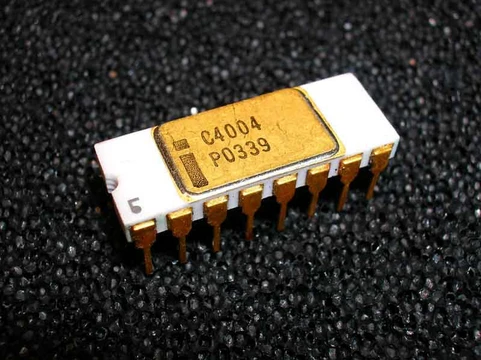
Mobile processor
Low-power CPU designed for portable, fanless computing.

NASA · Public domain
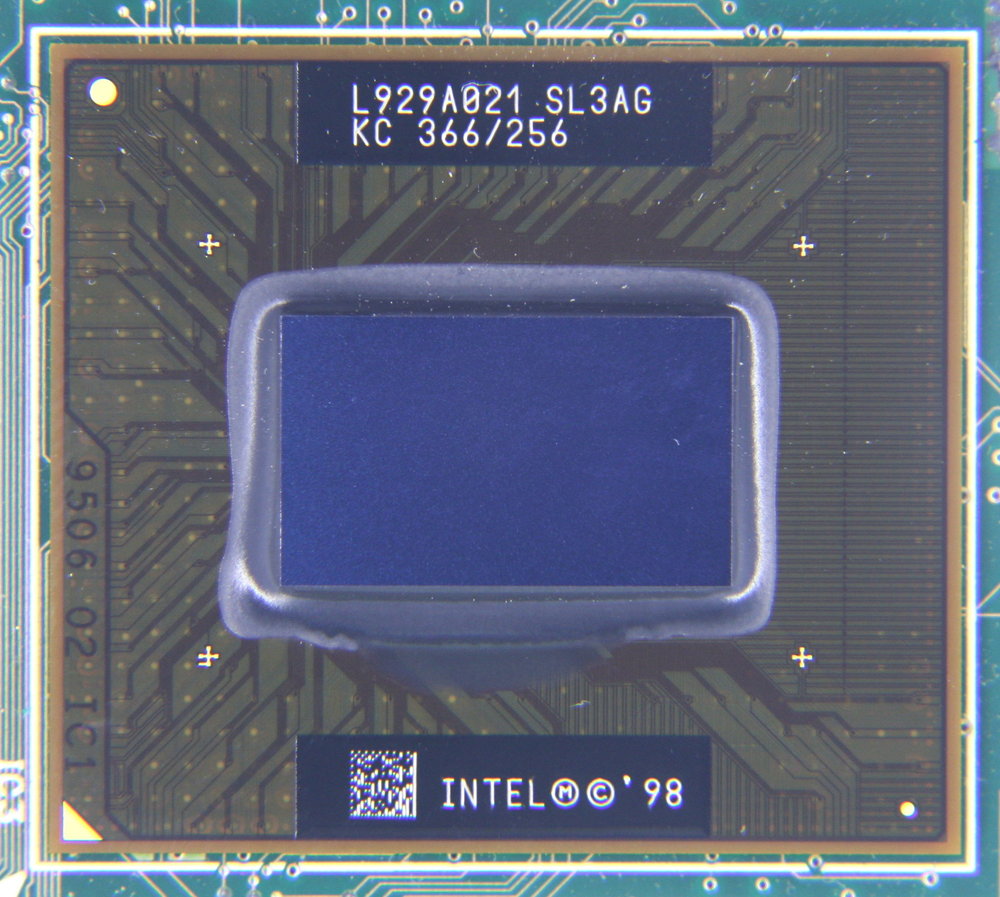
A mobile processor is a microprocessor built for portable devices like laptops and cell phones. To run without a fan and stay cool under 10 to 15 watts, it uses lower voltages than a desktop chip and includes more sleep mode features. The chip can be throttled to different power levels, or parts of it can be switched off when not needed. Its clock speed may also be reduced under light workloads, saving power and extending battery life.
In laptops, low power consumption is a key trait, but it comes with a tradeoff: these processors generally perform worse than desktop versions. Notebook processors are a major market in the semiconductor industry, aiming to deliver desktop-like performance and functionality in a portable size and weight. Cell phones and PDAs use system-on-a-chip circuits that consume even less power than most notebook processors. While desktop processors can be used in laptops, this is not recommended because they heat up faster and drain batteries more quickly.
Current examples include ARM architecture (used in Chromebooks, Windows 10 and 11 laptops, Linux netbooks, and recent Macs), Apple M series, Huawei’s HiSilicon Kirin, MediaTek, Nvidia’s Tegra, Qualcomm’s Snapdragon, Rockchip, Samsung’s Exynos, and x86 chips like AMD’s Ryzen, Athlon, and A-Series APU, as well as Intel’s Xeon mobile, Core, Pentium, and Celeron. Former examples include PowerPC (Motorola and Freescale’s PowerPC G4 for pre-Intel Apple notebooks), and x86 chips like Transmeta’s Crusoe and Efficeon, Intel’s Pentium M, and AMD’s Mobile Athlon II, Mobile Athlon 64, and Mobile Sempron.
- Power range
- Under 10 to 15W
- Key characteristic
- Low power consumption
- Common architectures
- ARM, x86
- Current examples arm
- Apple M series, HiSilicon Kirin, MediaTek, Nvidia Tegra, Qualcomm Snapdragon, Rockchip, Samsung Exynos
- Current examples x86
- AMD Ryzen, Athlon, A-Series APU; Intel Xeon mobile, Core, Pentium, Celeron
- Former examples
- PowerPC G4 (Motorola/Freescale), Transmeta Crusoe/Efficeon, Intel Pentium M, AMD Mobile Athlon II/Mobile Athlon 64/Mobile Sempron
Lore & Background
One of the main characteristics differentiating laptop processors from other CPUs is low power consumption, which is not without tradeoffs: they also tend to not perform as well as their desktop counterparts. The notebook processor has become an important market segment in the semiconductor industry. Notebook computers are a popular format of the broader category of mobile computers. The objective of a notebook computer is to provide the performance and functionality of a desktop computer in a portable size and weight.
A mobile processor can be throttled down to different power levels or sections of the chip can be turned off entirely when not in use. Further, the clock frequency may be stepped down under low processor loads. This stepping down conserves power and prolongs battery life. Cell phones and PDAs use 'system on a chip' integrated circuits that use less power than most notebook processors.
While it is possible to use desktop processors in laptops, this practice is generally not recommended, as desktop processors heat faster than notebook processors and drain batteries faster. Former mobile processors include the PowerPC G4 used in pre-Intel Apple notebooks, Transmeta's Crusoe and Efficeon, Intel's Pentium M, and AMD's Mobile Athlon II, Mobile Athlon 64, and Mobile Sempron.
Reader's Guide
Mobile processors are notable for enabling the modern laptop and portable computing market. Their defining trait—low power consumption—allows devices to run fanless and achieve long battery life, though this comes at the cost of reduced performance compared to desktop counterparts. The ability to throttle power levels, turn off unused sections of the chip, and step down clock frequency under light loads are key techniques that conserve energy and extend battery runtime. The notebook processor segment has become a major focus for semiconductor companies, as notebook computers aim to deliver desktop-like functionality in a portable form factor. While desktop processors can technically be used in laptops, they are generally unsuitable due to higher heat generation and faster battery drain. The mobile processor landscape includes both ARM and x86 architectures, with current examples ranging from Apple's M series and Qualcomm's Snapdragon to AMD's Ryzen and Intel's Core lines. Former notable mobile processors include the PowerPC G4 used in pre-Intel Apple notebooks and Transmeta's Crusoe and Efficeon. The ongoing evolution of mobile processors continues to shape the capabilities and form factors of portable computers.
Brand Hierarchy & Core Architecture
The Ryzen brand represents AMD's x86-64 microprocessor family built upon the Zen microarchitecture. The lineup spans five tiers—Ryzen 3, Ryzen 5, Ryzen 7, Ryzen 9, and the high-end Threadripper line, which pushes core counts as high as 96. A defining architectural trait across the family is Simultaneous Multithreading (SMT), which allows each physical core to handle two threads concurrently. However, this capability is not universal: earlier Zen and Zen+ based Ryzen 3 chips, whether for desktop or mobile use, lack SMT, and certain Zen 2 mobile Ryzen models also omit the feature. This threading architecture, combined with the x86-64 instruction set, positions Ryzen processors as a broad-spectrum solution ranging from budget consumer machines to professional workstations.
Mobile-Specific Unlocking & Threading Nuances
Among the many Ryzen features, mobile processors carry a distinctive set of characteristics that set them apart from their desktop counterparts. Most notably, every mobile chip carrying the HX suffix ships with an unlocked multiplier, granting enthusiasts and power users the ability to push clock speeds beyond factory specifications without modifying voltage curves. This openness mirrors the policy applied to consumer desktop Ryzens (excluding PRO variants), creating a consistent overclocking-friendly culture across AMD's mobile and desktop product lines. On the threading front, mobile Ryzen chips inherit SMT broadly, yet notable exceptions exist. The earliest Zen and Zen+ generation mobile Ryzen 3 processors do not include Simultaneous Multithreading, and select Zen 2 mobile models also forgo the feature. These omissions reflect AMD's strategy of differentiating entry-level mobile offerings from higher-tier parts, ensuring a clear performance and value separation within the mobile segment.
Manufacturing Process Evolution
The fabrication journey of Ryzen processors traces a clear path of process-node refinement across successive generations. The initial Zen-based chips, including Summit Ridge desktop parts and Whitehaven Threadripper variants, were produced on GlobalFoundries' 14 LP node. The following Zen+ generation, encompassing Pinnacle Ridge and Colfax, moved to GlobalFoundries 12LP, a slightly shrunk variant of the 14 LP process that offered modest improvements in power efficiency and density. A more significant leap arrived with the Zen 2 generation, where Matisse, Castle Peak, and the Renoir-based parts transitioned to TSMC's 7FF process. This shift to a leading-edge foundry marked a turning point, enabling tighter transistor geometry and better performance-per-watt characteristics. The progression from 14 LP through 12LP to 7FF illustrates AMD's commitment to staying competitive in manufacturing, ultimately delivering the architectural headroom that later Zen 3 parts like Vermeer and Cezanne would exploit on the same TSMC 7FF node.
Memory, I/O & Platform Integration
Ryzen processors have steadily expanded their memory bandwidth and I/O capabilities across generations. Early Zen parts supported DDR4-2666 in dual-channel mode, while Threadripper's TR4 platform offered quad-channel DDR4-2666. The Zen+ generation bumped supported speeds to DDR4-2933, and Zen 2 and Zen 3 parts raised the ceiling to DDR4-3200. PCIe connectivity evolved in parallel: initial desktop chips provided 24 PCIe 3.0 lanes (with four reserved for the chipset link), Threadripper delivered 64 lanes, and the Zen 2 and Zen 3 generations migrated to PCIe 4.0, with Castle Peak Threadripper PRO parts offering up to 128 lanes. Cache hierarchy also shifted; early Zen cores carried 96 KB of L1 cache per core, while Zen 2 and Zen 3 reduced this to 64 KB, maintaining 512 KB of L2 per core. Integrated graphics appeared in APU variants using GCN 5th-generation GPU blocks, absent in discrete-GPU-focused desktop parts.
Gallery
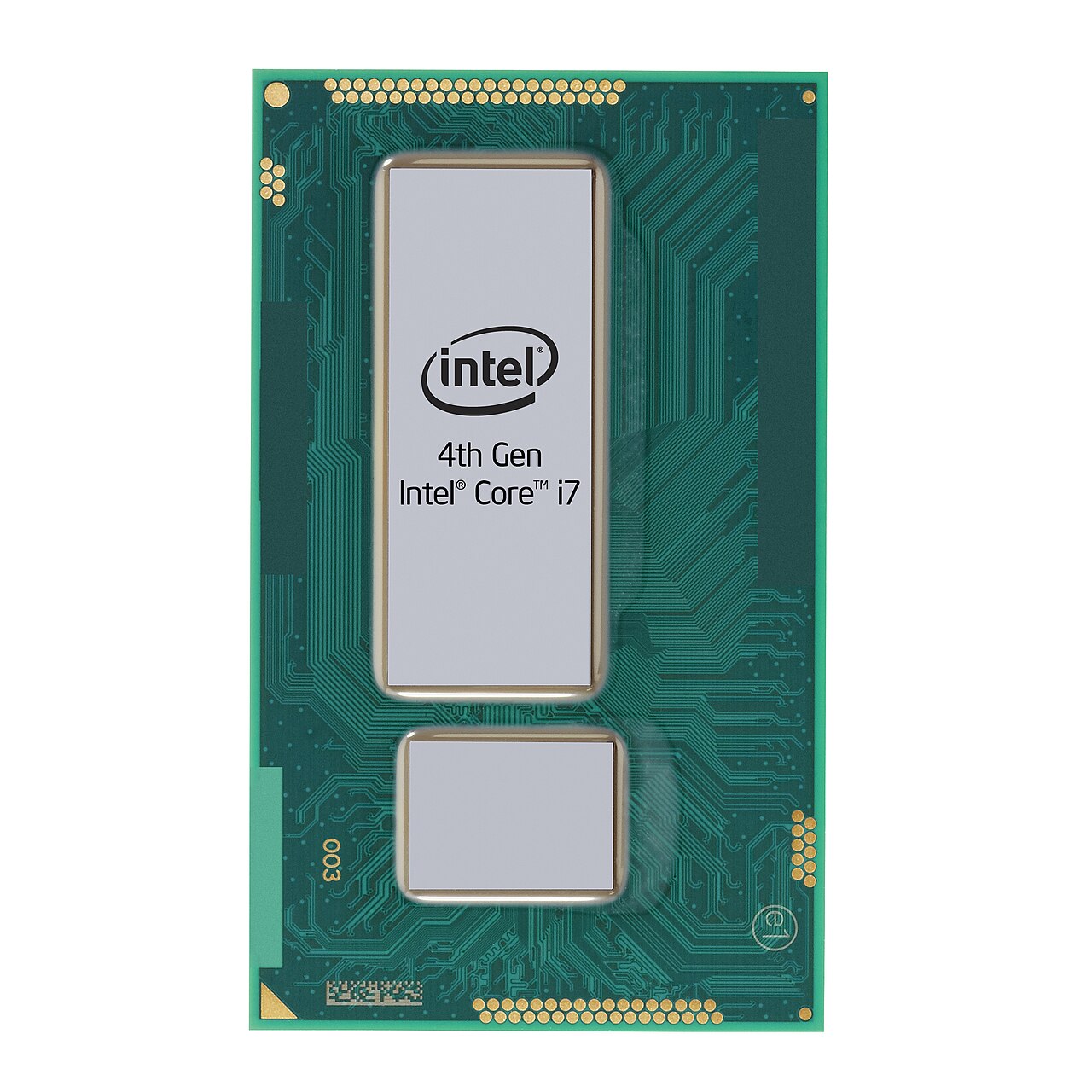
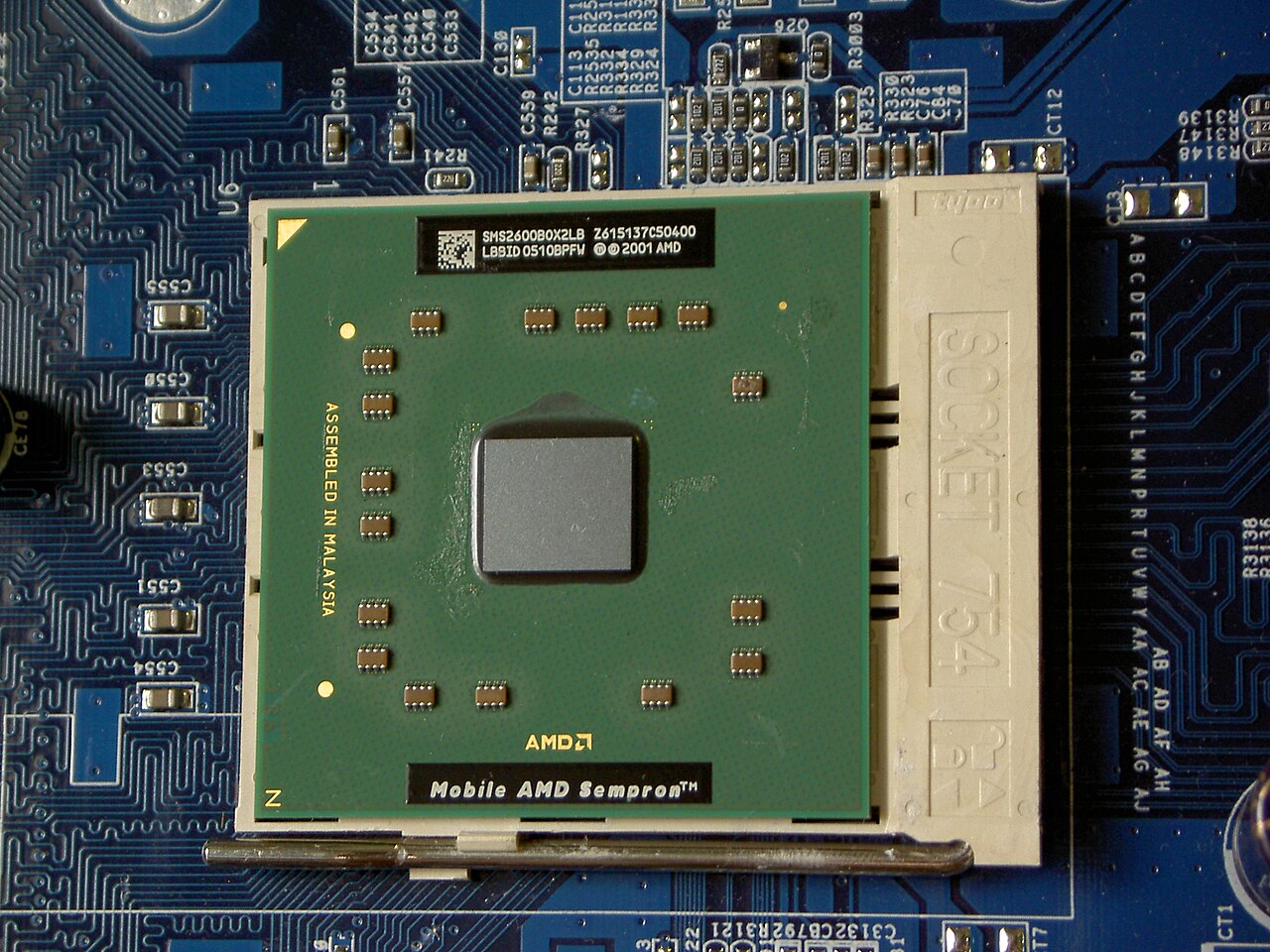
Frequently Asked Questions
What is a mobile processor?
A mobile processor is a microprocessor purpose-built for portable devices such as laptops and smartphones. It runs at reduced voltages and typically stays under a 10-to-15-watt power budget so the device can operate without a cooling fan.
How does a mobile processor conserve energy?
It dynamically throttles its clock speed during light workloads, powers down unused blocks of the chip, and supports deeper sleep modes than desktop parts. Together these features let the processor match its energy draw to whatever task is actually running.
What is the main tradeoff of a mobile processor versus a desktop chip?
The tight power ceiling that keeps a laptop or phone cool and battery-friendly generally means lower sustained performance than the desktop equivalent. Under heavy, prolonged workloads a mobile CPU will typically fall behind its desktop counterpart.
Which architectures do current mobile processors use?
The two dominant families are ARM and x86. On the ARM side you'll find Apple M-series, Qualcomm Snapdragon, Samsung Exynos, and MediaTek chips, while the x86 camp includes Intel Core, Pentium, Celeron, and AMD Ryzen or A-Series APUs.
Are there notable mobile processors from earlier generations?
Yes—designs like the Intel Pentium M, AMD Mobile Athlon 64, and Motorola's PowerPC G4 were all created specifically for portable use. Transmeta's Crusoe and Efficeon chips also belong to that earlier era of dedicated mobile CPUs.
More in Microprocessors 1-24
Spotted an error? Know more?
Reader corrections go straight into our review queue. Suggest an edit · How this site is sourced