Single-core
A microprocessor with a single CPU core on its die.

A single-core processor is a microprocessor that contains only one central processing unit on its chip. It handles the fetch-decode-execute cycle sequentially, operating on a single thread. Because of this, a computer with a single-core CPU generally runs slower than one with multiple cores.
These processors were once common in desktop computers, but as software required more processing power, their slower speeds became a drawback. Windows supported single-core processors until Windows 11, which mandates a dual-core CPU. Single-core chips remain in use for certain niche purposes. Older legacy systems, such as those running outdated operating systems like Windows 98, cannot take advantage of multiple cores. They also appear in hobbyist computers like the Raspberry Pi and single-board microcontrollers. Production of single-core desktop processors ended in 2013 with the Celeron G440, G460, G465, and G470 models.
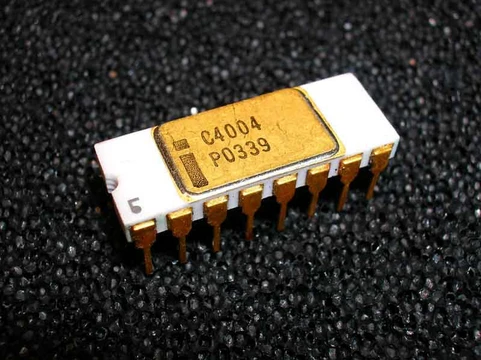
The first single-core processor, the Intel 4004, was commercially released by Intel on November 15, 1971. Since then, single-core processors have seen many improvements, from the 740 kHz clock speed of the 4004 to the 2 GHz of the Celeron G470.
Single-core processors consume less power than larger multi-core chips. They can also be manufactured more cheaply, making them suitable for embedded systems. However, they are generally outperformed by multi-core processors. They are more prone to bottlenecks with faster peripheral components, which must wait for the CPU to finish its cycle. Because they lack parallelization, only one application can run at a time, reducing performance as other processes wait for processor time, which can lead to process starvation.
In the trend toward increasing parallelism, a single-core processor has one processor on a die. Since around 2012, most smartphone CPUs are no longer single-core, though microcontrollers remain single-core with some exceptions. Multi-core processors have a few processors on a die, such as two, four, or eight. Manycore processors have a large number of processors on a die, ranging from tens to hundreds or thousands; some specialist ASICs, accelerators, and GPUs fall into this category.
- First commercial release
- Intel 4004, November 15, 1971
- Clock speed range
- 740 kHz (Intel 4004) to 2 GHz (Celeron G470)
- End of desktop production
- 2013 with Celeron G440, G460, G465 & G470
Lore & Background
The first single-core processor was the Intel 4004, commercially released on November 15, 1971 by Intel. Since then, many improvements were made, with clock speeds increasing from 740 kHz to 2 GHz in the Celeron G470. Single-core processors used to be widespread in desktop computers, but as applications demanded more processing power, their slower speed became a detriment to performance. Windows supported single-core processors until the release of Windows 11, which requires a dual-core processor. Production of single-core desktop processors ended in 2013 with the Celeron G440, G460, G465, and G470. Single-core processors are still used in niche circumstances, such as older legacy systems running antiquated operating systems like Windows 98, which cannot benefit from multi-core processors. They are also used in hobbyist computers like the Raspberry Pi and single-board microcontrollers.
Reader's Guide
Single-core processors draw less power than larger, multi-core processors and can be made more cheaply, making them suitable for embedded systems. However, they are generally outperformed by multi-core processors and are more likely to bottleneck with faster peripheral components, as these components must wait for the CPU to finish its cycle. Single-core processors lack parallelisation, meaning only one application can run at once, which reduces performance as other processes wait for processor time, leading to process starvation. Since about 2012, most smartphone CPUs marketed are no longer single-core, though microcontrollers remain single-core with some exceptions. The trend in processor design has moved from single-core to multi-core (a few processors on a die, e.g., 2, 4, 8) and manycore processors (a large number of processors on a die, e.g., tens, hundreds, thousands), with some specialist ASICs, accelerators, and GPUs falling into the manycore category.
Did You Know?
- The first single-core processor was the Intel 4004, released on November 15, 1971.
- Windows 11 requires a dual-core processor, ending support for single-core CPUs.
More in Microprocessors 1-24
Spotted an error? Know more?
Reader corrections go straight into our review queue. Suggest an edit · How this site is sourced