Yawkyawk
Aboriginal Australian freshwater spirit with fish tail.

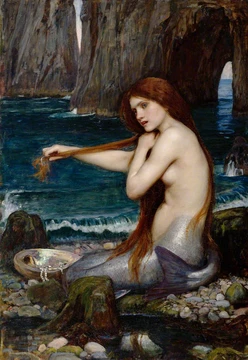
In the mythology of the Kunwinjku people of Western Arnhem Land, the Yawkyawk (also spelled yawk yawk or called ngal-kunburriyaymi) is a female water spirit. Non-Indigenous people often refer to them as mermaids, as they are depicted with a woman’s head and torso, scales on the belly, and a fish tail. The Kunwinjku word *Yawkyawk* means “young woman” or “young woman spirit being.”
An ancient story tells of two young women, Likanaya and Marrayka, who were traveling through Kuninjku Country. They camped too close to the sacred waterhole of Ngalyod (the Rainbow Serpent, a creator being) and were transformed into young girl spirits with fish tails. These transformation tales are closely linked to Ngalyod at certain sacred places.
Yawkyawks are believed to live in freshwater creeks, billabongs, and rock pools. Fish and small insects in these habitats are considered different forms of them, while water weed represents their long hair. They are amphibious and may bask on the banks in the sun. Specific landscape features are tied to parts of the yawkyawk—a river bend may be her tail, a billabong her head—and the stories also tell the tale of a river.
These stories connect clans and other groups across Kuninjku Country and are celebrated in Kunwinjku art, song, and dance. Artists like Lena Yarinkura have depicted the yawkyawk in their work. The myth also serves an educational purpose: yawkyawks are magical and alluring but also warn of danger, especially for children. As guardians of important water sites—essential for survival in the dry season—they caution people not to wander into forbidden places.
- field
- Aboriginal Australian mythology
- nationality
- Kunwinjku people, Western Arnhem Land, Northern Territory, Australia
- known_for
- Female water spirit, guardian of water sites, subject of art and dance
Lore & Background
The ancient myth of the Yawkyawk tells of two young women, Likanaya and Marrayka, crossing Kuninjku Country. They were turned into young girl spirits with fish tails because they camped too close to the sacred waterhole of Ngalyod, the Rainbow Serpent. Yawkyawk transformation stories are closely interwoven with Ngalyod at certain sacred locations.
Reader's Guide
The Yawkyawk are believed to live in freshwater creeks, billabongs, and rock pools, with fish and small insects in these habitats being different forms of them, and water weed signifying their long hair. They are amphibious and may lie in the sun on the banks. Specific geographical features are related to parts of the yawkyawk: a river bend may be her tail, and a billabong her head. Yawkyawk stories link clans and other groupings across Kuninjku Country, and are celebrated in the art, song, and dance of the Kunwinjku people. Artists such as Lena Yarinkura have represented the yawkyawk in their works of art. The story also has educational value; Yawkyawk are magical and enticing but also warn of danger, especially children. As guardians and protectors of important water sites, needed for survival during the dry season, they serve as a warning to people not to wander to places where they should not be.
Did You Know?
- The Yawkyawk is also known as ngal-kunburriyaymi.
- The word Yawkyawk means 'young woman' or 'young woman spirit being' in the Kunwinjku language.
- The myth tells of two young women, Likanaya and Marrayka, turned into spirits with fish tails.
- Water weed signifies the long hair of the yawkyawk.
More in Mermaids 1-24
Spotted an error? Know more?
This is a living reference — every entry is fact-audited, and reader corrections feed straight into our audit queue. Suggest an edit · See this site's audit record