Jengu
Water spirit of the Sawabantu peoples of Cameroon.

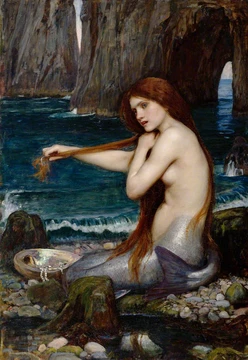
In the traditional beliefs of Cameroon’s Sawabantu groups—such as the Duala, Bakweri, Malimba, Subu, Bakoko, and Oroko—a jengu (plural miengu, also called bisima) is a water spirit. The Bakweri call it liengu (plural maengu). These spirits are described as mermaid-like beings, typically beautiful with long hair and noticeable gap-teeth, though their exact appearance varies by ethnic group. They live in rivers and the sea, bringing good fortune to those who honor them, curing illness, and serving as go-betweens for the living and the spirit world.
The jengu cult is especially important among the Duala. It may have originated with peoples farther west, possibly the Ijo, and spread eastward to the Batanga. Early European records show the cult was already well established by the early 1800s, and early missionaries struggled to suppress it. Originally, only “free” (pure-blooded) Duala could join—a rule that even excluded the Akwa clan because one of their ancestors was a Longasse woman. Today, both men and women can join, though this openness may be recent. Among the Duala and Malimba, worship is mostly male; among the Bakweri, it is mainly female and forms a key part of a young girl’s rite of passage into womanhood.
Jengu worship centers on a secret society led by a person called the ekale, who traditionally wore a mask at meetings (a practice nearly gone by the mid-1900s). Simple rituals involve prayers or sacrifices before fishing or traveling by water. More elaborate ceremonies include dressing in raffia capes, skirts, and headdresses, carrying palm fronds and wooden paddles, and offering food and drink to the spirits from pirogues on the Wouri River and its nearby islands. Healing is a major focus: when mainstream medicine fails, a jengu doctor may sacrifice a cock and goat, give the patient a vomit-inducing medicine, and wave a small stool over their head. The patient then follows a set of taboos. Among the Bakweri, this rite is called Liengu la Vafea.
The most prominent public ceremony today is the annual Ngondo festival in Douala, first held in 1949. The night before the climax, cult members hold a private ceremony on Jebale Island in the Wouri River, where they sacrifice to the miengu and prepare a gift package. The next day, the offering is presented on a beach near Douala. A cult member dives into the sea with the gift, stays underwater as long as p
- Type
- Water spirit
- Culture
- Sawabantu groups of Cameroon (Duala, Bakweri, Malimba, Subu, Bakoko, Oroko)
- Also known as
- Miengu, bisima, liengu (Bakweri)
- Domain
- Rivers, sea, lakes
- Role
- Bringer of good fortune, healer, intermediary between living and spirits
- Similar to
- Bisimbi (Bakongo), Mamba Muntu (West and Central Africa)
Lore & Background
Miengu are typically said to be beautiful, mermaid-like beings with long hair and beautiful gap-teeth. They inhabit both the ocean, rivers, and lakes of Cameroon, acting as guardians of the natural world and controlling the fates of humans and animals. Sawabantu peoples offer sacrifices to miengu spirits and hold extravagant festivals in their honor, determined by ruling families of the Ngondo political body. Jengu specialists, or 'jengu priests' (also called nganga), undergo extensive training to learn rituals to communicate with miengu. The night before festivals, these specialists hold a sacred ceremony on Jebalé Islands in the Wouri River, and the following day a specialist swims an offering deep underwater, re
Reader's Guide
The jengu cult is central to the spiritual life of the Duala and related groups, possibly originating with peoples further west such as the Ijo. Historically, jengu-worship centered on the water spirits as sources of crayfish, the end of the rainy season, victory in pirogue races, and protection from epidemics. Among the Duala, membership was originally reserved to 'free' (pure-blooded) Duala, excluding even the prestigious Akwa clan due to an ancestor being a Longasse woman. The cult remains active in Cameroon's Littoral and Southwest Provinces, with both males and females eligible to join, though among the Duala and Malimba proper it is primarily male, while among the Bakweri it is primarily for women. The highest-profile miengu ceremony today is the annual Ngondo celebration in Douala, first held in 1949, where a diver submerges for three to ten minutes and returns with a dry calabash containing a coded message from the gods.
Did You Know?
- Among the Bakweri, the term for jengu is liengu (plural: maengu).
- Jengu are similar to bisimbi in Bakongo spirituality and Mamba Muntu in West and Central African cultures.
- The jengu cult may have originated with peoples further west, possibly the Ijo, and passed from people to people.
- In the Ngondo festival, the diver returns from underwater with a dry calabash containing a coded message.
The Nature and Appearance of Miengu
Miengu are water spirits in the traditional belief systems of Sawabantu-speaking communities along Cameroon's coast, including the Duala, Bakweri, Malimba, Subu, Bakoko, and Oroko peoples. Among the Bakweri specifically, the term shifts to liengu (plural maengu). These beings are typically described as beautiful, mermaid-like figures with long flowing hair and distinctive gap-teeth. They inhabit the ocean, rivers, and lakes of Cameroon, serving as intermediaries between the living world and the spiritual realm of ancestors. Their role extends beyond mere dwelling in waterways—they function as guardians of the natural world, spiritual guides, and controllers of fate for both humans and aquatic animals. Their existence parallels the simbi of Bakongo spirituality and the Mamba Muntu found across West and Central African cultures. Because they are tied to fortune and destiny, communities that venerate them believe in receiving good fortune in return, making the miengu central figures in the spiritual architecture of these coastal societies.
The Ngondo Festival and the Sacred Dive
The most visible expression of jengu worship today is the annual Ngondo celebration in Douala, first held in 1949. The festival is governed by the Ngondo, a political body of ruling families who declare when the season begins. Once the declaration is made, jengu spiritualists collect offerings from surrounding villages. The night before the festival's climax, these specialists conduct a private sacred ceremony on Jebalé Islands in the Wouri River, where they sacrifice to the water spirits and prepare a package of gifts. The following day, a public ceremony takes place on a beach near Douala, where the tribute is displayed before the Duala chiefs. The ritual's centerpiece involves a traditional diver—accompanied by a woman and two men—who embarks on a ritual boat, submerges in the middle of the river for three to ten minutes, and is believed to visit the ancestral kingdom beneath the waters. He resurfaces carrying a calabash containing a coded prophetic message from the miengu about the year ahead, including news of the Ngondo presidency's successor.
Cult Structure, Origins, and Social Boundaries
The jengu cult is organized around a secret society led by an individual called the ekale, who traditionally wore a mask at all gatherings—a practice that largely faded by the mid-twentieth century. The cult's origins may trace back to peoples further west, possibly the Ijo, before spreading eastward through successive communities to reach the Batanga at its easternmost extent. In its earliest form, worship centered on four specific boons: crayfish harvests, the end of the rainy season, victory in pirogue races, and protection from epidemics. Among the Duala proper, membership was originally restricted to free or pure-blooded Duala, a rule that notably excluded members of the prestigious Akwa clan because one ancestor was a Longasse woman from the Sanaga-Maritime District. European traders and explorers documented the cult's presence by the early nineteenth century, and early missionary efforts to suppress it largely failed. Today the cult remains active in Cameroon's Littoral and Southwest Provinces, with both men and women eligible to join, though this inclusivity may be a relatively recent shift.
Healing, Rites of Passage, and Everyday Devotion
Beyond grand festivals, jengu worship permeates daily life and personal crisis. The simplest acts of devotion involve prayers or food and drink offerings before fishing or traveling by water, sometimes performed from pirogues on the Wouri River while dressed in raffia ceremonial garb. When mainstream healing fails, communities turn to jengu doctors who perform elaborate treatments: sacrificing a cock and goat, administering a vomit-inducing medicine, and waving a small stool over the patient's head, after which the patient must observe a series of taboos. Among the Bakweri, this healing rite is specifically called Liengu la Vafea. The miengu also hold a profound place in life transitions; among the Bakweri, the jengu cult forms an important component of a young girl's rite of passage into womanhood. The cult's specialists, sometimes compared to the banganga of Kongo culture, undergo extensive training to master precise rituals for communicating with the water spirits, ensuring that the bond between the human and spiritual worlds remains intact across generations.
Frequently Asked Questions
What is a Jengu?
A Jengu is a mermaid-like water spirit venerated by the Sawabantu peoples of Cameroon, including the Duala, Bakweri, Malimba, Subu, Bakoko, and Oroko. Depending on the ethnic group, it may also be called miengu, bisima, or liengu.
What does a Jengu look like?
Jengu are typically depicted as beautiful, mermaid-like figures with long hair and distinctive gap-teeth, though their precise appearance shifts from one Sawabantu community to another.
What powers or roles does a Jengu hold?
Jengu act as healers capable of curing illness, bringers of good fortune to those who honor them, and intermediaries who mediate between the living world and the spirit realm.
Where do Jengu dwell?
These water spirits inhabit rivers, the sea, and lakes throughout the regions of Cameroon where Sawabantu groups live.
Why is the Jengu important in Sawabantu culture?
The Jengu cult serves as a central spiritual practice for these communities, with the spirit functioning as a go-between for the living and the spirit world. Honoring the Jengu is believed to bring blessings and healing, making it a cornerstone of traditional Sawabantu belief.
More in Mermaids 1-24
Spotted an error? Know more?
This is a living reference — every entry is fact-audited, and reader corrections feed straight into our audit queue. Suggest an edit · See this site's audit record