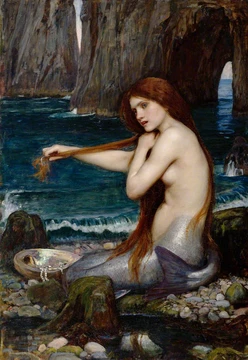
Bunzi
Serpent water spirit and rain goddess of Kongo religion.

Bunzi—also called Mpulu Bunzi or Phulu Bunzi—is a serpent-like water spirit and rain goddess in traditional Kongo religion, originally worshipped by the Woyo people of the Kingdom of Ngoyo. She may appear as a multicolored snake, and those who honor her are said to receive plentiful harvests. At sunset, she is also believed to show herself in the shimmering surface of a river.
In Kongo oral tradition, Bunzi is the child of Mboze, the Great Mother, and her husband Kuitikuiti. Bunzi was born as a tiny serpent. Seeing this, Kuitikuiti realized Mboze had been unfaithful; the biological father was their own son Makanga. Kuitikuiti killed Mboze for this betrayal, and Bunzi then inherited her mother’s power to bring rain. A rainbow in the sky is understood to be Bunzi herself.
Among the Yombe people of the Republic of the Congo, the same spirit is called Phulu Bunzi and is considered a male lord of the waters. He is said to have arranged a pact between Nzazi (the thunder god) and Mbumba (the rainbow water serpent) to keep peace between earth and sky. Once, while visiting Mbumba, Phulu Bunzi’s son died. Holding Mbumba responsible, Phulu Bunzi beheaded him.
A mountain on Venus, Bunzi Mons, was named after this spirit.
- also_known_as
- Mpulu Bunzi, Phulu Bunzi
- domain
- Serpent water spirit, goddess of rain
- culture
- Kongo religion (Woyo people, Kingdom of Ngoyo)
- depicted_as
- Multicolored serpent
- associated_with
- Rain, harvest, rainbow, river water at sunset
- notable_myth
- Daughter of Mboze and Kuitikuiti; took on mother's rain-bringing power
Lore & Background
According to Kongo oral tradition, Bunzi is the daughter of Mboze, the Great Mother, and her husband Kuitikuiti. When Mboze gave birth, Bunzi appeared as a baby serpent. Kuitikuiti, upon seeing the child, knew Mboze had been unfaithful; he learned the biological father was their son Makanga, and killed Mboze for her transgression. Bunzi then took on her mother's rain-bringing power. When a rainbow appears in the sky, that is said to be Bunzi.
Among the Yombe people of the Republic of the Congo, Bunzi is referred to as Phulu Bunzi and is considered a male lord of the water. He is said to have devised a pact between Nzazi (the god of thunder) and Mbumba (the rainbow water serpent) to create harmony between earth and skies. One day while visiting Mbumba, his son died; Phulu Bunzi blamed Mbumba and cut his head off.
Bunzi is also said to appear in the rippling water of the river at sunset, and rewards those who worship her with an abundant harvest.
Reader's Guide
Bunzi holds significance as a central figure in Kongo traditional religion, embodying both the life-giving and destructive aspects of water and rain. Her dual representation—as a female rain goddess among the Woyo and as a male water lord among the Yombe—reflects the diversity of beliefs within the broader Kongo cultural sphere. The myth of her origin, involving betrayal and the transfer of power from mother to daughter, underscores themes of justice, inheritance, and the natural cycle. The story of Phulu Bunzi's pact and subsequent vengeance highlights the fragile harmony between celestial and earthly forces. Bunzi's legacy extends beyond oral tradition into modern nomenclature: the Bunzi Mons, a mountain on Venus, is named after her, marking her place in planetary geography. Her continued presence in the spiritual landscape of Central Africa and her inclusion in comparative studies of water spirits (such as Simbi, Jengu, Kianda, and Mami Wata) demonstrate her enduring cultural relevance.
Did You Know?
- Bunzi is sometimes depicted as a multicolored serpent that rewards worshippers with an abundant harvest.
- According to legend, when a rainbow appears in the sky, that is Bunzi.
- The Yombe people consider Phulu Bunzi a male lord of the water who cut off the head of Mbumba after his son died.
- Bunzi Mons, a mountain on Venus, is named after her.
Origins & the Tragic Birth
In the oral traditions of the Kongo people, Bunzi's entry into the world is marked by a devastating family rupture. She was born to Mboze, the Great Mother, who was married to Kuitikuiti. When Mboze gave birth, the child emerged in the form of a baby serpent. The sight of this offspring immediately revealed to Kuitikuiti that his wife had been unfaithful. The truth behind the betrayal was even more staggering: the biological father of Bunzi was none other than their own son, Makanga. Enraged by this transgression, Kuitikuiti took Mboze's life. Despite the violence that surrounded her birth, Bunzi inherited her mother's extraordinary power to bring rain to the earth. She was first venerated by the Woyo people of the Kingdom of Ngoyo, where she became a central figure in traditional Kongo religion as a serpent water spirit and goddess of rain.
Form & the Promise of Rain
Bunzi is most commonly envisioned as a multicolored serpent, a form that sets her apart from many other water deities in the Kongo spiritual landscape. This vivid, shifting coloration is said to be visible to those who look closely at the rippling surface of a river at sunset, when the water seems to hold her presence within its currents. Her primary domain is rain, and she is understood as a generous figure who rewards devoted worshippers with abundant harvests, making her essential to agricultural communities. Perhaps the most poetic association with Bunzi is the rainbow. According to Kongo legend, when a rainbow arcs across the sky, it is not merely an atmospheric phenomenon but Bunzi herself made visible in the heavens. This connection between the serpent spirit, the rainbow, and the life-giving waters she commands weaves together her identity as both a terrestrial and celestial presence in traditional Kongo belief.
The Yombe Tradition: A Lord of Water
Not all Kongo-speaking peoples conceive of Bunzi in the same way. Among the Yombe people of the Republic of the Congo, the spirit is known as Phulu Bunzi and is regarded not as a goddess but as a male lord of the water. This version of the myth carries a dramatically different narrative. In the Yombe telling, Phulu Bunzi is credited with devising a sacred pact between two other powerful figures: Nzazi, the god of thunder, and Mbumba, the rainbow water serpent. The purpose of this agreement was to establish harmony between the earth and the skies, suggesting a cosmological role of mediator. However, the story takes a violent turn. While Phulu Bunzi was visiting Mbumba, his son died. In his grief and fury, he blamed Mbumba for the child's death and severed his head. This account introduces themes of paternal loss, divine retribution, and the fragile balance between celestial powers that are absent from the Woyo tradition.
Legacy Beyond the Kongo World
Bunzi's influence extends well beyond the river systems and communities of the Kongo cultural sphere. In the modern era, her name has been carried into the nomenclature of planetary science: the Bunzi Mons, a mountain on the planet Venus, bears her name, linking an ancient serpent water spirit to the geology of another world. Within the broader Kongo spiritual family, Bunzi occupies a place alongside other notable water and serpent figures, including Simbi, Jengu, Kianda, and Mami Wata, all of whom share thematic connections to water, transformation, and the liminal space between the human and divine realms. Her presence in both the Woyo and Yombe traditions demonstrates how a single spiritual figure can carry multiple, even contradictory, narratives across different communities. From the Kingdom of Ngoyo to the skies of Venus, Bunzi endures as a symbol of the rain that sustains life and the serpentine power that moves through water and sky alike.
Frequently Asked Questions
Who is Bunzi?
Bunzi, also referred to as Mpulu Bunzi or Phulu Bunzi, is a serpent-like water spirit and rain deity within the traditional Kongo religion. She was originally venerated by the Woyo people of the Kingdom of Ngoyo.
What does Bunzi look like and where can she be seen?
She is typically depicted as a multicolored serpent. In Kongo oral tradition, she is said to reveal herself in the shimmering surface of a river at sunset.
What powers or role does Bunzi hold?
Bunzi serves as a goddess of rain and is closely tied to agricultural abundance; devotees who honor her are promised plentiful harvests. She inherited her mother's rain-bringing power after being born as a tiny serpent.
Who are Bunzi's parents in Kongo mythology?
She is the child of Mboze, the Great Mother, and Mboze's husband Kuitikuiti. When Kuitikuiti saw Bunzi born as a tiny serpent, he concluded that Mboze had been unfaithful.
Why is Bunzi important to Kongo tradition?
Bunzi occupies a central place in Woyo spiritual life as the guardian of rain, harvest, and the rainbow. Her story and worship form a key thread in the broader Kongo oral tradition of the Kingdom of Ngoyo.
More in Mermaids 1-24
Spotted an error? Know more?
This is a living reference — every entry is fact-audited, and reader corrections feed straight into our audit queue. Suggest an edit · See this site's audit record