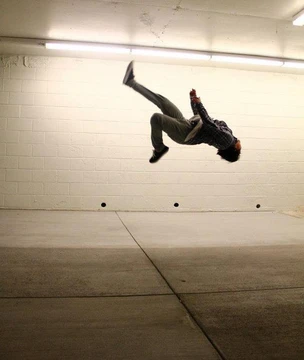
Front kick
A straight forward kick used in many martial arts.

The front kick is a fundamental kicking technique in martial arts, executed by lifting the knee straight forward and extending the leg to strike a target. It is a basic kick in styles such as karate and taekwondo, valued for its speed and versatility in both offense and defense.
Quick Facts
- Revhep
- mae geri
- Hanja
- none
- Rr
- ap chagi
- Mr
- ap' ch'aki
Facts from the source article.
Lore & Background
The front kick is performed by lifting the knee straight forward, keeping the foot and shin either hanging freely or pulled to the hip, then straightening the leg to strike. It is desirable to retract the leg immediately after delivery to avoid grappling. The strike is typically delivered with the ball of the foot (pointing the foot and keeping toes up) or the heel; when heavier footwear is used, the whole sole can be used. In karate, the ball of the foot is preferred for a narrow, penetrating strike, while taekwondo practitioners use both heel and ball. Variations include using the instep for groin strikes, the blade of the foot as a stop-kick, or the heel in tilted forms.
Reader's Guide
The front kick is a core technique in many martial arts, particularly in karate (mae geri) and taekwondo (ap chagi). In karate, it is the main kick in traditional kata and kihon practice, and can be thrusting (kekomi) or snapping (keage). The kekomi form pushes the opponent backward using body weight, while the keage form emphasizes quick retraction for breaking impact. In taekwondo, the front kick is distinct from the push kick in that power is delivered instantaneously. The kick is fast and involves little body motion, making it effective for both offense and defense. Common targets include the stomach, thighs, groin, knees, and lower areas, though skilled practitioners can strike head-level targets. Counters include deflecting the kick, stepping away, or shifting the body, but a careless execution can lead to grappling opportunities for the opponent.
Did You Know?
- The front kick is called mae geri in Japanese and ap chagi in taekwondo.
- In Cambodian martial arts pradal serey and bokator, the front kick is called sniet theak trang or chrot eysei.
- The front kick can be delivered with the ball of the foot, heel, instep, or blade of the foot depending on the style and target.
- A well-executed front kick is considered the fastest kick possible, but a careless execution can allow an opponent to grapple the leg.
More in Martial arts techniques 1-24
Spotted an error? Know more?
Reader corrections go straight into our review queue. Suggest an edit · How this site is sourced