Clinch fighting
Stand-up grappling used to control, strike, or takedown an opponent.

Cpl. Sarah M. Maynard · Public domain
Clinch fighting, also known as trapping, is a phase of stand-up fighting where combatants grapple using clinch holds. It is a fundamental technique in both striking martial arts such as Muay Thai, Lethwei, and Sanda, and grappling arts like Wrestling, Judo, and Brazilian Jiu-Jitsu. Clinch fighting allows a fighter to neutralize an opponent's kicks, punches, and melee weapons, and serves as a transition to ground fighting through takedowns, throws, or sweeps.
- Field
- Combat sports and martial arts
- Known for
- Stand-up grappling, clinch holds, takedowns, and strikes from close range
- Primary sports
- Muay Thai, Lethwei, Wrestling, Judo, Sambo, Brazilian Jiu-Jitsu, Mixed Martial Arts
- Key techniques
- Double collar tie, single collar tie, underhooks, guillotine choke, dirty boxing
Lore & Background
Clinch fighting is emphasized in striking martial arts such as Kun Khmer, Muay Thai, Lethwei, Boxing, and Sanda, as well as grappling arts like Wrestling, Judo, Sumo, Sambo, and Brazilian Jiu-Jitsu. The nature of clinch fighting depends on the rules of each sport: Muay Thai emphasizes strikes from the clinch, while Judo focuses on throws. Some combat sports, like Boxing or Taekwondo, only allow clinching for a short time or disallow it entirely, with warnings or restarts as penalties.
Reader's Guide
In combat sports, clinch fighting is the primary focus of Wrestling and a fundamental part of amateur wrestling, Sambo, Muay Thai, Lethwei, and mixed martial arts. Grapplers use the clinch to advance to dominant ground positions or to score points via throws. The type of techniques employed depends on whether participants wear clothing (gi) that can be grabbed for leverage; in gi competition, grip fighting is emphasized, while in no-gi competition, double underhooks are advantageous. Striking techniques from the clinch include punches, elbows, knees, and headbutts (in Lethwei), while submission holds like the guillotine choke can be applied. The position of a fighter's arms is vital, with fighters keeping arms inside the opponent's and cupping their hands.
Did You Know?
- Clinching can eliminate the opponent's effective usage of some kicks, punches, and melee weapons.
- In Lethwei, headbutts are encouraged and can be effectively used from the clinch.
- The guillotine choke is the most well-known submission hold from the clinch, requiring sufficient leverage.
- In no-gi competition, getting double underhooks is generally considered advantageous for throws or takedowns.
The Clinch as a Strategic Pivot Point
The clinch occupies a unique position in stand-up combat, serving simultaneously as a defensive shield and an offensive doorway. When two fighters lock into close-range grappling, the opponent's ability to deploy long-range tools—kicks, extended punches, or even melee weapons—becomes severely restricted. This neutralization of striking range is one of the clinch's most immediate tactical values. Yet its strategic significance extends far beyond simply shutting down an opponent's offense. The clinch functions as a bridge between two entirely different combat planes: the standing exchange and the ground fight. From this close position, a fighter can execute takedowns, throws, or sweeps that drag the contest onto the mat. This dual purpose is why the clinch commands attention across an extraordinary range of disciplines. Striking traditions like Kun Khmer, Muay Thai, Lethwei, Boxing, and Sanda all build clinch work into their curricula, while grappling systems such as Wrestling, Judo, Sumo, Sambo, and Brazilian Jiu-Jitsu treat it as a foundational entry point. In every case, the clinch is where the geometry of the fight changes, and where one fighter's advantage can be converted into a decisive positional shift.
Rules, Rhythms, and the Sport-Specific Clinch
The way a clinch is executed, judged, and even permitted varies dramatically from one combat sport to the next, shaped entirely by each discipline's rulebook. In wrestling, the clinch is not merely a component but the central stage of the entire contest. It is equally a fundamental pillar of amateur wrestling, sambo, Muay Thai, Lethwei, and mixed martial arts, though each sport carves out a different emphasis. Muay Thai fighters, for instance, treat the clinch as a striking platform, raining down knees and elbows while maintaining a grip. Judo, by contrast, views the same close position as a launching pad for throws. What unites all these sports is a shared allowance for the grappling contact needed to establish a clinch in the first place. Other disciplines draw a much tighter line. Boxing and Taekwondo either restrict clinching to brief moments or forbid it outright. When a fighter in those sports holds on too long, the referee issues a warning or resets the bout by separating the competitors and restarting from a distance. The result is that the clinch can be the heart of a fight in one arena and a rule violation in another, all within the same family of stand-up combat.
Grip, Position, and the Mechanics of Control
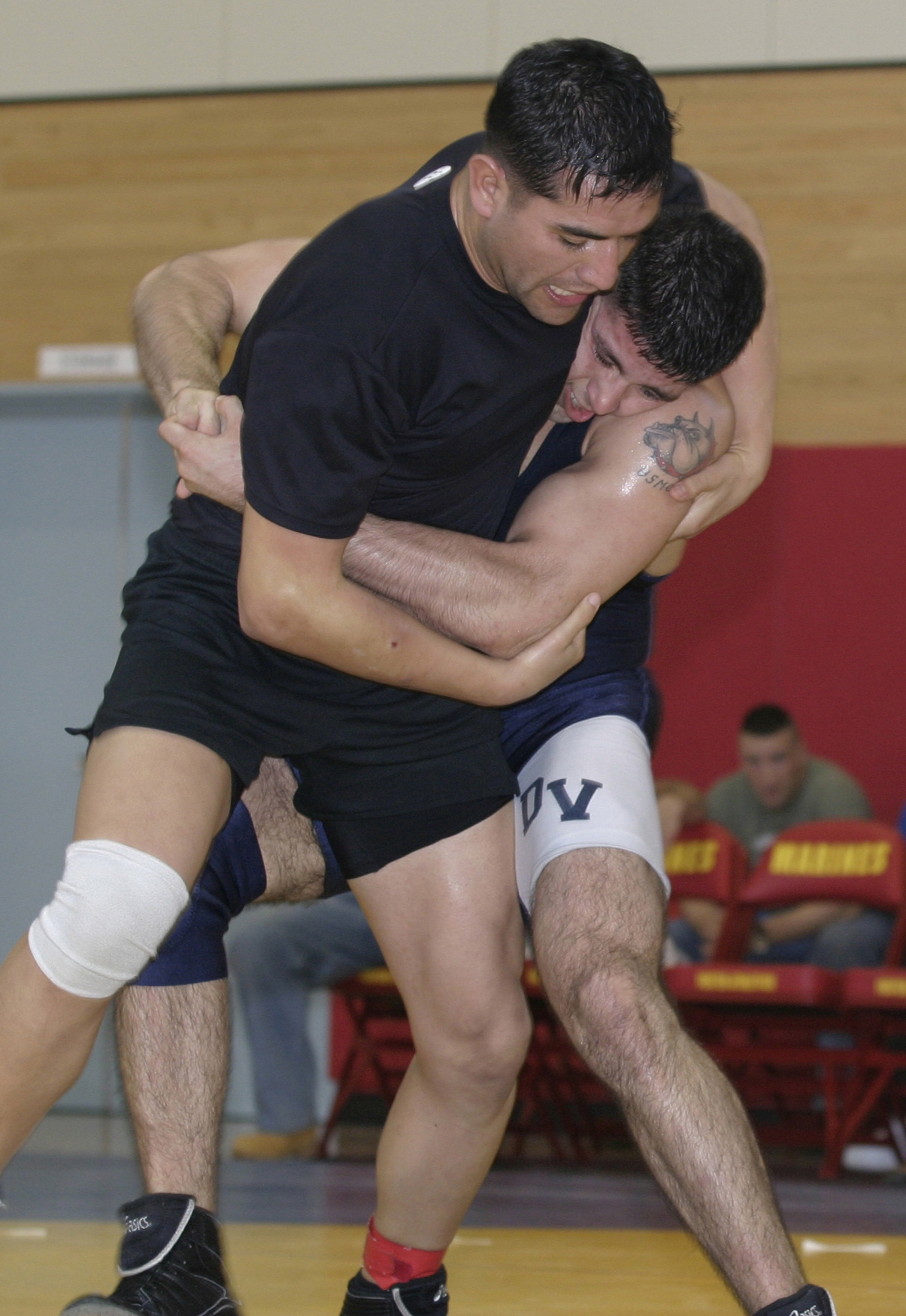
The physical mechanics of clinch grappling hinge on two critical variables: what the fighters are wearing and where their arms end up relative to each other. In gi-based competitions—judo, sambo, and many Brazilian Jiu-Jitsu divisions—the thick fabric of the judogi, Dalian jacket, Kurtka, or BJJ gi becomes the primary tool. Fighters engage in intense grip fighting, scrambling to seize a dominant hold on the opponent's clothing so they can unbalance and throw. Brazilian Jiu-Jitsu uniquely runs parallel gi and no-gi divisions, reflecting how much the garment changes the game. In no-gi settings, where there is no fabric to grab, the double underhook becomes the gold-standard position, offering a stable base from which to execute throws or takedowns. Securing the back of the opponent from that position is considered even more dominant, as it makes defense far more difficult and opens the door to techniques like the suplex. Regardless of the format, arm geometry is non-negotiable. A fighter always works to keep his arms on the inside of his opponent's, pressing elbows together to tighten the grip, and maintains a cupping hand position to maximize control and minimize the chance of being stripped.
Striking and Submission from Close Range
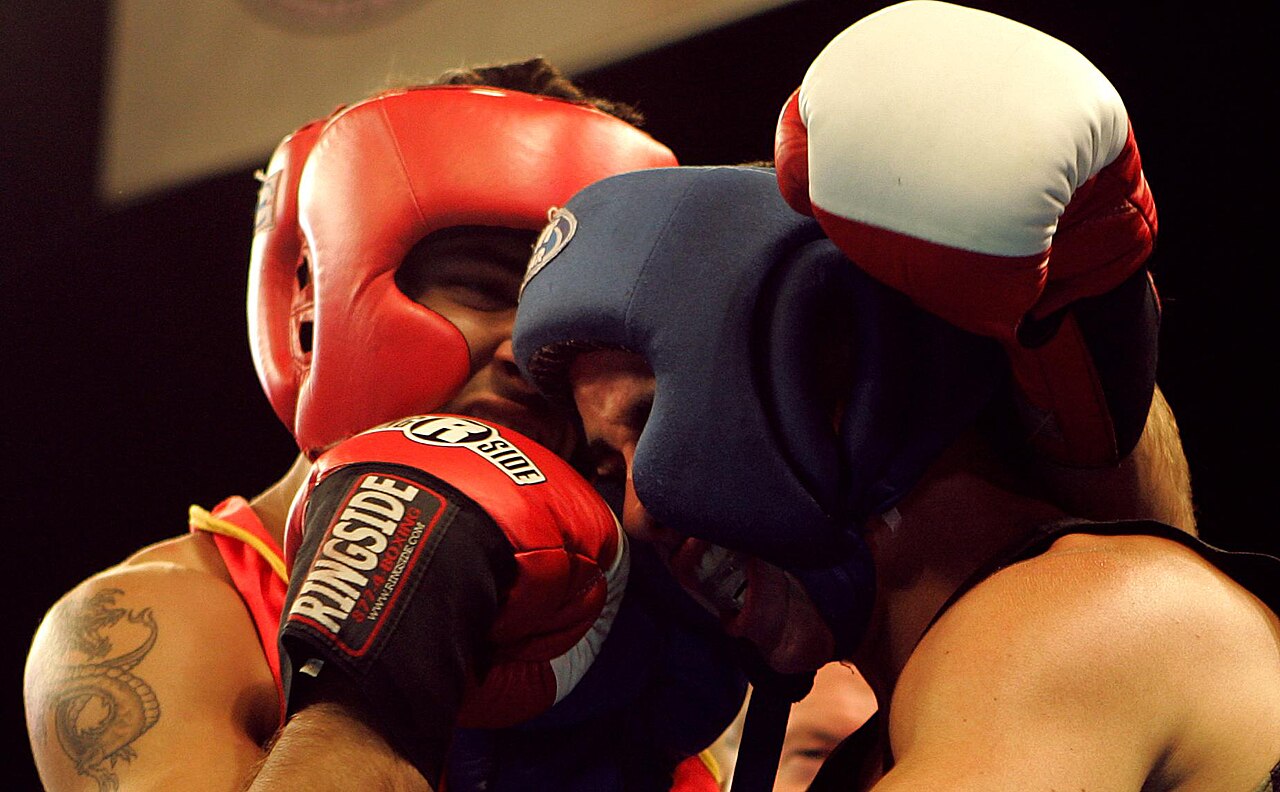
Once two fighters are locked in the clinch, a surprisingly rich arsenal of both striking and submission options becomes available, though the short distance reshapes what is effective. Punching, elbow strikes, and knee strikes—collectively sometimes called dirty boxing—form a core part of Muay Thai, Bajiquan, Wing Chun, Lethwei, and mixed martial arts. From a single collar tie, short looping punches like hooks and uppercuts as well as elbows find their target with minimal wind-up. Lethwei stands apart by actively encouraging headbutts from the clinch, a technique banned in most other sports. Kicks are largely neutralized by the close range, though a few remain viable; in some MMA competitions, stomps to the opponent's feet are employed. Wing Chun practitioners often use simultaneous grabs and traps at the elbows, wrists, or behind the neck to create an opening for a strike, while Muay Thai fighters use the double collar tie to lock down an opponent and drive knees into the head or midsection. On the submission side, options are more limited without going to the ground. The guillotine choke, applied from a single or double collar tie, is the most well-known, with height providing the leverage needed. Rarer clinch submissions include the arm triangle, rear naked choke, and Ezekiel choke.
Gallery
Frequently Asked Questions
What is Clinch fighting and what does it actually involve?
Clinch fighting is a close-range grappling phase of stand-up combat where fighters lock onto their opponent using collar ties, underhooks, or body holds. It is sometimes called 'trapping' and functions as the bridge between pure striking and ground-based grappling.
What are Clinch fighting's key techniques and signature moves?
Core tools include the double collar tie, single collar tie, underhooks, the guillotine choke, and 'dirty boxing' short-range strikes delivered while locked in. Together these let a fighter control distance, set up takedowns, or land elbows and knees at point-blank range.
Which martial arts and sports rely heavily on Clinch fighting?
It is a foundational element in Muay Thai, Lethwei, Sanda, Wrestling, Judo, Sambo, and Brazilian Jiu-Jitsu, and it remains a critical component in modern Mixed Martial Arts. Virtually any discipline that blends striking with grappling will feature clinch work.
How does Clinch fighting neutralize an opponent's strikes and weapons?
By securing a clinch hold, a fighter can smother incoming kicks, punches, and even blade attacks, stripping the opponent of the room needed to generate full-range power. Once control is established, the fighter can transition into a takedown, throw, or sweep to bring the fight to the ground.
Why is Clinch fighting considered so important in combat sports?
It acts as the connective tissue between standing strikes and ground grappling, making it the phase where many bouts are effectively decided. Without solid clinch work, a striker can be overwhelmed by a grappler, and a grappler cannot safely reach the ground to finish the fight.
More in Martial arts techniques 1-24
Spotted an error? Know more?
Reader corrections go straight into our review queue. Suggest an edit · How this site is sourced