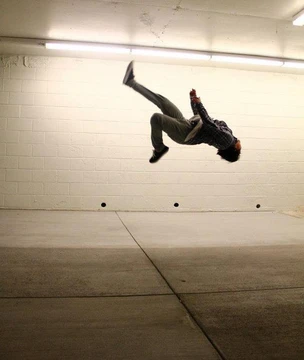
Foot sweep
A leg-based trip used across martial arts worldwide.

The foot sweep, sometimes written as footsweep, is a technique found across numerous martial arts. It involves using any part of the foot or leg to trip an opponent or disrupt their balance. As a basic act of aggression, foot sweeps have likely been used by humans worldwide since prehistoric times, which is why they appear in so many different fighting systems. The earliest recorded instances of foot sweeps for self-defense, sport, and combat, however, come from Chinese martial arts, Judo, Jujutsu, Karate, and Muay Thai.
In Judo, foot sweeps fall under the category of *ashi waza* (leg techniques). Examples include *de ashi barai*, *okuri ashi barai*, and *harai tsurikomi ashi*. (Note: *ko uchi gari* is classified as a reap, not a sweep.)
Other common types of foot sweeps include the drop sweep, often what people picture when they hear "foot sweep." This involves spinning and sweeping one or both legs from a crouched position. The single-leg sweep is used when an opponent has one foot off the ground, typically during a kick; the defender moves past the kick and sweeps the standing leg. A trap sweep is a variation where the defender catches the opponent's kick with one hand and sweeps the back leg, offering closer proximity and less chance of failure but leaving the defender open to head strikes. The two-leg sweep targets both of the opponent's legs while they are on the ground, often combined with a blow to the chest for extra off-balancing. A forward sweep strikes the front of the opponent's legs rather than the back, and is considered more dangerous because it can injure the knees or shins if applied too forcefully. The scissor sweep involves placing one leg across the opponent's lower chest or stomach and striking behind the knee or calves with the other leg, closing the legs like scissors. It can be used offensively by leaping toward the opponent, but is more common as an escape when the opponent has trapped the defender's kick. The reverse scissor sweep is an offensive variant done from the opposite position: the higher leg strikes the opponent's back while the lower leg scissors against the front of their knees. Like the forward sweep, it carries a risk of injury to the knees, spine, and kidneys.
- Field
- Martial arts technique
- Known for
- Tripping or off-balancing an opponent using the foot or leg
- Earliest documented in
- Chinese Martial arts, Judo, Jujutsu, Karate, Muay Thai
- Judo category
- Ashi waza (足技)
Lore & Background
Foot sweeps are part of Judo's ashi waza (足技). Examples of foot sweeps in judo include De ashi barai, Okuri ashi barai, and Harai tsurikomi ashi. (Note: Ko uchi gari is classified as a reap, not a sweep.) Other types include the drop sweep, commonly thought of when someone hears 'foot sweep,' which involves spinning and sweeping one or two legs from a crouched position. This move is sometimes compared to the back sweep (后扫腿) in some styles of Kung-fu, but they are distinct techniques.
Reader's Guide
The foot sweep is a fundamental technique in numerous martial arts, with documented use in Chinese Martial arts, Judo, Jujutsu, Karate, and Muay Thai. Its variants serve different tactical purposes: the single-leg sweep targets an opponent with one foot off the ground, while the trap sweep adds a catch to reduce failure risk. The two-leg sweep strikes behind both legs, often with a chest blow. The forward sweep is considered more dangerous due to potential knee or shin injury. The scissor sweep and reverse scissor sweep involve leg scissoring motions, with the reverse variant posing risks to the opponent's knees, spine, and kidneys. These techniques illustrate the foot sweep's adaptability across combat and sport contexts.
Did You Know?
- Foot sweeps have likely existed worldwide since prehistory.
- The forward sweep is considered more dangerous due to possible injury to the opponent's knees or shins.
- The reverse scissor sweep can be dangerous due to potential injury to the opponent's knees, spine, and kidneys.
More in Martial arts techniques 1-24
Spotted an error? Know more?
Reader corrections go straight into our review queue. Suggest an edit · How this site is sourced