Southern Hemisphere
The Southern Hemisphere is Earth's southern half, mostly ocean.

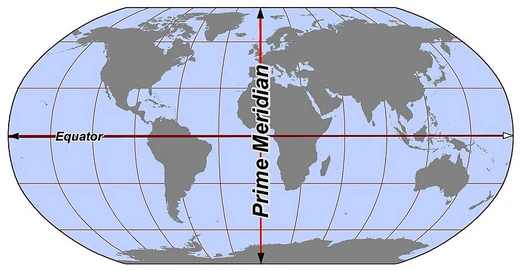
The Southern Hemisphere is the half of Earth located south of the equator. It includes all or parts of five continents: all of Antarctica and Oceania, roughly 90% of South America, about one-third of Africa, and some islands off mainland Asia. Its oceans are the entire Southern Ocean, most of the Indian Ocean, and the South Atlantic and South Pacific. New Zealand and most Pacific Islands in Oceania are also here. Water covers 80.9% of its surface, compared to 60.7% in the Northern Hemisphere, and it holds 32.7% of Earth’s land. Over 850 million people live here, about 10–12% of the global population.
Because of Earth’s axial tilt, summer runs from December to February and winter from June to August. The vernal equinox occurs around September 22 or 23, and the autumnal equinox around March 20 or 21. The South Pole sits at the center of this hemisphere.
Southern Hemisphere climates are generally milder than those at similar northern latitudes, except in Antarctica, which is colder than the Arctic. This is due to much more ocean and less land—water heats and cools more slowly—along with oceanic heat transfer and differences in greenhouse trapping. The lowest temperature ever recorded on Earth was at Antarctica’s Vostok Station: −89.2 °C (−128.6 °F) on July 21, 1983. The Northern Hemisphere’s record low is −69.6 °C (−93.3 °F) in Greenland on December 22, 1991. The Southern Hemisphere’s highest recorded temperature is 50.7 °C (123.3 °F), tied between Oodnadatta, South Australia (January 2, 1960) and Onslow, Western Australia (January 13, 2022). A 1922 reading of 58 °C (136.4 °F) in El Azizia, Libya, was long cited as the world record but was decertified in 2012 due to measurement errors; the 56.7 °C (134 °F) in Death Valley, California (July 10, 1913) replaced it.
In the Southern Hemisphere, the Sun travels from east to west through the north, though north of the Tropic of Capricorn it can be directly overhead or due south at midday. The Sun moves right to left across the northern sky, opposite the left-to-right motion seen in the Northern Hemisphere. Shadows turn anticlockwise during the day, and sundials have hours increasing anticlockwise. During solar eclipses viewed south of the Tropic of Capricorn, the Moon moves left to right across the Sun; north of the Tropic of Cancer, it moves right to left. The Coriolis effect makes cyclones and tropical storms spin clockwise here, versus anticlockwise in the Northern Hemisphere. The southern temperate zone is almost entirely ocean.
The night sky is excellent for viewing: the Sagittarius constellation, which contains the galactic center, is a southern constellation, along with both Magellanic Clouds. Clearer skies and brighter, more numerous stars are common. Air pollution is significantly lower than in the Northern Hemisphere, because most of Earth’s population and major industrial powers—including high-emission countries like China and India—are in the north. The 1986 Chernobyl nuclear disaster did not affect the Southern Hemisphere; small traces were found in northern locations like the United States, Canada, and Japan, but none in the south.
Forests here have unique features. Chile and Australia share beech species of the genus *Nothofagus*, while New Zealand has closely related *Lophozonia* and *Fuscospora*. Eucalyptus, native to Australia, is now planted in Southern Africa and Latin America for pulp and increasingly for biofuel. Some African animals, like chimpanzees and gorillas, live in both hemispheres. Eastern gorillas are native to three Southern Hemisphere countries: Rwanda (entirely below the equator) and the Democratic Republic of the Congo and Uganda (trans-hemispheric). Western gorillas are found in Angola, the Democratic Republic of the Congo, Equatorial Guinea, Gabon, and the Republic of the Congo, as well as in Northern Hemisphere countries Cameroon and Nigeria. The common chimpanzee ranges across both hemispheres, from Guinea and Senegal in the west to Tanzania and Uganda in the east, with populations in several countries partly or wholly south of the equator, including Burundi, the Democratic Republic of the Congo, Gabon, and the Republic of the Congo. The bonobo species is found only in the Southern Hemisphere.
- Area
- 80.9% water, 19.1% land
- Largest country
- Brazil
- Smallest country
- Nauru
- Number of independent countries
- 48 (fully or partially)
- Number of countries entirely below equat
- 34
Lore & Background
Owing to the tilt of Earth's rotation relative to the Sun and the ecliptic plane, summer in the Southern Hemisphere is from December to February and winter from June to August. The vernal equinox occurs on September 22 or 23, and the autumnal equinox on March 20 or 21. Southern Hemisphere climates tend to be slightly milder than those at similar latitudes in the Northern Hemisphere, except in the Antarctic which is colder than the Arctic, because the Southern Hemisphere has significantly more ocean and much less land; water heats up and cools down more slowly than land. The differences are also attributed to oceanic heat transfer and differing extents of greenhouse trapping. In the Southern Hemisphere, the Sun passes from east to west through the north, and sun-cast shadows turn anticlockwise throughout the day. The Coriolis effect causes cyclones and tropical storms to spin clockwise. The southern temperate zone is nearly all oceanic. Forests in the Southern Hemisphere have special features, including unique beech species or Nothofagus in Chile and Australia, and members of the closely related genera Lophozonia and Fuscospora in New Zealand. Notable animals include the spectacled bear, the only bear species in the Southern Hemisphere, and penguins, one of the most notable animals found almost exclusively there. Australia and Madagascar developed many endemic animals due to geological isolation, including kangaroos, koalas, platypuses, Tasmanian devils, emus, echidnas, quokkas, cassowaries, lemurs, aye-ayes, fossas, indris, sifakas and panther chameleons.
Reader's Guide
The Southern Hemisphere is significant as the less populated and more oceanic half of Earth, containing only 32.7% of the planet's land but 80.9% of its water. Its climate patterns, ocean currents, and seasonal cycles are distinct from the Northern Hemisphere due to the greater proportion of ocean, which moderates temperatures. The hemisphere is home to unique ecosystems and endemic species, particularly in Australia, Madagascar, and New Zealand, which evolved in isolation. Its lower air pollution levels reflect the smaller human population and industrial activity compared to the Northern Hemisphere. The Coriolis effect causes opposite rotation of cyclones, and the Sun's apparent path across the northern sky creates anticlockwise shadow movement. The hemisphere includes 48 independent countries, with Brazil as the largest and Nauru the smallest. Its legacy includes the extinction of the dodo and the development of several domestic dog breeds, as well as the ongoing hope of Bolivia to regain sovereign access to the sea.
Did You Know?
- The Southern Hemisphere contains 80.9% water, compared to 60.7% in the Northern Hemisphere.
- Summer in the Southern Hemisphere is from December to February, and winter from June to August.
- The spectacled bear is the only bear species that occurs in the Southern Hemisphere.
Frequently Asked Questions
What exactly is the Southern Hemisphere?
It is the portion of Earth's surface located on the south side of the equator. It encompasses all or part of five continents and four oceans, and is far more dominated by open water than by land.
How much of the Southern Hemisphere is covered by water?
About 80.9% of its surface is ocean, leaving roughly 19.1% as land. That is a much higher water ratio than the Northern Hemisphere, which sits at around 60.7% water.
What are the largest and smallest countries in the Southern Hemisphere?
Brazil is the biggest nation in the group, while Nauru is the tiniest. Altogether, 48 independent countries are either fully or partially situated in the southern half of Earth.
How many countries lie entirely south of the equator?
Thirty-four nations sit completely below the equator line. The other 14 of the 48 total straddle the equator, with territory in both hemispheres.
More in Lines & Hemispheres 1-24
Related in Lines & Hemispheres
Links follow this subject's own source article.
Spotted an error? Know more?
This is a living reference — every entry is fact-audited, and reader corrections feed straight into our audit queue. Suggest an edit · See this site's audit record