West
Cardinal direction opposite east, where the Sun sets.

West is a cardinal direction, located opposite east, marking where the Sun goes down each day. The term comes from a Germanic root, *wes, linked to the Indo-European *wes-pero for "evening" or "night," and is related to Ancient Greek *hesperos* and Latin *vesper*, both meaning "evening" or "west." In many languages, the word for west reflects this connection to sunset—for instance, French *ouest*, Italian *ovest*, Spanish *oeste*, and Hebrew *maarav*, which comes from *erev* ("evening"). West is often shortened to W.
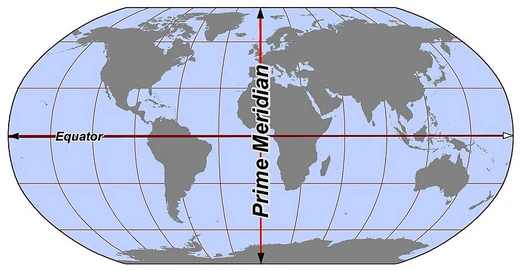
For navigation, a compass bearing of 270° points west (assuming magnetic north aligns with true north). Since Earth rotates eastward, the Sun appears to move west and set in that direction—but on Venus, which spins backward, the Sun would rise in the west and set in the east, though its thick clouds block any view. On a standard map with north at the top, west is on the left. Traveling continuously west follows a line of latitude.
In the middle latitudes (roughly 35 to 65 degrees), the prevailing winds—called westerlies—blow from the west due to Earth's rotation.
Culturally, "the West" often refers to the Western world, including the European Union, EFTA countries, the United Kingdom, the Americas, Israel, Australia, New Zealand, and partly South Africa. This concept traces back to the Western Roman Empire and Western Christianity. During the Cold War, "the West" meant the NATO alliance, as opposed to the Warsaw Pact and non-aligned nations; the term persists today with a less clear meaning.
Symbolically, in Chinese Buddhism, the west represents movement toward the Buddha or enlightenment, as in *Journey to the West*. The Aztecs saw it as the realm of the goddess of water, mist, and maize. In ancient Egypt, the west was the gateway to the afterlife, linked with death but not always negatively; the goddess Amunet personified it. The Celts believed the Otherworld lay beyond the western sea. In Judaism, the west points toward God's presence (Shekinah), since the Tabernacle and Temple faced east, with the Holy of Holies to the west; the Israelites crossed the Jordan westward into the Promised Land. In Islam, cardinal directions hold spiritual meaning, but the Qur'an (2:115) emphasizes that God is everywhere: "To God belong the East and the West. Wheresoever you turn, there is the Face of God." In American literature, such as *The Great Gatsby*, moving west can symbolize freedom, echoing the settlement of the Wild West and ideas like Manifest Destiny.
- type
- Cardinal direction
- abbreviation
- W
- opposite direction
- East
- etymology
- Germanic word from Indo-European *wes ('evening')
- cultural associations
- Western world, Western Roman Empire, Western Christianity, NATO camp
Lore & Background
West is one of the four cardinal directions, situated opposite east and marked by the setting sun. Its name originates from the Indo-European root *wes, a shortened form of *wes-pero meaning "evening" or "night," linking it linguistically to the Ancient Greek *hesperos* (evening, evening star, western) and Latin *vesper* (evening, west). Similar formations appear in Latin *occidens*, from *occidō* ("to go down, to set"), and Hebrew *maarav*, from *erev* ("evening"). The direction is sometimes abbreviated as W. On Earth, west is the direction opposite the planet's rotation, so the Sun appears to progress westward and set there; on Venus, which rotates retrograde, the Sun would rise in the west and set in the east. On a standard map with north at the top, west lies to the left. Following a continuous westward path traces a circle of latitude. In navigation, a compass bearing of 270° points west (assuming magnetic north aligns with true north). Prevailing winds in the middle latitudes—between 35 and 65 degrees—often blow from the west, known as the westerlies. Culturally, "the West" refers to the Western world, including the European Union, EFTA countries, the United Kingdom, the Americas, Israel, Australia, New Zealand, and parts of South Africa, with roots in the Western Roman Empire and Western Christianity; during the Cold War, it denoted the NATO alliance. Symbolically, in Chinese Buddhism, west represents movement toward enlightenment; the Aztecs associated it with a goddess of water, mist, and maize; in Ancient Egypt, it was the portal to the netherworld and linked to death, personified by the goddess Amunet; Celts placed the Otherworld beyond the western sea. In Judaism, west is toward the Shekinah (divine presence), as the Temple faced east with the Holy of Holies to the west. Islam emphasizes divine omnipresence over directional symbolism, citing the Qur'anic verse that east and west belong to God. In American literature, moving west has symbolized freedom, tied to the Wild West and Manifest Destiny.
Reader's Guide
West holds significant cultural and symbolic meanings across civilizations. In Chinese Buddhism, the West represents movement toward the Buddha or enlightenment. The ancient Aztecs believed the West was the realm of the great goddess of water, mist, and maize. In Ancient Egypt, the West was considered the portal to the netherworld, associated with death, and the Goddess Amunet was a personification of the West. The Celts believed that beyond the western sea lay the Otherworld, or Afterlife. In Judaism, west is seen to be toward the Shekinah (presence) of God, as the Tabernacle and Jerusalem Temple faced east with God's Presence in the Holy of Holies to the west. In Islam, the Qur'an states: 'To God belong the East and the West. Wheresoever you turn, there is the Face of God.' In American literature, moving West has sometimes symbolized gaining freedom, associated with the settling of the Wild West. The phrase 'the West' often refers to the Western world, including the European Union, the United Kingdom, the Americas, Israel, Australia, New Zealand, and South Africa, with roots in the Western Roman Empire and Western Christianity.
Did You Know?
- West is the direction opposite that of the Earth's rotation on its axis.
- On Venus, due to retrograde rotation, the Sun would rise in the west and set in the east.
- The prevailing wind in many middle latitudes (35 to 65 degrees) is from the west, known as the westerlies.
- In Ancient Egypt, the West was considered the portal to the netherworld and associated with death.
Frequently Asked Questions
Where does the name West come from linguistically?
The term descends from a Germanic word built on the Proto-Indo-European root *wes, which carried the sense of 'evening.' That same root also produced the Greek ἕσπερος and the Latin vesper, all binding the direction to the closing of the day.
What is West's direct opposite in the cardinal framework?
West stands squarely across from East, forming one of the two primary axis pairs that define the four-point compass. Their relationship is purely oppositional: West marks the Sun's descent while East marks its rise.
What cultural and political associations does West carry in the canon?
Within the broader narrative, West is linked to the Western Roman Empire, Western Christianity, and the NATO-aligned bloc. These ties give the direction a layered historical and geopolitical identity that goes well beyond its simple geographic function.
More in Lines & Hemispheres 1-24
Spotted an error? Know more?
This is a living reference — every entry is fact-audited, and reader corrections feed straight into our audit queue. Suggest an edit · See this site's audit record