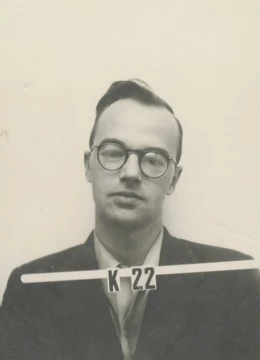
William Unek
Ugandan serial mass murderer who killed 58 in two sprees.

William Unek, who died on 20 February 1957, was a Ugandan who killed 58 people across two separate killing sprees in the mid-1950s. The first took place in the Belgian Congo (now the Democratic Republic of Congo), and the second in Tanganyika Territory (now Tanzania). He used a machete in the first attack and a gun and axe in the second.
His name followed a patronymic system: William was his given name, and Unek his father’s name. Formal sources, including the police, referred to him as “Constable William,” not “Constable Unek.” Reports described him as a “Uganda man,” and the East African Standard identified him as an ethnic Acholi, a claim repeated by The Times. However, a joint investigation by Congolese and Ugandan authorities found that William Unek was an alias. His birth name was Adrogo s/o Urwinyo, an Alur from the Jahoulur chiefdom in Okoro County, West Nile District. The Alur kingdom, spanning northeastern Congo and northwestern Uganda, had an arrangement with colonial authorities that allowed self-regulated border crossings through individual chiefdoms.
In either February 1954 or mid-1955, on a Saturday night, Adrogo invited 22 family members to a banquet at his home in Angala village, Mahagi territory, near the Congo–Uganda border, for an indigenous festival. After the celebration, 20 relatives went to sleep; two children went outside to play. Adrogo used a machete—often misreported as an axe—to kill the sleeping guests. He then set the house on fire and fled, encountering the two children nearby and killing them as well. Taking advantage of the late hour on a weekend, he obtained a boat on Lake Albert and crossed into Uganda. Despite extensive searches and inquiries from Congo authorities to the Ugandan administration, he was never found. The killings shocked both native and colonial populations.
All 22 victims were relatives, though English sources reported only 21. Belgian Congo authorities said Adrogo blamed close relatives for infertility in his second marriage, accusing them of “hexes.” He showed signs of neurasthenia, an obsolete term for physical and mental fatigue.
Adrogo eventually reached Tanganyika Territory, where he adopted the false identity William Unek and claimed to be Acholi, a Luo people from northern Uganda. The British regarded the Acholi as a “martial race” and often assigned them to military duty.
Quick Facts
- Birth Name
- Adrogo
- Death Date
- 20 February 1957
- Birth Place
- Okoro County, West Nile District, Protectorate of Uganda
- Death Cause
- Gunshot wound
- Occupation
- Police constable
- Date
- February 1954 or mid-1955 / 11–16 February 1957
- Criminal Charge
- Murder
- Wanted By
- Belgian Congo
- Fatalities
- 58
- Injuries
- 32+
- Weapons
- Machete (Congo) / Axe, .303 British rifle, arson (Tanganyika)
- Apprehended
- 19 February 1957
Facts from the source article.
Lore & Background
William Unek, born Adrogo s/o Urwinyo, was an Alur from the Jahoulur chiefdom in Okoro County, West Nile District. While living in the Belgian Congo, he killed 22 of his relatives in a mass stabbing in Mahagi territory during a family reunion, apparently believing they were responsible for sabotaging his marriage using witchcraft. He fled to Tanganyika Territory, where he assumed the false identity of William Unek and became a police constable under the British administration.
After about two years, suspecting his new spouse was having an affair with his boss, he committed a second spree killing in and around Malampaka village, killing 36 people with a rifle and an axe. The attack began at the police post and spread into the town and surrounding countryside. Following a nine-day manhunt, William was fatally wounded during his capture; his true identity and connection to the earlier murders were discovered a month later.
A joint investigation determined that William Unek was an alias, and that he was born Adrogo s/o Urwinyo, an Alur. The Alur kingdom had an arrangement with colonial authorities allowing self-regulated border crossings. Reports described him as 'always quiet and reserved' and noted he showed signs of neurasthenia.
Reader's Guide
William Unek's significance lies in the scale and brutality of his two spree killings, which claimed 58 lives across two colonial territories. His case highlights the mobility of individuals across colonial borders in East Africa, enabled by the Alur kingdom's autonomous border crossings and the British practice of minimal background checks for African police recruits. The fact that he could flee a mass murder in the Belgian Congo, assume a new identity, and join the Tanganyika Police Force underscores the limited communication between colonial administrations. His crimes also reflect the intersection of personal motives—such as belief in witchcraft and marital jealousy—with the availability of firearms and the authority of a police uniform. The joint investigation between Congolese and Ugandan authorities that uncovered his true identity illustrates the belated coordination that sometimes occurred. Unek's story remains a cautionary tale about the dangers of unchecked migration and the potential for violence when personal grievances are combined with access to weapons and official power.
Did You Know?
- William Unek killed 22 relatives in a mass stabbing during a family reunion in the Belgian Congo, believing they had used witchcraft to sabotage his marriage.
- After fleeing to Tanganyika, he became a police constable under the British administration, serving as an askari in Malampaka village.
- His second spree killing, in February 1957, involved a mass shooting and axe attack that killed 36 people, including 11 near the police post.
- His true identity as Adrogo s/o Urwinyo, an Alur, was discovered a month after his death during a joint investigation by Congolese and Ugandan authorities.
Frequently Asked Questions
Who is William Unek?
William Unek was a Ugandan former police constable who carried out two separate mass killings in the mid-1950s, killing a combined total of 58 people. He was born Adrogo, son of Urwinyo, and belonged to the Alur community of the Jahoulur chiefdom in Okoro County, West Nile District.
What weapons did William Unek use in his attacks?
During his first spree in the Belgian Congo, he wielded a machete. In the second spree in Tanganyika Territory, he employed both a firearm and an axe.
Where did William Unek carry out his killing sprees?
The first attack took place in the Belgian Congo (present-day Democratic Republic of the Congo), while the second occurred in Tanganyika Territory (now Tanzania). Both incidents happened in the mid-1950s.
Why is William Unek considered significant in criminal history?
He is regarded as one of the deadliest serial mass murderers in East African history, responsible for 58 deaths across two distinct sprees. His case remains a frequently cited reference in regional criminal and colonial-era records.
More in Infamous Criminals & Spies 1-19
Spotted an error? Know more?
Reader corrections go straight into our review queue. Suggest an edit · How this site is sourced