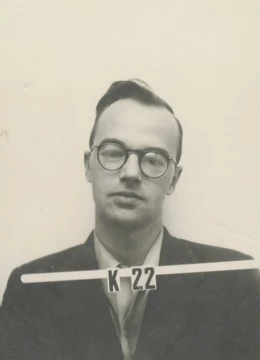
Viktor Bout
Russian arms dealer convicted in U.S., swapped for Brittney Griner.

Drug Enforcement Administration · Public domain
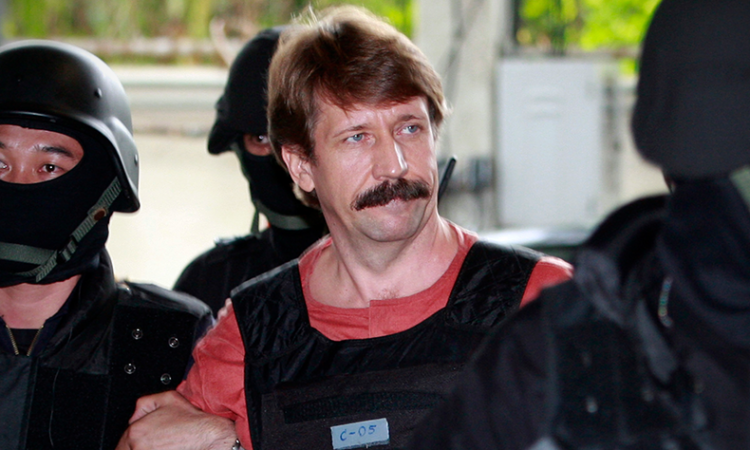
Viktor Anatolyevich Bout (born 13 January 1967) is a Russian arms dealer and politician. A former Soviet military translator, he used his companies to smuggle arms from Eastern Europe to Africa and the Middle East during the 1990s and early 2000s, earning the epithet 'Merchant of Death' after a 2003 United Nations report. He was convicted in the United States in 2011 for conspiracy to kill American citizens and officials, and was released in a 2022 prisoner exchange for American basketball player Brittney Griner.
Quick Facts
- Nickname
- Merchant of Death / Vadim Markovich Aminov / Viktor Bulakin / Viktor Butt / Viktor Budd / Boris
- Birth Name
- Viktor Anatolyevich Bout
- Native Name
- ru · Виктор Бут
- Birth Date
- 1967-01-13
- Birth Place
- Dushanbe, Tajik SSR, Soviet Union
- Occupation
- Arms dealer
- Office
- Member of the Legislative Assembly of Ulyanovsk Oblast
- Term Start
- 20 September 2023
- Party
- Liberal Democratic Party of Russia (2022–present)
- Spouse
- Alla Bout · 1992
- Children
- Yelizaveta Bout
Facts from the source article.
Lore & Background
Viktor Bout's origins are unclear, but United Nations documents and Bout himself state his birthplace as Dushanbe, Tajik SSR, and his date of birth as most likely 13 January 1967. He served in the Soviet Armed Forces, graduating from the Soviet Military Institute of Foreign Languages in the late 1980s, and became a polyglot fluent in Portuguese, English, French, Arabic, Persian, and Esperanto. He is thought to have been discharged from the Soviet Army upon its dissolution in 1991 with the rank of lieutenant colonel, after which he started an air freight business. Bout was involved with a Soviet military operation in Angola in the late 1980s and spent time in Mozambique.
Reader's Guide
Viktor Bout's significance lies in his role as a major arms trafficker who exploited the chaos following the Soviet Union's collapse to supply weapons to conflict zones in Africa and the Middle East, often bypassing United Nations embargoes. His network, epitomized by his company Air Cess, transported arms from Eastern Europe to groups such as UNITA in Angola and Charles Taylor in Liberia, and he was formally mentioned in a 2000 UN report for transporting weapons from Bulgaria using forged end-user certificates. His 2008 arrest in a U.S. sting operation, conviction in 2011 for conspiracy to kill Americans and provide aid to a terrorist organization, and subsequent 2022 release in a high-profile prisoner exchange for Brittney Griner highlight the intersection of international arms trafficking, counterterrorism, and diplomatic negotiations. Bout's legacy remains controversial, with his denials of dealings with al-Qaeda or the Taliban, and his later entry into Russian politics as a member of the Liberal Democratic Party of Russia, winning a seat in the Legislative Assembly of Ulyanovsk Oblast in 2023.
Did You Know?
- Bout learned Esperanto at age 12 as a member of the Dushanbe Esperanto club.
- He was arrested in Thailand in 2008 in a sting operation involving a DEA informer pretending to represent the Revolutionary Armed Forces of Colombia (FARC).
- Bout was sentenced to the minimum 25 years' imprisonment in 2011 but served about 11 years before being released in the 2022 prisoner exchange for Brittney Griner.
- After returning to Russia, he joined the Liberal Democratic Party of Russia and won a seat in the Legislative Assembly of Ulyanovsk Oblast on 2 July 2023.
A Multi-National Security Career
Paul Whelan's professional life was defined by a steady climb through the world of security and law enforcement, underpinned by a complex web of international identities. Born in Ottawa to British parents of Irish descent, he grew up in the Ann Arbor, Michigan area and graduated from Huron High School in 1988 alongside his twin brother David. He claimed to have entered law enforcement that same year, working in roles at Chelsea, Michigan and Washtenaw County, though both departments later cast doubt on the scope of his employment. A former colleague confirmed he served as a patrol officer in Keego Harbor from 1998 to 2000. After a stint as an IT manager at Kelly Services, Whelan rose to senior manager of global security and operations there by 2010, eventually becoming director of global security and investigations at BorgWarner, a Michigan-based automotive parts firm. These corporate security roles reportedly gave him contact with U.S. intelligence personnel, federal agents, and foreign embassies. He held citizenship in four nations—American, British, Irish, and Canadian—and, according to a 2013 deposition, possessed a bachelor's degree in criminal justice and an MBA.
Marine Corps Service and the Court-Martial
Whelan's military career, though it spanned roughly a decade, ended in disgrace. He enlisted in the Marine Corps Reserve in 1994 while still working in local law enforcement, and later took extended military leave from Kelly Services between 2003 and 2008. During that period he held the rank of staff sergeant in Marine Air Control Group 38, serving as an administrative clerk and chief, and deployed as part of Operation Iraqi Freedom. In January 2008, however, a court-martial found him guilty on a string of charges: attempted larceny, three counts of dereliction of duty, making a false official statement, wrongfully using another person's Social Security number, and ten counts of issuing checks without sufficient funds. His punishment included sixty days of restriction, a reduction to the pay grade of E-4, and a bad conduct discharge. The incident would later become significant in the broader narrative of his Russian case: former CIA officers asserted that the agency would never have recruited an officer carrying such a military record, and that no genuine intelligence operative would be left exposed without a diplomatic passport.
The Moscow Arrest
Whelan's detention in Russia unfolded under circumstances that remain fiercely disputed. He arrived in Moscow on December 22, 2018, to attend the wedding of a fellow former Marine at the Hotel Metropol and to help the groom's family navigate their first visit to Russia. His twin brother David said the trip was supposed to end with a return to Michigan through Saint Petersburg on January 6. Six days later, the FSB arrested him in the Moscow area, and he was formally charged on January 3, 2019. Russian media outlet Rosbalt reported that he was caught in his hotel room after a long outing with a Russian citizen who allegedly handed him a USB drive containing a list of employees at a classified security agency. Whelan's account was different: he said a long-time Russian friend, identified by his family as Ilya Yatsenko, a major in the FSB's Department "K," appeared unexpectedly at the hotel, was followed by authorities, and set up the arrest. Whelan claimed he had lent the man 80,000 rubles for the wedding; the FSB characterized the payment as an intelligence fee. He was held in Moscow's Lefortovo Prison, where he shared a cell with a non-English-speaking inmate.
Sentence, Swap, and the Long Road Home
On June 15, 2020, a Russian court handed Whelan a sixteen-year prison sentence for espionage, a verdict that locked him into one of the most high-profile detentions of the era. The case became entangled in broader U.S.–Russia tensions; former CIA officers pointed to the simultaneous detention of Maria Butina, a confessed unregistered foreign agent, as context, while President Vladimir Putin publicly insisted in late 2018 that Russia did not arrest innocent people merely to use them in exchanges. U.S. Ambassador Jon Huntsman Jr. visited Whelan in custody on January 2, 2019, and relayed to the family that he was in good health and spirits. For nearly four years after his sentencing, Whelan remained in Russian custody until, on August 1, 2024, he was freed in a United States–Russia prisoner swap conducted in Ankara, Turkey. His release marked the end of a five-and-a-half-year ordeal that had drawn attention to his unusual four-country citizenship, his years of intermittent visits to Russia from 2006 onward, and his modest online presence on the Russian social platform VKontakte, where he had roughly seventy contacts and occasionally posted in Russian using a translation tool.
Gallery
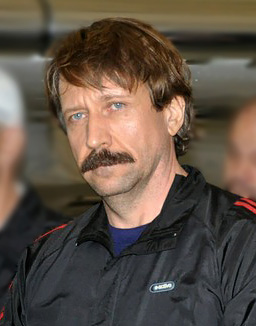
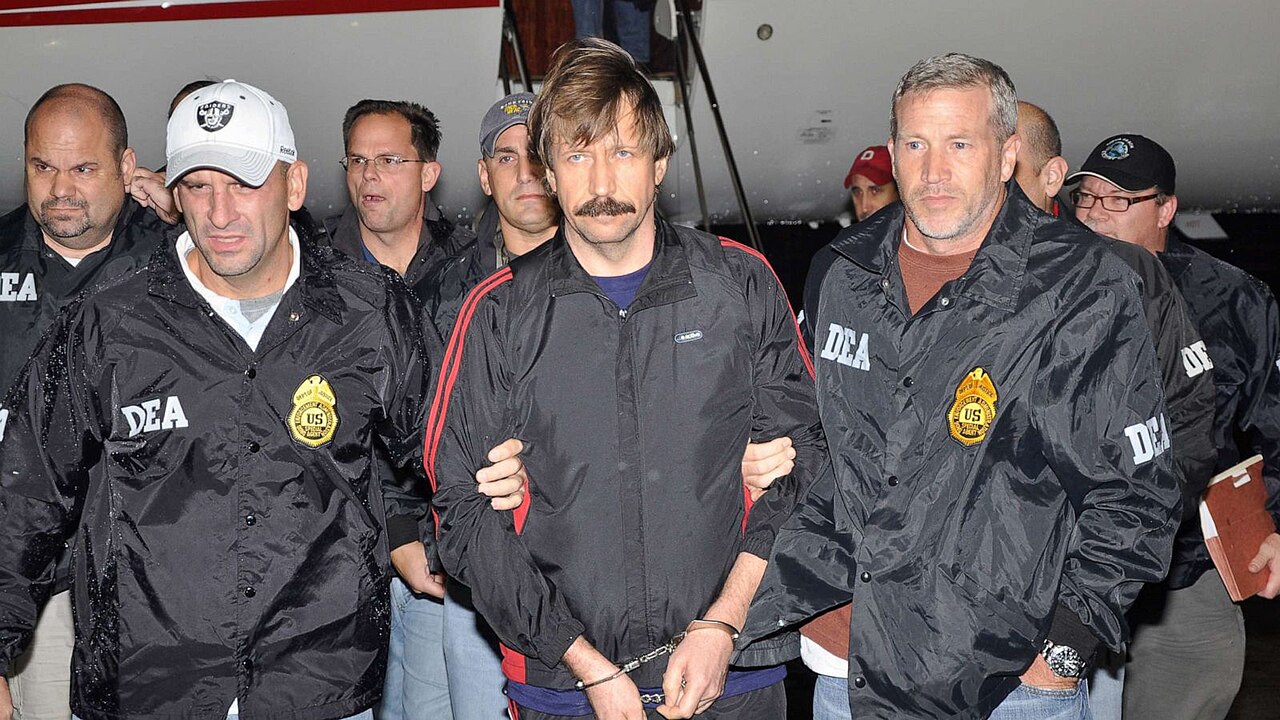
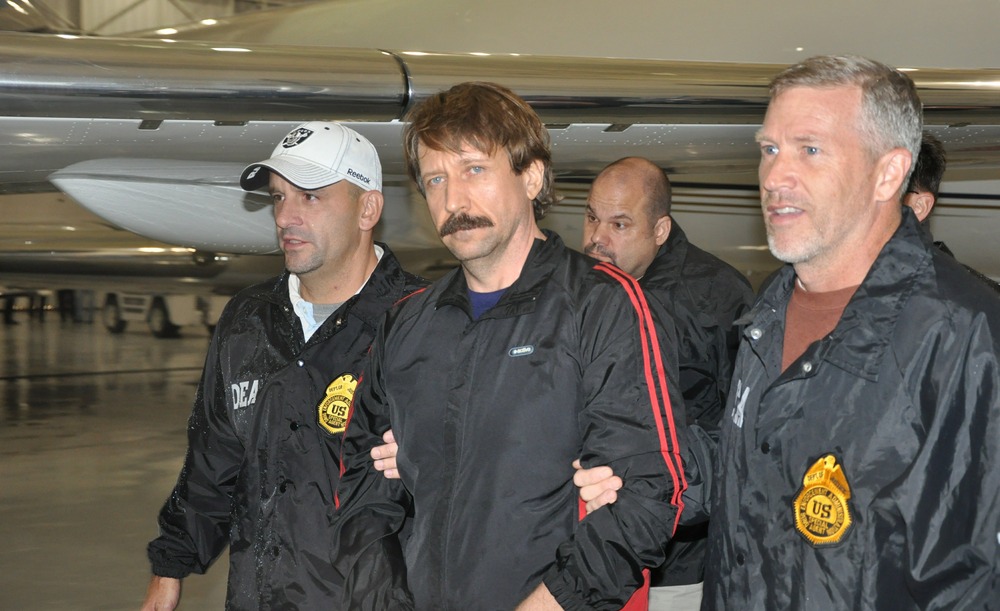
Frequently Asked Questions
Who is Viktor Bout?
Viktor Bout is a Russian arms trafficker born in 1967 in Dushanbe, Tajik SSR, who built a global weapons-smuggling network during the 1990s and early 2000s. He is widely recognized under the nickname "Merchant of Death" and later entered Russian politics after his release from U.S. custody.
How did Viktor Bout earn the nickname "Merchant of Death"?
The label stuck after a 2003 United Nations report highlighted his role in funneling weapons into conflict zones across Africa and the Middle East. The phrase quickly became his defining public identity in international media coverage.
What was Viktor Bout convicted of in the United States?
In 2011, a federal court found him guilty of conspiracy to murder American citizens and U.S. government officials. The charges stemmed from his alleged involvement in planning attacks on U.S. personnel in Africa.
How did Viktor Bout get released from American prison?
In 2022, Bout was freed as part of a high-profile prisoner swap in which the United States returned him to Russia in exchange for basketball player Brittney Griner, who had been detained in Moscow.
What was Viktor Bout's background before he became an arms dealer?
He originally served as a translator in the Soviet military, a role that gave him the language skills and security contacts he later leveraged to move weapons out of Eastern Europe. That military-adjacent foundation became the springboard for his smuggling operations amid the post-Soviet chaos of the 1990s.
More in Infamous Criminals & Spies 1-19
Spotted an error? Know more?
Reader corrections go straight into our review queue. Suggest an edit · How this site is sourced