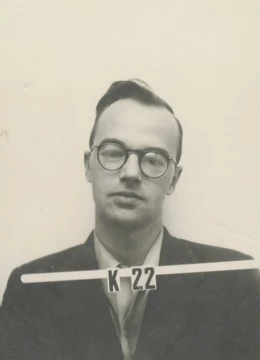
Victor Lustig
Con artist who sold the Eiffel Tower twice.

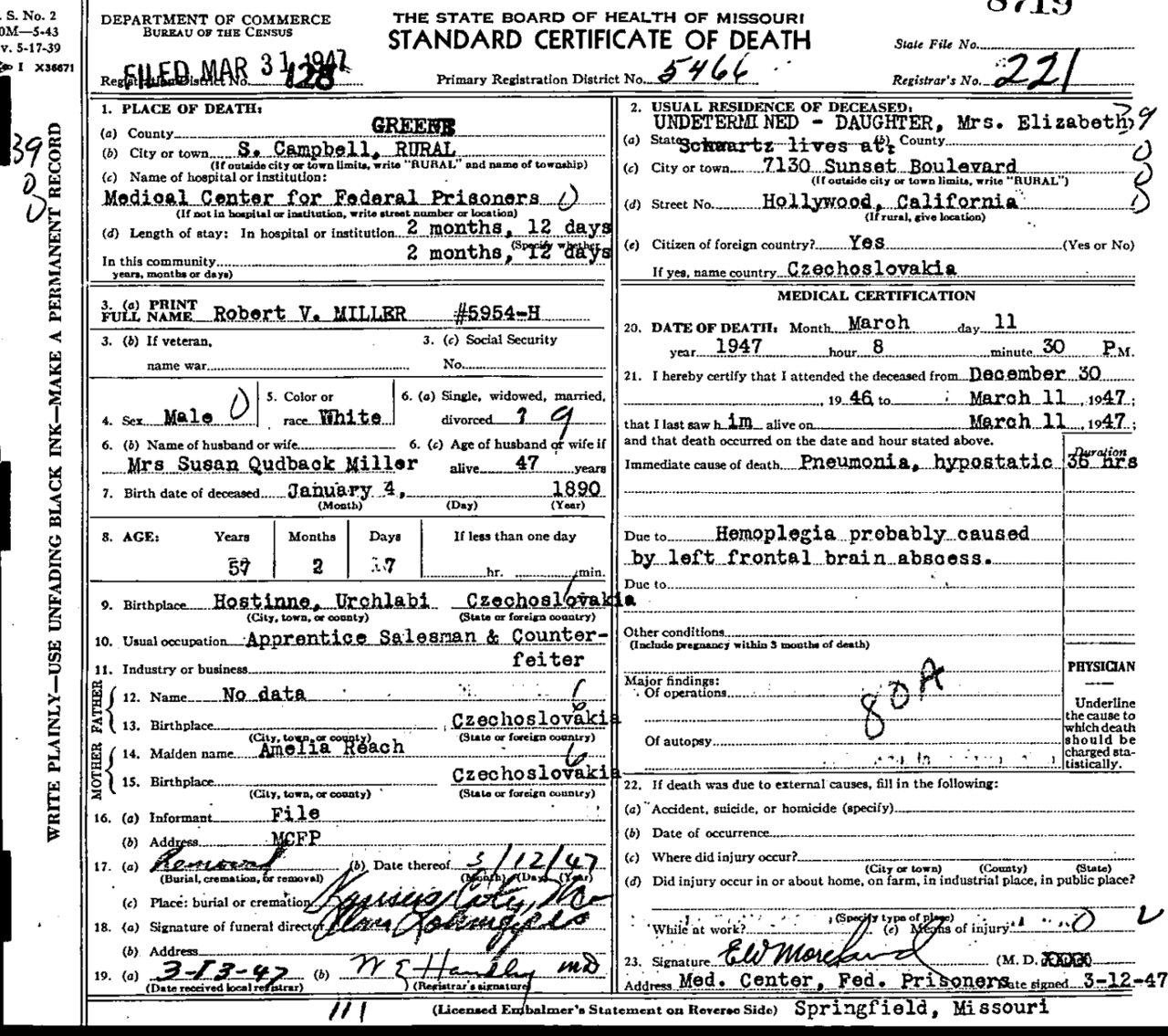
The State Board of Health of Missouri · Public domain
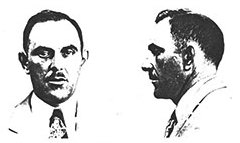
Victor Lustig (4 January 1890 – 11 March 1947) was a con artist born in Austria-Hungary who ran scams across Europe and the United States in the early 1900s. He is remembered as one of the era’s most infamous swindlers, known for selling the Eiffel Tower once (a second attempt failed when he was recognized) and running the “Rumanian Box” con.
Lustig grew up in Hostinné (then called Arnau), in the Kingdom of Bohemia, as the second of three children. His father, Ludwig, sold tobacco and once served as mayor, but was reportedly abusive to his wife Amelia and the children. At age eight, Lustig was made to sign a pledge to avoid alcohol and attend church, and he was forced into violin lessons he hated—once, during an argument, his father hit him over the head with the instrument. His parents divorced around 1898 but still lived together at the time of the 1900 census. As a child, Lustig often traveled with his father to Prague and Zurich; seeing Paris at age seven, he found the inner city “exquisite” but the outskirts a “sad, soiled place.” He then attended a one-room school in Čermná, where classmates liked his bold personality and impressions of military leaders. A 1902 school report called him “retarded morally, an idiot in other respects.” By thirteen he took up boxing, and despite chronic migraines and breathing problems from sinus swelling, he never missed a day. In 1904, he ran away for a week, then was sent to a boarding school in Dresden, where he learned English, French, Italian, and Hungarian (some sources say five or six languages) and studied design. His granddaughter claimed he excelled there into his early twenties, but most biographers say he dropped out before turning seventeen. A childhood friend, Karl Harrer, recalled that Lustig returned to Hostinné in June 1906 after a poor grade on his design portfolio; the two got drunk, and Lustig complained about elitist attitudes and life’s unfairness. The next year, Harrer received postcards from Vienna, with a final note saying Lustig would study law at Charles University. In 1909, after spending time in Paris (though there is no evidence of formal enrollment at the Sorbonne), Lustig began gambling.
Quick Facts
- Birth Date
- 1890-01-04
- Birth Place
- Hostinné, Bohemia, Austria-Hungary / (now Czech Republic)
- Death Date
- 1947-03-11
- Death Place
- Springfield, Missouri, U.S.
- Other Names
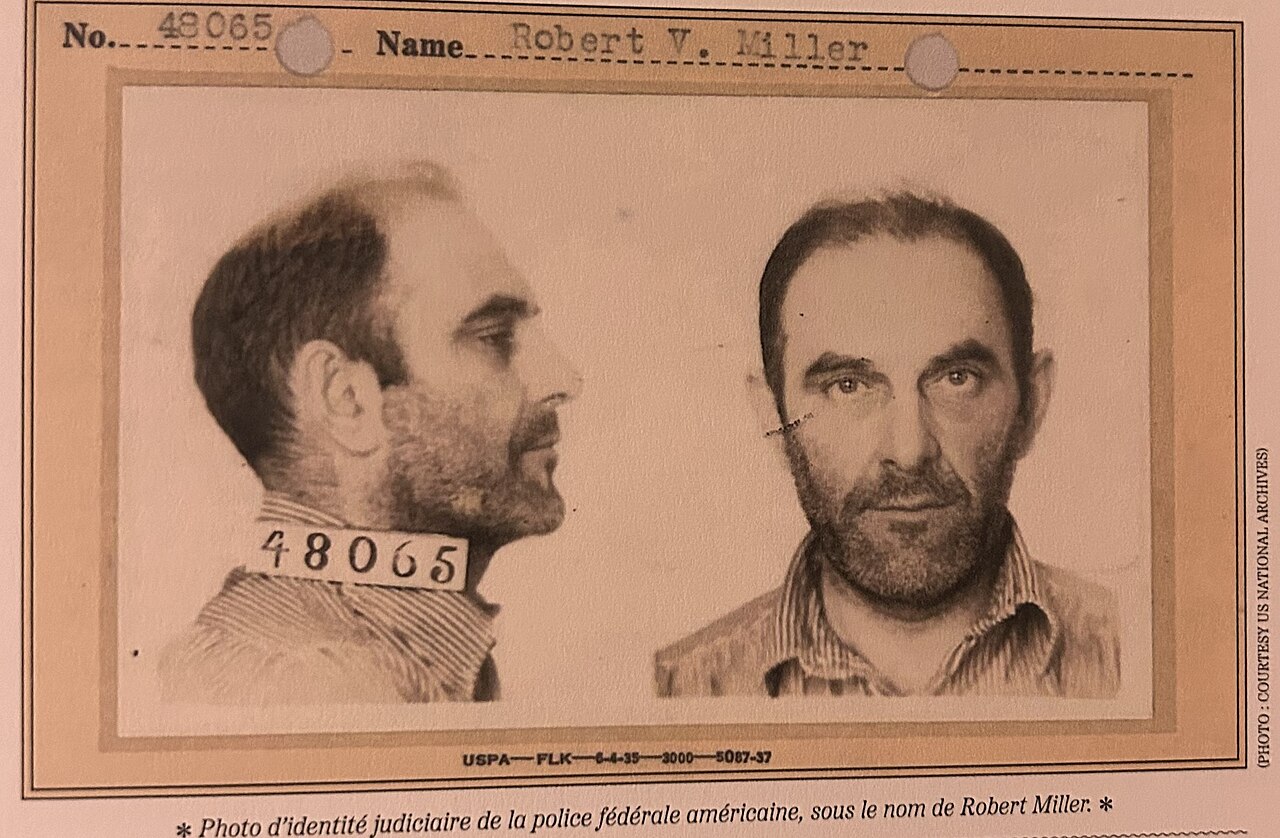
- Count Lustig; Robert Miller; Robert Duval
- Occupation
- Confidence artist
- Criminal Charge
- Scamming
- Criminal Penalty
- 20 years imprisonment
- Criminal Status
- Died in prison
Facts from the source article.
Lore & Background
Lustig was born in Hostinné, the second of three children to Ludwig and Amelia Lustig. Raised in a German-speaking middle-class Catholic family, his father was a tobacco salesman and former mayor who was reportedly physically abusive. At age eight, Lustig was forced to sign an oath to abstain from alcohol and attend church, and he hated violin lessons, once being beaten over the head with the instrument by his father. His parents divorced around 1898 but still lived together during the 1900 census. As a child, he traveled across Europe with his father, recalling Paris at age seven as 'exquisite' in the inner city but a 'sad, soiled place' in the outer areas. He attended a one-room school.
Reader's Guide
Victor Lustig's significance lies in his audacious and repeated exploitation of human vanity and greed, epitomized by selling a national monument—the Eiffel Tower—not once but twice. His career illustrates the vulnerabilities in early 20th-century business and legal systems, where a convincing persona and forged documents could bypass scrutiny. The Eiffel Tower scam, in particular, highlights how public discourse about a landmark's maintenance costs could be weaponized. Lustig's legacy endures as a cautionary tale about the limits of shame: his first victim, André Poisson, did not report the crime, enabling a second attempt. The Rumanian Box scam further demonstrates his skill in creating plausible mechanical frauds. Though his methods were simple, his psychological insight—targeting insecure individuals seeking status—made him effective. His life also reflects the transnational nature of crime in an era of ocean liners and weak international police cooperation. Lustig remains a archetype of the charming, multilingual con man whose exploits are studied in fraud prevention and criminal history.
Did You Know?
- Lustig was expelled from infant school on his first day for telling a female teacher 'Leck mich am Arsch' ('Kiss my ass').
- He once sold a 'Rumanian Box' money-duplicating machine to a Texas sheriff for thousands of dollars.
- Lustig's father was a mayor of Hostinné and reportedly physically abusive.
- He sustained a defining scar on the left side of his face from the jealous boyfriend of a woman he consorted with.
Gallery
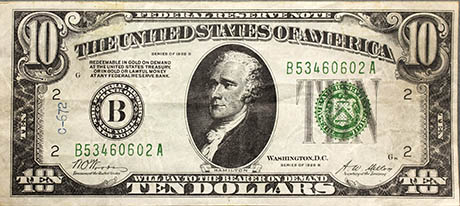
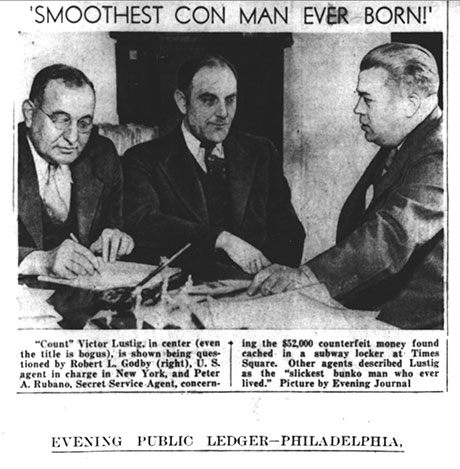
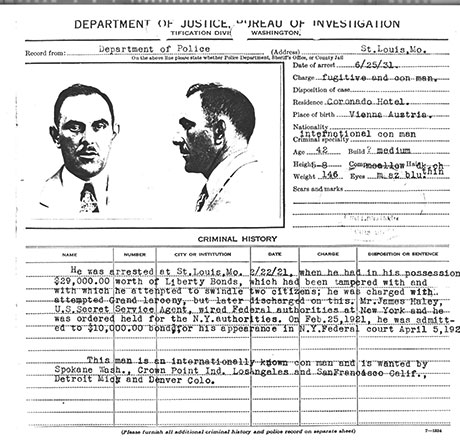
Frequently Asked Questions
Who is Victor Lustig?
Victor Lustig was an Austrian-Hungarian con artist born in 1890 in what is now the Czech Republic, who built a notorious reputation for elaborate fraud schemes across Europe and America in the early twentieth century.
What is Victor Lustig most famous for?
He is best remembered for convincing scrap-metal dealers to purchase the Eiffel Tower in 1925, a stunt he reportedly attempted a second time but was foiled when his identity was exposed.
How did the Eiffel Tower scam work?
Lustig posed as a government official and lured scrap-metal buyers into believing the tower was slated for demolition, then offered them the right to buy the iron at a discount. The ruse succeeded once before he was recognized during a follow-up attempt.
What was the Rumanian Box con?
The Rumanian Box was a long-running confidence scheme in which Lustig used a single suitcase to extract repeated payments from victims by claiming it contained valuable items and staging elaborate stories around its contents.
How did Victor Lustig's life end?
Lustig died on 11 March 1947 in Paris, France, after a period of declining health and relative obscurity following his earlier years of high-profile swindling.
More in Infamous Criminals & Spies 1-19
Spotted an error? Know more?
Reader corrections go straight into our review queue. Suggest an edit · How this site is sourced