Vito Genovese
Italian-born American mafioso who led the Genovese crime family.

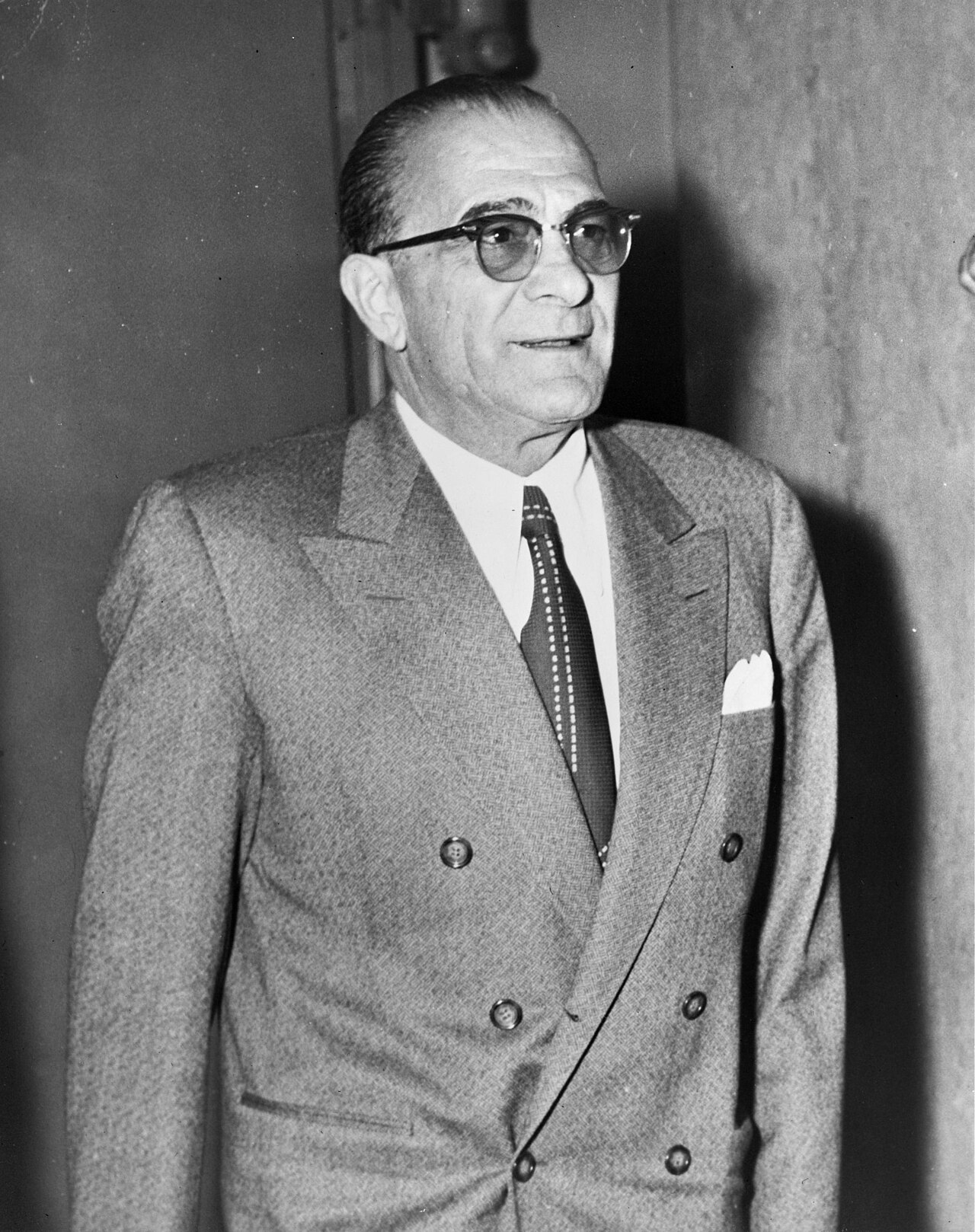
Phil Stanziola, World Telegram staff photographer · Public domain
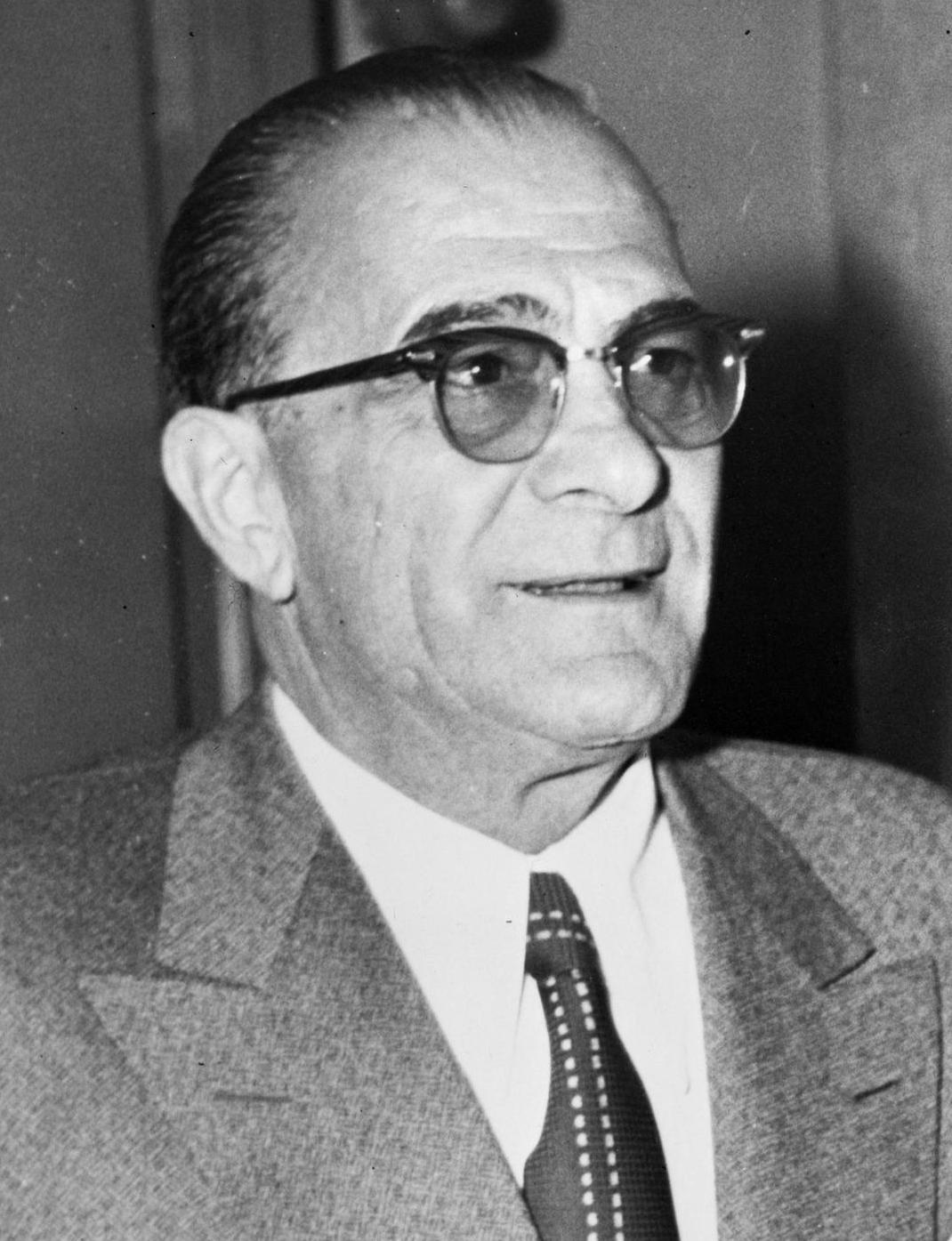
Vito Genovese, born near Naples in 1897, moved to New York City’s Little Italy as a teenager and soon began a life of crime. He stole from street vendors, ran errands for mobsters, and collected illegal lottery payments. At 19, he served a year in prison for carrying a gun without a permit. By the 1920s, he worked for gang boss Joe Masseria, and alongside his childhood friend Lucky Luciano and Frank Costello, he launched a bootlegging operation backed by gambler Arnold Rothstein. In 1930, police found $1 million in counterfeit cash in a Brooklyn workshop linked to Genovese, and that same year he allegedly murdered Gaetano Reina, a Bronx gang leader suspected of betraying Masseria. During the Castellammarese War, Genovese helped Luciano kill Masseria in a Coney Island restaurant in 1931, with gunmen including Albert Anastasia and Bugsy Siegel. Luciano then took over Masseria’s gang, naming Genovese his underboss. Later that year, Luciano and Genovese learned that rival Salvatore Maranzano planned to kill them; they struck first, sending four unknown Jewish gangsters to Maranzano’s office to murder him. Luciano later created the Mafia’s ruling Commission. In 1931, Genovese’s first wife died of tuberculosis, and he quickly married Anna Petillo, his cousin, after her husband was found strangled on a Manhattan rooftop in 1932. Genovese fled to Italy in 1937 to avoid murder charges in the U.S., and during World War II he briefly backed Mussolini’s regime out of fear of deportation. After returning in 1945, he mentored Vincent Gigante, who would later lead the family. Alongside Luciano, Genovese helped expand the heroin trade worldwide. In 1957, he ordered the murder of Albert Anastasia and a failed hit on Frank Costello to claim the title of boss of bosses. He called a Mafia summit to cement his power, but police raided it. In 1959, Genovese was convicted of drug conspiracy and sentenced to 15 years in prison. While incarcerated, his underling Joe Valachi killed a man he mistook for a hitman sent by Genovese, then became a government witness. Genovese died in prison on February 14, 1969. The FBI later renamed Luciano’s crime family after him.
Quick Facts
- Birth Date
- 1897-11-21
- Birth Place
- Tufino, Campania, Italy
- Resting Place
- Saint John Cemetery, New York City, New York, U.S.
- Death Date
- 1969-02-14
- Death Place
- Springfield, Missouri, U.S.
- Spouse
- Donata Ragone (her death) / Anna Genovese · 1932
- Occupation
- Crime boss
- Predecessor
- Frank Costello
- Successor
- Philip Lombardo
- Allegiance
- Genovese crime family
- Other Names
- "Don Vitone"
- Relatives
- Michael Genovese (cousin)
Facts from the source article.
Lore & Background
Vito Genovese was born on November 21, 1897, in Risigliano, Italy, and immigrated to the United States in 1913. He started his criminal career young, stealing from pushcart vendors and running errands for mobsters. By the 1920s, he worked for Joe Masseria, and later partnered with Lucky Luciano and Frank Costello in bootlegging. During the Castellammarese War, Genovese allegedly participated in the murder of Masseria and helped plan the murder of Salvatore Maranzano. He became underboss to Luciano and later acting boss when Luciano was imprisoned in 1936.
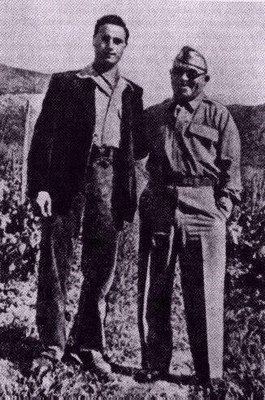
Fearing prosecution for the murder of Ferdinand Boccia, Genovese fled to Italy in 1937 with $750,000 cash. There, he befriended Galeazzo Ciano and donated nearly $4 million to Benito Mussolini's fascist party. During World War II, he switched sides and worked for the U.S. Army as an interpreter and liaison officer, while running a large black market operation in southern Italy. After returning to the U.S. in 1945, he mentored Vincent Gigante.
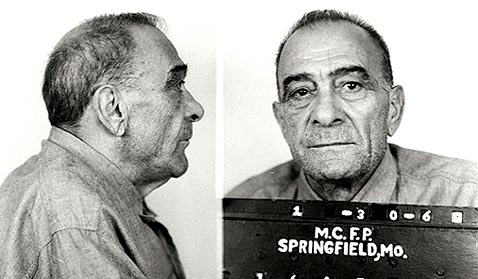
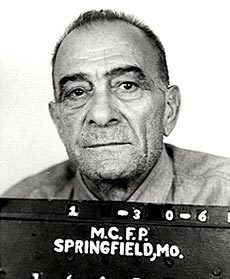
In 1957, Genovese vied for the title of capo di tutti capi by ordering the murder of Albert Anastasia and a botched hit on Frank Costello. He called a Mafia summit that was raided by police. In 1959, he was convicted on drug-related conspiracy charges and sentenced to fifteen years in prison. While imprisoned, his underling Joe Valachi killed an inmate he thought was a hitman sent by Genovese and became a government witness. Genovese died in prison on February 14, 1969.
Reader's Guide
Vito Genovese's significance lies in his role as a key figure in the American Mafia's rise during the mid-20th century. As a childhood friend and associate of Lucky Luciano, he helped shape the Mafia's structure and expansion, particularly through the Castellammarese War and the creation of The Commission. His leadership of the Luciano crime family, later renamed the Genovese crime family by the FBI, marked a period of consolidation and conflict. Genovese's involvement in the international heroin trade, his flight to Italy and alliance with Mussolini's regime, and his return to the U.S. to vie for the title of boss of bosses illustrate the transnational and violent nature of organized crime. His conviction on drug charges and the subsequent defection of Joe Valachi highlighted the vulnerabilities within the Mafia and led to increased government scrutiny. Genovese's legacy is that of a powerful but ultimately imprisoned mob boss whose actions contributed to both the Mafia's peak and its decline.
Did You Know?
- Genovese was a childhood friend and criminal associate of Lucky Luciano.
- He fled to Italy in 1937 and supported Benito Mussolini's Fascist regime during World War II.
The Genovese Among the Five Families
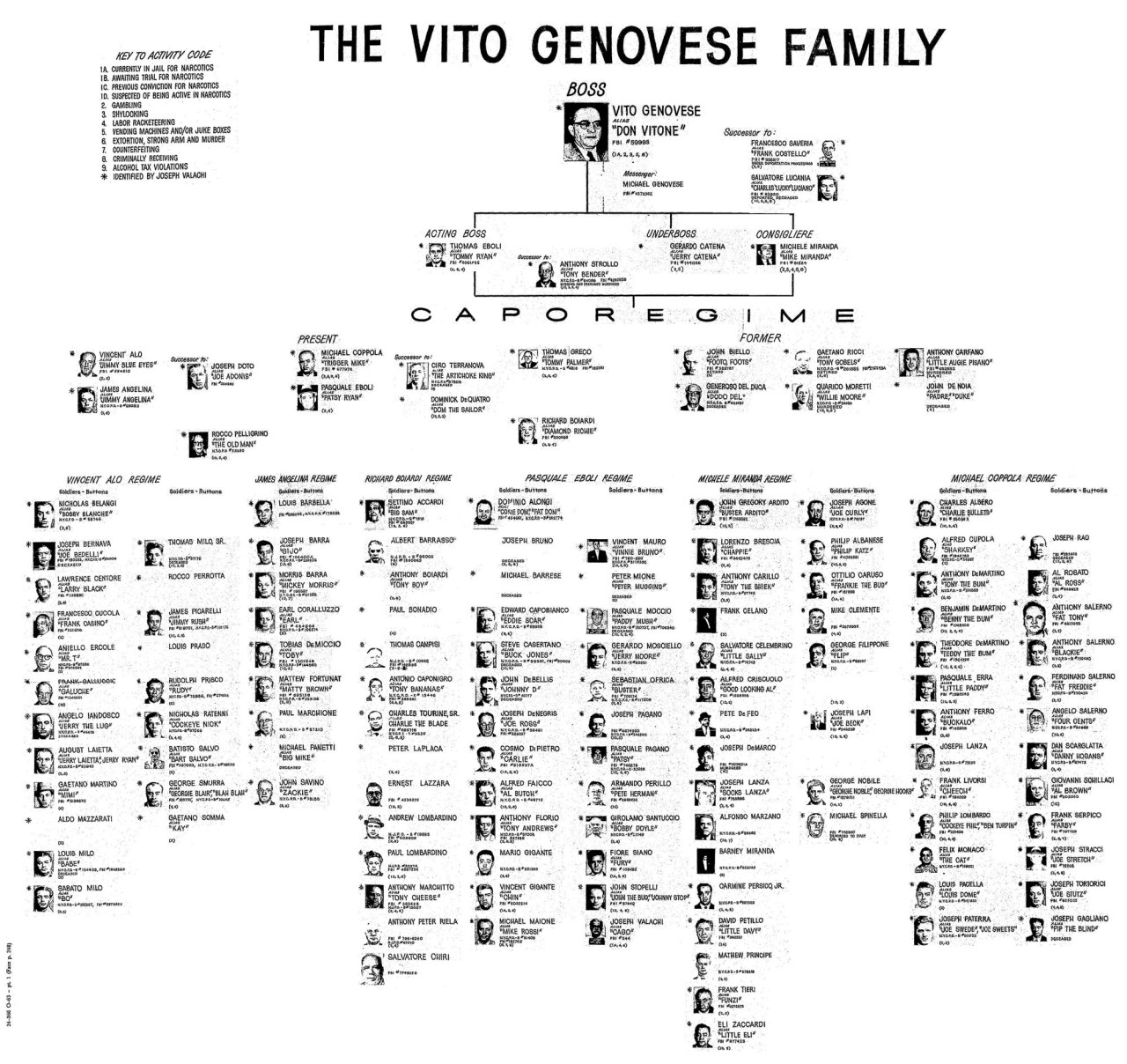
The Genovese family occupies one of five principal positions within New York City's organized crime landscape, standing alongside the Gambino, Lucchese, Bonanno, and Colombo families. This quintet represents the most concentrated expression of Cosa Nostra's presence in a single metropolitan area. Each of these families commands its own territory and conducts operations independently, yet they are bound together by a higher coordinating body known as the Commission. This Commission is composed of the bosses of the strongest families and oversees nationwide coordination, creating a structure where local autonomy exists within a broader framework of collective governance. The Genovese family, like its four counterparts, operates within this dual system—maintaining its own sphere of influence while participating in the larger institutional architecture that has allowed the Italian-American Mafia to dominate organized crime across the United States for generations.
Roots in the Immigrant Experience
The Genovese family, like all American Mafia organizations, traces its institutional DNA to the waves of Italian immigration that reshaped the Northeastern United States in the late nineteenth and early twentieth centuries. The Mafia first took root in impoverished Italian immigrant neighborhoods—East Harlem, the Lower East Side, and Brooklyn in New York, as well as communities in Chicago, New Orleans, and other major cities. What began as small neighborhood operations in poor Italian ghettos gradually expanded into citywide and eventually national organizations. Crucially, the modern pan-Italian Mafia was not a single ethnic or regional entity. Campanian, Calabrian, and other Italian criminal groups, along with independent Italian-American criminals, eventually merged with Sicilian Mafiosi to form the broader organization. This amalgamation of diverse Italian criminal traditions created the institutional foundation upon which families like the Genovese would later build their operations.
Structure and the Language of Power
The organizational language of the Mafia carries deep etymological roots that shape how the institution understands itself. The word mafia derives from the Sicilian adjective mafiusu, which in nineteenth-century Sicily conveyed meanings of boldness, fearlessness, and pride when applied to a man. Members themselves refer to their organization as Cosa Nostra—literally Our Thing—a term that signals exclusivity and internal identity. The American government adopted the Italian phrasing as La Cosa Nostra, or LCN. The fundamental unit of this structure is the family, a term that is purely organizational rather than biological; these are not familial groupings in any literal sense. At the peak of the Mafia's reach, at least twenty-six cities across the United States hosted Cosa Nostra families, with numerous additional offshoots and associates extending the network further. The Genovese family represents one node in this vast, layered architecture of organized criminal enterprise.
Cultural Echoes and Popular Memory
The world of the Genovese family and the broader American Mafia has been profoundly shaped by its representation in popular culture, particularly since Mario Puzo's 1969 novel The Godfather. Francis Ford Coppola's subsequent film adaptation cemented a romanticized vision of organized crime that continues to influence public perception decades later. Television series such as The Sopranos further embedded the Mafia's world into mainstream cultural consciousness, presenting the inner workings of these organizations to mass audiences. These fictional accounts, while not documentary, have created a parallel legacy for figures and families like the Genovese—one filtered through narrative, character, and cinematic spectacle. The real institutional history of the Mafia, with its roots in immigrant neighborhoods and its complex organizational hierarchies, thus exists alongside a cultural mythology that often overshadows the actual historical record. The Genovese name, in particular, carries weight in both the criminal and popular imagination.
Gallery
Frequently Asked Questions
Who is Vito Genovese?
Vito Genovese was an Italian-born American organized crime figure, born in 1897 in the Naples region, who grew up in New York's Little Italy and went on to lead one of the city's five major mob families.
What was Vito Genovese's role in the mob?
As boss of the Genovese crime family, he directed operations that ranged from 1920s bootlegging and illegal lottery collection to the later expansion of heroin trafficking through his organization.
How was Vito Genovese involved in the Castellammarese War?
He threw his support behind Joe Masseria against Luciano's faction and ended up on the losing side, a defeat that led to his imprisonment and years away from active criminal leadership.
Why is Vito Genovese important in mafia history?
His long tenure as a family head and his strategic push into narcotics made him a central architect of the post-war power structure in New York organized crime.
More in Infamous Criminals & Spies 1-19
Spotted an error? Know more?
Reader corrections go straight into our review queue. Suggest an edit · How this site is sourced