Andhra cuisine
Tangy, hot, and spicy cuisine of the Telugu people.
Last updated
Andhra cuisine, the traditional food of the Telugu people in Andhra Pradesh, is known for its tangy, hot, and spicy flavors. The state’s high production of red chili and rice heavily influences the cooking, resulting in generous spice use across many dishes.
Quick Facts
- Leading producer of
- red chili and rice in India
Facts from the source article.
Regional variations
The regions of Coastal Andhra (including Uttarandhra and Dakshinandhra) and Rayalaseema each produce distinctive variations of Telugu cuisine. Rice is the staple in irrigated areas, while ragi is popular in Rayalaseema and Palnadu. Curries, snacks, and sweets vary in name and preparation across regions. Andhra Pradesh is the leading producer of red chili and rice in India, which has led to liberal use of spices.
Vegetarian dishes, as well as meat and seafood in coastal areas, feature prominently. Tomato pappu, gongura, and tamarind are widely used for cooking curries. Spicy pickles like avakaya are important. Deltaic cuisine from Guntur is known as the spiciest variety, due to traditional use of red chilis grown there.
The eating habits of Hindu royals and Brahmins have historically influenced Andhra cuisine. Proximity to Western, Central, and Eastern India has also influenced border regions.
Coastal Andhra, dominated by the Krishna and Godavari river deltas and adjacent to the Bay of Bengal, has rice, lentils, and seafood as dietary staples. The Nellore region has unique recipes different from Uttarandhra. Ulava charu (horse gram soup) and bommidala pulusu (seafood stew) are considered specialties.
Breakfast
A typical Andhra breakfast includes items such as idli, garelu (vada), or minapattu (dosa), often accompanied by tea, coffee with milk, or milk. Common dishes are idli (steamed rice cakes) with chutney or sambar; Andhra dosa (rice and urad dal crepe); minapattu (rice and lentil crepe); pesarattu (green gram crepe) often served with ginger chutney, sometimes filled with upma (upma pesarattu); dibba attu (deep-fried dosa from idli batter); atukula dosa (from poha); rava dosa (sooji dough with chili, coriander, onion, and pepper); Andhra upma; godhuma uppindi (broken wheat upma); pesarpindi uppindi (green gram flour porridge); pulusu uppindi (rice flour, peanuts, tamarind porridge); beeyam rava pesara pappu (broken rice and hulled green gram); varipindi uppindi (rice flour and hulled green gram); uppudu pindi (sooji upma with ghee and vegetables); saggubiyyam upma (sago upma); semiya upma (vermicelli upma); garelu (deep-fried lentil doughnut); punukulu (bonda from idli and dosa batter); gunta punugulu (rice and dal batter); saggubiyyam punugulu (sago vada); mung dal punugulu (bonda); thapala chekkalu (deep-fried rice and dal flat vada with onions, curry leaves, chili); and atukulu (poha, moist rice flakes sautéed in oil).
Main course types
Koora is a generic word for curry, with dishes named for ingredients and preparation. Iguru is a curry where most moisture evaporates, leaving mainly oil. Vepudu (fry) includes crispy fried vegetables or meats like prawns, okra, ivy gourd, potato, and colocasia. Pappu koora (lentil-based dish) consists of boiled vegetables stir-fried with half-cooked lentils.
Podi is a powdered dal-based condiment mixed with rice and ghee or sesame oil. Gujju (gravy) uses a tomato or coriander seed base with brinjal or okra. Pulusu (sour paste or gravy) includes pulusu koora (stew of vegetables or meats in tamarind sauce and mustard paste). Kaaram petti koora involves sautéed vegetables cooked with curry powder or paste, often stuffed whole.
Pappucharu (thick dal broth) or charu (rasam) are soups. Ooragaya (pickle) includes avakaya, gongura, and nimmakaya. Pachadi (chutney) includes coconut, tomato, gongura, dosakaya, gummadikaya, and allam. Other gravy curries use vegetables cooked in tomato sauce and onion with coriander and cumin powder.
Pappu dishes include toor daal (kandi pappu) and moong daal (pesara pappu), cooked with vegetables or greens without masala; seasoning varies by region. Kandi pappu is often cooked with leafy vegetables, tomato, mango, or bottle gourd. Roasted or ground versions include kandi pachadi and pesara pachadi.
Non-vegetarian dishes
Over 98 percent of Telugus in both Andhra Pradesh and Telangana consume non-vegetarian food. Both states lead in per capita meat consumption within India, which surged by 40% between 2018-2019 and 2024–2025. Per capita meat consumption (excluding seafood) reached 21.33 kg in Andhra Pradesh and 28.78 kg in Telangana in 2024, compared to a national average of 7.5 kg. Most widely consumed meats include poultry (chicken, quail, duck), small ruminants (goat, sheep), and seafood.
Chicken is the most prevalent poultry, with three varieties: broiler chicken, country chicken (naatu kodi), and gamecock (pandepu kodi). Country chicken is allowed to roam freely, kept drug free, and lives on a minimally processed diet; its meat is tougher and gamier than broiler chicken, and is costlier, typically as costly as mutton and chevon. Gamecock refers to roosters bred for cockfights, a Sankranti tradition; they are raised on a high-protein, high-fat diet, and their meat is darker and much tougher than broiler chicken, taking hours to cook.
Traditionally, the losing rooster was relinquished to the winner, but due to high demand, the winner often sells the meat. Quail is popular for its nutritional benefits and affordability. Duck is reared in rural areas for its meat and eggs due to fast growth.
Did You Know?
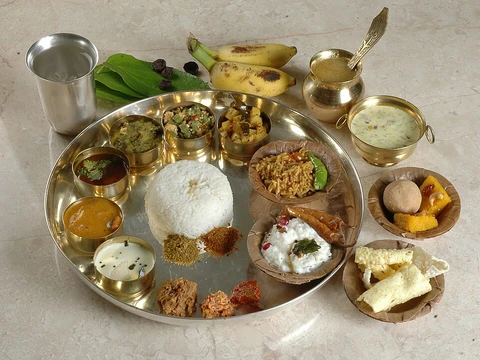
- A complete vegetarian Andhra meal is often served on a banana leaf, especially during festivals and for guests.
- Pootharekulu, a sweet dish with cardamom-flavored powder stuffed into thin rice flour pancake skins, was created in Atreyapuram, a village in Andhra Pradesh.
- Sun-dried banana leaves have traditionally been used to package food for personal use on long journeys.
More in Indian Cuisine by State Or Union Territory
Sources
Compiled from Wikipedia and the sources listed below. Text from Wikipedia is available under CC BY-SA 4.0; this entry is adapted from it.
- Wikipedia: Andhra cuisine (CC BY-SA 4.0).
Spotted an error? Know more?
Reader corrections go straight into our review queue. Suggest an edit · How this site is sourced