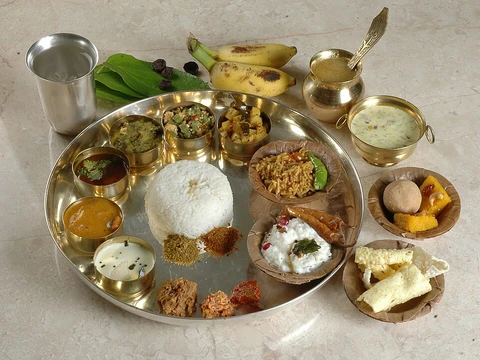
Assamese cuisine
A cuisine of subtle flavors, fermented ingredients, and rice-based dishes.
Last updated
Assamese cooking blends hill traditions of fermentation and drying with plains staples like fresh vegetables, fish, and meat, all centered on rice. It uses minimal spices, relying instead on strong flavors from endemic fruits and vegetables, whether fresh, dried, or fermented.
Quick Facts
- Staple grain
- Rice
- Preferred cooking oil
- Mustard oil
- Signature dish class
- Khar
- Sour dish class
- Tenga
- Traditional serving vessels
- Bell metal utensils made by the Mariya/Moria community
- Common concluding item
- Tamul (betel nut) and paan
Facts from the source article.
Ingredients
Rice is the most important ingredient in Assamese cuisine, with both indica and japonica varieties grown in the region. The most popular class is joha, or scented rice. Rice is eaten steam boiled (ukhua) or sun-dried (aaroi), and high-quality varieties such as Karaballam or kauribadam are available only in Assam. As a snack, rice appears in many forms: roasted and ground (xandoh), boiled in its husk and flattened (chira), puffed (akhoi), or precooked, dried, and husked (kumol saul), which can be soaked in warm water for a light meal.
A traditional breakfast consists of chira with yogurt and jaggery, while farmers often eat cooked rice soaked overnight (poita) with salt, mustard oil, and onions. Sticky rice (bora saul) is cooked in bamboo hollows to make sunga saul, or steamed over boiling water as sewa diya bhaat, and is generally served with meat or fish. Tupula bhat is sticky rice wrapped in plantain leaves or tora pat and boiled. Special occasion rice cakes called pithas are made with soaked and ground glutinous rice, fried, roasted in bamboo, or baked and rolled with fillings.
Preparations
Assamese cuisine includes many traditional dishes similar to those of East Asian and South-East Asian nations. A signature class is khar, made with a key ingredient prepared by filtering water through the ashes of sun-dried banana skins, called kola khar. A traditional meal begins with a khar dish, which can be made with raw papaya, mustard leaves, vegetables, pulses, or fish. Xôkôta is a severely bitter preparation using dry jute leaf, urad bean, and khar; the combination of khar (alkaline) and tenga (acidic) is not recommended.
Liquid khar is also eaten as kharoli with rice, with a few drops of mustard oil. Assamese people eat a large variety of bitter dishes, including fresh bamboo shoot, cane shoot, neem leaves, titabhekuri, bitter gourd, xukuta, titaphool, and sewali phool. Masor tenga is a light and sour fish dish, with souring ingredients such as mangosteen, lemon, tomatoes, roselle leaves, outenga, manimuni, tengesi, or kokum. Fish dishes made with fermented bamboo shoot (khorisa) are sour but not called tenga.
Another tenga dish uses matimah (urad bean) and outenga (elephant apple). Naroxingho masor jul is fish cooked in a light gravy of curry leaves (noro-xingho paat), emphasizing the natural flavors of the fish with few spices. Pura includes various grilled and roasted foods, such as aalu bengena pura pitika, pura maas pitika (mashed grilled fish), and pura mankho.
Snacks and cakes
Jolpan are snacks often considered breakfast foods, though they are also eaten as light meals between main meals and served during Bihu, weddings, shraadhs, and other special occasions. Types include bora saul (sticky rice), komal saul, xandoh, chira, muri, akhoi, and sunga saul, eaten with hot milk, curd, jaggery, yogurt, or seasonal ripe fruits. Pitha are rice cakes made only on occasions like Bhogali Bihu, prepared with soaked and ground rice, then fried, roasted over a slow fire, or baked and rolled on a hot plate.
Varieties include til pitha, ghila pitha, xutuli pitha, sunga pitha, bhapotdiya pitha, lakhimi pitha, tora pitha, tekeli pitha, deksi pitha, muthiya pitha, and kholasapori pitha. Larus are sweet balls such as laskara, narikolor laru, and tilor laru. Tea (saah) is indispensable, with preparations including black tea (laal saah), milk tea, lemon tea, herbal tea, spiced tea, and green tea.
Did You Know?
- Beef used to be eaten before British colonialism, and Muslim communities continue to do so.
- The practice of bhuna, the gentle frying of spices before adding main ingredients, is absent in Assamese cuisine.
More in Indian Cuisine by State Or Union Territory
Sources
Compiled from Wikipedia and the sources listed below. Text from Wikipedia is available under CC BY-SA 4.0; this entry is adapted from it.
- Wikipedia: Assamese cuisine (CC BY-SA 4.0).
- Word definitions: the , each quoted from its Wikipedia article.
Spotted an error? Know more?
Reader corrections go straight into our review queue. Suggest an edit · How this site is sourced