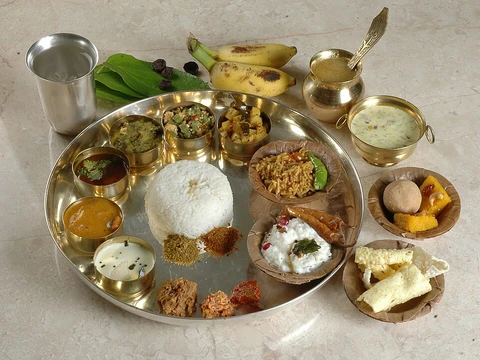
Hyderabadi cuisine
A princely legacy of the Nizams of Hyderabad.
Last updated
Hyderabadi cuisine, also called Deccani cuisine, is the cooking style of Hyderabad and its surrounding area in Telangana, India. It blends Indian, Mughalai, Turkic, and Arabic influences with the culinary habits of the Golconda Sultanate. The cuisine developed under the Bahmani Sultanate and Qutb Shahi dynasty and became a princely legacy of the Nizams of Hyderabad.
Quick Facts
- Native name
- Hyderabadi Ghizaayat
- Region
- Hyderabad, Telangana, India
- Major influences
- Indian
- Mughalai
- Turkic
- Arabic
- Historical periods of development
- Bahmani Sultanate
- Qutb Shahi dynasty
- Nizams
Facts from the source article.
History
The Deccan Plateau, where Hyderabad lies, had a largely local and traditional cuisine until the Vijayanagara Empire period. When Muhammad bin Tughluq moved his capital from Delhi to Daulatabad, the region adopted dishes from other areas. Turkish influences entered with the Bahmani Sultanate in the 14th century, when Turkish nobles held high government positions. Two centuries of inbound migration accompanying political and cultural change introduced further culinary influences.
In Deccan medieval cuisine, banquets were common among the aristocracy, with multiple courses served in Dastarkhān style on a long cloth on the floor. Food was generally eaten without utensils. Meat-based dishes became more common, spice use increased, fresh fruit became a common dessert, and Kahwa was a popular digestive. Ingredients varied by season and festival, and many items were preserved as pickles.
The modern cuisine evolved during the Nizams in the mid-17th century and was elevated to a sublime art form. Continuous influx of migrants, especially since 1857, led to foreign foods being adapted to local preferences, creating unique derivatives such as Hyderabadi Biryani and Hyderabadi Haleem. Til ke chatuni relates to Arabic tahini, Persian dried lamb with beans was modified into dalcha, and tandoori naan from Central Asia became Sheermal. Most modern desserts were introduced or invented during the Nizams.
Starters
Lukhmi is a regional non-vegetarian variation of the samosa, shaped into a flat square patty, made from flour and stuffed with minced mutton or beef (kheema), eaten as an evening snack or starter at celebrations. Murtabak is a spicy folded omelette pancake with bits of vegetables, an egg-filled pancake sometimes mixed with green onion and minced meat, made from pan-fried crepes folded and cut into squares. Hyderabadi Haleem is a stew of mutton, lentils, spices, and wheat, originating from the Arab dish Harees brought by Arab migrants; Harees is still prepared in its original form in Barkas.
It is sometimes served as a starter at celebrations but is usually prepared only during Ramadan for Iftar. Hyderabadi Biryani is a celebration dish of basmati rice and mutton with yoghurt, onions, and various spices, originating from the kitchens of the Nizams. Kalyani Biryani is a variant using beef instead of lamb or mutton, started after the Kalyani Nawabs of Bidar came to Hyderabad in the 18th century, made with small beef cubes, spices, onions, and many tomatoes, with a distinct tomato, cumin, and coriander flavour.
Tahari, made by Hyderabadi Muslims, is a rice and meat dish where rice is cooked in meat, unlike biryani; occasionally vegetables, commonly potatoes, are added, and it is served with dahi ki chutney.
Other dishes
Pathar-ka-gosht is a mutton kebab named for its traditional preparation on a stone slab. The Hyderabadi version of khichdi is distinct from other Indian variants and is eaten with kheema (minced mutton curry), consumed as a breakfast item and during Ramadan for Sehri. Tala huwa gosht (or talawa gosht) is a simple mutton or beef dish usually accompanied by khatti dal, eaten with roti or rice.
Desserts
Double ka meetha is a bread pudding with dried fruit on top, inspired by the Mughlai sweet shahi tukre. Sheer korma, a vermicelli pudding, is a festive dessert served especially on Eid ul-Fitr. Firni, also called payasam, is a rice-based dessert.
Gil-e-firdaus, whose name means "clay of paradise," is a kheer variation made from bottle gourd. Faluda consists of shredded vermicelli noodles in rose syrup and milk. Aab ka shola, or aab shola, is a typical summer drink.
Osmania Biscuit is a popular tea-time biscuit. Hyderabadi Irani tea is served at Irani cafes. Dum-ke-roat is a sweet confection prepared during the month of Muharram.
More in Indian Cuisine by State Or Union Territory
Sources
Compiled from Wikipedia and the sources listed below. Text from Wikipedia is available under CC BY-SA 4.0; this entry is adapted from it.
- Wikipedia: Hyderabadi cuisine (CC BY-SA 4.0).
Spotted an error? Know more?
Reader corrections go straight into our review queue. Suggest an edit · How this site is sourced