Pedro Álvares Cabral
Portuguese explorer who led the first voyage to touch four continents.
Last updated

Felipe Restrepo Acosta · CC BY-SA 4.0
Pedro Álvares Cabral, a Portuguese noble and explorer, is credited as the European who discovered Brazil. During his 1500 voyage, he became the first European known to have set foot on four continents—Europe, Africa, South America, and Asia—on a single expedition, and carried out the first major exploration of South America’s northeast coast, claiming it for Portugal. Details of his early life are sketchy, but he came from a minor noble family and was well educated.
Fleet commander-in-chief
In 1500, King Manuel I appointed him to lead an expedition to India, following the route Vasco da Gama had opened around Africa. The mission aimed to bring back valuable spices and establish trade ties, bypassing the Arab, Turkish, and Italian merchants who then controlled the spice trade. Though some later accounts speculated about earlier land sightings, da Gama’s 1497-1499 voyage did not note signs of land west of the southern Atlantic; Cabral’s fleet was the first known to touch four continents on a single journey.
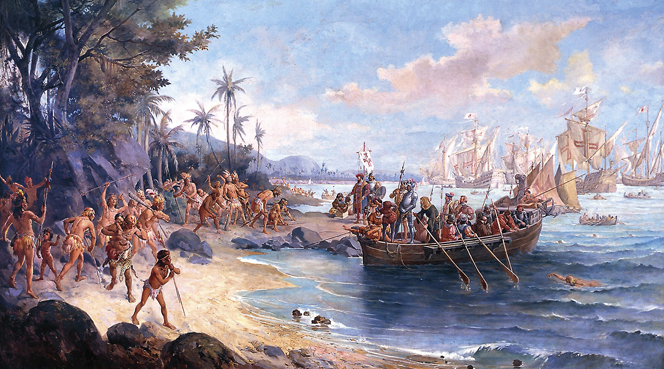
His 13 ships sailed far into the western Atlantic—possibly on purpose—and made landfall in April 1500 on what he first thought was a large island. Because the land fell within Portugal’s sphere under the 1494 Treaty of Tordesillas, Cabral claimed it for the Portuguese crown.
Return to Europe
He explored the coast, realized it was likely a continent, and sent a ship back to inform King Manuel. That land was South America, and the territory he claimed later became Brazil. After restocking, the fleet turned east toward India.
Massacre in Calicut
A storm in the southern Atlantic sank several ships; the remaining six regrouped in the Mozambique Channel and then sailed to Calicut, India. Cabral initially negotiated trading rights successfully, but Arab merchants, seeing the Portuguese as a threat, incited an attack by Muslims and Hindus on the Portuguese trading post. Many Portuguese were killed, and their facilities were destroyed.
In revenge, Cabral looted and burned the Arab fleet and bombarded the city after its ruler failed to explain the attack. From Calicut, the expedition moved to Cochin, another Indian city-state, where Cabral befriended the ruler and loaded his ships with spices before returning to Europe. Despite losing ships and men, the voyage was considered a success.
Lore & Background
Little is certain regarding Pedro Álvares Cabral's life before or after his voyage. He was born in 1467 or 1468 at Belmonte, about 30 km from present-day Covilhã in central Portugal, one of five boys and six girls. He was christened Pedro Álvares de Gouveia and only later, supposedly upon his elder brother's death in 1503, began using his father's surname.
Raised as a member of the lower nobility, he was sent to court at around age 12 and received an education in the humanities and in bearing arms. He was named moço fidalgo by King João II in 1484, and King Manuel I awarded him an annual allowance and the title Fidalgo in 1497. No contemporary image or detailed physical description survives, though it is known he had a strong build and matched his father's height of 190 cm.
The Costly Return and Historical Aftermath
The journey home from Calicut exacted a heavy toll on Cabral's fleet. He departed on 16 January 1501, but of the thirteen ships that had originally set sail for India, only four made it back to Portuguese waters. The vessel arrived in Portugal on 23 June 1501, a span of more than five months for the return leg. The loss of nine ships—nearly two-thirds of the original fleet—underscored the immense logistical and human costs of the India trade in its earliest years.
Yet the expedition's consequences extended well beyond the immediate loss of tonnage. The violent confrontation at Calicut, the treaties secured at Cochin and Cannanore, and the broader pattern of Portuguese aggression in the harbor would shape subsequent expeditions, including da Nova's clash with the Zamorin's fleet at the First Battle of Cannanore and da Gama's second, more heavily armed voyage. Cabral's 1500–1501 mission thus stands as a pivotal, if deeply troubled, chapter in the founding of Portuguese India.
Reader's Guide
Cabral's significance lies in his 1500 expedition, which resulted in the European discovery of Brazil and the first known voyage to touch four continents. Although earlier explorers had recorded signs of land west of the southern Atlantic, Cabral led the first expedition to make substantial exploration of the northeast coast of South America and claim it for Portugal. His voyage also opened the spice trade route to India, bypassing Arab, Turkish and Italian merchants, and the profits bolstered the Portuguese Crown's finances, helping lay the foundation of a Portuguese Empire from the Americas to the Far East. Despite the loss of ships and lives, the voyage was deemed a success.
Cabral was later passed over for command of a new fleet, possibly due to a quarrel with King Manuel I, and retired to a private life. His accomplishments slipped into obscurity for over 300 years until Emperor Pedro II of Brazil rehabilitated his reputation. Historians debate whether the discovery was accidental or intentional, but no consensus exists. Cabral is considered a major figure of the Age of Discovery.
Did You Know?
- Historians have long argued whether Cabral was Brazil's discoverer and whether the discovery was accidental or intentional; no definite consensus has been formed.
Frequently Asked Questions
What happened during Cabral's 1500 expedition?
King Manuel I dispatched him to reach India via the sea route around Africa that Vasco da Gama had pioneered. En route, his fleet made landfall on Brazil's northeast coast, where he claimed the territory for Portugal before pressing on to Asia.
What is known about Cabral's early life and background?
Records of his youth are sparse, but he was born into a minor Portuguese noble family and received a thorough education. His standing and learning eventually earned him the crown's trust to command a major overseas expedition.
More in Historical Figures & Leaders
Sources
Compiled from Wikipedia and the sources listed below. Text from Wikipedia is available under CC BY-SA 4.0; this entry is adapted from it.
- Wikipedia: Pedro Álvares Cabral (CC BY-SA 4.0).
Spotted an error? Know more?
Reader corrections go straight into our review queue. Suggest an edit · How this site is sourced