Mencius
Second Sage of Confucianism, advocate of innate human goodness.
Last updated

Medieval Chinese publishing house · Public domain
Mencius (孟子, Mèngzǐ, c. 371 – c. 289 BC), originally named Meng Ke, was a Chinese philosopher in the Confucian tradition. He is often called the Second Sage, a title that places him just below Confucius in esteem. Though traditionally linked to Confucius’s grandson Zisi, this connection is chronologically impossible, as Zisi died before Mencius was born.
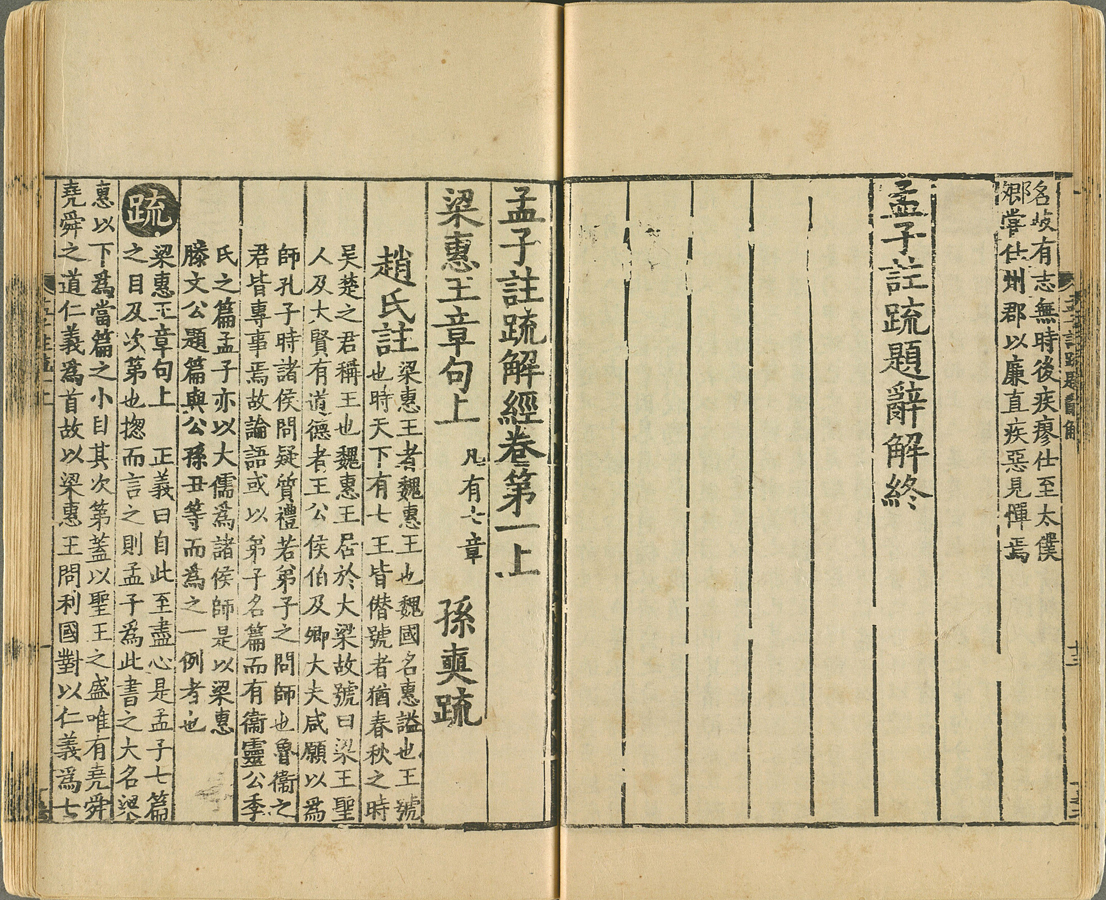
Mencius took Confucius’s ideas and expanded them. He lived through the Warring States period and reportedly traveled widely, advising rulers in different states. The dialogues he had with them became the book Mencius, later recognized as a Confucian classic.
Human nature
A core idea in his work is that people are naturally good and humane. How citizens respond to a ruler’s policies shows this principle: if a state’s policies are righteous and humane, it will naturally thrive. When good rulers give citizens freedom, they willingly care for their families, learn proper rites, and improve themselves. This view put Mencius in opposition to his near-contemporary Xunzi, who argued that human nature is evil.
Mencius was born in the state of Zou, in what is now Zoucheng, Shandong. He was a traveling philosopher and sage, and a key interpreter of Confucianism. Legend says he studied under Confucius’s grandson, Zisi, though this is chronologically impossible.
Life
Like Confucius, he supposedly spent many years journeying through China, offering rulers advice on reform. During the Warring States period, he served as an official and scholar at the Jixia Academy in the state of Qi. He showed filial piety by taking three years of leave from his Qi duties to mourn his mother’s death.
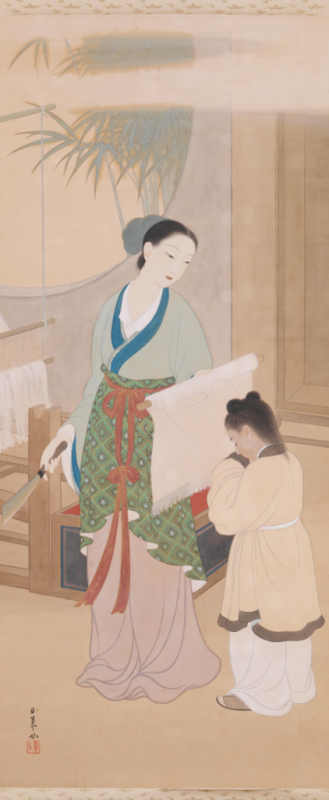
Frustrated by his inability to bring change, he eventually withdrew from public life. According to Ying Shao’s Fengsu Tongyi, King Hui of Liang appointed Mencius as a high official after Wei’s capital moved from Anyi to Daliang. He was buried in the Cemetery of Mencius, about 12 kilometers northeast of Zoucheng’s center, where a stele on a stone tortoise and crowned with dragons stands before his grave.
Mother
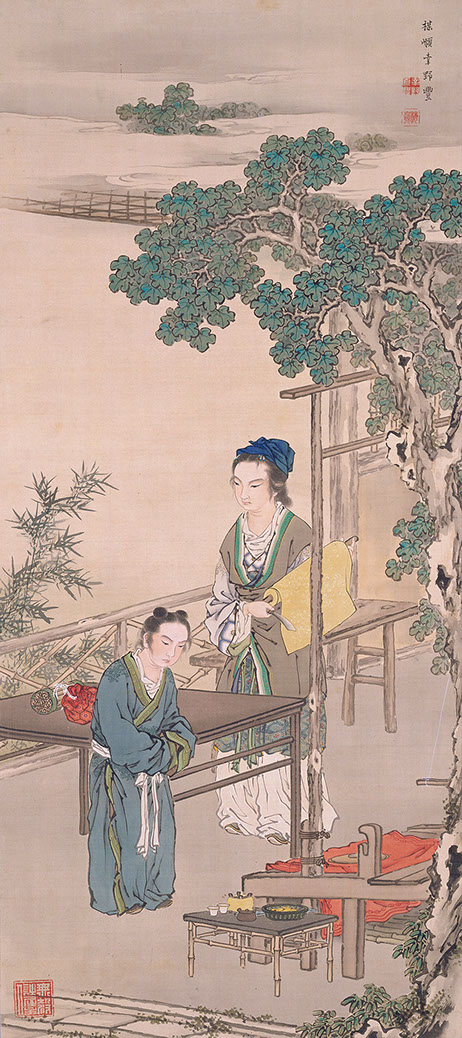
Mencius’s father, Meng Ji, died when Mencius was very young. His mother, Meng Mu (born Zhang), is celebrated in Chinese culture as an exemplary woman. She is one of 125 women in Liu Xiang’s Biographies of Exemplary Women, which includes four stories about her.
Lore & Background
Mencius was born Meng Ke in the state of Zou, in what is now Zoucheng, Shandong. He was an itinerant philosopher and sage, and one of the principal interpreters of Confucianism. He was traditionally said to be a pupil of Confucius's grandson Zisi (c. 481 – c. 402 BC), but this is chronologically impossible as Zisi died before Mencius was born. Like Confucius, according to legend, he travelled throughout China for many years to offer advice to rulers for reform.
During the Warring States period (c. 475 – 221 BC), Mencius served as an official and scholar at the Jixia Academy in the state of Qi. He expressed his filial piety when he took three years leave of absence from his official duties for Qi to mourn his mother's death. Disappointed at his failure to effect changes in his contemporary world, he retired from public life.
Reader's Guide
Mencius is significant for his development of Confucian thought, particularly his assertion that human nature is inherently righteous and humane, in contrast to Xunzi's belief that human nature is evil. He argued that the responses of citizens to rulers' policies embody this principle, and a state with righteous and humane policies will flourish. Mencius emphasized the importance of the common citizens in the state, arguing that it is acceptable for subjects to overthrow or even kill a ruler who ignores the people's needs and rules harshly. He also believed in the power of Destiny, but denied that Heaven would protect a person regardless of his actions.
His work, the Mencius, was later canonised as a Confucian classic. His ideas on education stressed awakening innate abilities and active interrogation of texts, denouncing memorization. The four beginnings—commiseration, shame, deference, and right or wrong—are central to his philosophy, representing the sprouts of humanity, righteousness, propriety, and wisdom.
Did You Know?
- His mother moved houses three times to find a suitable environment for his upbringing.
- Mencius argued that a ruler who does not rule justly is no longer a true ruler.
Frequently Asked Questions
Who is Mencius?
Mencius (Meng Ke, c. 371–c. 289 BC) was a Chinese philosopher from the state of Zou who developed and expanded Confucian thought during the Warring States era. He is traditionally honored as the "Second Sage," a title that ranks him directly behind Confucius in the Confucian hierarchy.
What is the book Mencius?
The text known as Mencius is a collection of dialogues and discussions he had with various rulers and students across different states. It was later elevated to the status of a Confucian classic and remains a foundational text in the tradition.
How does Mencius relate to Confucius?
Mencius is considered a fourth-generation disciple in the Confucian lineage and is widely regarded as the most direct heir to Confucius's teaching. His title "Second Sage" reflects the view that he carried forward and deepened Confucian ideas while remaining subordinate to the original master.
More in Historical Figures & Leaders
Sources
Compiled from Wikipedia and the sources listed below. Text from Wikipedia is available under CC BY-SA 4.0; this entry is adapted from it.
- Wikipedia: Mencius (CC BY-SA 4.0).
Spotted an error? Know more?
Reader corrections go straight into our review queue. Suggest an edit · How this site is sourced