Peter Kropotkin
Russian anarchist philosopher and geographer who championed anarchist communism.
Last updated

Foreign Bureau Communication Anarcho-Syndicalists · Public domain
Pyotr Alexeyevich Kropotkin, a Russian anarchist thinker and geographer, championed a vision of society without central government, built on voluntary associations of self-governing communities and worker-run enterprises. He was born in Moscow in 1842 to an aristocratic landowning family.
Early life (1842–1862)
His father, a royal officer, owned serfs across three provinces, and his mother died of tuberculosis when he was three. A stepmother who was indifferent and vindictive toward the children followed, and Kropotkin and his brother Alexander were largely raised by a German nurse. He developed a lasting compassion for the serfs and servants who cared for him.
At age eight, he attended a royal ball, and Tsar Nicholas I selected him for the elite Page Corps in St. Petersburg. There, Kropotkin began writing revolutionary texts calling for a Russian constitution, developed interests in science and opera, and became a top student and sergeant-major. He served as the emperor’s personal page but grew disillusioned with court life.
Career in Siberia (1862–early 1870s)
After his service, he chose a post in eastern Siberia with the Amur Cossacks, seeking financial independence and the chance to study nature. He worked on prison reform and city governance projects under governor-general Boleslav Kukel, but these were blocked by the central government. An exiled poet introduced him to anarchism through an essay by Pierre-Joseph Proudhon.
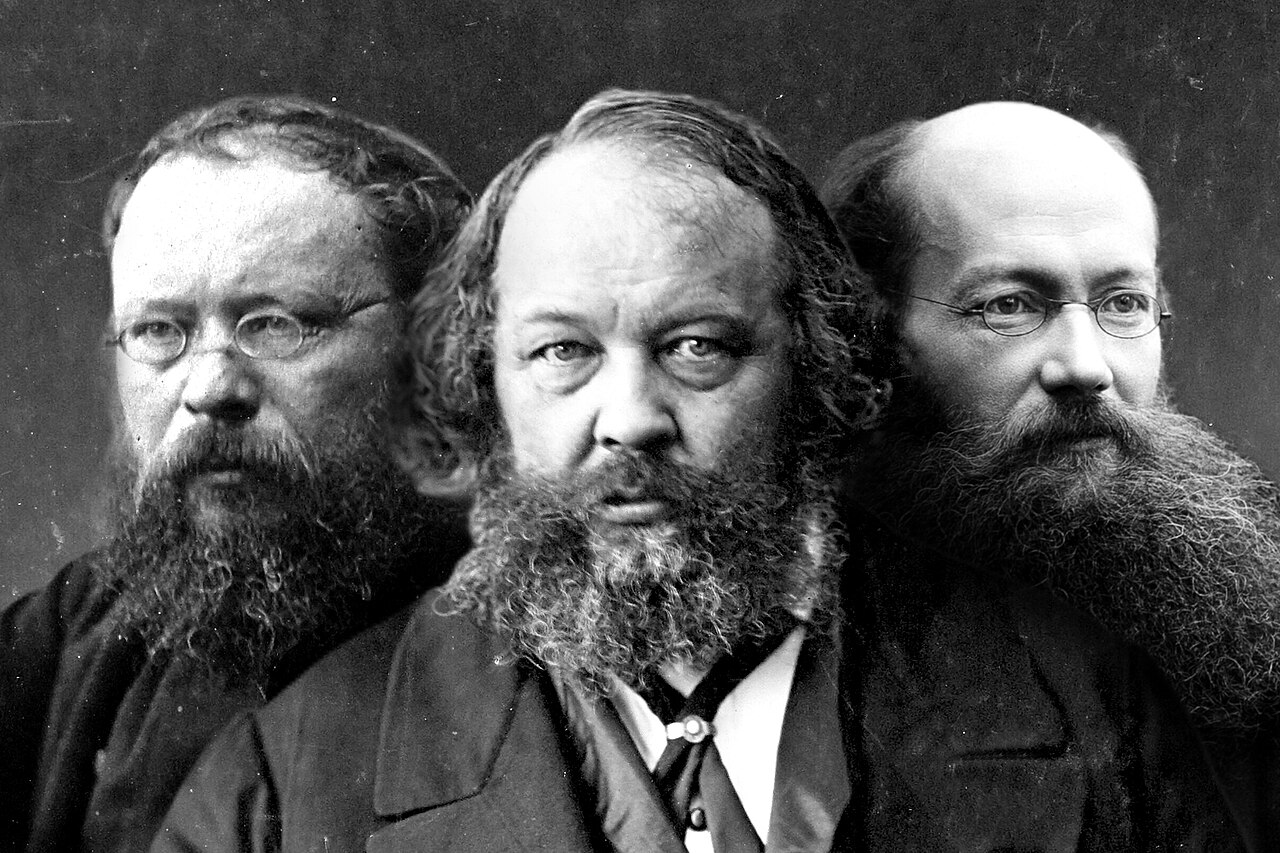
Kropotkin found his true calling in geography. He led a disguised reconnaissance expedition through Manchuria and explored the East Siberian Mountains. His measurements from an 1866 expedition confirmed that Siberia from the Urals to the Pacific was a plateau, not a plain, earning him a gold medal from the Russian Geographical Society and leading to the naming of a mountain range after him.
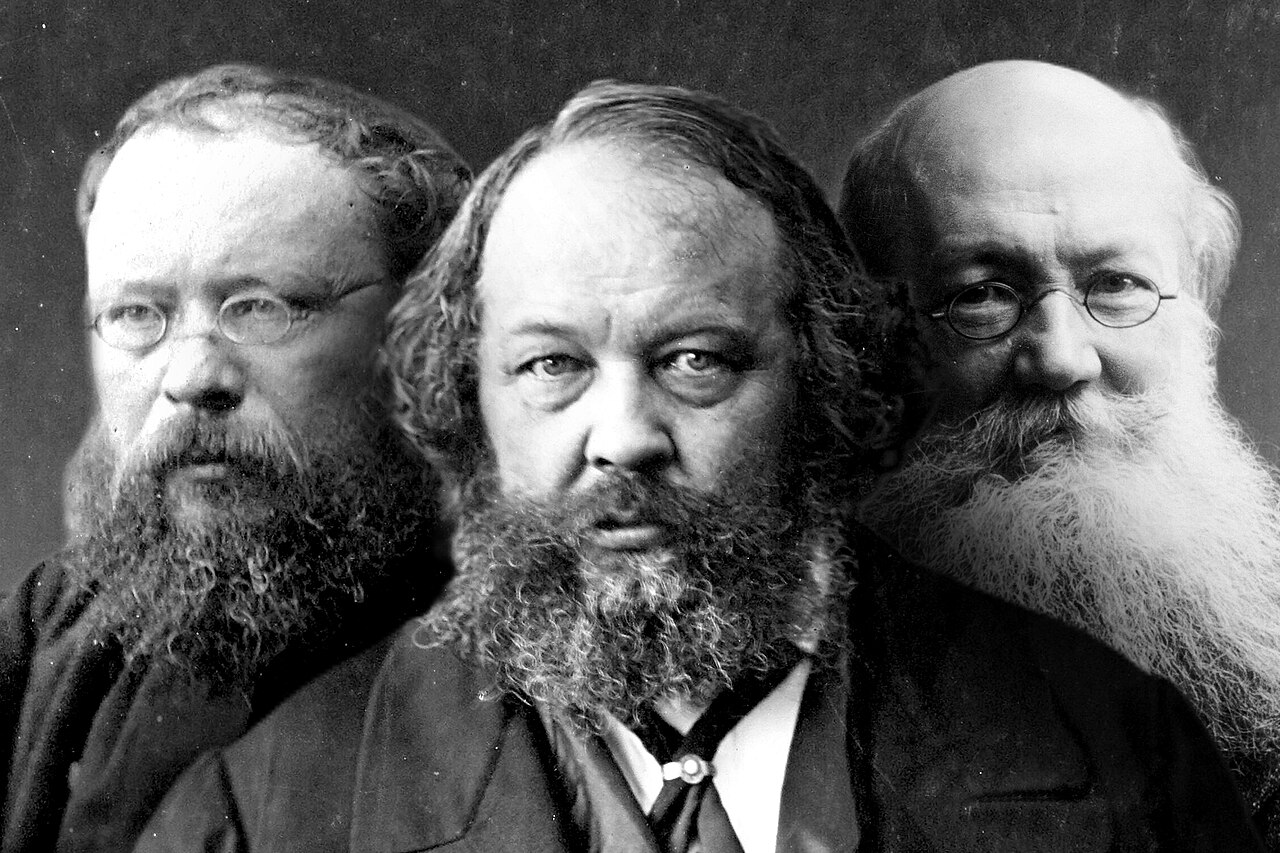
He also covered Siberia for newspapers, including the condition of Polish political exiles. After the governor-general reneged on a promise to suspend death sentences for prisoners, Kropotkin and his brother left the military. His time in Siberia convinced him that administrative reform was futile and that peasant social organization held the key to change.
Exile in the United Kingdom (1886–1917)
He moved to St. Petersburg, studied mathematics, physics, and geography, and presented his findings to the Russian Geographic Society. In 1874, he was imprisoned for his activism but escaped two years later, spending the next 41 years in exile in Switzerland, France (where he was imprisoned for nearly four years), and England. During this period, he lectured and published widely on anarchism and geography. His most prominent books include The Conquest of Bread (1892) and Fields, Factories, and Workshops (1899), while Mutual Aid: A Factor of Evolution (1902) was his principal scientific work.
He also contributed the article on anarchism to the eleventh edition of the Encyclopædia Britannica and left an unfinished work on anarchist ethical philosophy. After the Russian Revolution in 1917, he returned to Russia but was disappointed by the Bolshevik state. He died on 8 February 1921.
Lore & Background
Kropotkin was born in Moscow in 1842 to an aristocratic land-owning family. He attended the Page Corps, an elite military school, and served as an officer in Siberia, where he participated in geological expeditions that led to the discovery of the Patom and Vitim Plateaus, earning a gold medal from the Russian Geographical Society. His work focused on specific highland regions, not the entire expanse from the Urals to the Pacific, which includes vast plains like the West Siberian Plain.
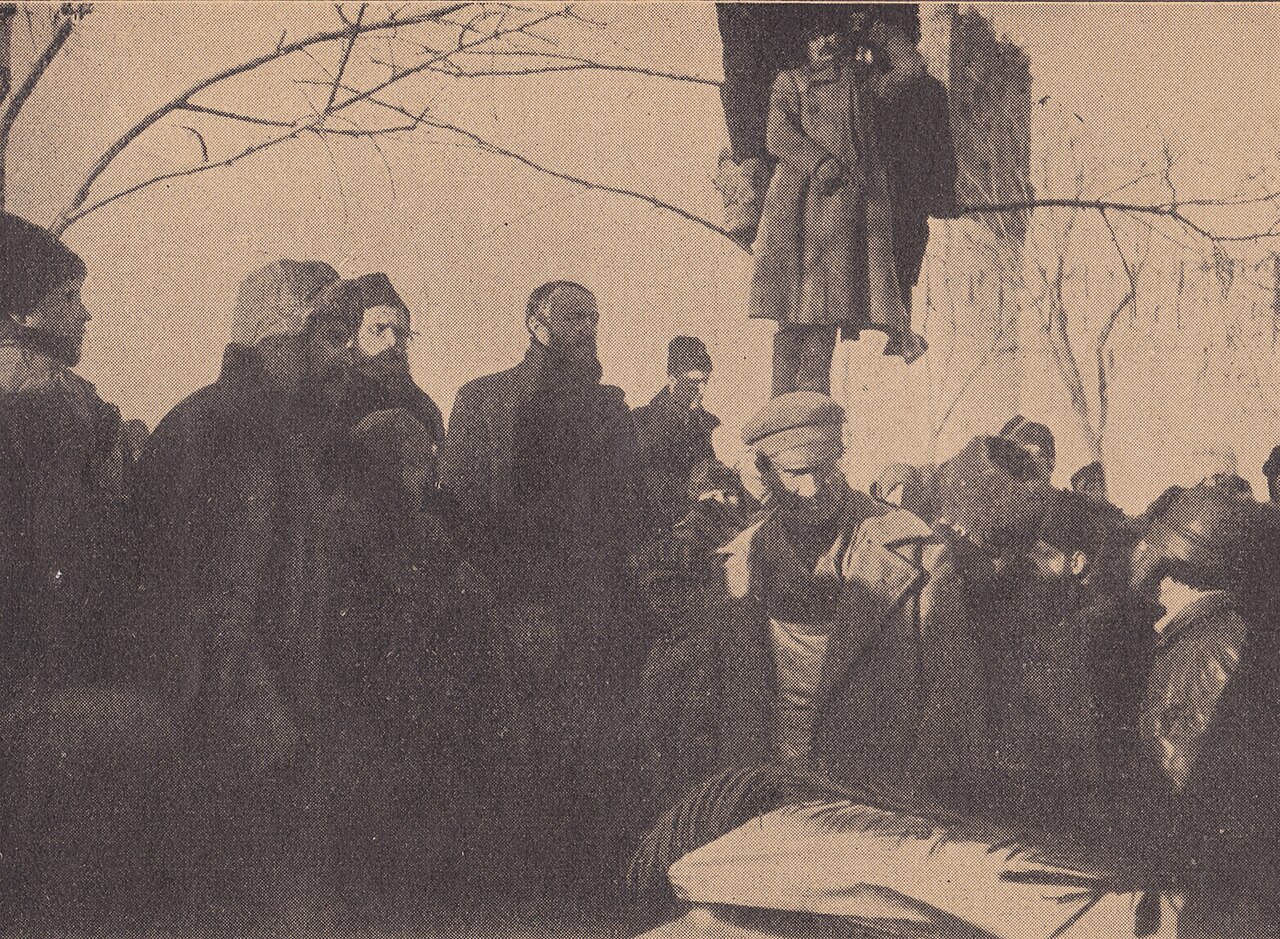
He was imprisoned for his activism in 1874 but escaped two years later, spending the next 41 years in exile in Switzerland, France (where he was imprisoned for nearly four years), and England. While in exile, he lectured and published widely on anarchism and geography. He returned to Russia after the 1917 Russian Revolution but was disappointed by the Bolshevik state.
Aristocratic Origins and the Seeds of Revolt
Kropotkin entered the world in December 1842 in Moscow's Konyushennaya district, the youngest of four children born to Alexey Kropotkin, a royal officer holding serfs across three provinces, and Ekatarina Sulima, whose lineage traced back to a Zaporozhian Cossack leader. Tragedy struck early: his mother succumbed to tuberculosis when he was merely three, and his father's subsequent remarriage brought a stepmother who actively worked to erase the memory of the boy's mother. Left largely in the care of a German nurse alongside his brother Alexander, young Peter absorbed stories of his mother's generosity from the estate's servants and serfs, forging a lifelong empathy for those at the bottom of the social hierarchy.
At eight, he attended a Royal Ball where Tsar Nicholas I personally selected him for the elite Page Corps in St. Petersburg. There, even as a teenager, he was already sketching underground pamphlets calling for a Russian constitution and harboring populist sympathies toward serf emancipation. By 1861, academic excellence had elevated him to sergeant-major and personal Page de Chambre to the emperor, yet the gilded court life increasingly repelled him, and he privately wrestled with the urgent need to live a life of genuine social usefulness.
The Siberian Geographer
In 1862, Kropotkin selected the Amur Cossacks posting in east Siberia, an unglamorous assignment that would grant him freedom to study artillery mathematics, roam the wilderness, and achieve financial independence from his father. What began as a military tour became a geological odyssey. He led a disguised reconnaissance pushing through Manchuria toward Vladivostok, then pressed northward into the East Siberian Mountains. His 1866 Olekminsk-Vitimsk survey produced measurements proving that the stretch of Siberia between the Urals and the Pacific was an elevated plateau rather than a flat plain.
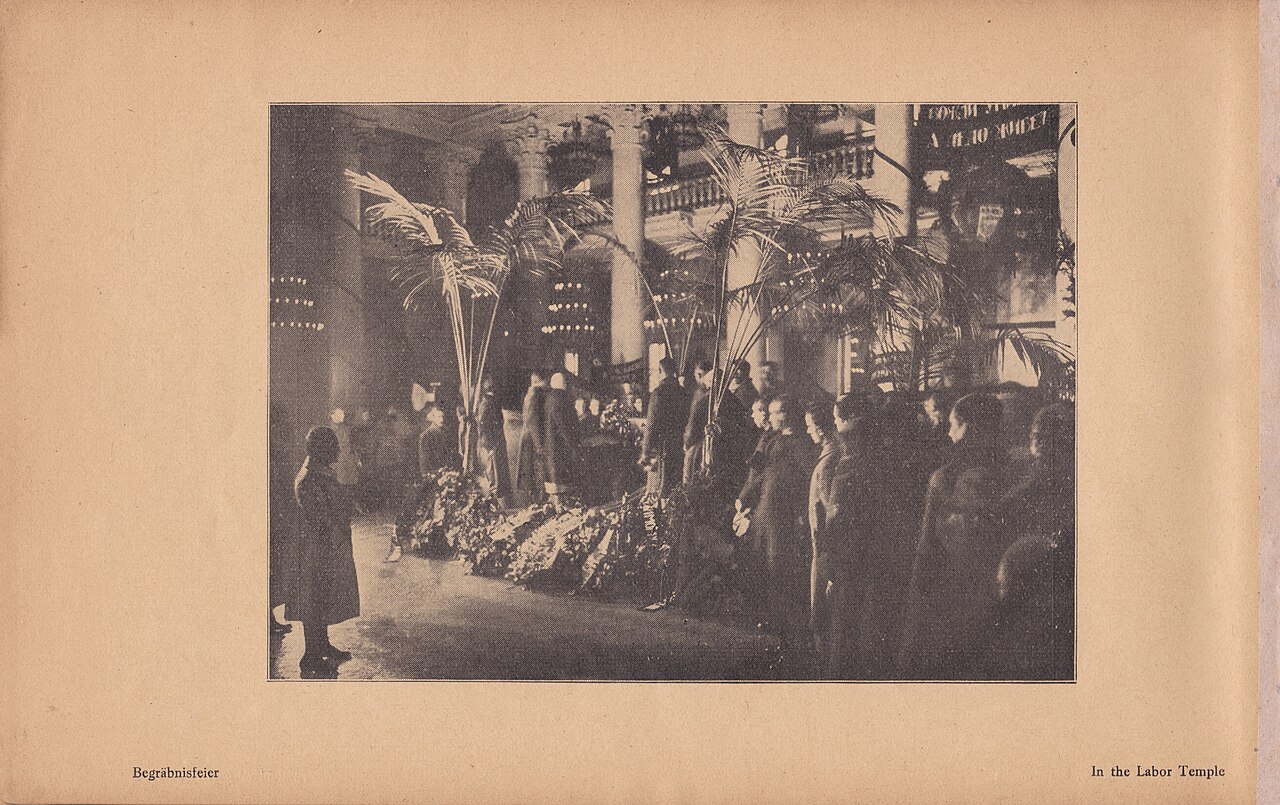
Identifying the Patom and Vitim Plateaus earned him a gold medal from the Russian Geographical Society and unlocked the commercial potential of the Lena gold fields; a mountain range in the region still bears his name. Beyond the science, his Siberian years reshaped his politics. He marveled at the dignity of yeoman peasant farmers, engaged in prison-reform and municipal self-governance projects under governor-general Kukel, and championed the Polish political exiles of the 1866 Baikal Insurrection, securing a temporary reprieve from their death sentences before the central government reneged. By the time he and his brother abandoned the military, Kropotkin had concluded that top-down administrative tinkering could never remedy the injustices he saw.
The Anarchist Philosopher's Body of Work
Kropotkin's political vision centered on a decentralized communist society organized without any central state, built instead from voluntary associations of self-governing communities and worker-managed enterprises. He articulated this framework across a prolific output of books, pamphlets, and articles spanning decades. The Conquest of Bread, published in 1892, laid out his argument that a society free from coercive authority could meet every person's material needs through collective labor and mutual support. Three years later, Fields, Factories, and Workshops (1899) extended the analysis to concrete proposals for reorganizing agriculture and industry along cooperative lines.
His most scientifically ambitious contribution, Mutual Aid: A Factor of Evolution (1902), drew on observations from his Siberian fieldwork and broader natural history to argue that cooperation, not mere competition, was a fundamental driver of biological and social evolution. He also contributed the article on anarchism to the eleventh edition of the Encyclopædia Britannica, and at the time of his death he left behind an unfinished treatise on anarchist ethical philosophy. His ideas were shaped in part by an introduction to Proudhon's work during his Siberian years, recommended by the exiled poet Mikhail Larionovitch Mikhailov.
Exile, Return, and the Bitter End
In 1874, Kropotkin was arrested and imprisoned for his revolutionary activism. Two years later he escaped custody, beginning a forty-one-year stretch of exile that carried him through Switzerland, France, and England. In France he endured nearly four additional years behind bars, yet even from foreign prisons and foreign cities he continued to lecture, publish, and build his theoretical edifice. The 1917 Russian Revolution finally opened a path home.
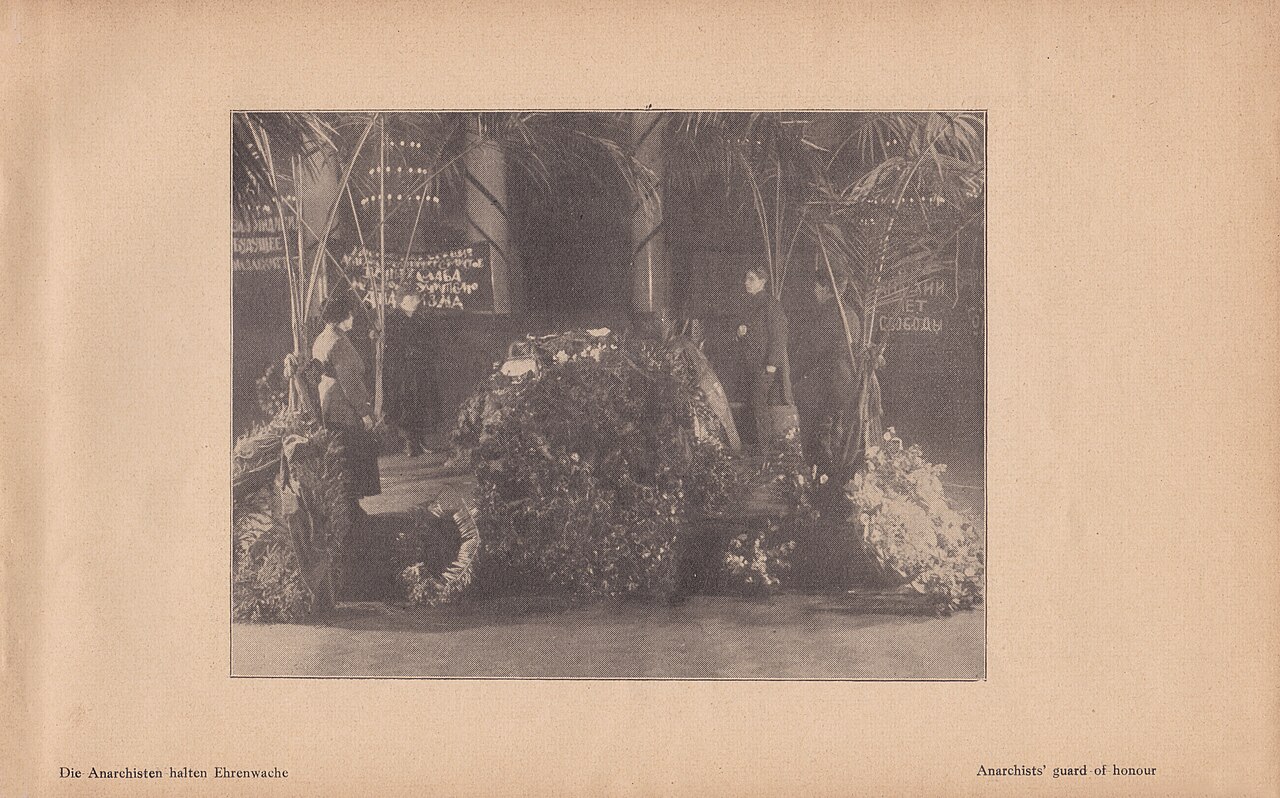
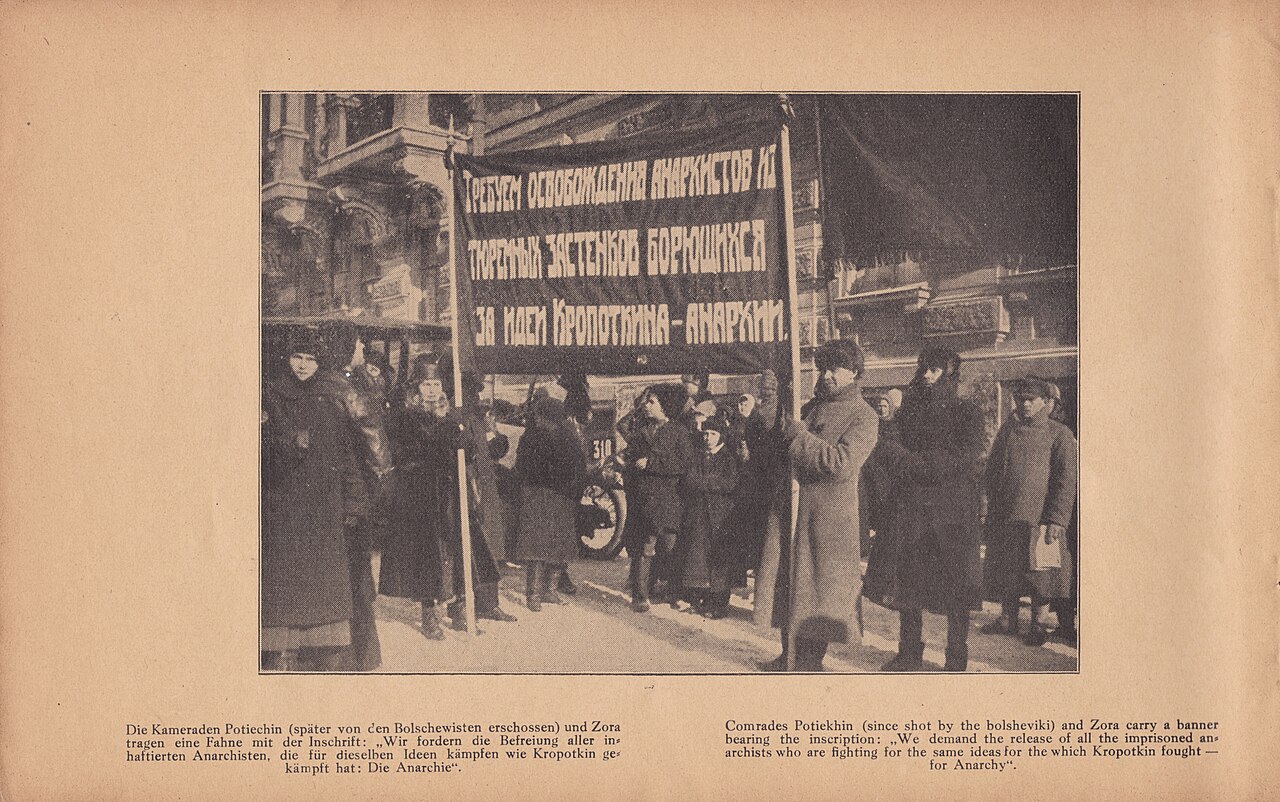
Kropotkin returned to the country of his birth, only to find himself profoundly disillusioned by the Bolshevik state that had seized power. The apparatus the new regime erected stood in direct contradiction to the voluntary, self-governing communities he had spent a lifetime envisioning. His death on 8 February 1921 thus came not in triumph but in a kind of quiet grief, the anarchist philosopher watching the very centralization he had opposed become the operating principle of the Russian state. His legacy, however, endured in the body of written work he left behind and in the mountain ranges of Siberia that still carry his name.
Reader's Guide
Kropotkin's significance lies in his development of anarchist communism, a vision of a decentralized society without central government, based on voluntary associations of self-governing communities and worker-run enterprises. His major works, including The Conquest of Bread (1892) and Fields, Factories, and Workshops (1899), articulated this vision, while Mutual Aid: A Factor of Evolution (1902) provided a scientific argument for cooperation in nature and society. He contributed the article on anarchism to the eleventh edition of the Encyclopædia Britannica and left an unfinished work on anarchist ethical philosophy. His ideas influenced later anarchist and socialist movements, though his critique of the Bolshevik state after the Russian Revolution highlighted tensions between anarchist and authoritarian socialist models.
Frequently Asked Questions
Who is Peter Kropotkin?
Pyotr Alexeyevich Kropotkin (1842–1921) was a Russian anarchist philosopher and geographer widely regarded as the foremost theorist of anarchist communism. He argued for a stateless society organized around voluntary cooperation and worker-managed production rather than centralized state power.
What are Kropotkin's most famous works?
His two best-known texts are The Conquest of Bread, which lays out his vision of a stateless, communally organized economy, and Mutual Aid: A Factor of Evolution, where he uses biological examples to challenge the idea that competition is the sole driver of natural selection.
What exactly is anarchist communism as Kropotkin defined it?
Kropotkin's version called for the abolition of the state, private property in the capitalist sense, and wage labor, replacing them with decentralized communes, voluntary associations, and enterprises run directly by their workers. He believed that mutual aid, not coercion, was the natural basis for human cooperation.
What was Kropotkin's personal background and how did it shape his politics?
Born into Russian aristocratic landowning nobility, he initially trained as a military officer and geographer before rejecting his privileged class and turning to revolutionary activism. He endured multiple prison sentences and spent decades in European exile, experiences that deepened his commitment to anti-authoritarian thought.
Why is Kropotkin still discussed in political and social circles today?
His emphasis on mutual aid, grassroots self-organization, and decentralized governance continues to resonate with contemporary movements in mutual-aid networks, cooperative economics, and anti-state political theory. Scholars also revisit his evolutionary arguments as an early alternative to Social Darwinism.
More in Historical Figures & Leaders
Sources
Compiled from Wikipedia and the sources listed below. Text from Wikipedia is available under CC BY-SA 4.0; this entry is adapted from it.
- Wikipedia: Peter Kropotkin (CC BY-SA 4.0).
Spotted an error? Know more?
Reader corrections go straight into our review queue. Suggest an edit · How this site is sourced