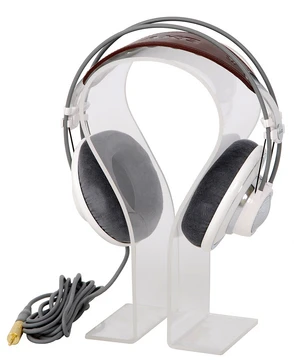
Noise-cancelling headphones
Headphones that actively cancel ambient noise using destructive interference.

Noise-cancelling headphones are designed to cut down on unwanted background noise by using active noise control, or ANC. This works by generating sound waves that clash with and cancel out incoming noise. People often use them in places with constant low-level racket, like airplane cabins, trains, offices, factories, or busy city streets. Unlike standard passive noise-isolating headphones, which rely on padding or ear seals to physically block sound, ANC models actively target low-frequency noise. They do this with microphones, amplifiers, and digital signal processing that pick up surrounding sounds and create an opposite waveform to neutralize the noise before it reaches the ears.
The idea of active noise control goes back to the early 1900s. In 1936, German physicist Paul Lueg patented a theoretical method for canceling sound through destructive interference. Early attempts to put this into practice were held back by the limits of analog electronics and signal processing at the time. During the 1950s and 1960s, researchers looked into using active noise reduction for aviation and industrial settings, especially for pilots and crews exposed to loud environments that could damage hearing or interfere with communication. Modern consumer ANC headphones took off in the 1980s. Bose Corporation was one of the first to successfully sell the technology, after founder Amar Bose got frustrated with aircraft cabin noise on a flight. Bose started with aviation-focused ANC headsets and later released its QuietComfort line for travelers and the general public. In the 2000s and 2010s, better batteries, digital processing, wireless tech, and miniaturization fueled rapid growth in the consumer ANC market. Companies like Sony, Apple, Sennheiser, AKG, and Beats Electronics came out with increasingly advanced noise-cancelling headphones and earbuds.
Most modern ANC headphones use one of three microphone setups: feedforward, feedback, or hybrid. Feedforward systems place microphones on the outside of the earcups to catch noise before it hits the ear. Feedback systems put microphones inside the earcup to measure what reaches the listener. Hybrid systems combine both for better cancellation across a wider range of frequencies. The technology works best on steady, low-frequency sounds like aircraft engines, air conditioning, road noise, and train rumble.
- First patent
- 1936, by German physicist Paul Lueg
- Early aviation developer
- Lawrence J. Fogel (1950s)
- First commercial consumer anc
- Bose QuietComfort series
- First faa certified anc headset
- Sennheiser LHM-45 (1987)
Lore & Background
The concept of active noise control dates to the early 20th century. In 1936, German physicist Paul Lueg patented a theoretical system for cancelling sound waves through destructive interference. Early applications of the technology were limited by the capabilities of analog electronics and signal processing systems available at the time. During the 1950s and 1960s, researchers began exploring active noise reduction for aviation and industrial use. The technology became especially important for pilots and aircraft crews operating in high-noise environments where prolonged exposure could damage hearing and interfere with communication. Lawrence J. Fogel created systems and submitted patents regarding active noise cancellation in the field of aviation, and is considered the inventor of active noise cancellation, designing one of the first noise-cancelling headphone systems. Later, Willard Meeker designed an active noise control model applied to circumaural earmuffs for advanced hearing protection.
Modern consumer noise-cancelling headphones emerged during the 1980s. Bose Corporation became one of the first companies to successfully commercialize ANC headphone technology after founder Amar Bose reportedly became dissatisfied with aircraft cabin noise while on a flight. Bose introduced aviation-focused ANC headsets before later releasing consumer-oriented QuietComfort headphones, which helped popularize the technology among travelers and general consumers. In 1984, German audio equipment manufacturer Sennheiser was asked by Lufthansa Airlines to develop a pilot headset which could reduce hearing loss, stress, and interference associated with constant cockpit noise. In response, Sennheiser developed its patented NoiseGard technology. In 1987, the Sennheiser LHM-45 headset launched, and was the first ANC headset to obtain U.S. Federal Aviation Association's Technical Standard Orders certification to authorize mass-manufacturing.
During the 2000s and 2010s, improvements in battery technology, digital signal processing, wireless communication, and miniaturization led to rapid growth in the consumer ANC market. Companies including Sony, Apple, Sennheiser, AKG, and Beats Electronics released increasingly advanced noise-cancelling headphones and earbuds. Most modern ANC headphones use either feedforward, feedback, or hybrid microphone systems. The technology is generally most effective at reducing constant low-frequency sounds such as aircraft engines, air conditioning systems, road noise, and train rumble. Sudden or irregular sounds, including speech, alarms, or nearby conversations, are more difficult to eliminate, though modern digital processing systems have improved performance significantly.
Reader's Guide
Noise-cancelling headphones have become a significant category in consumer audio, widely used in commercial aviation to reduce fatigue and improve communication clarity for passengers and flight crews. Pilots frequently use specialized aviation headsets equipped with ANC to reduce cockpit engine noise and improve radio intelligibility. The technology has also become common among commuters and travelers using trains, buses, and subways, where continuous environmental noise may interfere with listening or concentration. In offices and educational settings, noise-cancelling headphones are frequently used to reduce distractions and improve focus during work or study. Research has suggested that ANC headphones may improve concentration, listening comprehension, and multitasking performance in noisy environments. The headphones are therefore widely used by students, remote workers, programmers, gamers, and content creators. In industrial and military applications, active noise control technology is sometimes incorporated into hearing protection systems to reduce prolonged exposure to hazardous noise while preserving the ability to hear important communications and warning signals. There is a general danger that listening to loud music in headphones can distract the listener and lead to injury and accidents, and noise-cancelling headphones add extra risk. Several countries and states have made it illegal to wear headphones while driving or cycling. It is not uncommon to get a pressure-like feeling when using noise-cancelling headphones initially, caused by the lack of low-frequency sounds being perceived as a pressure differential between the inner and outer ear.
Did You Know?
- The first patent for active noise control was filed in 1936 by German physicist Paul Lueg.
- Lawrence J. Fogel is considered the inventor of active noise cancellation and designed one of the first noise-cancelling headphone systems.
- The Sennheiser LHM-45, launched in 1987, was the first ANC headset to obtain FAA Technical Standard Orders certification.
- Noise-cancelling headphones are most effective at reducing constant low-frequency sounds like aircraft engines and road noise, but less effective on sudden sounds like speech or breaking glass.
More in Headphones and Audio Gear 1-24
Spotted an error? Know more?
Reader corrections go straight into our review queue. Suggest an edit · How this site is sourced