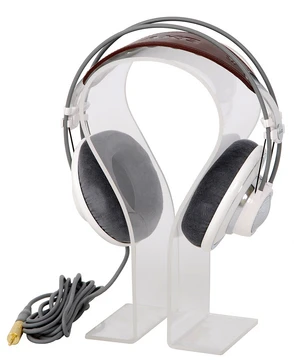
AirPods Pro
Apple's mid-range wireless in-ear headphones with active noise cancellation.

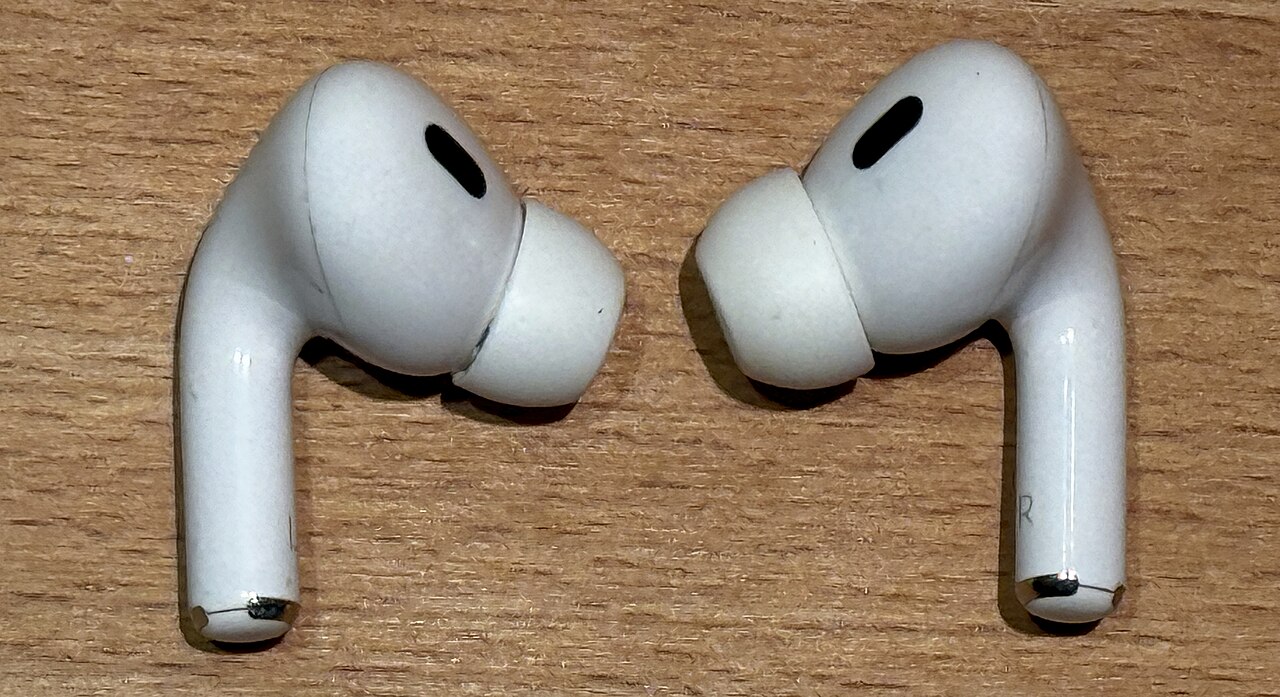
Burkhard Mücke · CC BY-SA 4.0
The AirPods Pro are wireless Bluetooth in-ear headphones from Apple, first released on October 30, 2019. They sit as Apple’s mid-range option, between the standard AirPods and the top-tier AirPods Max. The first-generation model brought active noise cancellation, a transparency mode, and swappable silicone ear tips, carving out a new line in Apple’s audio range.
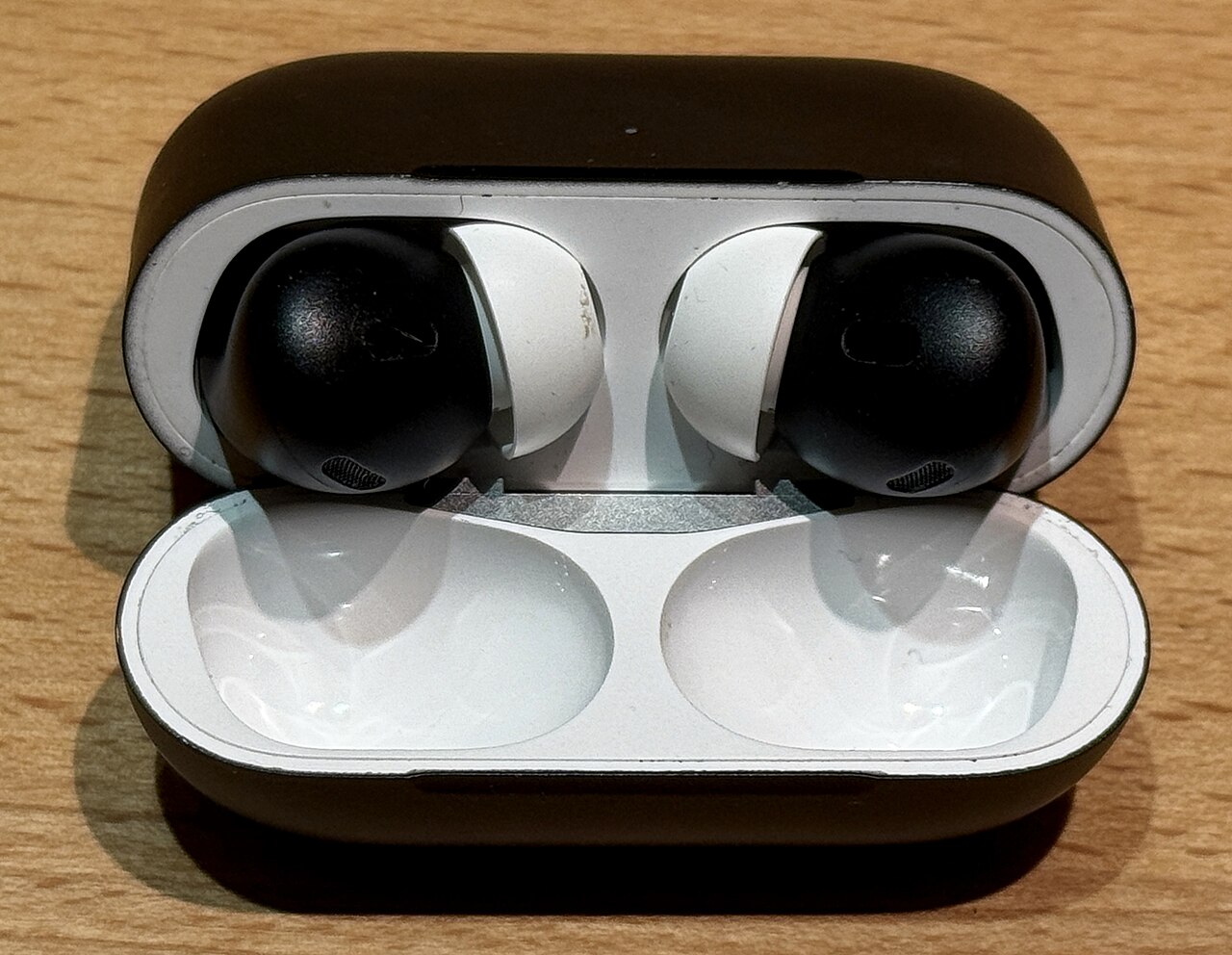
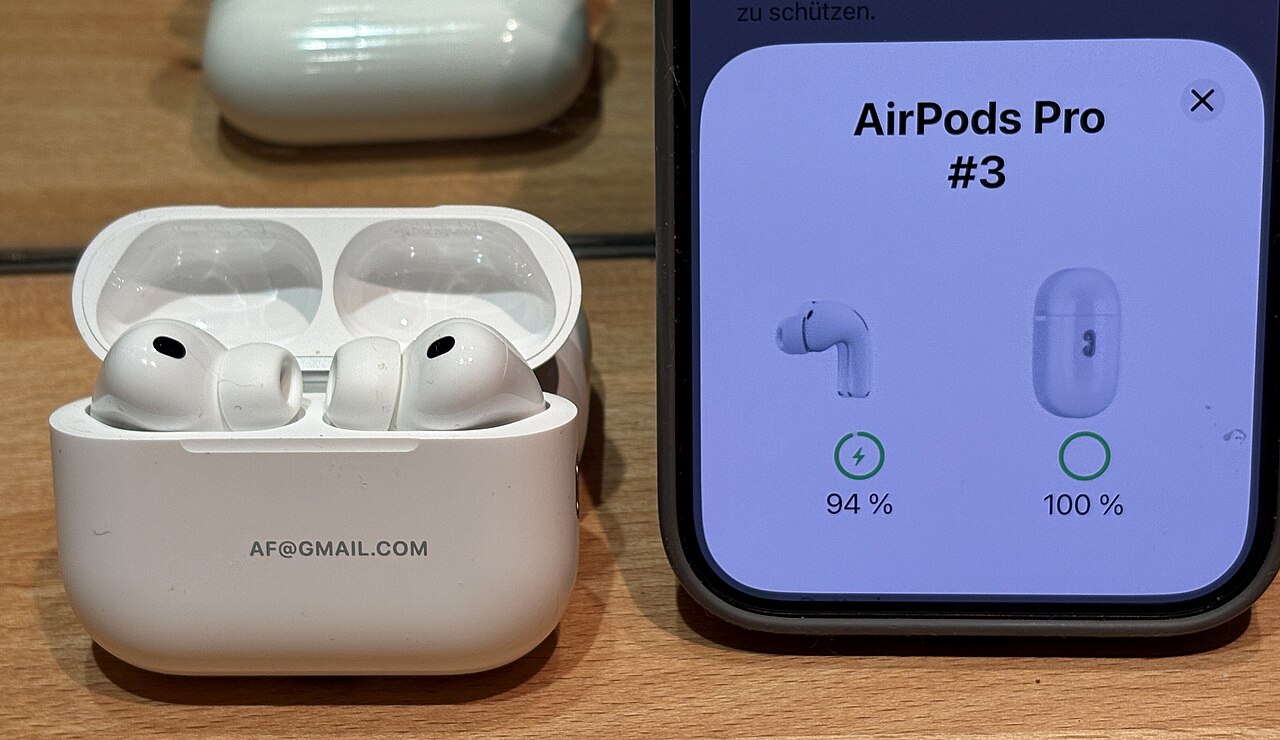
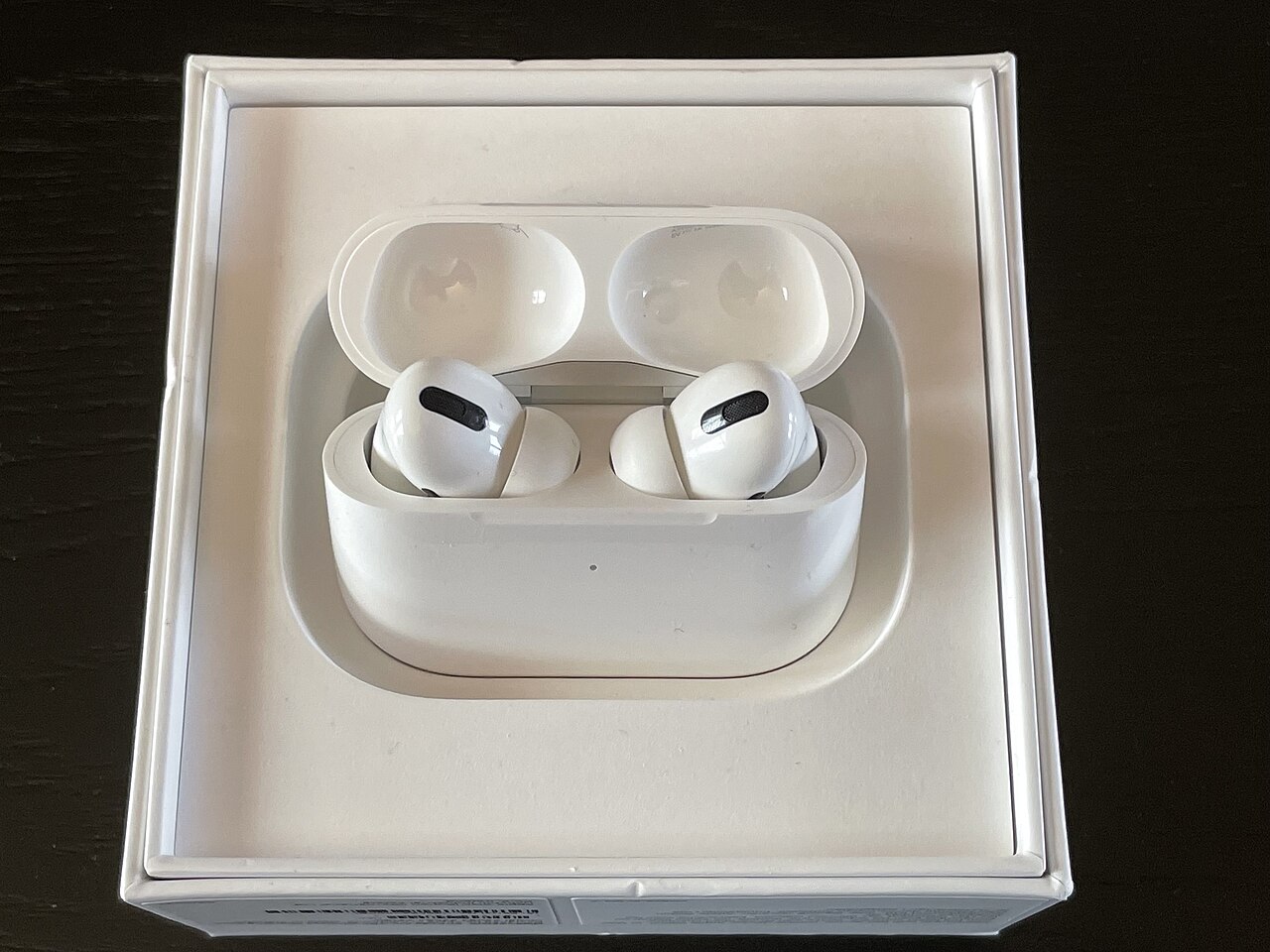
The first-generation AirPods Pro use the H1 chip, the same one found in the second-generation base AirPods. Key features include active noise cancellation, transparency mode, automatic frequency adjustment, an IPX4 water-resistance rating, a wireless charging case, and interchangeable silicone ear tips. They also have accelerometers and optical sensors to detect stem presses and in-ear placement, and they pause audio automatically when removed. Instead of taps, controls rely on a force sensor on the stems. The H1 chip is part of a system-in-package module that also holds the audio processor and accelerometers. Battery life is rated at five hours, dropping to 4.5 hours with noise cancellation or transparency mode active; the charging case provides 24 hours of total listening time and supports Qi wireless charging. In October 2021, Apple updated the case to include MagSafe compatibility. The ear tips come in three sizes, with a medium set pre-attached, and iOS includes an Ear Tip Fit Test to check the seal. Adaptive EQ automatically adjusts the frequency response to match the wearer’s ear shape. Starting in early 2020, Apple began selling replacement tips online. With iOS 14 and iPadOS 14, spatial audio was added, simulating 5.1 surround sound in apps like Apple TV, Disney+, HBO Max, and Netflix, requiring an A10 processor or newer device. The same update let users apply headphone accommodations to transparency mode, effectively turning the AirPods Pro into basic hearing aids. In October 2021, Conversation Boost was added, amplifying voices over background noise. In May 2020, a Texas family claimed their 12-year-old child suffered a ruptured eardrum and permanent hearing loss when an Amber alert played at high volume through the AirPods Pro; Apple won the resulting lawsuit in 2025.
The second-generation AirPods Pro were announced on September 7, 2022, and released on September 23, 2022.
Quick Facts
- Developer
- Apple Inc.
- Family
- AirPods
- Release Date
- 1st generation: / 2019-10-30 / 2nd generation (Lightning): / 2022-09-23 / 2nd generation (USB-C): / 2023-09-22 / AirPods Pro 3: / 2025-09-19
- Price
- US$249.00
- System On Chip
- 1st gen: Apple H1 / 2nd gen: Apple H2 (AirPods), Apple U1 (charging case) / 3rd gen: Apple H2 (AirPods), Apple U2 (charging case)
- Discontinued
- 1st gen: / 2022-09-07 / 2nd gen: / 2025-09-09
- Currentfw
- 1st gen: 6F21 / 2nd gen: 8B41 / 3rd gen: 8B41
- Dimensions
- AirPods: (each) / 30.9 x / Charging case: / 45.2 x
- Weight
- AirPods: (each) / 1st gen: 5.4 g / 2nd gen: 5.3 g / Charging case: / 1st gen: 45.6 g / 2nd gen: 50.8 g
- Manufacturer
- Luxshare (under contract)
- Related
- AirPods, AirPods Max
Facts from the source article.
Lore & Background
The first-generation AirPods Pro were announced on October 28, 2019, and released two days later. They use the H1 chip, also found in the second-generation base-level AirPods, and include active noise cancellation, transparency mode, automated frequency profile adjustment, IPX4 water resistance, a charging case supporting wireless charging, and interchangeable silicone ear tips. Control by tapping was replaced by pressing a force sensor on the stems. Battery life is rated at five hours, reduced to 4.5 hours with noise cancellation or transparency mode. The charging case offers 24 hours of total listening time and features Qi standard wireless charging compatibility; in October 2021, the bundled case was updated with MagSafe.
The second-generation AirPods Pro were announced on September 7, 2022, and released on September 23, 2022. They incorporate the H2 chip with Bluetooth 5.3 connectivity, improved sound quality and noise cancellation, extended battery life, volume adjusting gestures, Find My tracking support, compatibility with Apple Watch chargers, and extra-small ear tips. A revision in September 2023 added IP54 dust resistance, support for lossless audio with the Apple Vision Pro, and a USB-C charging case. The third-generation AirPods Pro 3 were introduced on September 9, 2025, and released on September 19, 2025. They continue using the H2 chip and add heart rate monitoring, live voice AI translation, and improved hearing health features.
Reader's Guide
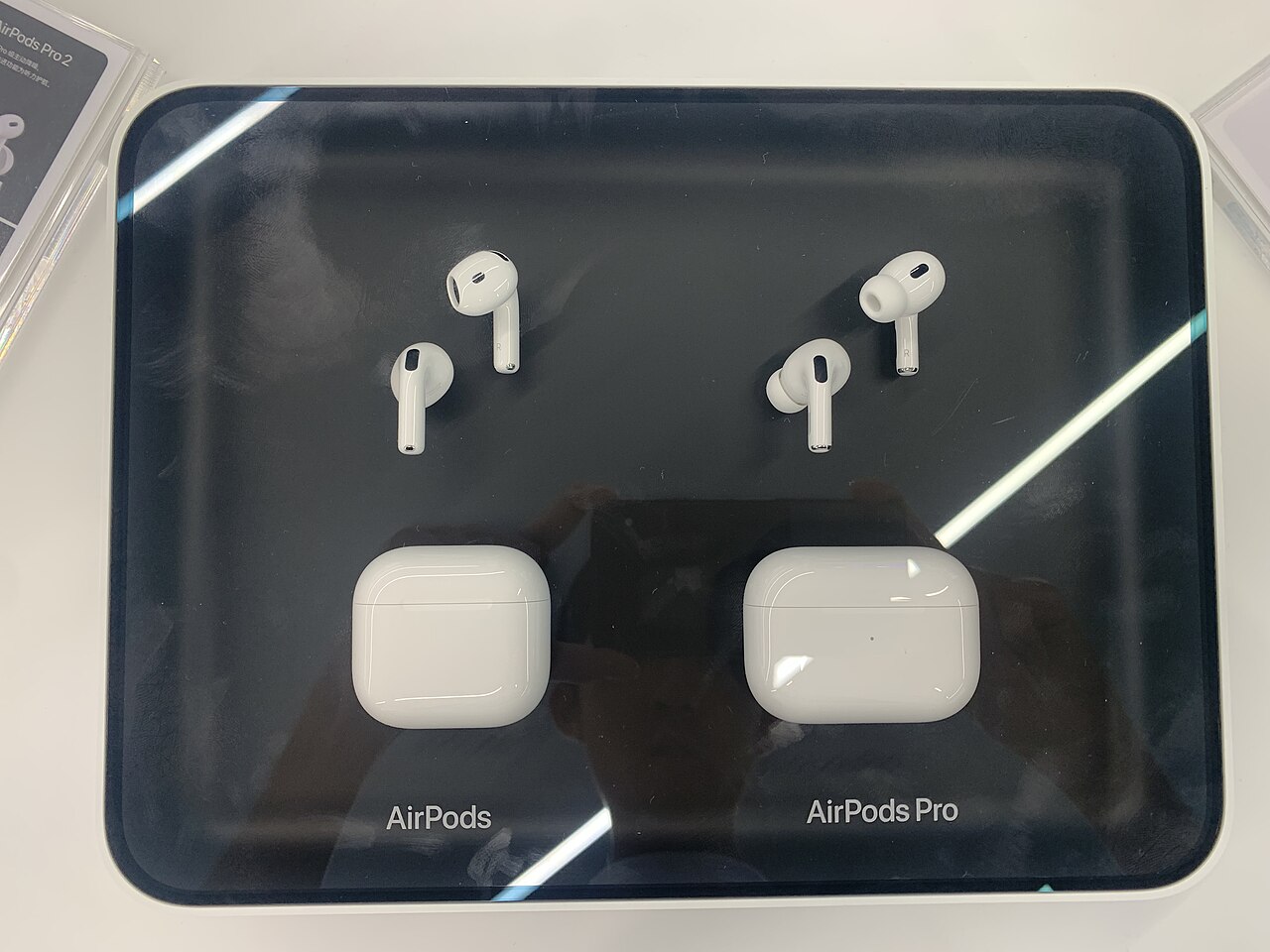
The AirPods Pro line represents Apple's mid-range wireless headphones, bridging the base-level AirPods and the highest-end AirPods Max. The first generation established active noise cancellation and transparency mode as core features, with the H1 chip enabling hands-free 'Hey Siri' and adaptive EQ. The second generation refined these capabilities with the H2 chip, Bluetooth 5.3, and volume gestures, while the 2023 revision added dust resistance and USB-C. The third generation introduced health monitoring features such as heart rate sensing and live translation. The line has been subject to a lawsuit: on May 17, 2020, Carlos Gordoa and Ariani Reyes of Texas claimed their child suffered a ruptured eardrum and permanent hearing loss from an Amber alert pushed through first-generation AirPods Pro at high volume; Apple won the lawsuit in 2025. The AirPods Pro are compatible with any Bluetooth device, but certain features like automatic switching are limited to Apple devices using iCloud.
Did You Know?
- The second-generation AirPods Pro charging case is compatible with Apple Watch chargers.
- The third-generation AirPods Pro were the first AirPods with heart rate monitoring.
- A 2023 revision of the second-generation AirPods Pro added IP54 dust resistance and a USB-C charging case.
From W1 to H2: A Decade of Silicon and Shape
Apple's entry-level wireless earbuds have undergone a remarkable hardware metamorphosis since their 2016 debut. The original pair relied on a proprietary W1 system-on-chip to manage Bluetooth 4.2 connectivity and optimize power draw, housing a 93 milliwatt-hour cell in each stem and a 1.52 watt-hour battery inside the charging case. That first iteration delivered roughly five hours of playback, with a quick fifteen-minute top-up yielding three more hours of listening. By the second generation in 2019, Apple swapped in the H1 processor, adding Bluetooth 5 support and a 50 percent increase in talk time. The physical design, however, remained identical to the original. The third generation in late 2021 marked the first true visual overhaul: shorter stems echoing the AirPods Pro silhouette, force-touch controls, and a MagSafe-compatible case pushing total battery to thirty hours. The fourth generation in 2024 brought the H2 chip, Bluetooth 5.3, IP54 dust and water resistance, and a compact USB-C case, while the fifth generation announced in 2026 pushed environmental sealing further to IP57.
Sensing the World: Microphones, Motion, and Touch
Each AirPod houses two microphones—one oriented outward at ear level and another positioned at the base of the stem—to capture voice while filtering ambient noise. Beyond audio, the earbuds integrate accelerometers and optical sensors that interpret physical gestures: a double-tap or a pinch can pause playback, and the same sensor array detects whether the bud is seated in the ear, triggering automatic pausing the moment it is removed. The third generation expanded the sensory palette with spatial audio and Dolby Atmos support, while the fourth and fifth generations layered in active noise cancellation and, in the 2026 model, enhanced voice isolation. Environmental durability has climbed steadily as well, from IPX4 water resistance in 2021 to IP54 dust-and-water protection in 2024 and IP57 in 2026. The fourth generation also redesigned the earbud controls and speaker architecture, and the fifth added on-stem volume adjustment, giving users a more tactile way to manage playback without reaching for a phone.
Woven Into the Apple Ecosystem
From the start, AirPods were designed as a bridge across Apple's software stack. The W1 chip required iOS 10, macOS Sierra, or watchOS 3 for its advanced pairing features, yet the earbuds still function as ordinary Bluetooth 4.0 headphones on Windows laptops and Android devices. The second generation's H1 chip unlocked hands-free "Hey Siri" activation, and iOS 13.2 later added the ability to dictate text messages through Siri. Charging options have broadened with each release. The second generation offered an optional Qi-compatible wireless case, a product originally announced in 2017 but delayed by the AirPower mat's troubled development. The third generation introduced MagSafe, the fourth shifted to USB-C while retaining Qi and Apple Watch charger compatibility on the premium tier, and the fifth carried those options forward. The fourth and fifth generation cases also embed a speaker for Find My tracking. Most recently, iOS 26 paired the active-noise-cancelling model with Apple Intelligence–powered real-time foreign-language conversation, turning the earbuds into a live translation device.
Five Generations, One Accessory Throne
Apple unveiled the first AirPods on September 7, 2016, at the same special event that introduced the iPhone 7 and Apple Watch Series 2. Originally slated for a late-October launch, the product was pushed to December 20, 2016, after online orders opened on the 13th. Within two years of hitting shelves, the earbuds had become Apple's best-selling accessory, a position they have held ever since. The product line now sits as the entry tier beneath the AirPods Pro and AirPods Max. Each generation has been succeeded with a clear discontinuation: first-gen production ended on March 20, 2019, and second-gen units were repriced after the third generation arrived in October 2021. Pricing has been a lever as well—the third generation launched at $179 before a $169 variant without Qi or MagSafe appeared in 2022. Model numbers have proliferated across five generations, from the original A1523 and A1722 to the six distinct identifiers assigned to the fourth generation, reflecting the growing complexity of tiered hardware options.
Gallery

Frequently Asked Questions
Who is AirPods Pro?
AirPods Pro is Apple's mid-range line of wireless Bluetooth in-ear headphones, first unveiled to the public on October 30, 2019. It occupies the slot between the standard AirPods and the flagship AirPods Max in Apple's audio family.
What are AirPods Pro's powers and role?
The line brought active noise cancellation, a transparency mode, and interchangeable silicone ear tips into Apple's earbud catalog, along with automatic frequency adjustment and IPX4 water resistance. In essence, it gave Apple a compact, ANC-equipped in-ear option that hadn't existed in the lineup before.
Why is AirPods Pro important to the wider audio-gear world?
By pairing true wireless convenience with genuine active noise cancellation in a small in-ear package, it forced competitors to rethink their mid-tier offerings. It also established a distinct Apple audio tier that didn't exist prior to the 2019 launch.
What chip lineage do AirPods Pro generations follow?
The original 2019 model runs on the H1 chip, the same silicon found in second-generation base AirPods. Both the 2022 second generation and the 2025 third generation step up to the H2 chip.
More in Headphones and Audio Gear 1-24
Spotted an error? Know more?
Reader corrections go straight into our review queue. Suggest an edit · How this site is sourced