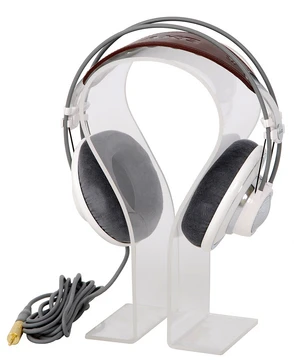
Headphones
Electroacoustic transducers worn over or in the ears for private listening.

R. Henrik Nilsson · CC BY 4.0
Headphones are small speakers worn on or around the head, placed over the ears. They work as electroacoustic transducers, turning electrical signals into sound. Unlike loudspeakers, which broadcast audio into the open air for anyone nearby, headphones let a single person listen privately. They go by other names like earphones or, informally, cans. The two main over-the-ear styles are circumaural (wrapping around the ear) and supra-aural (resting on the ear), both held in place by a band across the top of the head. Another type, earbuds or earpieces, are individual units that fit inside the ear canal; from this category came cordless air buds that use wireless technology. A third type, bone conduction headphones, typically curve around the back of the head and sit in front of the ear canal, leaving it open. In telecommunications, a headset combines a headphone with a microphone.
These devices connect to signal sources like audio amplifiers, radios, CD players, portable media players, mobile phones, video game consoles, or electronic musical instruments. They can use a cord or wireless technologies such as Bluetooth, DECT, or FM radio. The first headphones appeared in the late 19th century for telephone switchboard operators, letting them keep their hands free. Early audio quality was poor, but the invention of high-fidelity headphones marked a major improvement.
Headphones vary widely in audio reproduction quality. Those made for telephone use generally cannot match the high fidelity of expensive units designed for audiophile music listening. Wired headphones typically use a 1/4-inch or 1/8-inch phone jack to plug into an audio source. Wireless models use Bluetooth to receive radio signals from devices like cellphones and digital players. Starting in the 1980s, thanks to the Walkman effect, people began wearing headphones in public places such as sidewalks, grocery stores, and public transit. Professionals also use them in many contexts: audio engineers mixing sound for live concerts or recordings, disc jockeys cueing up the next song without the audience hearing, and aircraft pilots or call center employees, who often use headsets with integrated microphones.
The history of headphones began with the need to free telephone operators' hands.
- First stereo headphones
- 1958, John C. Koss
- First in-ear headphone patent
- 1891, Ernest Mercadier
- Common connector types
- 1/4 in or 1/8 in phone jack
- Early impedance range
- 75 ohms (telegraph/telephone) to 1,000–2,000 ohms (early wireless radio)
- First major supplier to u.s. navy
- Nathaniel Baldwin, 1910
Lore & Background
Headphones grew out of the need to free up a person's hands when operating a telephone. By the 1880s, telephone switchboard operators began using head-mounted telephone receivers, which held a single earpiece next to the ear. By the 1890s, the British company Electrophone developed a listening device with two earpieces that connected through phone lines to live performances at theaters and opera houses. French engineer Ernest Mercadier patented a set of in-ear headphones in 1891, while the German company Siemens Brothers sold headpieces with two earpieces placed outside the ear. Early wireless telegraphy innovators, such as Lee de Forest, used two jointly head-mounted telephone receivers by 1902. The term 'headphones' came into use by 1909.
Early headphones used moving iron drivers with either single-ended or balanced armatures. The common single-ended type used voice coils wound around the poles of a permanent magnet, positioned close to a flexible steel diaphragm. The audio current through the coils varied the magnetic field, causing the diaphragm to vibrate and create sound waves. These early models lacked padding and were often uncomfortable to wear for long periods. Impedance varied widely, with telegraph and telephone work using 75 ohms and early wireless radio using 1,000 to 2,000 ohms. In 1958, John C. Koss produced the first stereo headphones. Smaller earbud-type earpieces, which plugged into the ear canal, were first developed for hearing aids and became widely used with transistor radios starting in 1954. The 3.5 mm phone connector, commonly used in portable applications, has been used at least since the Sony EFM-117J transistor radio released in 1964, and its popularity was reinforced by the Walkman portable tape player in 1979.
Reader's Guide
Headphones have been used in various professional contexts, including by audio engineers mixing sound for live concerts or sound recordings, disc jockeys (DJs) who use headphones to cue up the next song without the audience hearing, aircraft pilots, and call center employees. The latter two types use headphones with an integrated microphone. In the professional audio sector, headphones are used in live situations by DJs with a DJ mixer and by sound engineers for monitoring signal sources. In radio studios, DJs use a pair of headphones when talking to the microphone with speakers turned off to avoid acoustic feedback while monitoring their own voice. In studio recordings, musicians and singers use headphones to play or sing along to a backing track or band. Beginning in the 1980s, as a result of the Walkman effect, headphones started to be used in public places such as sidewalks, grocery stores, and public transit. Cordless headphones, which receive a radio or infrared signal encoded using FM, Bluetooth, or Wi-Fi, are used with events such as silent discos. Headsets designed for telephone use typically cannot reproduce sound with the high fidelity of expensive units designed for music listening by audiophiles.
Did You Know?
- The first headphones were developed in the late 19th century for use by telephone switchboard operators to keep their hands free.
- Nathaniel Baldwin invented a prototype telephone headset in 1910 after being unable to hear sermons during Sunday service.
- Bone conduction headphones typically wrap around the back of the head and rest in front of the ear canal, leaving the ear canal open.
From Switchboard to Stereo – The Birth of Headphones
Headphones did not arrive fully formed as the personal audio devices we recognize today. Their story begins in the 1880s, when telephone switchboard operators needed a way to keep their hands free while connecting caller wires. The solution was a simple clamp that held a single telephone receiver against the ear — a head-mounted receiver that went by the name "headphone." For years, most operator headgear retained this single-earpiece design. A genuine leap forward came in the 1890s, when the British firm Electrophone built a two-earpiece listening system that let London subscribers tune into live theater and opera performances over phone lines, using massive earphones anchored below the chin by a long rod. Around the same period, French engineer Ernest Mercadier patented an in-ear design in 1891, while Siemens Brothers offered operators two-earpiece headpieces positioned outside the ear. The technology soon crossed into wireless telegraphy, where innovators like Lee de Forest paired two head-mounted receivers to detect radio signals. By 1908 the term had settled into "head phones," and a year later the single compound word "headphones" entered common usage.
Driver Technology and the Pursuit of Sound
Early headphone drivers relied on moving-iron technology, where voice coils wound around the poles of a permanent magnet sat close to a flexible steel diaphragm. Audio current passing through the coils altered the magnet's field, pushing and pulling the diaphragm to generate sound waves. Because these units were designed for maximum sensitivity rather than fidelity, no damping was applied, and the diaphragm resonated with large peaks across the frequency range, producing a distinctly rough sound. Padding was largely absent, making extended listening uncomfortable. Impedance varied by application: telegraph and telephone units typically ran at 75 ohms, while early wireless radio headphones used more turns of finer wire to boost sensitivity, commonly hitting 1,000 to 2,000 ohms — a range suited to both crystal sets and triode receivers. Particularly sensitive models, such as those produced by Brandes around 1919, became staples of early radio work. The fundamental trade-off was clear: the very sensitivity that let a user hear faint signals also sacrificed the smooth, full-range reproduction that later high-fidelity designs would eventually deliver.
The Walkman Effect and Professional Adoption
A cultural shift in the 1980s, often attributed to the Walkman effect, transformed headphones from a niche professional tool into a ubiquitous personal accessory. Suddenly people were listening to music on sidewalks, inside grocery stores, and aboard public transit — a scene that would have been unimaginable a generation earlier. Beyond casual listening, headphones became essential in a wide range of professional settings. Audio engineers rely on them to mix sound for live concerts and studio recordings. Disc jockeys use headphones to cue the next track without the audience hearing the transition. Aircraft pilots and call center employees depend on headsets — a combination of a headphone and an integrated microphone — to communicate hands-free. The quality spectrum is vast: a headset built for telephone duty simply cannot match the high-fidelity reproduction of expensive units crafted for audiophiles. This divide between functional communication gear and dedicated music-listening equipment remains a defining feature of the headphone landscape.
Form Factors and Connectivity
Modern headphones come in a variety of physical configurations, each suited to different listening contexts. Circumaural models wrap around the ear, while supra-aural designs rest over it; both use a band across the top of the head to keep the drivers in place. Earbuds, or earpieces, are individual units that plug directly into the ear canal, and a cordless variant using wireless technology has since emerged. A third approach, bone conduction headphones, wraps around the back of the head and rests just in front of the ear canal, deliberately leaving the canal open. On the connectivity side, wired models typically accept either a 1⁄4-inch (6.4 mm) or 1⁄8-inch (3.2 mm) phone jack, plugging into sources as varied as audio amplifiers, radios, CD players, portable media players, mobile phones, video game consoles, and electronic musical instruments. Wireless options transmit the audio signal via radio waves using Bluetooth, DECT, or FM radio, freeing the listener from any physical tether to the source device.
Gallery
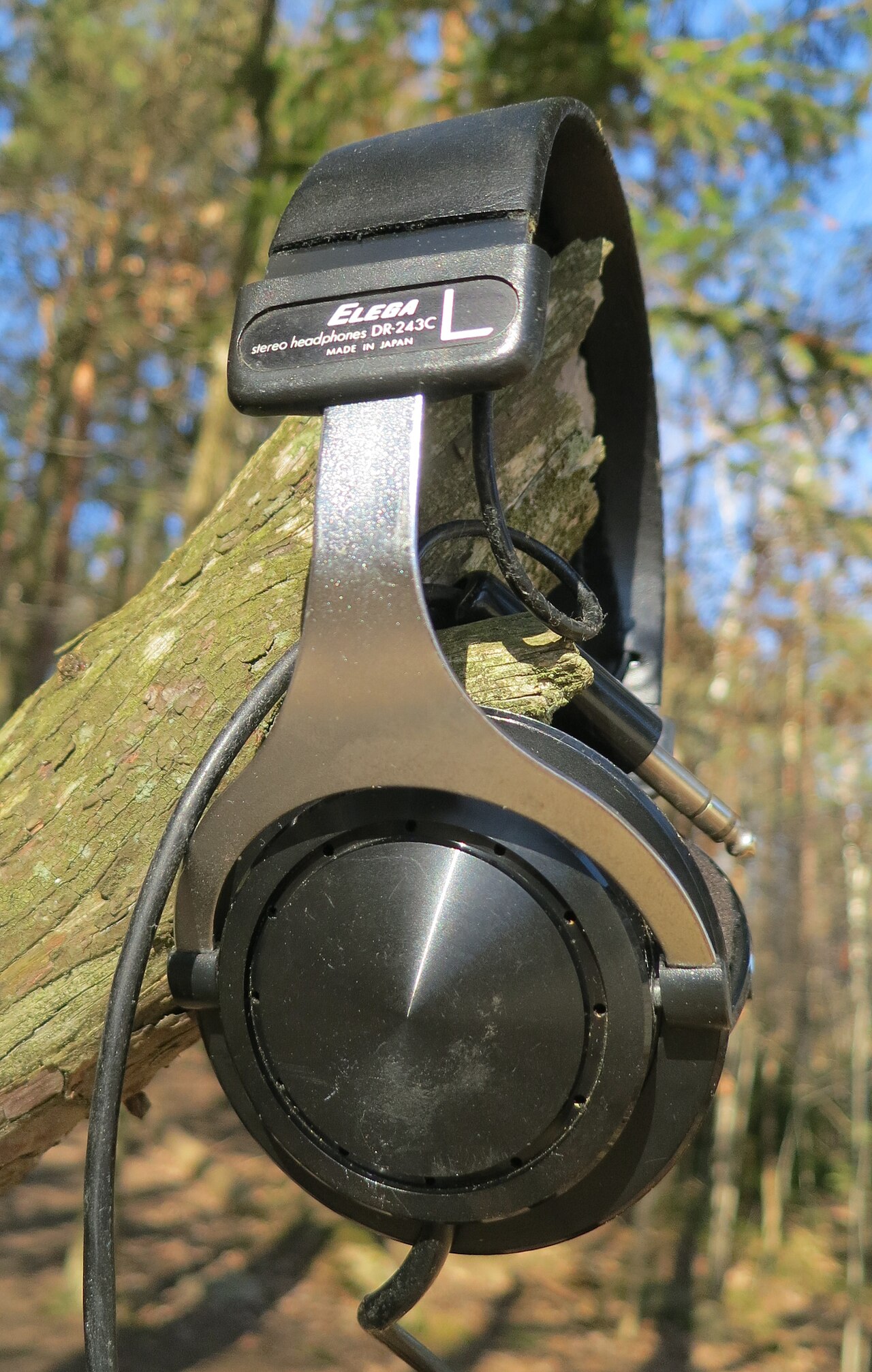
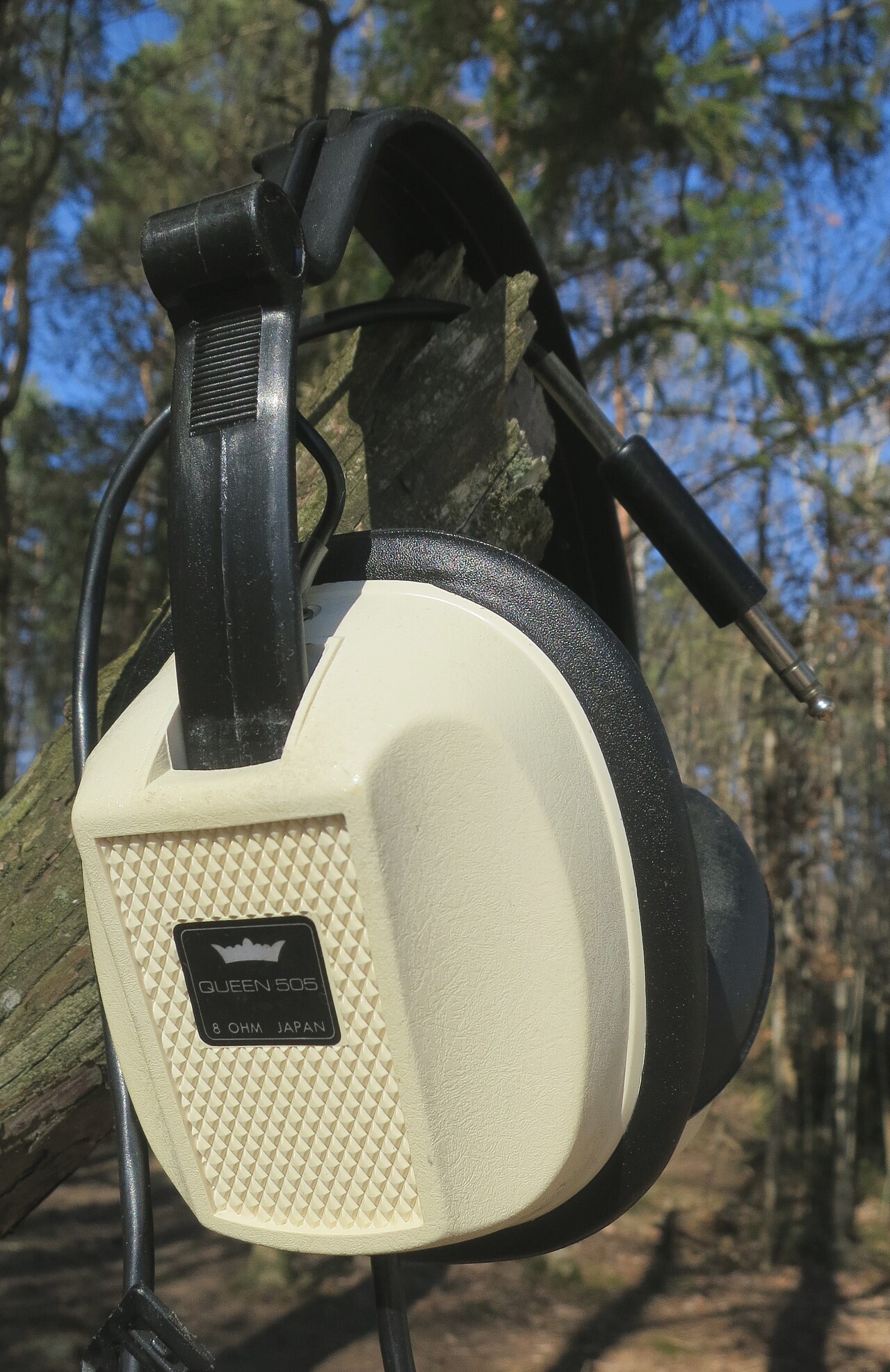
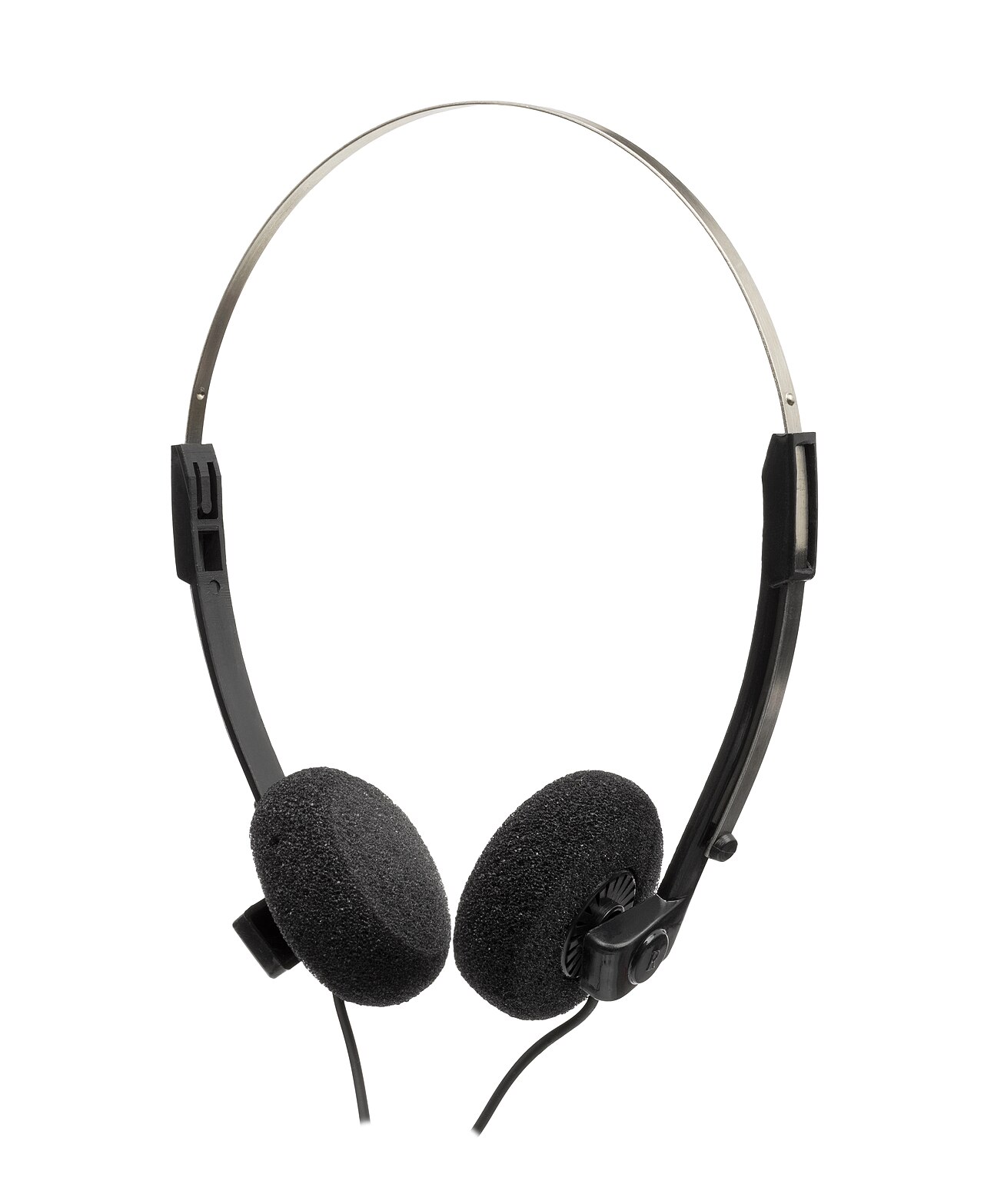
Frequently Asked Questions
What are headphones?
Headphones are personal electroacoustic transducers that convert electrical signals into sound and deliver it directly to one listener's ears. They come in over-ear, on-ear, and in-ear configurations, and are also commonly called earphones or, informally, "cans."
Who is credited with creating the first stereo headphones?
John C. Koss is widely recognized for building the first stereo headphones in 1958, a design that became the foundation of his company Koss. Earlier still, Ernest Mercadier had filed a patent for an in-ear headphone concept back in 1891.
What's the difference between circumaural and supra-aural headphones?
Circumaural models wrap fully around the outer ear, while supra-aural models rest on top of it. Both styles are held in place by a band spanning the top of the head, but the circumaural design generally provides better passive sound isolation.
What connector do most consumer headphones use?
The standard plug found on the vast majority of consumer headphones is either a 1/4-inch or 1/8-inch phone jack. These small cylindrical connectors mate with the corresponding audio output on phones, laptops, and dedicated audio gear.
Who first supplied headphones to the U.S. Navy?
Nathaniel Baldwin became the first major supplier of headsets to the U.S. Navy in 1910, working out of a small operation in Kansas. His early designs operated at impedance levels around 75 ohms, consistent with the telegraph and telephone systems of that era.
More in Headphones and Audio Gear 1-24
Spotted an error? Know more?
Reader corrections go straight into our review queue. Suggest an edit · How this site is sourced