
Headphone amplifier
A low-powered amplifier for driving headphones, used in consumer and pro audio.

John Donovan · CC BY 3.0
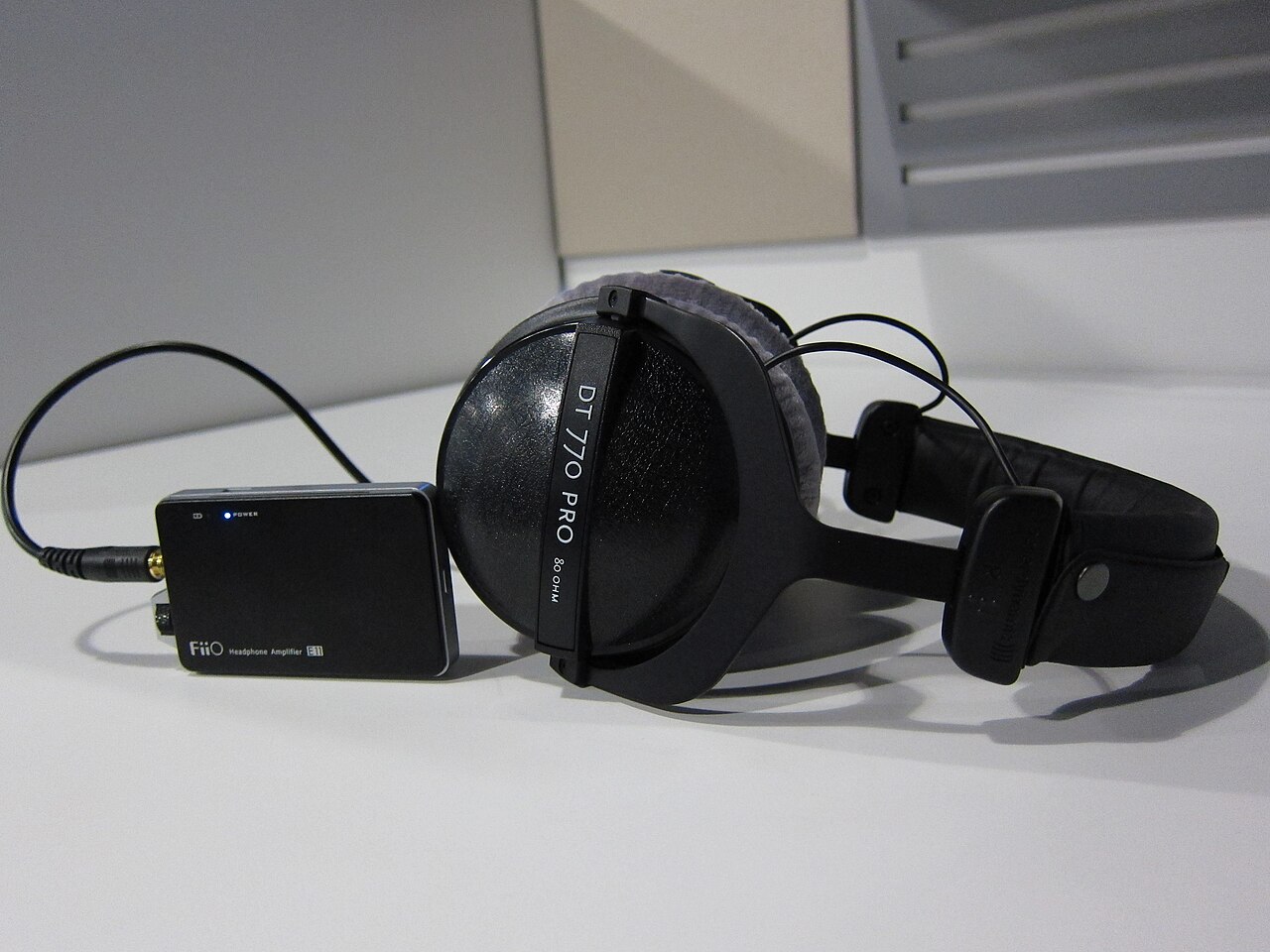
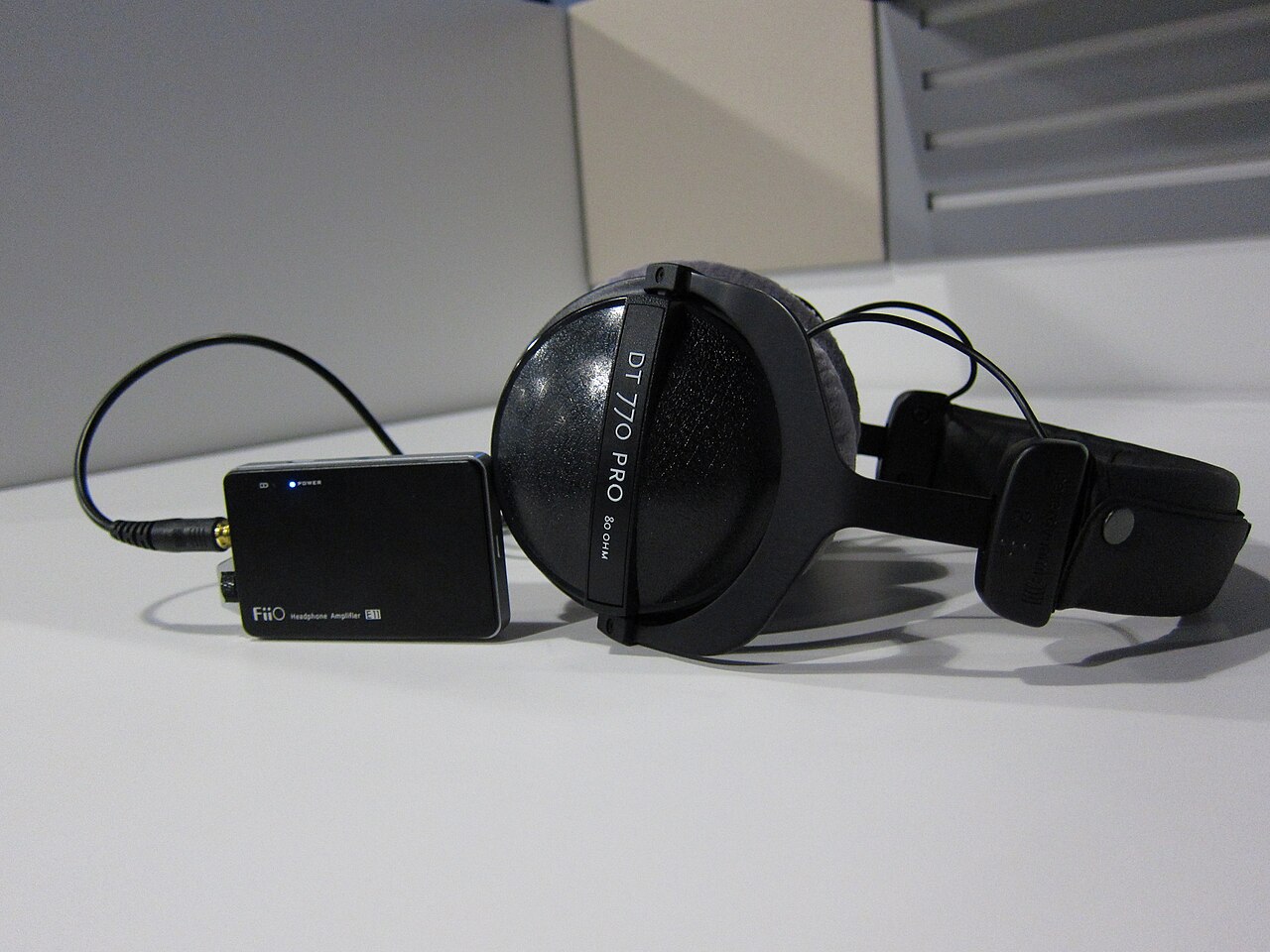
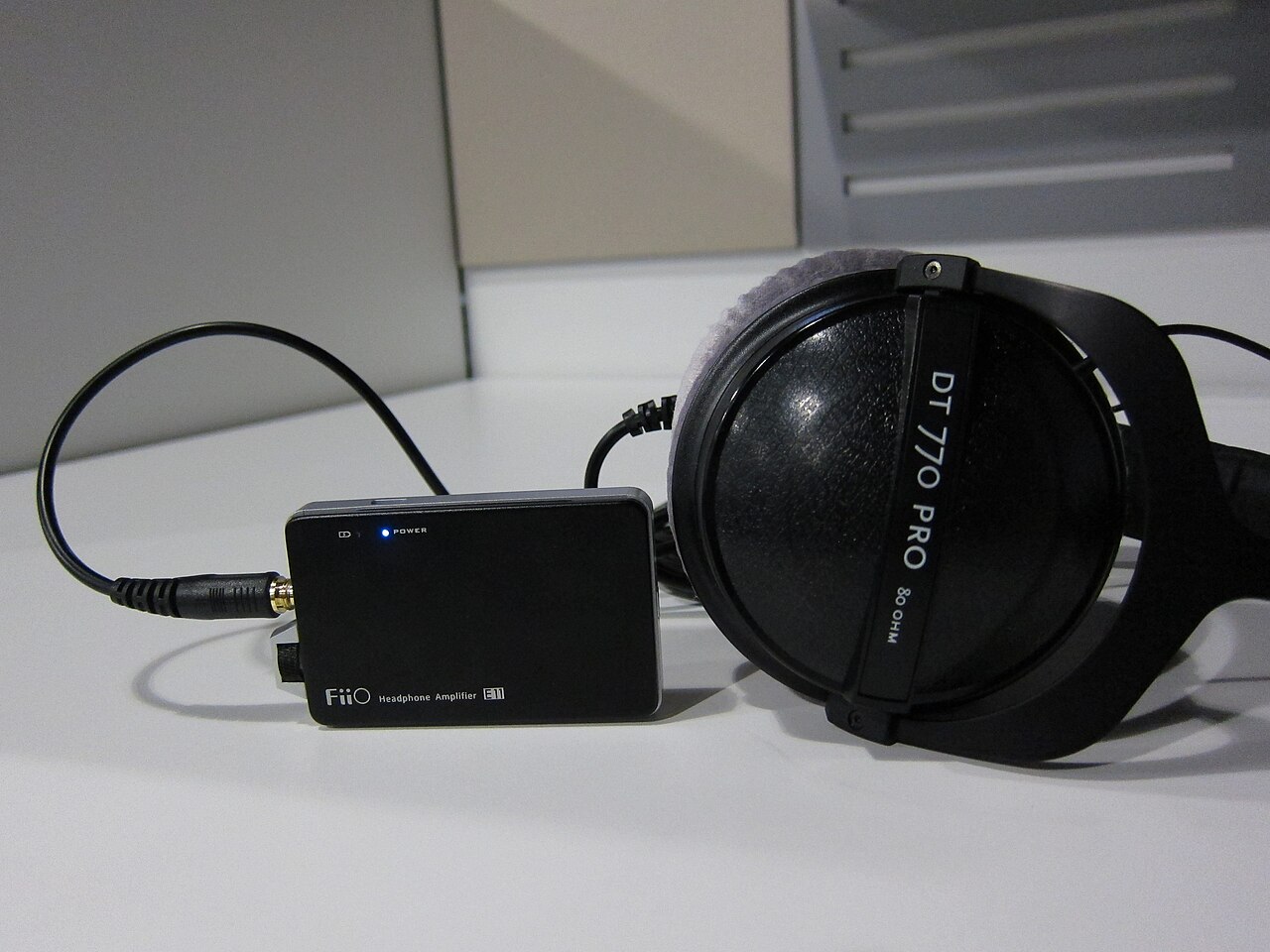
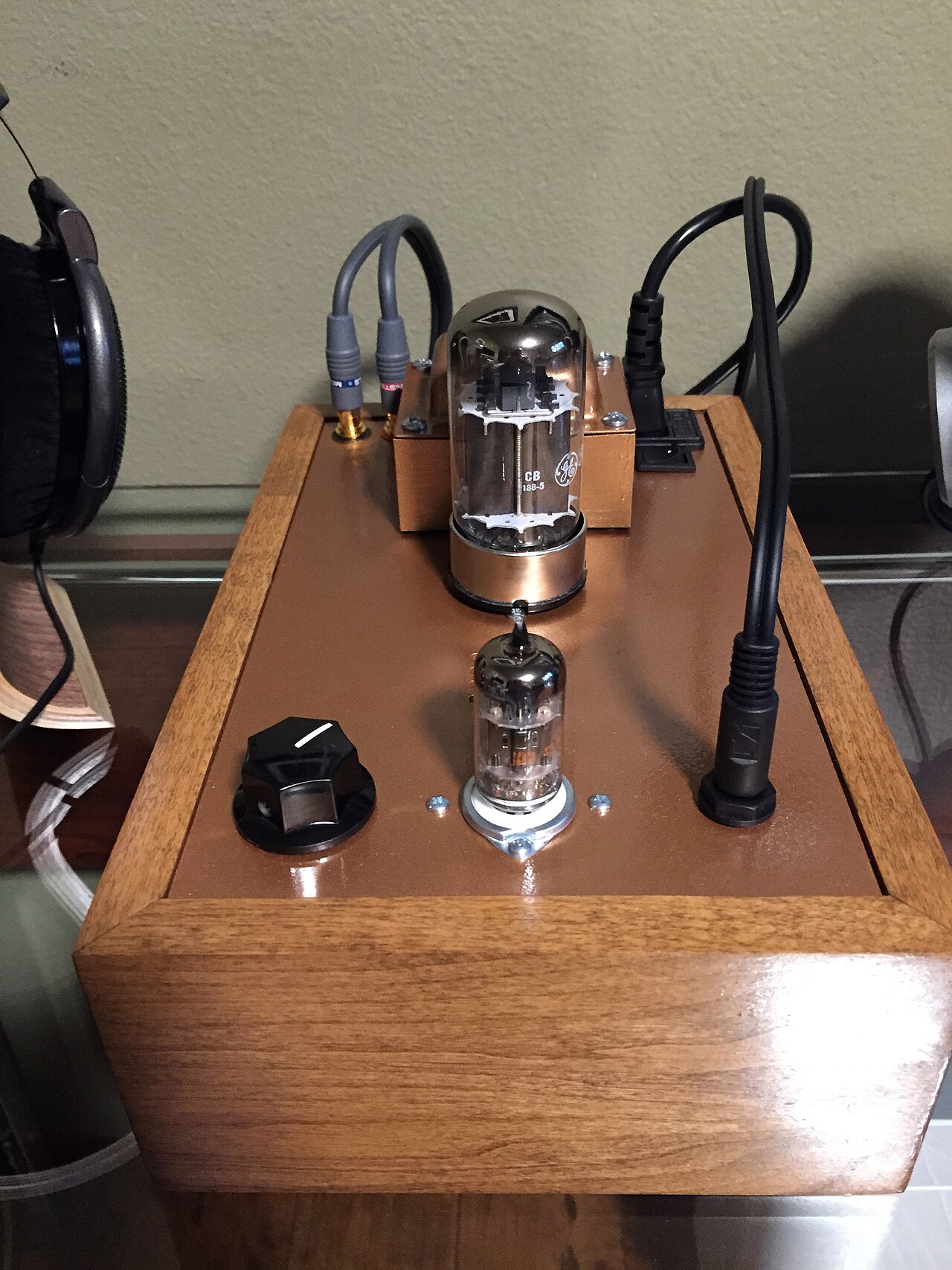
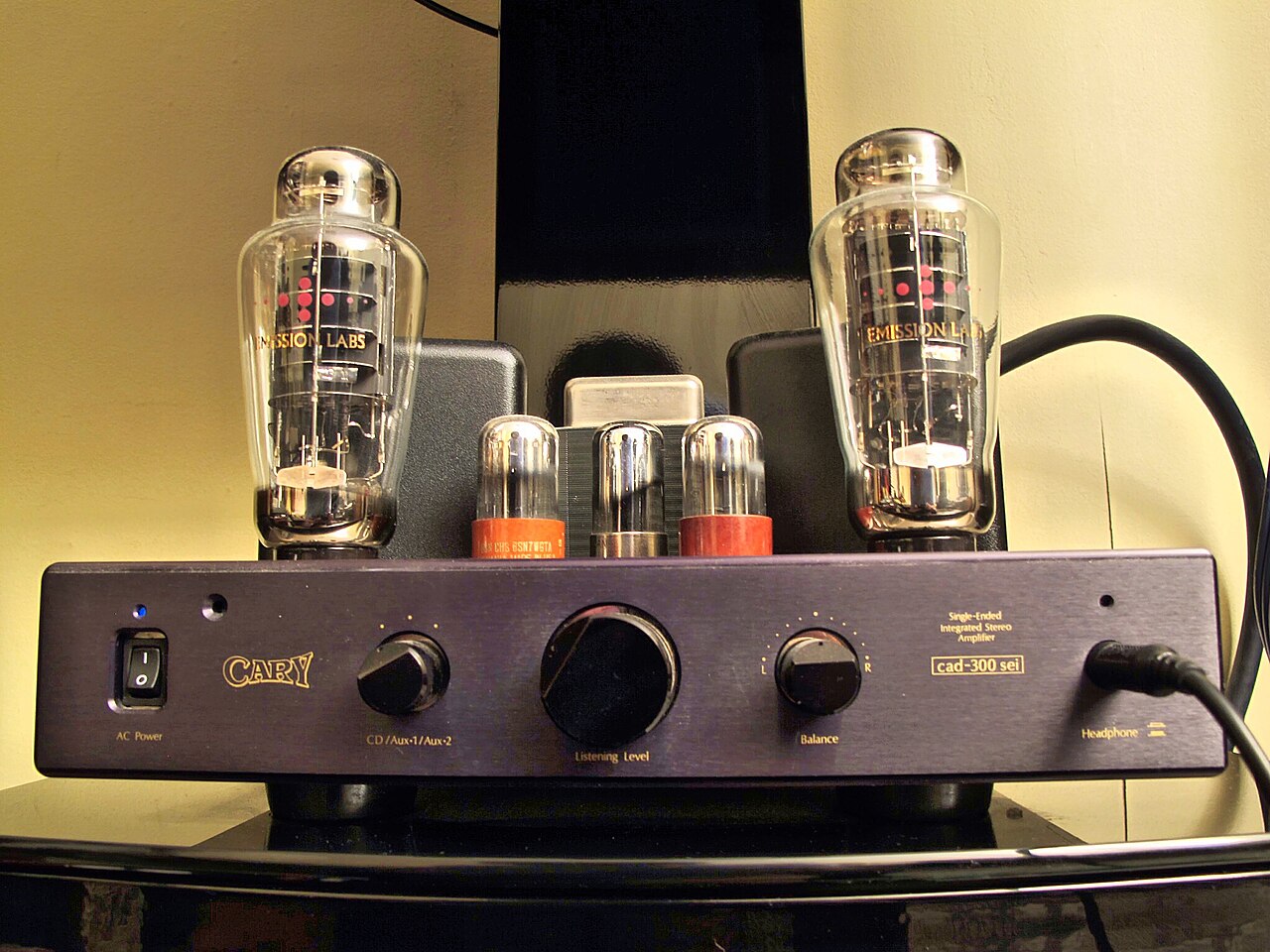
A headphone amplifier is a low-power device built to drive headphones rather than loudspeakers. These amplifiers are most often built into electronics that include a headphone jack, such as integrated amplifiers, portable music players, and televisions. Separate, standalone headphone amplifiers are also used, particularly in audiophile circles and professional settings like recording studios.
Consumer models are sold as separate units to a niche market of hi-fi enthusiasts. They are designed to improve sound quality and power, providing a richer, more detailed listening experience. For electrostatic headphones like the Stax SR-007, a specialized electrostatic amplifier or transformer step-up box is necessary because only such equipment can supply the required voltage levels. Most headphone amplifiers deliver between 10 mW and 2 W, depending on the headphones and amplifier design. Some high-power designs can output up to 6 W into low-impedance loads, though the benefit is unclear, as the few orthodynamic headphones sensitive enough to use that power would reach dangerously high volumes.
Electrically, a headphone amplifier is a small power amplifier that connects to a standard headphone jack or line output. It ideally presents a very high input impedance and a lower output impedance, with a larger range of output voltages. This allows low-sensitivity headphones to play louder due to the extra voltage. Fidelity gains can occur if headphones are driven with lower distortion than from a built-in amplifier, which often happens with low-impedance headphones connected to consumer electronics that have insufficiently low output impedance.
Most headphone amplifiers support higher voltage output and thus higher volume levels. While portable electronics typically use a 1.8, 2.5, or 3.3 Vpp supply, many headphone amplifiers use 10, 18, or 24 Vpp supplies, allowing 5–20 dB more volume. If headphones are too quiet, an amplifier with higher voltage or power will increase their volume.
Output impedance in headphone amplifiers typically ranges from 0.5 to 50 ohms. The 1996 IEC 61938 standard recommended 120 ohms, but this is rarely used and not recommended with modern headphones. High output impedance can cause frequency response fluctuations due to varying load impedance at different frequencies.
- Output power range
- 10 mW to 2 W (most models); up to 6 W in certain high-power designs
- Typical supply voltage
- 10, 18, or 24 Vpp
- Output impedance range
- 0.5 – 50 ohms
- Iec 61938 recommendation
- 120 ohms (rarely used in practice)
- Damping factor example
- 32 Ω headphone with 1 Ω amp: 32; with iPod touch 3G (7 Ω): 4.6; with 120 Ω: 0.26
Lore & Background
Consumer headphone amplifiers are separate devices sold to a niche audiophile market, designed to boost sound quality and power. For electrostatic headphones like the Stax SR-007, a specialized electrostatic amplifier or transformer step-up box is required to provide the necessary voltage levels. Most headphone amplifiers provide power between 10 mW and 2 W, though some high-power designs can deliver up to 6 W into low impedance loads, though the benefit of such power is unclear as it can reach dangerously high volume levels.
Electrically, a headphone amplifier presents a very high input impedance and a lower output impedance, allowing low-sensitivity headphones to be driven louder with extra voltage. Potential fidelity gains occur when headphones are driven with lower distortion than from an integrated amplifier, particularly with low impedance headphones and consumer electronics with insufficiently low output impedance. The 1996 IEC 61938 standard recommended 120 ohms output impedance, but this is rarely used and can cause frequency response fluctuations of up to 5 dB with certain headphones.
In professional audio, headphone amplifiers allow multiple headsets to connect to one or more audio sources for monitoring during recording sessions. Distribution headphone amplifiers feed a single signal to multiple headsets and can be cascaded. Some models offer sub-mixing capabilities, allowing listeners to adjust and monitor audio signals from multiple sources simultaneously.
Reader's Guide
Headphone amplifiers occupy a distinct niche in audio, bridging the gap between portable consumer electronics and high-fidelity listening. Their significance lies in providing higher voltage output and lower output impedance than typical headphone jacks, which can improve volume and reduce distortion for certain headphones. The damping factor—the ratio of load impedance to output impedance—is a key metric; higher damping factors reduce distortion, as demonstrated by a 45 dB improvement in THD+N at 30 Hz for a low-impedance amplifier compared to a 30-ohm design. However, the benefit varies: a 32 Ω headphone driven by a 1 Ω amp has a damping factor of 32, while the same headphone with an iPod touch 3G (7 Ω) yields only 4.6, and with the 120 ohm recommendation, an unacceptably low 0.26. Conversely, 120 Ω headphones driven by the same iPod achieve a damping factor of 17.1, likely not benefiting from an external amplifier.
The DIY community has embraced headphone amplifiers as popular projects, with designs like the simple opamp-based CMoy fitting inside a breath mint tin. Crossfeed processing, which blends left and right channels, reduces extreme channel separation and can improve soundstage naturalness, though opinions on its desirability vary. Digital signal processing has introduced headphone virtualization features that simulate surround sound. In professional settings, distribution and sub-mixing headphone amps are essential tools for recording and monitoring, allowing multiple musicians and engineers to hear isolated tracks or live performances simultaneously.
Did You Know?
- The CMoy headphone amplifier design can be built small enough to fit inside a tin of breath mints, including batteries.
- A 120-ohm output impedance can cause a 5-dB error in frequency response with certain headphones.
- Crossfeed processing blends left and right stereo channels to reduce extreme channel separation, which can cause headaches in a small fraction of listeners.
Roots in Telephony: The Hands-Free Problem
Headphones trace their origins to a practical workplace challenge in the 1880s. Shortly after the telephone's invention, switchboard operators needed a way to keep their hands free while connecting caller wires. The answer was a head-mounted receiver—a single earpiece clamped next to the ear—and this singular device is what gave the technology its name. By the 1890s, the British firm Electrophone pushed the concept further, engineering a two-earpiece listening system that allowed subscribers across London to tune into live theater and opera performances through phone lines. Their massive earphones were secured below the chin with a long rod. Around the same period, French engineer Ernest Mercadier filed a patent in 1891 for in-ear headphones, and the German firm Siemens Brothers began selling two-earpiece headpieces for operators that bore a striking resemblance to modern designs. Despite these advances, most operator headgear still relied on a single earpiece for years to come.
The Wireless Leap and the Birth of a Name
The shift from telephony to radio broadcasting reshaped both the purpose and the terminology of head-mounted audio. In the emerging field of wireless telegraphy, early developers repurposed telephone receivers as signal detectors for receiving circuits. By 1902, innovators such as Lee de Forest were pairing two head-mounted telephone receivers to monitor wireless signals, referring to them in the singular as "head telephones." The terminology evolved steadily: by 1908 the term appeared as "head phones," and a year later the compound word "headphones" took hold. Manufacturing followed quickly. The Holtzer-Cabot Company produced headphones for wireless operators as early as 1909, while Nathaniel Baldwin, inspired by his difficulty hearing sermons at Sunday service, built a prototype headset in 1910. The U.S. Navy ordered one hundred units almost immediately, and a manufacturing facility was established in Utah to meet demand. These early wireless headphones employed moving iron drivers with either single-ended or balanced armatures, a technology that would define the field for decades.
Driver Engineering and the Fidelity Trade-Off
The engineering behind early headphones reveals a fundamental trade-off between sensitivity and sound quality. The most common single-ended driver design used voice coils wound around the poles of a permanent magnet, positioned near a flexible steel diaphragm. Audio current passing through the coils altered the magnetic field, exerting a varying force on the diaphragm and producing sound waves. Because high sensitivity was essential for weak radio signals, no damping was applied to the diaphragm. This meant the frequency response exhibited large resonant peaks, yielding noticeably poor sound quality. Impedance varied by application: telegraph and telephone units typically ran at 75 ohms, while early wireless radio headphones used more turns of finer wire to boost sensitivity, with impedances commonly between 1,000 and 2,000 ohms—suited to both crystal sets and triode receivers. Some exceptionally sensitive models, such as those made by Brandes around 1919, became standard for early radio work. Early designs also lacked padding, making them uncomfortable for extended wear, and overall audio quality remained far below what modern audiophile headphones would eventually achieve.
From Private Listening to Professional Instrument
What began as a hands-free telephone accessory evolved into a versatile personal audio device and a critical professional tool. The Walkman effect of the 1980s transformed headphones from a niche gadget into a public presence, with people now wearing them on sidewalks, in grocery stores, and aboard public transit. In professional settings, the role deepened considerably. Audio engineers rely on headphones to mix sound for live concerts and studio recordings, while disc jockeys use them to cue the next track without the audience hearing the preview. Aircraft pilots and call center employees depend on headsets—combinations of a headphone and an integrated microphone—for communication. Modern form factors have diversified dramatically: circumaural and supra-aural designs use a headband to position drivers around or over the ear, earbuds plug directly into the ear canal, and bone conduction models wrap behind the head while leaving the ear canal open. Connectivity has expanded from simple 1/4-inch or 1/8-inch phone jacks to wireless options like Bluetooth, DECT, and FM radio, linking headphones to everything from mobile phones to video game consoles and electronic musical instruments.
Gallery
Frequently Asked Questions
Who is Headphone amplifier?
A headphone amplifier is a low-power electronic circuit purpose-built to drive headphones instead of full-size loudspeakers. You'll find it embedded in integrated amps, portable music players, and televisions, while standalone units cater to audiophile enthusiasts and recording-studio professionals.
What are Headphone amplifier's powers or role?
Its job is to deliver enough voltage and current to energize headphone drivers, with most models producing between 10 mW and 2 W and a few high-power designs reaching 6 W. By sitting between the source and the cans, it pushes a richer, more detailed signal than a bare 3.5 mm jack can manage on its own.
What are Headphone amplifier's key stats?
Typical supply voltages are 10, 18, or 24 Vpp, and output impedance generally falls in the 0.5-to-50-ohm range. The IEC 61938 standard nominally calls for a 120-ohm load, but that figure is rarely seen in actual consumer or pro designs.
Why is Headphone amplifier important?
High-impedance or hard-to-drive headphones simply won't reach their designed volume or tonal balance without a dedicated amp behind them. A standalone unit also lets the listener fine-tune damping factor and power delivery, which translates into a noticeably more controlled and detailed sound.
Where does Headphone amplifier sit in the audio chain?
It occupies the last active stage before your ears, receiving a line-level or digital signal from a DAC, source player, or interface and handing a boosted analog signal straight to the headphone drivers. In a studio or hi-fi rig, it is the final component that actually shapes what you hear.
More in Headphones and Audio Gear 1-24
Spotted an error? Know more?
Reader corrections go straight into our review queue. Suggest an edit · How this site is sourced