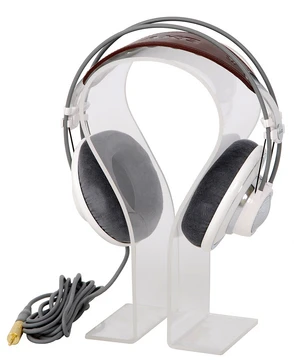
Bose (brand)
American audio equipment manufacturer known for noise-canceling headphones and speakers.

Bose Corporation is an American manufacturer of audio equipment, founded by Amar Bose in 1964 and headquartered in Framingham, Massachusetts. The company is widely recognized for home audio systems and speakers, noise-canceling headphones, professional audio products, and automotive sound systems. It is known for aggressively protecting its patents, trademarks, and brands. The majority owner of Bose is the Massachusetts Institute of Technology (MIT), which holds non-voting shares donated by Amar Bose that receive cash dividends. In its 2021 fiscal year, Bose reported $3.2 billion in sales and employed roughly 7,000 people.
The company was launched in Massachusetts with funding from angel investors, including Amar Bose’s thesis advisor, Y. W. Lee. Bose’s interest in speaker design began in 1956 after he bought an audio system and found its performance disappointing. The company aimed to create speaker systems that used multiple speakers aimed at walls to reflect sound, mimicking a concert hall experience.
Bose’s first product, the 2201, debuted in 1966 after a decade of research. It featured 22 speakers, many facing away from the listener, and was designed to sit in a corner to use wall reflections to make a room seem larger. The 2201 was a commercial failure and was discontinued that same year. Following this, Bose concluded that standard audio measurement techniques like distortion and frequency response were poor indicators of natural sound reproduction, arguing that listener perception was the best measure of quality. In 1968, the company introduced the Bose 901 stereo speaker system, which had eight mid-range drivers aimed at the wall behind the speaker and one driver facing the listener, prioritizing reflected sound over direct sound. This unconventional design was an immediate success, fueling rapid growth in the 1970s. The 901 remained in production from 1968 until 2016.
In 1991, a Bose research team debunked a 1989 experiment claiming to have achieved cold fusion. The first Bose retail store opened in 1993 in Kittery, Maine. Bob Maresca became president in 2005, having been promoted to vice president of the Home Entertainment Division in 2002.
Quick Facts
- Founder
- Amar Bose
- Industry
- Audio electronics
- Products
- Audio equipment
- Owner
- Massachusetts Institute of Technology
- Key People
- Bob Maresca (Chairman) / Lila Snyder (CEO)
- Revenue
- US$3.2 billion (FY 2021)
- Num Employees
- 7,000 (FY 2021)
- Hq Location
- Framingham, Massachusetts, U.S.
Facts from the source article.
Lore & Background
Bose was founded in 1964 by Amar Bose with angel investor funding, including from his thesis advisor Y. W. Lee. Bose's interest in speaker systems began in 1956 after he purchased an audio system and was disappointed with its performance. The company aimed to develop speaker systems that used multiple speakers aimed at surrounding walls to reflect sound and replicate a concert hall experience. The first product, the Bose 2201, was introduced in 1966 but failed commercially and was discontinued the same year. In 1968, the company launched the Bose 901 stereo speaker system, which used eight mid-range drivers pointing toward the wall and a ninth driver toward the listener, achieving a dominance of reflected over direct sound. The 901 was an immediate commercial success and was produced from 1968 until 2016.
In 1991, a team of Bose researchers debunked a 1989 experiment that claimed to have created energy through cold fusion. The first Bose retail store opened in 1993 in Kittery, Maine. In 2011, founder Amar Bose donated the majority of the firm's non-voting shares to MIT, with conditions that MIT could not sell them nor participate in management. Following Amar Bose's death in 2013, Bob Maresca became CEO. In January 2020, Bose announced it would close all its more than 100 retail stores in North America, Japan, Europe, and Australia, while retaining about 130 stores in Asia and the Middle East, along with its online presence and sales through Target, Best Buy, and Amazon. In August 2020, Bose selected its first female CEO, Lila Snyder, an MIT alumna.
Reader's Guide
Bose's significance lies in its pioneering approach to audio reproduction, particularly through the use of reflected sound in home speaker systems, as exemplified by the long-running Bose 901. The company is also notable for its development of noise-canceling headphones, beginning with the QuietComfort line in 2000, which became widely recognized for airline passengers. Bose has supplied audio systems for numerous automotive manufacturers, starting with a MY1983 Cadillac Seville, and has contracts with the U.S. military and NASA. The company's commercial sound division, established in 1972, accounted for about 60% of annual revenue in 2009 and made Bose the first company to pay for the title of official Olympics sound system supplier. Bose's legacy includes a reputation for being particularly protective of its patents, trademarks, and brands, and its unique ownership structure where the majority owner is MIT, holding non-voting shares that receive cash dividends to advance MIT's research and education mission.
Did You Know?
- Bose's first product, the Bose 2201, used 22 speakers with many facing away from the listener and was discontinued the same year it launched.
- Bose developed a prototype active suspension system using electromagnetic motors, but it was not released due to weight and cost.
- The majority owner of Bose Corporation is the Massachusetts Institute of Technology, which holds non-voting shares donated by founder Amar Bose.
More in Headphones and Audio Gear 1-24
Spotted an error? Know more?
Reader corrections go straight into our review queue. Suggest an edit · How this site is sourced