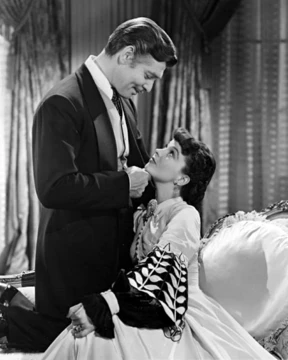
King Vidor
American auteur director of silent and sound films.
King Wallis Vidor (February 8, 1894 – November 1, 1982) was an American film director, film producer, and screenwriter whose 67-year career spanned the silent and sound eras. His works are distinguished by a sympathetic depiction of contemporary social issues, and he is considered an auteur director who approached multiple genres, often pressing the limits of film-making conventions.
Quick Facts
- Birth Name
- King Wallis Vidor
- Birth Date
- 1894-02-08
- Birth Place
- Galveston, Texas, U.S.
- Death Date
- 1982-11-01
- Death Place
- Paso Robles, California, U.S.
- Other Names
- King W. Vidor, John Vidor
- Awards
- Hollywood Walk of Fame
- Known For
- The Big Parade · Northwest Passage · Comrade X · An American Romance · Duel in the Sun
- Occupation
- Film director · producer · screenwriter
- Years Active
- 1913–1980
- Spouse
- Florence Arto · 1915 · 1924 · 1926 · 1931 (1932–1978)
- Children
- 2
Facts from the source article.
Lore & Background
Vidor was born into a well-to-do family in Galveston, Texas, the son of Kate Wallis and Charles Shelton Vidor, a lumber importer and mill owner. His paternal grandfather was a refugee of the Hungarian Revolution of 1848. At age six, Vidor witnessed the devastation of the Galveston Hurricane of 1900, which he later recalled in a 1980 interview. He attended grade school at Peacock Military Academy in San Antonio, Texas, and dropped out of a private high school in Maryland at age 16 to work as a nickelodeon ticket taker and projectionist in Galveston. As an 18-year-old amateur newsreel cameraman, he made his first movie based on footage of a local hurricane and sold footage of a Houston army parade to a newsreel outfit.
Reader's Guide
King Vidor's significance lies in his long career bridging silent and sound cinema, with works noted for sympathetic treatment of social issues. His silent masterpiece The Big Parade (1925) was his most acclaimed and successful film of that era. In the 1940s and early 1950s, films such as Northwest Passage, Comrade X, An American Romance, and The Fountainhead are considered among his best. Vidor's dramatic depictions of the American western landscape endow nature with a sinister force where characters struggle for survival and redemption. He was considered an 'actors' director,' with many of his players receiving Academy Award nominations or awards. Vidor was nominated five times for Best Director by the Academy and received an Honorary Academy Award in 1979. He also won eight national and international film awards, including the Screen Directors Guild Lifetime Achievement Award in 1957. His early films tend to identify with common people in collective struggle, while later works place individualists at the center of narratives.
Did You Know?
- Vidor's given name was King, not a sobriquet, honoring his mother's favorite brother, King Wallis.
- Near the end of production for MGM's The Wizard of Oz, Vidor was called in to direct the remaining Kansas scenes, including the cyclone sequence; the musical number 'Over the Rainbow' was directed by Victor Fleming.
- Vidor formed the Hotex Motion Picture Company in 1914 with vaudevillian Edward Sedgwick, but only still photos survive from its comedy-adventures.
- In 1962, Vidor was head of the jury at the 12th Berlin International Film Festival, and in 1969 he served on the jury at the 6th Moscow International Film Festival.
More in Golden Age Hollywood 1-24
Spotted an error? Know more?
Reader corrections go straight into our review queue. Suggest an edit · How this site is sourced