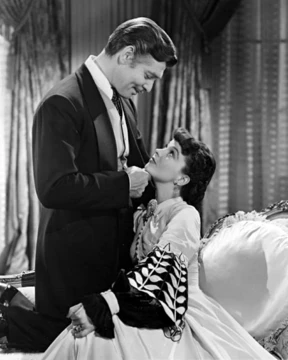
George Sanders
British actor known for sophisticated villain roles.

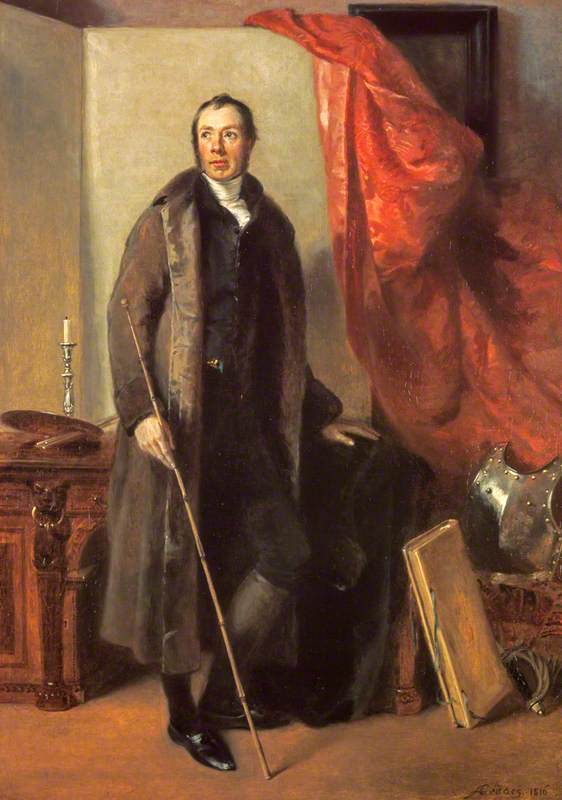
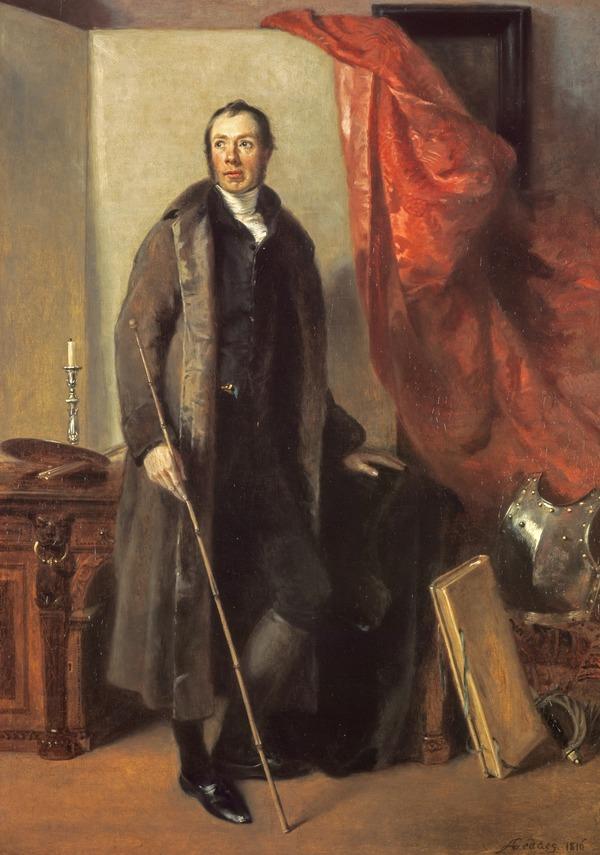
Andrew Geddes · Public domain
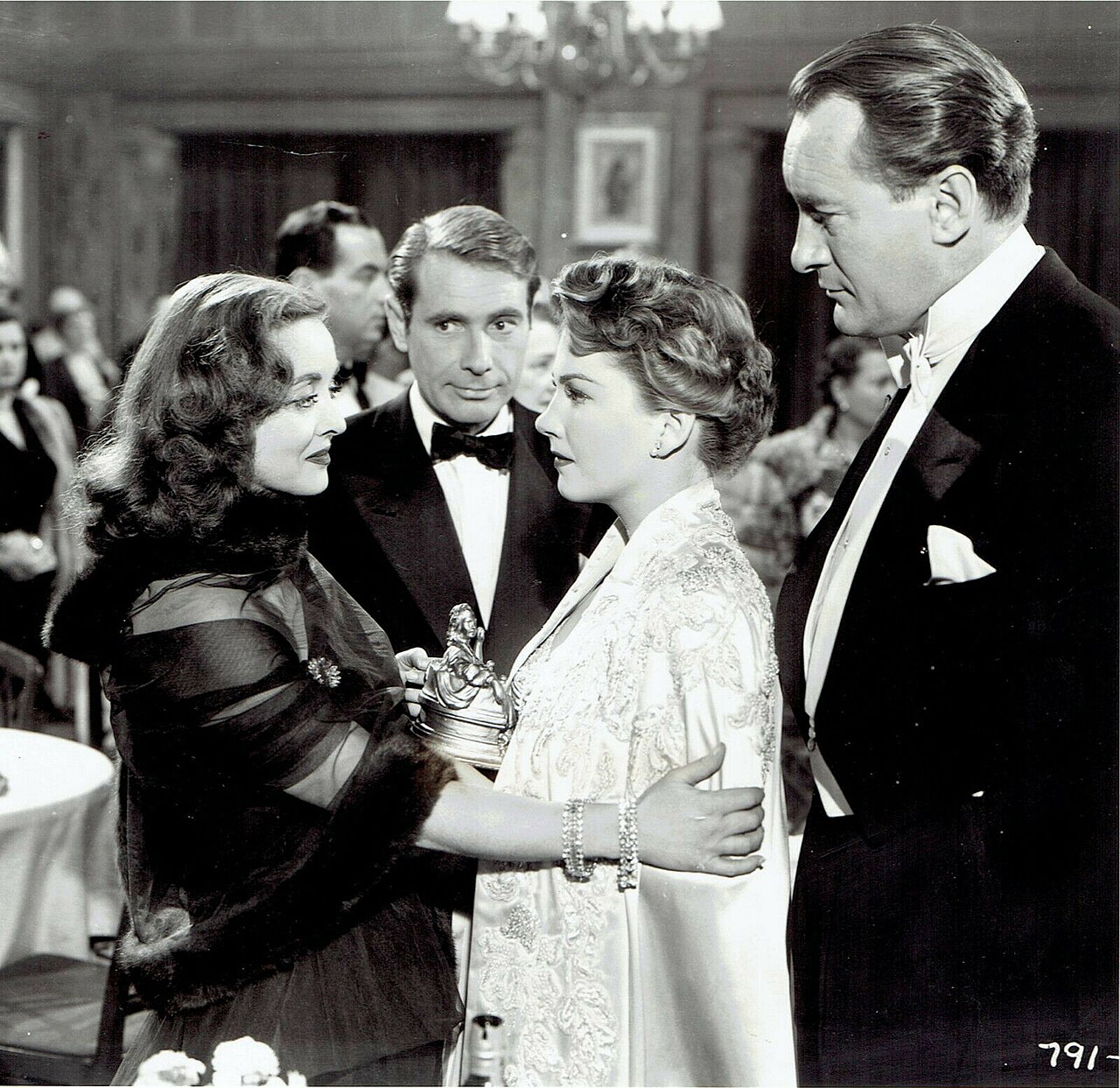
George Henry Sanders (3 July 1906 – 25 April 1972) worked as a British actor and singer for more than four decades. His distinct upper-class English accent and deep, smooth bass voice typically landed him roles as polished, wicked characters. He is best known for playing Jack Favell in *Rebecca* (1940), Scott ffolliott in *Foreign Correspondent* (1940, an unusual heroic turn), The Saran of Gaza in *Samson and Delilah* (1949, the top-grossing film of 1950), theatre critic Addison DeWitt in *All About Eve* (1950, earning him the Academy Award for Best Supporting Actor), Sir Brian De Bois-Guilbert in *Ivanhoe* (1952), King Richard the Lionheart in *King Richard and the Crusaders* (1954), Mr. Freeze in a two-part *Batman* episode (1966), and the voice of Shere Khan in Disney’s *The Jungle Book* (1967). He also portrayed Simon Templar in the first five of eight *The Saint* films (1939–1941) and a suave, Saint-like crimefighter in the first four of sixteen *The Falcon* films (1941–1942).
Sanders was born on 3 July 1906 in Saint Petersburg, Russia, at 6 Petrovski Ostrov. His father, Henry Sanders, worked as a rope manufacturer; his mother, Margaret (née Kolbe), also born in Saint Petersburg, was a horticulturist of mostly German, Estonian, and Scottish ancestry. Sanders wrote that his mother descended from “the Thomas Clayhills of Dundee, who went to Estonia in 1626 to establish a business there.” He described his parents as “well-off” and noted his mother’s “forebears of solid social position and impeccable respectability,” adding that “to the best of (his) knowledge, (his) father came in the mail.” A 1990 biography claimed that family “recent disclosures… indicate” Sanders’ father was the out-of-wedlock son of a Russian noblewoman at the Tsar’s court and a prince of the House of Oldenburg married to a sister of the Tsar. At Henry Sanders’ birth, the Anglo-Russian Sanders family lived in Saint Petersburg; the mother, Dagmar, served as a lady-in-waiting to the Dowager Empress, and it was said this connection led to Henry’s adoption by the Sanders family.
In 1917, when the Russian Revolution broke out, Sanders and his family moved to Great Britain. Like his brother, he attended Bedales School and Brighton College, a boys’ independent school in Brighton, then Manchester Technical College, after which he worked in textile research.
- Born
- 3 July 1906, Saint Petersburg, Russia
- Died
- 25 April 1972
- Field
- Actor, singer
- Nationality
- British
- Known for
- Villainous roles, Academy Award for Best Supporting Actor (All About Eve), voice of Shere Khan
Lore & Background
Sanders was born in Saint Petersburg, Russia, to rope manufacturer Henry Sanders and horticulturist Margaret Kolbe. A 1990 biography alleged that his father was the out-of-wedlock son of a Russian noblewoman and a prince of the House of Oldenburg. After the Russian Revolution in 1917, his family moved to Great Britain, where he attended Bedales School and Brighton College, then Manchester Technical College. He worked in textile research, managed a tobacco plantation in South America, and later worked at an advertising agency, where aspiring actress Greer Garson suggested he take up acting.
Sanders began his career on the British stage and appeared on Broadway in Noël Coward's Conversation Piece (1934). He was cast by 20th Century-Fox as a villain in Lloyd's of London (1936) and placed under a seven-year contract. He played the hero in The Saint film series (1939–1941) and the first four The Falcon films (1941–1942). His notable roles include Jack Favell in Rebecca (1940), Scott ffolliott in Foreign Correspondent (1940), and The Saran of Gaza in Samson and Delilah (1949). He won the Academy Award for Best Supporting Actor for All About Eve (1950).
Later in his career, Sanders appeared in Ivanhoe (1952), King Richard and the Crusaders (1954), Village of the Damned (1960), and A Shot in the Dark (1964). He voiced Shere Khan in The Jungle Book (1967) and played Mr. Freeze in a two-part episode of Batman (1966). He declared bankruptcy in 1966 due to poor investments.
Reader's Guide
George Sanders' significance lies in his distinctive screen presence as a suave, upper-class villain, a typecasting that he exploited with wit and skill. His Academy Award-winning performance as Addison DeWitt in All About Eve remains a benchmark for acerbic, intelligent character acting. Sanders also contributed to popular culture through iconic roles such as the voice of Shere Khan in Disney's The Jungle Book and as Mr. Freeze in the Batman television series. His career spanned major Hollywood studios and genres, from historical epics to science fiction. Despite often playing unsympathetic characters, Sanders brought a memorable elegance and depth to his roles, ensuring his lasting legacy in film history.
Did You Know?
- Sanders was born in Saint Petersburg, Russia, and moved to Great Britain after the Russian Revolution in 1917.
- Sanders voiced the bengal tiger Shere Khan in Disney's The Jungle Book (1967).
- He played the hero in five of the eight films in The Saint series (1939–1941).
Saint Petersburg Roots and an Unlikely Path to the Stage
Born on 3 July 1906 at number 6 Petrovski Ostrov in Saint Petersburg, George Henry Sanders entered the world into a family of considerable means and layered heritage. His mother Margaret, née Kolbe, was a horticulturist of predominantly German stock with Estonian and Scottish roots—she traced her lineage to the Thomas Clayhills of Dundee, who had set up a business in Estonia in 1626. His father Henry was a rope manufacturer, though Sanders himself wryly observed that "to the best of (his) knowledge, (his) father came in the mail." A 1990 biography floated a far more aristocratic origin, linking Henry to the House of Oldenburg and the Tsar's court through a lady-in-waiting to the Dowager Empress. The 1917 Russian Revolution uprooted the family and sent them to Britain, where Sanders attended Bedales School and Brighton College before studying at Manchester Technical College. He worked in textile research, managed a tobacco plantation in South America, and was swept back to Britain by the Depression, where an advertising-agency colleague—the aspiring actress Greer Garson—urged him to try the stage.
Hollywood's Suave Villain and the Serial-Actor Treadmill
Sanders' American breakthrough arrived with Lloyd's of London (1936), in which he played the villainous Lord Everett Stacy opposite Tyrone Power. His heavy upper-class English diction, sleek bearing, and quietly threatening air made him an instant magnet for sophisticated antagonist parts, and 20th Century-Fox locked him into a seven-year contract that November. RKO then cast him as Simon Templar in The Saint series, taking over from Louis Hayward for five of the eight films between 1939 and 1941. When RKO replaced that franchise with The Falcon, Sanders slipped into the debonair crimefighter Gay Laurence for four of the sixteen entries (1941–1942), a role so obviously derivative that Saint creator Leslie Charteris sued the studio for unfair competition. Sanders, chafing at the B-movie treadmill, bowed out after those four pictures. His refusal to take leads in The Undying Monster and The Immortal Sergeant in 1942 earned him suspensions from Fox, who eventually negotiated a raise and a lead in School for Saboteurs. He also starred in The Moon and Sixpence (1942) for United Artists and King Charles II in Forever Amber (1947).
Oscar-Winning Peak and Enduring Screen Icons
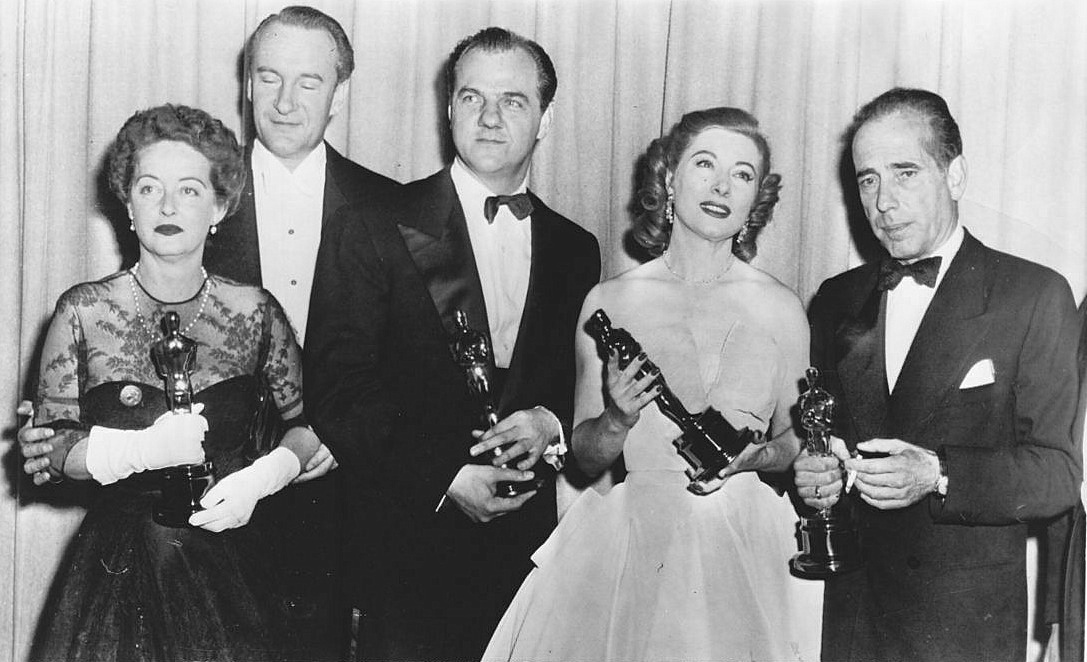
The second half of Sanders' career produced his most enduring images. In 1949 he delivered the Saran of Gaza in Samson and Delilah, which became the most popular film of that year. The following year, as the razor-sharp theatre critic Addison DeWitt in All About Eve, he earned the Academy Award for Best Supporting Actor—a recognition that validated decades of character work. He continued in grand historical roles: Sir Brian De Bois-Guilbert in Ivanhoe (1952) and King Richard the Lionheart in King Richard and the Crusaders (1954). Yet his range extended well beyond period drama. In 1966 he appeared as Mr. Freeze in a two-part episode of the television series Batman, and in 1967 his smooth bass voice gave life to Shere Khan in Disney's animated The Jungle Book. Earlier, in 1940, he had played both the wicked Jack Favell in Hitchcock's Rebecca and, in the same year, the rare heroic lead of Scott ffolliott in Foreign Correspondent—proof that his magnetism could serve either side of the moral line.
A Voice and Manner That Defined a Niche
Spanning more than four decades, Sanders' career moved fluidly between British and American stages and screens, from a brief Broadway run in Noël Coward's Conversation Piece (1934) to voice-over work for a Disney feature in 1967. His signature toolkit—a rich bass baritone, an unmistakably aristocratic English accent, and a poised, slightly contemptuous physicality—made him uniquely suited to characters who were cultured, dangerous, and often both at once. He learned to sing early, earned his first stage credit in the short-lived Ballyhoo, and built a steady London career appearing alongside Edna Best and Dennis King before crossing the Atlantic. Even in his later years, when the industry had shifted toward television and animation, his voice and presence remained in demand. From the pulp serials of the early 1940s to the prestige productions of the late 1940s and 1950s, Sanders occupied a rare niche: the actor whose very refinement was the threat.
Gallery
More in Golden Age Hollywood 1-24
Spotted an error? Know more?
Reader corrections go straight into our review queue. Suggest an edit · How this site is sourced